In this article
What you’ll learn
- A deep clean is necessary every 3-4 months to prevent foodborne illness.
- Always follow the 'Top-to-Bottom' and 'Dry-Before-Wet' rules for efficiency.
- High-touch areas like fridge handles and sink drains are the germiest spots.
The kitchen is often called the heart of the home, but it is also the most biologically active room in it. While we may wipe down our counters daily, a true deep clean kitchen routine is a critical health intervention that goes far beyond surface-level aesthetics. Foodborne illness outbreaks have been rising, and a great many of them trace back to contamination that begins in the home environment.
With food poisoning affecting a huge number of people every year, maintaining a professional standard of hygiene isn't just about "spring cleaning"—it's about family safety. This guide will walk you through a comprehensive kitchen deep cleaning checklist designed for the modern 2025 home, blending traditional wisdom with high-tech sustainable solutions.
Why Deep Cleaning Matters in 2025
Before we pick up a scrub brush, we must understand the "why" behind the work. Bacteria "hot spots" are rarely where we expect them. While many homeowners obsess over the cleanliness of their floors, the real culprits harboring E. coli, Salmonella, and Listeria are often high-touch surfaces like refrigerator handles, sink drains, and even the buttons on your microwave.
The financial impact is equally staggering; Salmonella contamination alone drives an enormous healthcare bill every year. By committing to a quarterly deep clean, you aren't just organizing your space; you are performing a preventative maintenance routine for your household’s health.
Note: Deep cleaning involves moving appliances, cleaning inside cabinets, and descaling machinery—tasks that go far beyond your daily wiping routine.
The Master Kitchen Deep Cleaning Checklist
To ensure efficiency, we follow the "Top-to-Bottom" rule. Gravity ensures that dust and debris from ceiling fans or cabinet tops will fall as you work. Cleaning your floors first is a common mistake that leads to double the work.
Zone 1: The High Reaches and Lighting
Start where the eye rarely looks. Dust accumulates on top of cabinets and light fixtures, mixing with evaporated cooking grease to create a sticky "grime" that is difficult to remove if left for more than a few months.
- Ceiling Fans and Lights: Dust blades and wipe down glass globes with a microfiber cloth and a mild degreaser.
- Cabinet Tops: If your cabinets don't reach the ceiling, the tops are likely covered in a layer of oily dust. Use a bio-enzymatic cleaner to break down the organic matter.
- The "Dry Before Wet" Rule: Always vacuum or dust surfaces before applying liquid cleaners. This prevents "mudding"—the creation of a wet, sticky mess of dust and cleaner that is much harder to wipe away.
Zone 2: Large Appliances (The Core of the Kitchen)
Your appliances are the workhorses of your kitchen, and they require internal maintenance to function efficiently.
The Refrigerator and Freezer
Empty everything. Check expiration dates and discard anything past its prime.
- The Interior: Use a mixture of baking soda and water to scrub shelves. Avoid harsh chemicals where food is stored.
- The Coils: This is a vital step often missed. Vacuum the condenser coils (usually located behind or beneath the unit) every six months.
- The Seals: Use a toothbrush to clean the rubber door gaskets where crumbs and mold often hide.
Success: Vacuuming your fridge coils can increase energy efficiency by up to 30%, extending the life of your appliance and lowering your utility bill.
The Oven and Range Hood
A greasy range hood filter is more than just an eyesore; it is a legitimate fire hazard and a major contributor to poor indoor air quality.
- Filter Soak: Remove the metal mesh filters from your range hood and soak them in a mixture of boiling water and heavy-duty degreaser (or run them through a high-heat dishwasher cycle).
- Oven Interior: If you prefer to avoid the high-heat "self-clean" cycle (which can sometimes damage oven components), use a paste of baking soda and water. Let it sit overnight before scrubbing.
The Dishwasher
It seems counterintuitive to clean a machine that cleans, but mineral buildup and food debris can clog the spray arms.
- The Filter: Locate the filter at the bottom of the tub. Rinse it under hot water weekly.
- Vinegar Cycle: Once a month, place a bowl of white vinegar on the top rack and run a hot cycle to descale the interior.
| Appliance | Deep Clean Frequency | Key Task |
|---|---|---|
| Refrigerator | Every 3 Months | Vacuum Condenser Coils |
| Oven | Every 3-6 Months | Degrease Range Hood Filter |
| Dishwasher | Monthly | Clean Filter & Descale |
| Microwave | Weekly | Steam with Lemon Water |
Zone 3: Counters, Cabinets, and Backsplashes
This zone is where cross-contamination is most likely to occur. When cleaning cabinets, don't just focus on the shelves; the vertical surfaces (cabinet fronts) and the "hidden" verticals (the sides of the fridge) often harbor grease-laden dust.
Warning: Never use vinegar or lemon juice on natural stone like granite or marble. The acidity can "etch" the stone, permanently dulling the finish. Use a pH-neutral stone cleaner instead.
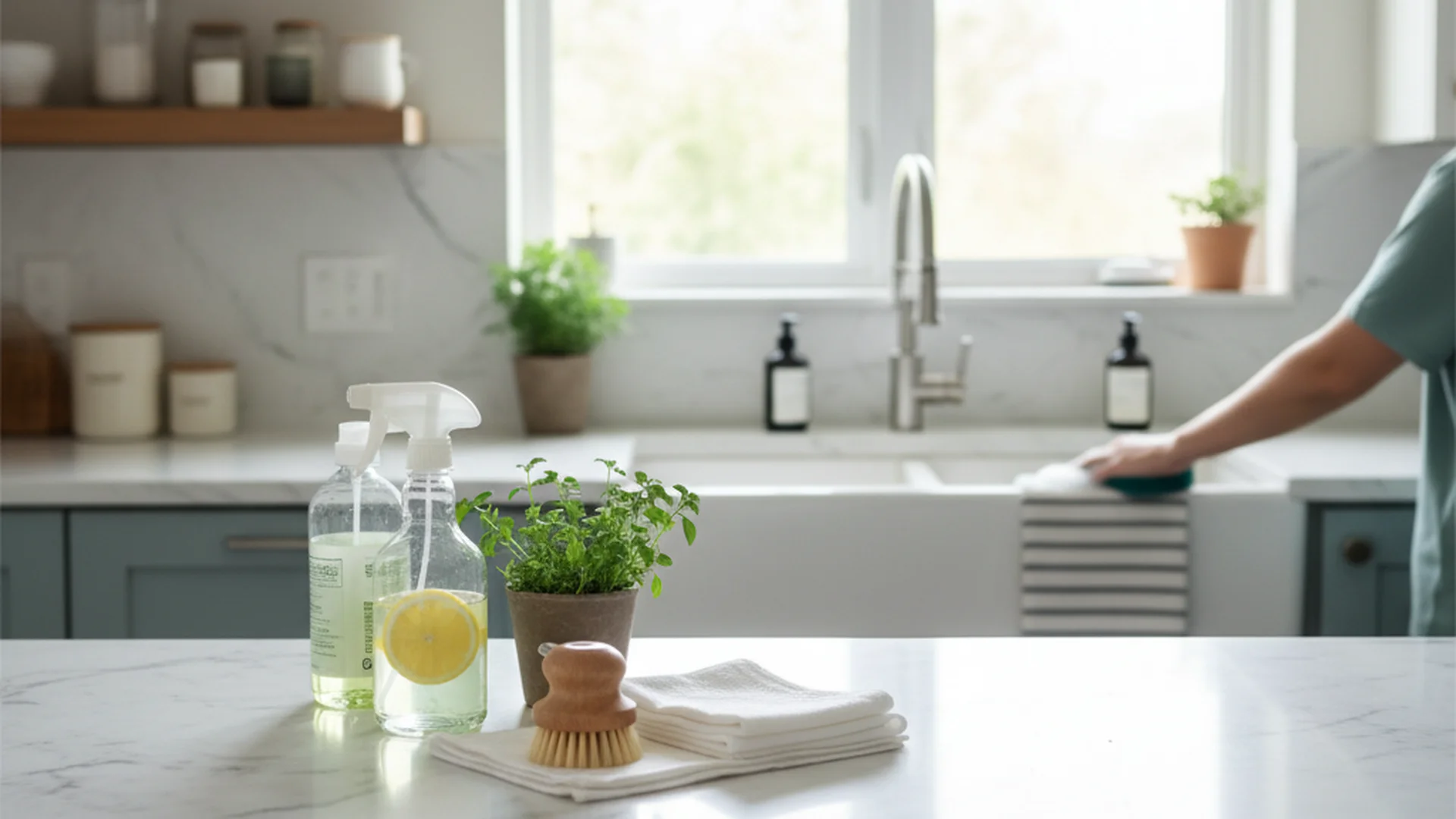
Pro-Tip: Color-Coded Microfiber To prevent spreading bacteria from the sink to the food-prep areas, adopt a color-coding system. For example:
- Red: High-germ areas (sinks, trash bin exteriors).
- Blue: Food-prep surfaces (countertops, islands).
- Green: General dusting and cabinet fronts.
Modern Trends: Cleaning in 2025 and 2026
The world of cleaning has evolved. We are moving away from harsh chemicals and toward "Smart & Sustainable" solutions.
1. Bio-Enzymatic & Plant-Based Solutions
There is a massive shift away from bleach and ammonia. 2025 marks the rise of "living" cleaners. These products use beneficial bacteria (enzymes) that continue to "eat" grease and organic matter for days after the initial application. They are safer for pets, children, and the environment.
2. UV-C Sanitization
Portable UV-C light wands are becoming a standard final step for tech-savvy homeowners. These devices allow you to sanitize high-touch electronics, such as smart fridge touchscreens and oven displays, without risking liquid damage to the circuitry.
3. The Zero-Waste Kitchen
The movement toward sustainability has replaced paper towels with compostable Swedish dishcloths and single-use plastic bottles with refillable glass containers. Not only does this reduce your carbon footprint, but it also creates a more curated, aesthetic kitchen environment.
4. Cleaning as Self-Care
Influenced by "CleanTok" and mindful living trends, many now view the deep clean as a mental health reset. The emotional satisfaction and stress reduction associated with an organized, hygienic space are being recognized as a form of "home therapy."
Tip: Use a steam cleaner for tile grout. It’s highly effective at killing bacteria and lifting stains without the need for abrasive chemicals.
Common Mistakes to Avoid
Even the most diligent cleaners can fall into traps that make their kitchen less safe or damage their expensive finishes.
- Overusing Product: More soap does not equal more clean. Excess product leaves a sticky residue that acts as a magnet for new dirt and bacteria.
- Putting Everything in the Dishwasher: High-quality chef's knives, cast iron skillets, and wooden cutting boards should never see the inside of a dishwasher. The heat and moisture will dull blades, strip seasoning, and crack wood.
- Neglecting the Sponge: A kitchen sponge can harbor millions of bacteria. While you can microwave a damp sponge for 60 seconds to kill 99.9% of germs, you should still replace them outright every two weeks.
- Ignoring the Small Verticals: Most people wipe the counter but forget the backsplash and the cabinet handles. These are some of the highest-touch points in the room.
Frequently Asked Questions
How often should I deep clean vs. regular clean?
What are the best natural ingredients for deep cleaning?
Can I use a steam cleaner on all kitchen surfaces?
How do I properly sanitize my kitchen sponge?
Conclusion
Deep cleaning your kitchen is more than a chore; it is a foundational part of maintaining a healthy, high-functioning home. By following the "Top-to-Bottom" approach, paying attention to often-ignored appliance maintenance, and embracing the sustainable trends of 2025, you can ensure your kitchen remains a safe space for your family.
Remember, the goal isn't just a kitchen that looks clean—it’s a kitchen that is biologically safe and mechanically efficient. Take it one zone at a time, and enjoy the mental clarity that comes with a truly pristine environment.
Success: By completing this checklist, you have significantly reduced the risk of foodborne illness in your home and extended the lifespan of your most expensive appliances.
Cleaning that keeps score
Every task earns points, every streak multiplies them, and Premium adds a household leaderboard plus a monthly Dustagorgon to beat.
- Free forever
- 30 badges to earn
- Up to 6 in a household
No card needed. Set up your rooms in a couple of minutes.