In this article
What you’ll learn
- Hallways are the primary entry point for outdoor bacteria and allergens.
- A top-to-bottom, dry-to-wet strategy prevents double work and streaks.
- Deep cleaning every 3–6 months extends the life of high-traffic flooring.
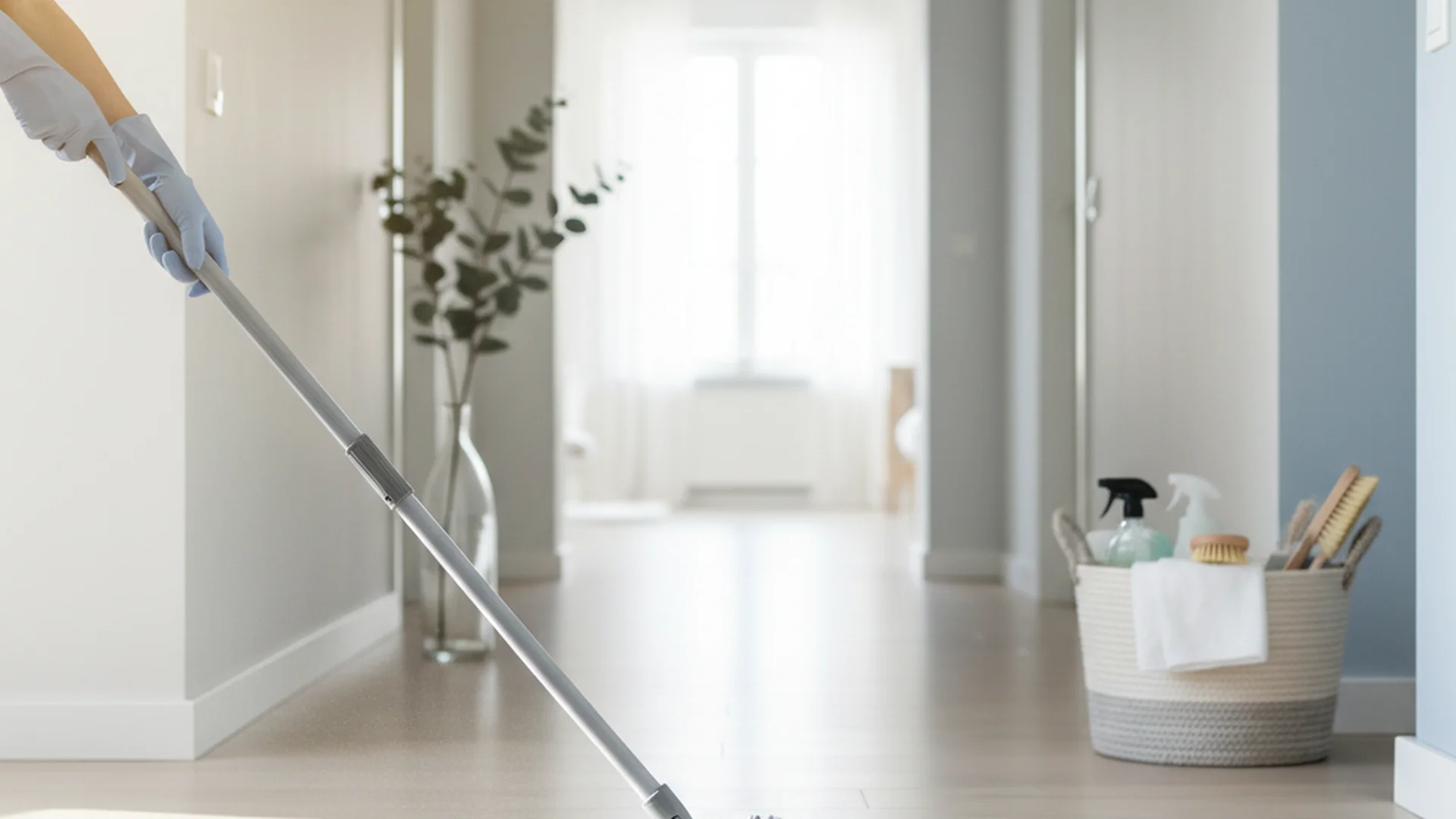
The hallway is the most overlooked yet vital part of your home. It serves as the transition point between the chaotic outside world and your personal sanctuary. However, guests form a lasting opinion of a home within seconds of stepping through the door. This means that if you want to make a statement, you must deep clean hallway spaces with the same rigor you apply to your kitchen or bathroom. Beyond aesthetics, the hallway acts as a biological "trap," collecting everything from street grime to dangerous pathogens before they can migrate into your living areas.
In this guide, we will explore the professional protocols required to restore your entryway to its peak condition, incorporating the latest 2025–2026 cleaning trends and eco-friendly practices.
The Science of the "First Impression" Zone
Why do we focus so much on the hallway? It isn't just about appearances. A worn pair of shoes carries an astonishing bacterial load on its soles. When you enter your home, the hallway is the primary recipient of E. coli, meningitis, and diarrheal diseases.
Furthermore, because hallways are often narrow and lack windows, air circulation is frequently poor. Indoor air is routinely more polluted than the air outside, and in the hallway this manifests as accumulated dust and allergens on baseboards and in carpet fibers. Every time someone walks through, these particles become airborne, lowering the overall air quality of your home.
Note: Deep cleaning your hallway doesn't just make it look better; it actively improves the health of your household by neutralizing the "bacteria trap" at your front door.
The Professional Strategy: Top-to-Bottom and Dry-to-Wet
Before you grab a mop, you need a plan. Professional cleaning consultants always follow two golden rules: the Top-to-Bottom Strategy and the Dry-to-Wet Rule.
- Top-to-Bottom: Gravity is your enemy or your friend. By starting at the ceiling corners and light fixtures, any dust or debris that falls will be captured during the later steps of cleaning walls and floors.
- Dry-to-Wet: Never apply liquid cleaners to a surface that hasn't been thoroughly dry-dusted or vacuumed. Adding water to thick dust creates a "sludge" that is significantly harder to remove and can actually push dirt deeper into porous surfaces like paint or wood grain.
Tip: Use a vacuum with a HEPA filter. In the narrow confines of a hallway, standard vacuums often exhaust fine dust back into the air. HEPA filtration ensures these micro-pollutants are trapped for good.
Your Hallway Deep Cleaning Checklist
To achieve a professional-grade result, follow this structured hallway deep cleaning checklist. This sequence is designed to maximize efficiency and ensure no corner is left untouched.
Step 1: Declutter and Prepare
Remove everything that isn't permanent. This includes shoe racks, coats, umbrellas, mail piles, and decorative items.
Success: Clearing the space completely allows you to see "hidden" grime in corners that are usually blocked by furniture.
Step 2: Ceilings, Corners, and Lighting
Using a long-handled duster or a vacuum attachment, clear away cobwebs from the corners of the ceiling. Wipe down light fixtures. In 2026, many homes utilize "Dopamine Decor"—bright, high-touch aesthetic fixtures. Ensure these are polished to maintain the "sparkle" that boosts your mood every time you walk through the door.
Step 3: Walls and Art
Dust the tops of picture frames and mirrors. For the walls themselves, look for scuff marks. The method you use depends entirely on your paint finish.
| Paint Finish | Cleaning Method | Warning |
|---|---|---|
| Matte/Flat | Dry microfiber or barely damp cloth | Avoid scrubbing; it creates shiny patches (burnishing). |
| Eggshell | Warm water and mild dish soap | Do not use abrasive sponges. |
| Semi-Gloss | Mild detergent or diluted vinegar | Safe for most gentle scrubbers. |
| Gloss | Glass cleaner or soap solution | Very durable; can handle more vigorous cleaning. |
Step 4: High-Touch Points
Disinfect doorknobs, deadbolts, and light switches. These are the most handled surfaces in your home and are hotbeds for germ transmission.
Warning: Do not spray liquid cleaners directly onto light switches. Spray the cloth first, then wipe, to prevent liquid from entering the electrical housing.
Step 5: The Baseboard Restoration
Baseboards in hallways take a beating from shoes and vacuum cleaners. Instead of a simple dusting, use the "Anti-Static Hack." Wipe them down with a mix of warm water and a drop of fabric softener. This cuts through the greasy film often found near floors and leaves behind an anti-static layer that repels future dust.
Step 6: Furniture and Storage
Empty your shoe cabinets and console drawers. Vacuum the interior of these units. In 2026, we see a rise in sustainable "refill" culture—this is a great time to replace old plastic air fresheners with glass diffusers or concentrated tablets.
Step 7: The "Dry" Floor Prep
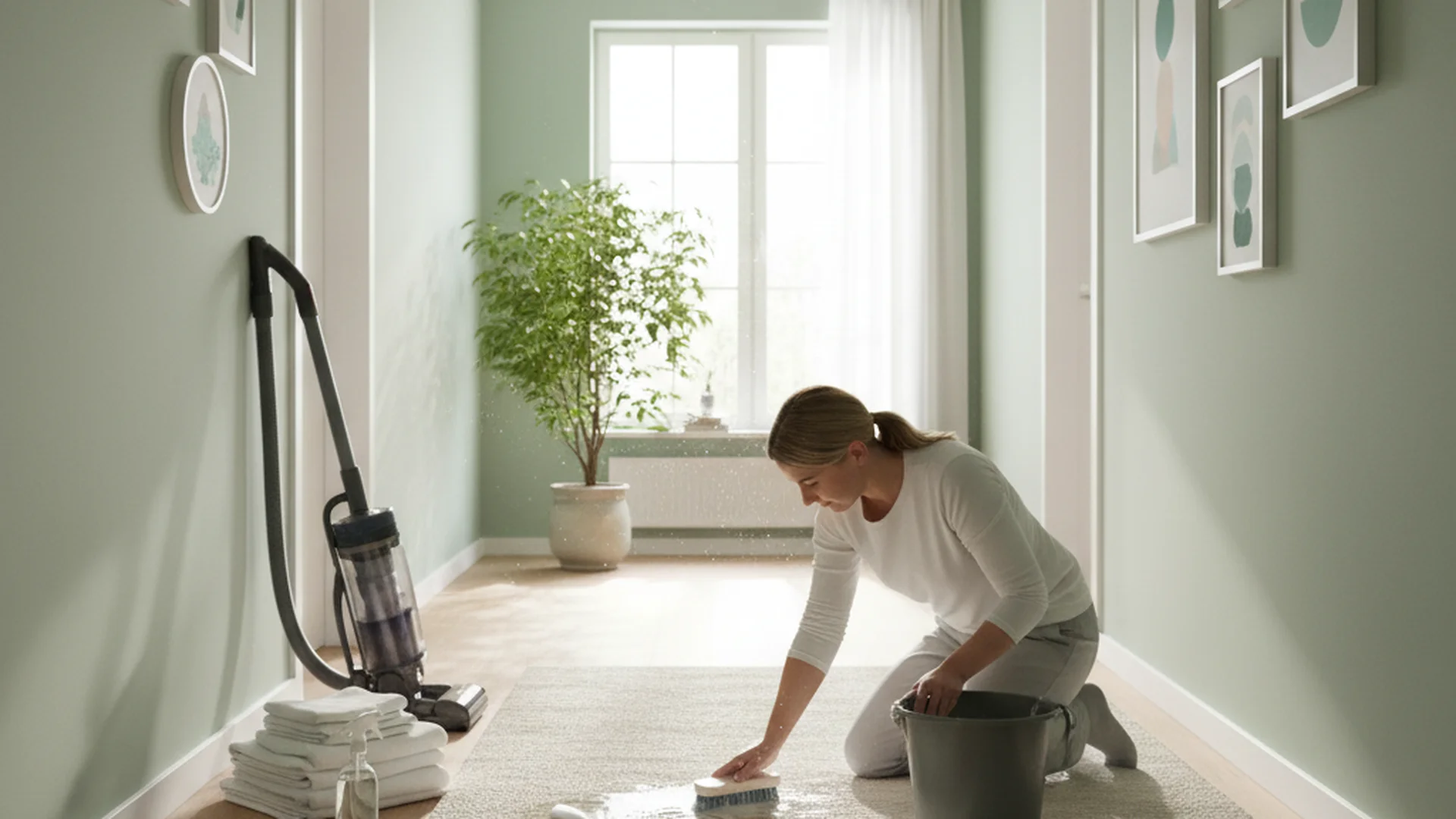
Vacuum the floor thoroughly. If you have a hallway runner, vacuum both the top and the underside. Dust and grit trapped under a rug can act like sandpaper against your hard flooring, causing permanent scratches over time.
Step 8: The Deep Floor Clean
This is where you address the "80/20 Rule of Flooring." Since 80% of floor wear happens in the high-traffic hallway lane, this area needs special attention.
- For Carpets: Decide between steam cleaning (best for allergens) or shampooing (best for physical stains).
- For Wood/Laminate: Use a damp—never soaking—mop.
Warning: Excess water is the leading cause of "cupping" or warping in wood and laminate floors. Always wring your mop until it is merely damp to the touch.
Step 9: Finishing Touches and Wellness Scenting
Clean the inside and outside of your front door. Finally, introduce a "Wellness-Driven Scent." The 2026 trend is shifting toward "Cozy Nostalgia" (saffron and warm woods) or "Functional Wellness" (citrus-mint blends). These scents are designed to energize you as you arrive home.
Real-World Examples of Hallway Restoration
Example 1: The Busy Family Entry
A family of four with two dogs noticed their hallway always felt "grimy" despite weekly vacuuming. By implementing a deep clean built around the bacteria that shoes carry indoors, they moved to a "shoes-off" policy and used a steam cleaner on their tile grout. The result was a measurable reduction in seasonal allergies for the children.
Example 2: The Modern Apartment
An urban dweller with matte-painted walls tried to use a "magic eraser" on scuffs near the coat rack. This resulted in unsightly shiny spots. After learning about paint finishes, they switched to a dedicated matte-safe cleaner and used "Functional Wellness" scents to mask the stale air common in high-rise corridors.
Example 3: The Historic Home
A homeowner with original 1920s hardwood floors was worried about wear and tear. By applying the "80/20 Rule," they focused their deep cleaning on the central "lane" of the hallway and used a pH-neutral wood soap. They added a high-quality runner with a non-slip pad to prevent the "sandpaper effect" of grit, extending the life of the historic wood by years.
Common Mistakes to Avoid
- Over-Saturating Wood Floors: As mentioned, water is the enemy of wood. Never leave standing water on your hallway floor.
- The One-Product Fallacy: You cannot clean a mirror, a brass handle, and a wooden floor with the same "all-purpose" spray. Mirrors require alcohol-based cleaners for a streak-free finish, while wood requires pH-neutral solutions to avoid stripping the finish.
- Neglecting the "High-Touch" Zone: Many people spend hours on the floor but forget the wall area around the light switch, which often carries a visible layer of skin oils and bacteria.
- Using Abrasives on Matte Paint: This is a permanent mistake. Scrubbing matte paint changes the texture of the surface, creating a "burnished" look that cannot be undone without repainting the entire wall.
Frequently Asked Questions
How often should I deep clean my hallway?
What is the best way to remove scuff marks from hallway walls?
Should I steam clean or shampoo my hallway runner?
How do I stop my hallway from smelling "stale"?
Conclusion
Deep cleaning your hallway is more than just a chore; it is an investment in your home’s health and your guests' first impressions. By following a structured hallway deep cleaning checklist and respecting the specific needs of your surfaces—from matte paint to hardwood floors—you can create a transition space that is both beautiful and hygienic. Remember to work top-to-bottom, keep your mops damp rather than soaking, and don't forget those high-touch points where germs love to hide.
Success: A clean hallway reduces the amount of dirt tracked into the rest of your home by up to 60%, making every other cleaning task easier.
Cleaning that keeps score
Every task earns points, every streak multiplies them, and Premium adds a household leaderboard plus a monthly Dustagorgon to beat.
- Free forever
- 30 badges to earn
- Up to 6 in a household
No card needed. Set up your rooms in a couple of minutes.