In this article
What you’ll learn
- Entryways are the primary source of indoor contaminants, including 421,000 units of bacteria per shoe.
- A dual-mat system and a "no-shoes" policy are essential for long-term home health.
- Follow the top-to-bottom rule and 2026 "Entry Shield" trends for a professional-grade clean.
Your entryway is more than just a transition space; it is the primary frontline of your home’s health and your mental well-being. To properly deep clean entryway areas, you must look past the surface-level clutter and address the invisible "bacteria highway" that enters your home every time the door opens. Whether you are dealing with a cramped apartment foyer or an expansive mudroom, a strategic deep clean ensures that the outside world stays exactly where it belongs—outside.
In this guide, we will explore the science of entryway hygiene, the latest 2026 organizational trends, and a comprehensive checklist to transform your "landing strip" into a pristine sanctuary.
The Science of the "Bacteria Highway"
Before we pick up a mop, it is vital to understand why the entryway requires more than a simple sweep. Research from the University of Arizona has revealed staggering data: the average shoe sole carries approximately 421,000 units of bacteria. Among these, E. coli was found on 27% of shoes, indicating frequent contact with fecal matter from the streets.
Even more concerning is the transfer rate. When you walk indoors with shoes on, 90% to 99% of that bacteria transfers instantly to your floors. Furthermore, approximately 30% to 40% of all indoor contaminants, including lead dust, pesticides, and pollen, are tracked in from outdoors.
By committing to a deep clean entryway routine, you aren't just tidying up; you are performing a critical health intervention for your family.
Warning: Beyond common bacteria, shoes track in "forever chemicals" (PFAS) and toxins from asphalt that are notoriously difficult to remove with standard vacuuming alone.
The 2026 "Entry Shield" Concept
In 2025 and 2026, the trend for entryways has shifted from simple storage to the "Entry Shield" or "Mudroom Lite" concept. This approach treats the foyer as a dedicated sanitation zone.
Modern "Entry Shields" often incorporate:
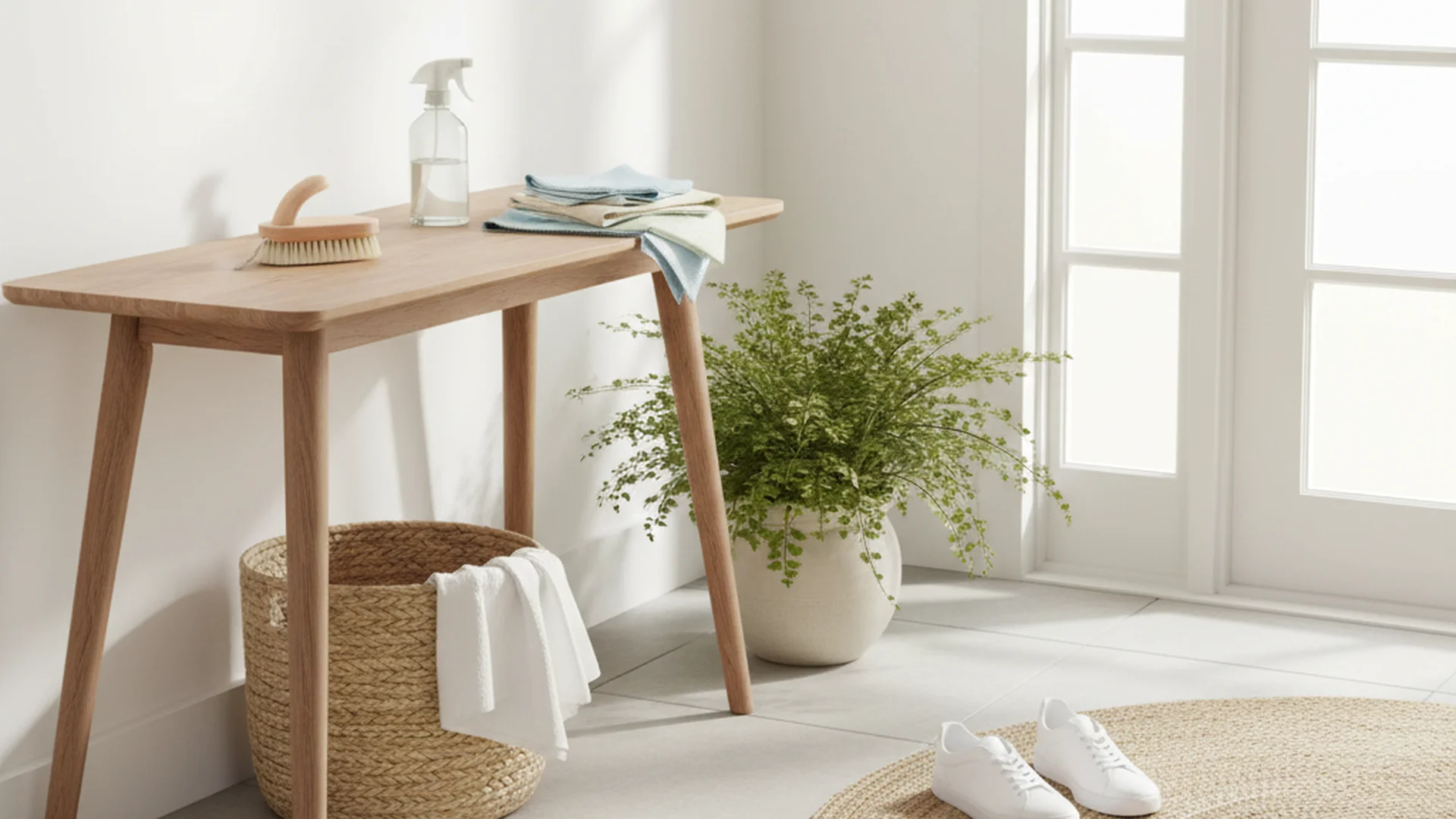
- Built-in Air Purifiers: Many homeowners are now choosing air purifiers disguised as high-end decor or integrated into console tables to capture airborne pollutants the moment the door opens.
- Antimicrobial Surfaces: From copper-infused hardware to silver-ion cabinet finishes, the 2026 entryway is designed to kill germs on contact.
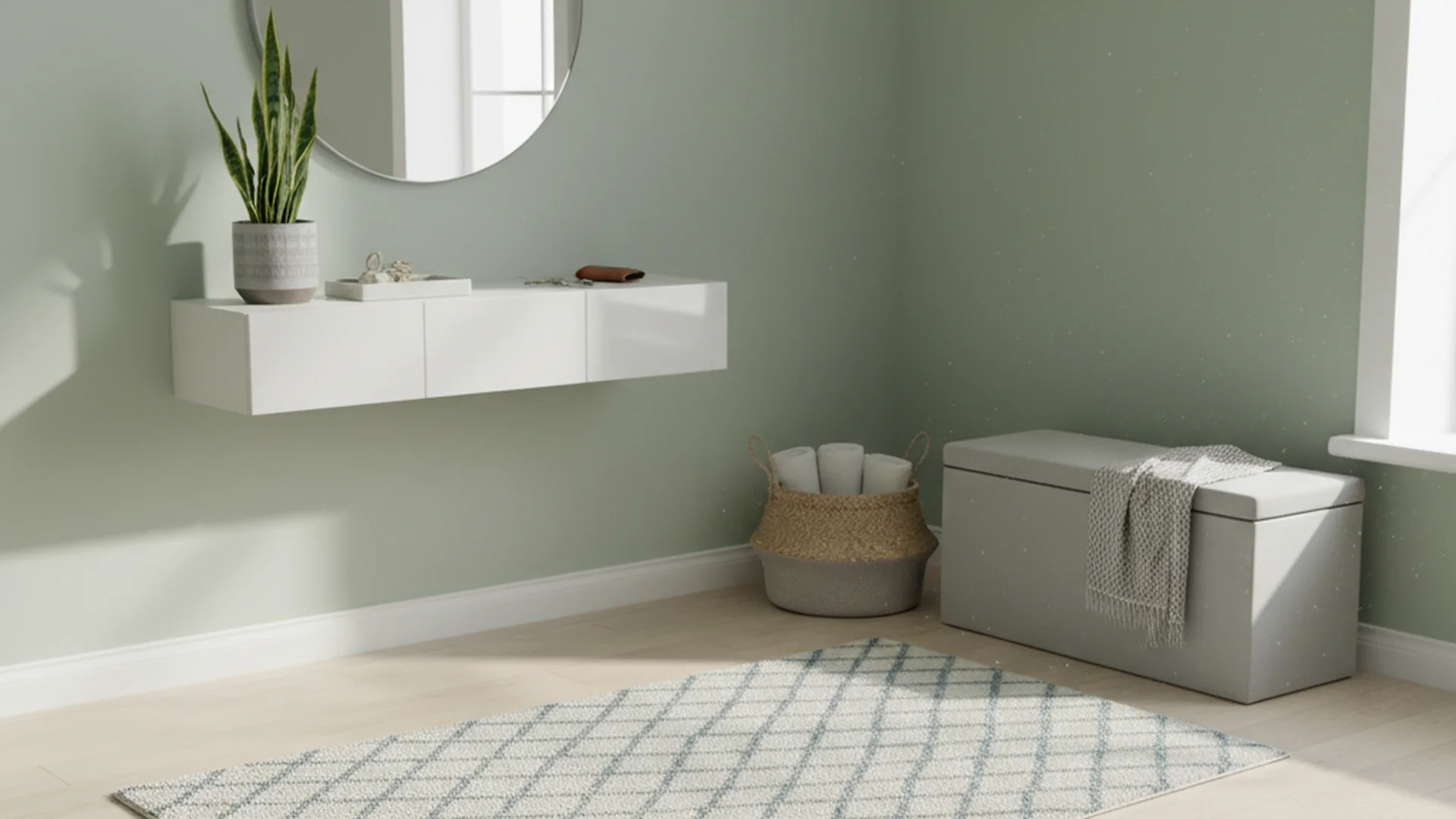
- Grounding Aesthetics: Deep cleaning is now paired with "refreshing" the space using biophilic colors like soft sages, misty blues, and warm terracottas to reduce cortisol levels immediately upon arrival.
Comprehensive Entryway Deep Cleaning Checklist
To ensure no corner is left untouched, follow the "Top-to-Bottom" rule. This prevents dust and debris from falling onto surfaces you have already sanitized.
1. Ceilings, Corners, and Lighting
Start at the very top. Use a long-handled duster or a microfiber cloth to remove cobwebs and dust from the ceiling and crown molding. If you have a hanging light fixture or chandelier, now is the time to wipe down each individual bulb and glass element. Dust on light fixtures can dim the brightness of your entry, contributing to "mess blindness."
2. The Door: The Forgotten Zone
Most people clean their floors but ignore the door itself.
- The Top Ledge: Run a damp cloth along the top ledge of the door frame. This is a massive dust trap that recirculates allergens every time the door swings.
- The Panels: Wipe down both the interior and exterior sides of the door with a mild detergent.
- Hardware: Use an EPA-approved disinfectant on doorknobs, deadbolts, and handles. In 2026, we also recommend sanitizing any "command center" touchscreens or smart home panels.
3. Wall Treatment and Baseboards
Entryway walls suffer from scuff marks and "hand prints" from people leaning while taking off shoes.
- Wall Refresh: Use a damp microfiber flat mop to clean large wall surfaces quickly. This 2026 pro-tip saves your back and covers more ground than hand-wiping.
- Baseboards: Dust first, then wipe with warm, soapy water.
Tip: Use a dryer sheet on your baseboards after cleaning. The anti-static properties will help repel future dust, keeping them cleaner for longer.
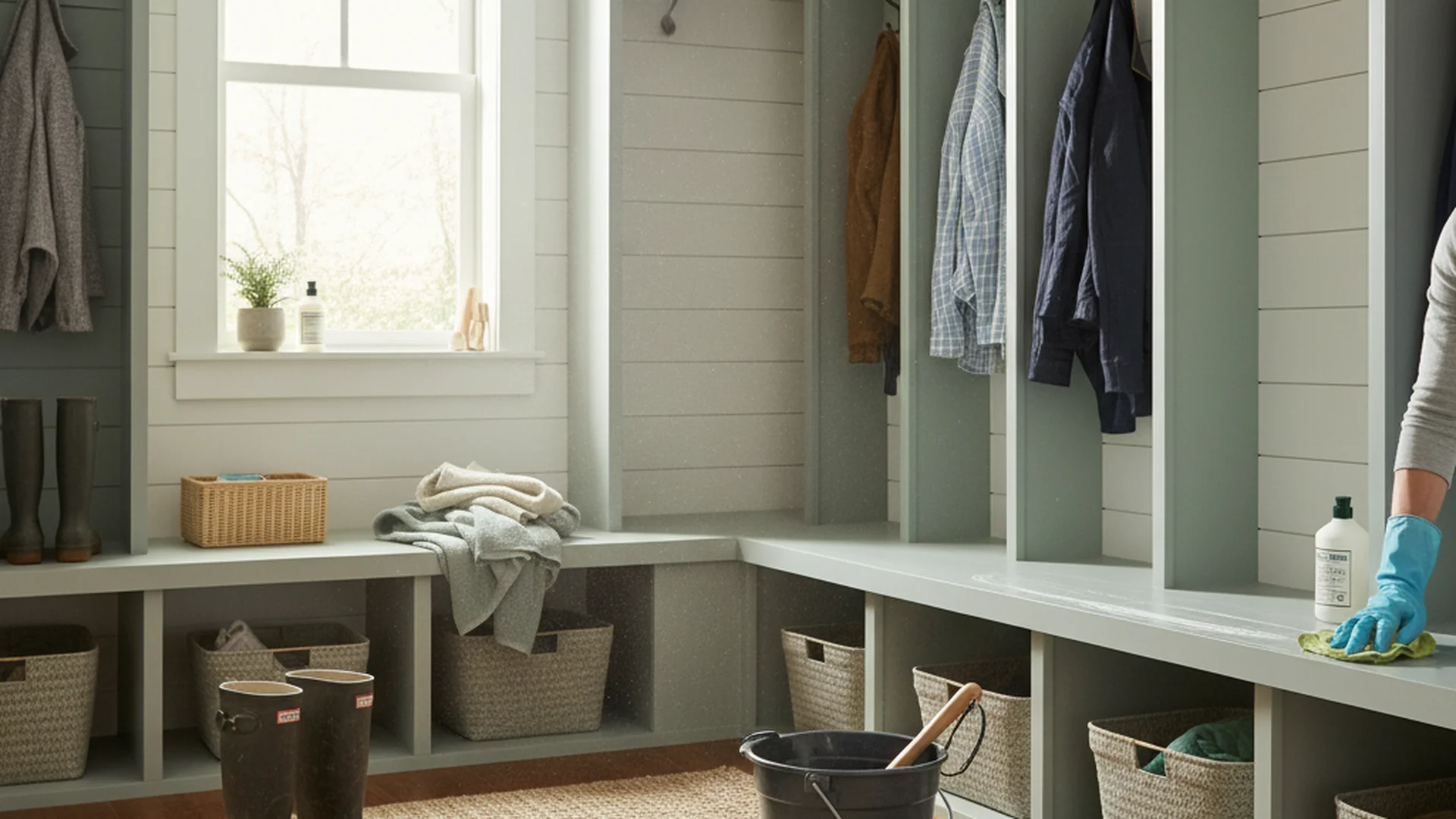
4. Furniture and Storage Deep Dive
Empty every shoe rack, coat hook, and basket.
- Vacuum the Voids: Vacuum the shoe rack itself and the floor underneath it.
- Sanitize Containers: If you use wicker baskets or bins, take them outside and shake them out. Wipe down plastic or wood bins with a vinegar-based solution to kill odor-causing fungi.
5. Floor Deep Clean
The final step is the most labor-intensive.
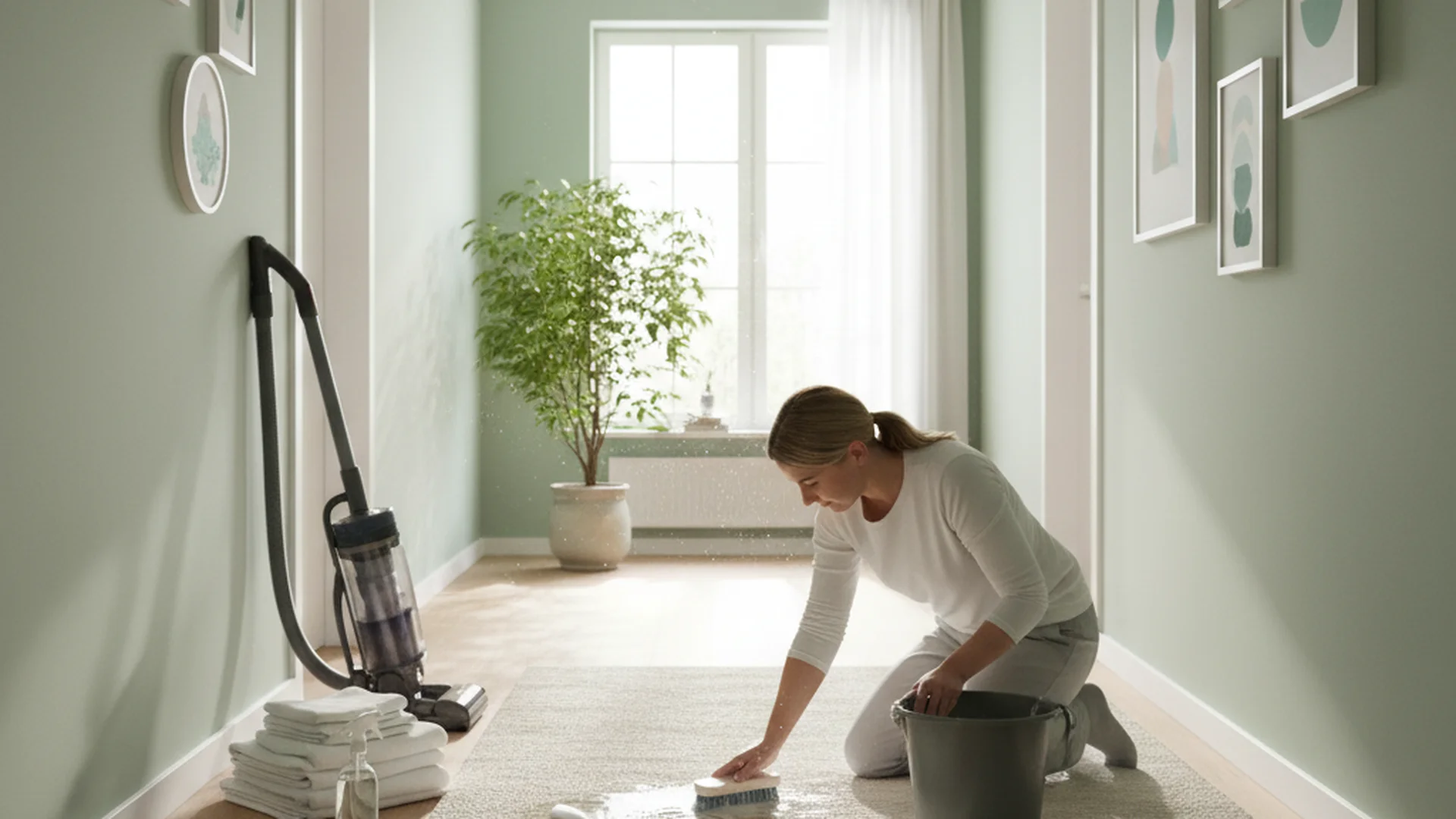
- Sweep and HEPA Vacuum: Use a vacuum with a HEPA filter to ensure you are actually capturing small particles like pollen and lead dust rather than blowing them back into the air.
- Mopping: Use a mop appropriate for your floor type. For tile, a diluted vinegar solution works wonders; for hardwood, use a specialized pH-neutral wood cleaner.
| Flooring Type | Recommended Cleaning Agent | Tool |
|---|---|---|
| Hardwood | pH-Neutral Wood Soap | Microfiber Mop |
| Ceramic Tile | Water + White Vinegar | Steam Mop or String Mop |
| Luxury Vinyl | LVP-Specific Cleaner | Damp Flat Mop |
| Natural Stone | Stone-Specific Sealer/Soap | Soft Cloth/Mop |
Real-World Examples of Entryway Success
Example 1: The "Dual-Mat" System in Action
A family of four in a rainy climate found that their carpets were constantly stained with mud. By implementing the "Dual-Mat" system—a heavy-duty scraper mat outside and a high-absorbency microfiber mat inside—they reduced the amount of dirt entering the main living areas by over 80%. The scraper mat removes the "big" debris, while the interior mat captures the fine moisture and bacteria.
Example 2: The Sunday Butterfly Method
A busy professional who felt overwhelmed by "mess blindness" adopted the "Sunday Butterfly" method. Instead of a rigid, two-hour cleaning block, she "floats" through the entryway every Sunday morning. She puts away stray keys, wipes one section of the wall, and clears the mail pile as she sees it. This reduces the cortisol spike of a cluttered entry and makes the quarterly deep clean much faster.
Example 3: Maximizing Small Spaces
A studio apartment dweller utilized 2026's magnetic storage trend. By attaching heavy-duty magnetic containers to her metal front door, she moved her keys, sunglasses, and mail off her small console table. This made deep cleaning the table's surface a 10-second task rather than a 10-minute reorganization project.
Common Mistakes to Avoid
- Mistake: Using a single doormat. A single mat quickly becomes saturated. Professionals always recommend the "dual-mat" standard to effectively trap contaminants.
- Mistake: Ignoring the "Dust Landing Strip." People often forget the tops of picture frames and the inner grooves of the door's molding. These areas hold dust that is disturbed by the air pressure of the door opening and closing.
- Misconception: "My rug is clean because I vacuumed it." Entryway rugs trap deep-seated grit that acts like sandpaper on the fibers. Once a season, take the rug outside to beat it or use a professional steam cleaner.
- Mistake: Over-reliance on "Open Storage." While open shoe racks are convenient, they contribute to "visual noise." The 2026 trend favors closed cabinetry to hide the mess and prevent dust from settling on the shoes themselves.
- Mistake: Sizing the rug incorrectly. An "island rug" (one that is too small for the space) looks cluttered and doesn't capture enough footsteps to be effective. Ensure your rug is wider than the door and covers the primary traffic path.
Note: If you use sustainable materials like bamboo, water hyacinth, or recycled wood for your organization, avoid harsh chemical cleaners. These materials are porous and can be damaged by bleach or heavy solvents.
Frequently Asked Questions
How often should I deep clean my entryway?
What is the best way to clean a doormat?
Is a "no-shoes" policy actually necessary?
How do I get rid of the "shoe smell" in the entryway?
Conclusion
A deep clean entryway is the foundation of a healthy, low-stress home. By following a top-to-bottom approach and addressing the "bacteria highway" with a dual-mat system, you create a barrier that protects your family from outdoor contaminants. Remember that the entryway is the first thing you see when you return home—keeping it clean is an act of self-care that lowers your cortisol and welcomes you into a sanctuary of your own making.
Success: Following this quarterly guide will extend the life of your flooring, improve your indoor air quality, and ensure your home makes a perfect first impression every time.
Cleaning that keeps score
Every task earns points, every streak multiplies them, and Premium adds a household leaderboard plus a monthly Dustagorgon to beat.
- Free forever
- 30 badges to earn
- Up to 6 in a household
No card needed. Set up your rooms in a couple of minutes.