In this article
What you’ll learn
- Deep cleaning cuts down the dust and dander that drive respiratory issues.
- Always use the Top-to-Bottom and Dry-to-Wet cleaning methodology.
- A bedroom deep clean is a vital component of a modern wellness routine.
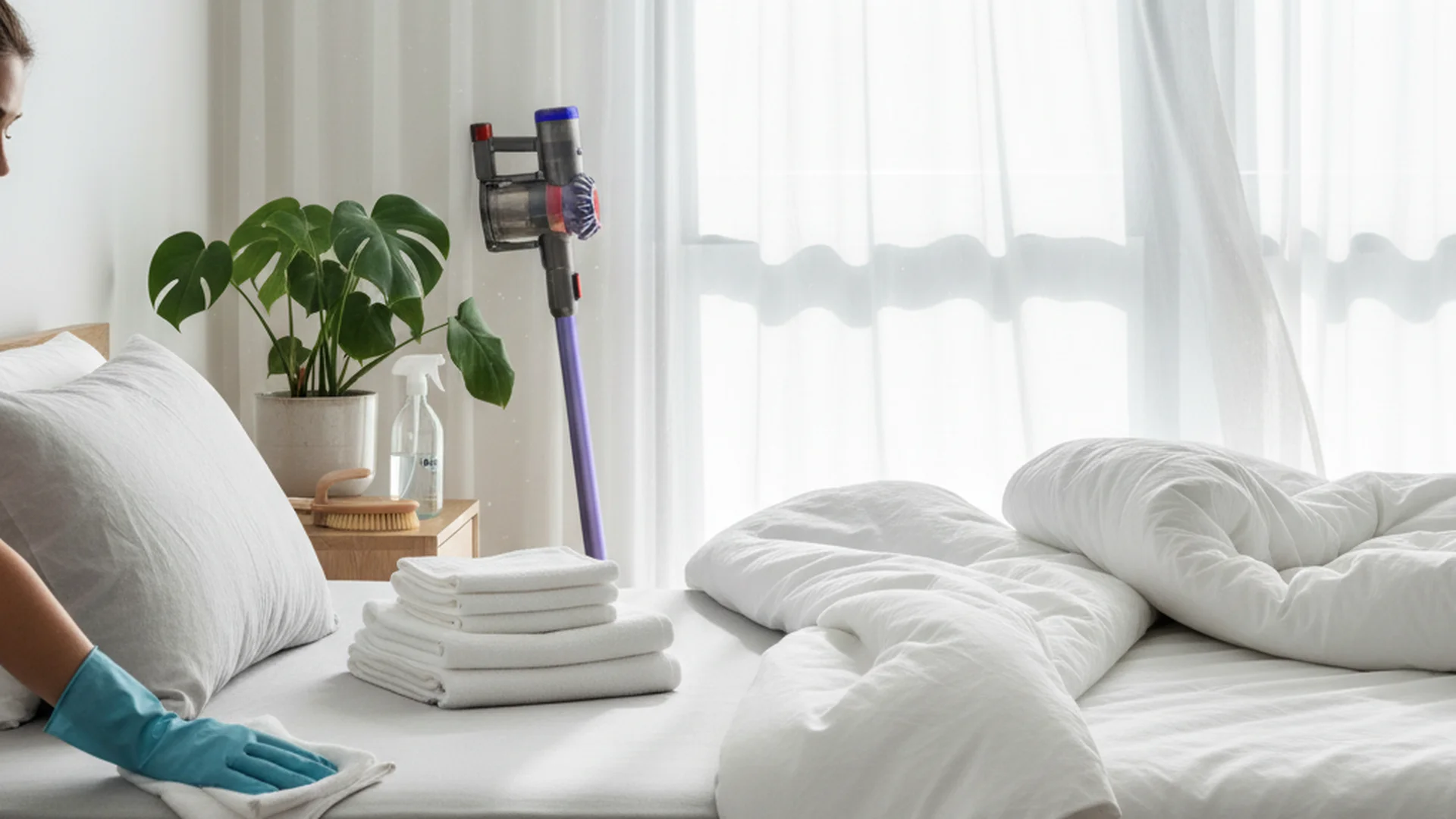
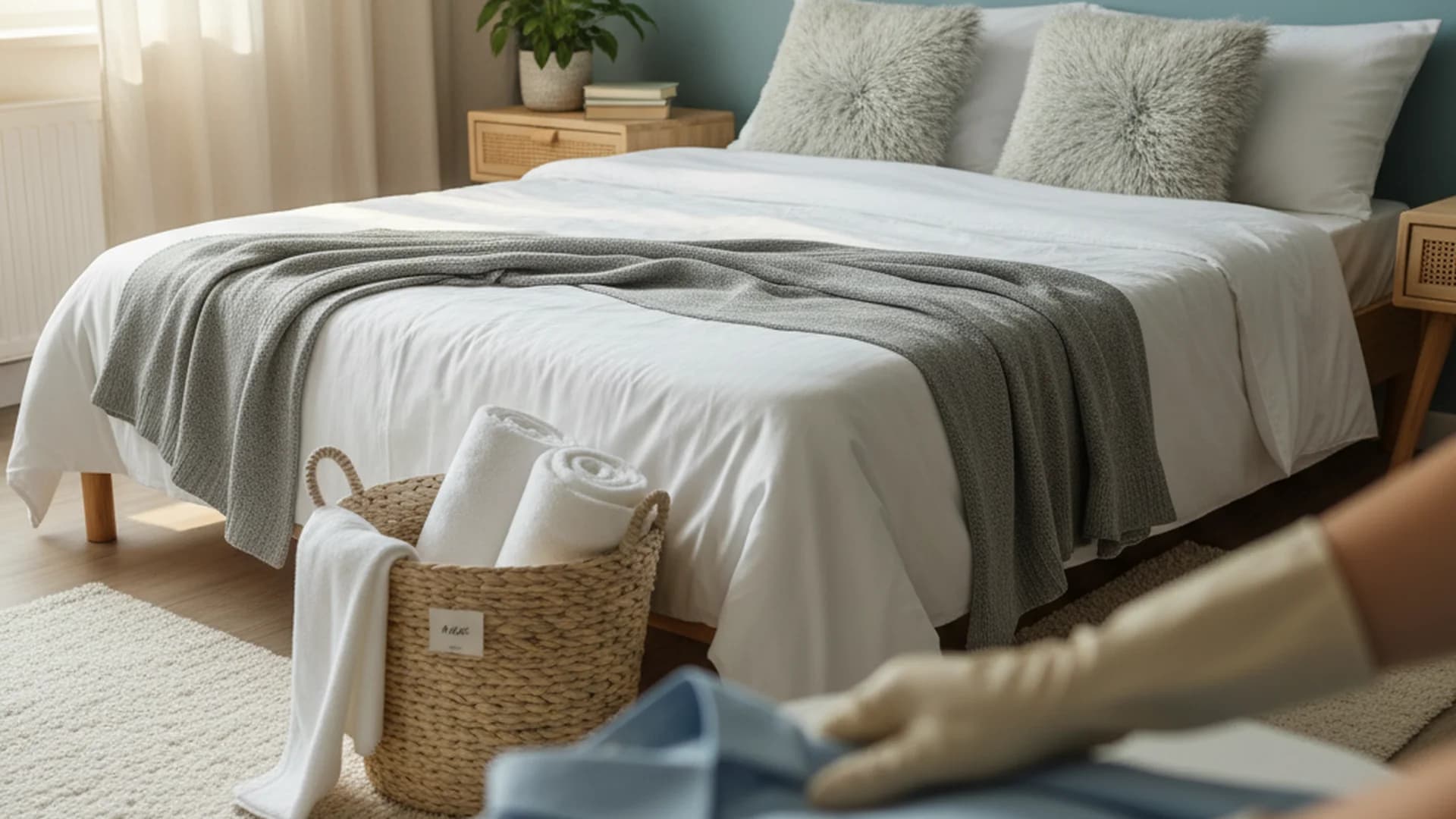
In the fast-paced landscape of 2025 and 2026, the bedroom has evolved from a simple sleeping area into a vital "wellness sanctuary." However, maintaining this sanctuary requires more than just making the bed or occasionally vacuuming the rug. To truly reap the benefits of restorative sleep and mental clarity, you must perform a comprehensive deep clean bedroom routine. Your environment directly impacts your physical health; a cluttered or dusty room can spike cortisol levels and disrupt respiratory patterns. This guide provides a professional-grade roadmap to reclaiming your space and your health.
The Science of a Clean Sleeping Environment
Deep cleaning is no longer just about aesthetics; it is a fundamental pillar of "wellness-oriented living." Living in a cluttered, unkempt environment keeps cortisol (the body’s primary stress hormone) elevated. When you deep clean bedroom surfaces, you aren't just removing dirt; you are actively lowering your physiological stress response.
Furthermore, the indoor air quality in our homes is often significantly worse than the air outside. In the bedroom, where we spend roughly one-third of our lives, this pollution manifests as dust mites, pet dander, and mold. Following a rigorous bedroom deep cleaning checklist strips out a great deal of what causes respiratory trouble.
Success: People who make their beds every morning and maintain a clean room tend to sleep better, and they notice it.
Essential Tools and Supplies for 2025
Before you begin, gathering the right tools is essential for efficiency. In 2025, the focus has shifted toward high-efficiency equipment and eco-friendly solutions.
| Tool/Supply | Purpose | Recommendation |
|---|---|---|
| HEPA-Filter Vacuum | Allergen removal | Use a vacuum with a sealed system |
| Microfiber Cloths | Dust capture | Traps 99% of bacteria and dust |
| Enzyme Cleaner | Stain removal | Great for mattress spot-cleaning |
| Baking Soda | Deodorizing | Natural and VOC-free |
| Vinegar/Water Solution | Windows/Mirrors | 1:1 ratio for streak-free finish |
| Extension Duster | High areas | For ceiling fans and "The Fifth Wall" |
Note: Professional cleaners overwhelmingly favour microfiber cloths over paper towels, because they trap dust particles rather than simply spreading them around the room.
The Professional Methodology: Top-to-Bottom
The most common mistake people make is cleaning in a random order. Use the "Top-to-Bottom" and "Dry-to-Wet" approach instead. This ensures that any dust or debris dislodged from high surfaces (like ceiling fans) falls onto the floor before the floor is cleaned. If you vacuum first and then dust your shelves, you will simply have to vacuum again.
Step 1: The Mental and Physical Declutter
You cannot clean clutter; you can only move it. Start by clearing every surface. Remove books from nightstands, clothes from the "laundry chair," and items from under the bed.
- The Three-Box Method: Use boxes labeled "Keep," "Donate," and "Relocate."
- Surface Clearance: Clear off dressers and vanities entirely so you can reach the corners.
Tip: Decluttering your nightstand of electronics and excess items can significantly reduce pre-sleep anxiety.
Step 2: Laundering and Textiles
Strip your bed completely. This includes the mattress protector, pillow protectors, and even the curtains if they are machine-washable.
- High-Heat Wash: Wash bedding in the hottest water safe for the fabric to kill dust mites.
- Pillow Care: Most pillows are machine washable; wash two at a time to keep the machine balanced.
- Curtains: Use a vacuum attachment for heavy drapes or launder light shears.
Warning: Check the care labels on weighted blankets or silk sheets, as these often require specialized dry cleaning or low-heat settings.
Step 3: High Dusting and the "Fifth Wall"
The "Fifth Wall" refers to your ceiling. It is the primary source of "recycled dust" that falls onto your bed throughout the day.
- Ceiling Fans: Use an old pillowcase to slide over the fan blades; this traps the dust inside the bag instead of letting it fall on your face.
- Corners: Use a microfiber duster to remove cobwebs from corners and crown molding.
- Light Fixtures: Wipe down bulbs and glass globes. Dust on bulbs can reduce light output and create a "burnt dust" smell.
Step 4: The Mattress Reset
A typical home generates about 4 pounds of dust per year, much of which settles into your mattress.
- Vacuum: Use the upholstery attachment to vacuum the entire surface, including the sides and seams.
- Deodorize: Sprinkle a generous layer of baking soda over the mattress. Let it sit for at least 30 minutes (2 hours is better) to absorb odors and moisture.
- Spot Clean: Use an enzyme cleaner for any yellowing or stains, but be careful not to over-saturate the foam.
- Rotate: Unless you have a one-sided pillow-top, rotate the mattress 180 degrees to prevent sagging.
Step 5: Windows, Mirrors, and Glass
In 2025, we avoid heavy chemicals that release Volatile Organic Compounds (VOCs) into our sleeping air.
- The Solution: Use a 1:1 mix of white vinegar and distilled water.
- The Technique: Use a microfiber cloth for the glass and an old toothbrush for the window tracks. Dust and grime often hide in the tracks, leading to mold growth during humid months.
Success: Clean windows and mirrors increase the "Sense-scaping" value of a room by reflecting natural light more efficiently.
Step 6: Surface Polishing and High-Touch Points
Now, move to your furniture. Wipe down the inside of drawers (which often collect lint) and the tops of dressers.
- Sanitize: Use a gentle disinfectant on high-touch points: light switches, door handles, and remote controls. These areas harbor 90% of household pathogens.
- Furniture Polish: Use a natural beeswax or wood oil for wooden furniture to prevent cracking and dulling.
Step 7: Low Cleaning and Baseboards
Baseboards are the most neglected part of a bedroom deep clean.
- The Wipe Down: Use a damp microfiber cloth to wipe the dust from baseboards.
- Under the Bed: Move the bed if possible. If not, use a long-reach vacuum attachment. A manual deep-reach session is required here, as robotic vacuums often miss the tight corners and edges where "dust bunnies" thrive.
Step 8: Floor Care and Air Refresh
The final step is the floor.
- Edge Cleaning: Use the crevice tool of your vacuum to go around the entire perimeter of the room where the carpet meets the wall.
- Mopping: If you have hard floors, mop with a damp (not soaking) mop.
- Air Quality: Replace your HVAC filter. If you have a window unit, clean the coils. In 2025, professional "coil cleaning" every two years is recommended to prevent "sludge" buildup that causes odors.
Tip: Open your windows for 15 minutes during and after cleaning. This allows airborne dust to escape and introduces fresh oxygen into the space.
Real-World Examples: Deep Cleaning in Action
Example 1: The Allergy Sufferer’s Protocol
Sarah, a marketing executive with severe seasonal allergies, noticed her symptoms worsened at night. By implementing a bedroom deep cleaning checklist every three months—specifically focusing on steam-cleaning her curtains and using a HEPA-filter vacuum on her mattress—her nighttime sneezing dropped away almost entirely. She also switched from synthetic air fresheners to a HEPA air purifier, achieving a "scent-neutral" environment.
Example 2: The Tech-Forward Minimalist
James, a Gen Z software developer, uses a robotic vacuum daily but realized it was missing the "hidden" dust. During his semi-annual deep clean, he discovered four pounds of dust and debris behind his headboard and under his heavy desk. By moving his furniture and performing a manual "low clean," he eliminated the musty smell that his robot vacuum couldn't reach.
Example 3: The Seasonal Reset
A family in a humid climate performs a "Post-Summer Reset." They focus on cleaning the "sludge" from their AC unit coils and using baking soda to pull moisture and odors out of their mattresses after a long, humid summer. This prevents mold growth and ensures the air remains healthy for the winter months.
Common Mistakes to Avoid
- Vacuuming First: As mentioned, always work top-to-bottom. If you vacuum first, you'll have to do it again after dusting the ceiling fan.
- Overusing Chemicals: Using too much cleaning product leaves a sticky residue. This residue actually attracts more dust and dirt in the long run. Follow the "less is more" rule.
- Forgetting the "Fifth Wall": Ignoring the ceiling and fans means you are constantly breathing in recycled dust that falls onto your pillows.
- Relying Solely on Robots: Robotic vacuums are maintenance tools, not deep cleaning tools. They cannot reach baseboards, corners, or deep under furniture.
- Masking Odors: Using synthetic sprays or candles to "clean" the air. Real cleanliness is scent-neutral. Use ventilation and natural deodorizers like baking soda instead.
Recent Trends (2025-2026)
Sense-scaping
Modern deep cleaning now incorporates "sense-scaping"—the art of creating a sensory environment that promotes sleep. This involves using natural essential oils like lavender or eucalyptus during the final wipe-down instead of synthetic "linen" scents. It’s about how the room feels and smells naturally.
Color Capping Maintenance
A 2026 design trend involves "color capping" (painting ceilings in tonal shades). This requires specific dusting techniques using soft-bristled attachments to prevent "color dulling" caused by cobwebs and microscopic dust layers that can make vibrant ceilings look grey over time.
Eco-Automation vs. Manual Reach
While robotic vacuums have become far more common, the 2025 trend is "Hybrid Cleaning." This is the practice of using automation for daily maintenance but scheduling manual, deep-reach sessions to ensure the "unseen" areas (behind the headboard, inside the vents) are addressed.
Frequently Asked Questions
What order should I clean my bedroom in?
How often should I deep clean?
How do I deep clean a mattress?
Is professional deep cleaning worth it?
Why does my room still feel "stuffy" after cleaning?
Conclusion
Deep cleaning your bedroom is an investment in your physical health and mental clarity. By following a structured bedroom deep cleaning checklist, you move beyond surface-level tidying and address the hidden allergens and stressors that impact your daily life. From the "Fifth Wall" to the baseboards, every step contributes to a "wellness sanctuary" that supports restorative sleep.
Success: Following this guide consistently will keep your bedroom hygienic, reduce your stress levels, and significantly improve your indoor air quality for 2025 and beyond.
Cleaning that keeps score
Every task earns points, every streak multiplies them, and Premium adds a household leaderboard plus a monthly Dustagorgon to beat.
- Free forever
- 30 badges to earn
- Up to 6 in a household
No card needed. Set up your rooms in a couple of minutes.