In this article
What you’ll learn
- Hygge cleaning prioritizes atmosphere and emotional well-being over sterile perfection.
- Simple rituals like "airing out" and setting the mood genuinely take the edge off stress.
- Modern trends for 2026 emphasize microbiome-friendly cleaning and social "body doubling."
Over a lifetime, household chores swallow the better part of two years. For many, this time is seen as a relentless cycle of drudgery and exhaustion. However, the Danish concept of hygge cleaning (pronounced hoo-guh) offers a radical shift in perspective. Instead of viewing cleaning as a chore to be completed as quickly as possible, hygge cleaning transforms it into a mindful ritual of self-care and environmental nurturing. By focusing on the atmosphere, experience, and emotional well-being of the inhabitants, you can turn your home maintenance into a source of peace rather than a source of stress.
Hygge Cleaning Explained: More Than Just Tidying
To truly understand hygge cleaning explained, one must look beyond the bucket and mop. Hygge is a Danish word that lacks a direct English translation but roughly equates to a sense of coziness, contentment, and well-being found in simple things. In the context of cleaning, this means "caring for the nest." It is the difference between disinfecting a surface because you fear germs and wiping down a table because you want to create a beautiful, smooth space for your family to gather.
In Denmark, household equality is a cornerstone of this philosophy. Danish men are known across Europe for pulling their weight at home. This isn't just about fairness; it’s about the hygge principle of Equality. When everyone contributes to the home’s comfort, the burden is shared, and the collective appreciation for the "nest" grows.
Note: Hygge is not about achieving a sterile, museum-like environment. It is about "peace over perfection," prioritizing a lived-in warmth over a catalog-ready aesthetic.
How to Use Hygge Cleaning in Your Daily Life
If you are wondering how to use hygge cleaning to improve your mental health, the secret lies in the ritual. An organized, clean space leaves you calmer and better able to focus. By following a structured, sensory-focused ritual, you can achieve these benefits while actually enjoying the process.
Step 1: Set the Mood Before You Begin
In traditional cleaning, we often jump straight into the mess, fueled by frustration. In hygge cleaning, the preparation is just as important as the execution. Before you pick up a cloth, change into your hygge-bukser (your favorite comfortable lounge pants). Light a candle to provide a warm, flickering glow, and put on a calming playlist or a favorite podcast. This signals to your brain that this is a period of "me-time" rather than a period of "work."
Step 2: The Art of "Udluftning" (Airing Out)
Airing out the home is a national obsession in Denmark. Even in the depths of winter, Danes will open their windows for 5–10 minutes. This practice, known as udluftning, is essential for removing "stale" energy and refreshing the indoor air quality. It’s a sensory reset that makes the home feel alive and connected to the natural world.
Step 3: Slow Cleaning and Sensory Engagement
Instead of rushing to finish, focus on the tactile experience. Feel the warmth of the water on your hands. Notice the way a wooden brush moves across a surface. By slowing down, you turn a mindless task into a meditative practice. This "Slow Cleaning" movement encourages you to stay present in the moment, which significantly reduces anxiety and prevents the feeling of being overwhelmed.
Tip: Use the "One-Minute Rule" from Danish life designer Lena Bentsen: If a task takes less than a minute (like hanging up a coat or rinsing a mug), do it immediately. This prevents "visual noise" from accumulating and keeps your hygge-zone peaceful.
Essential Tools for the Hygge Cleaner
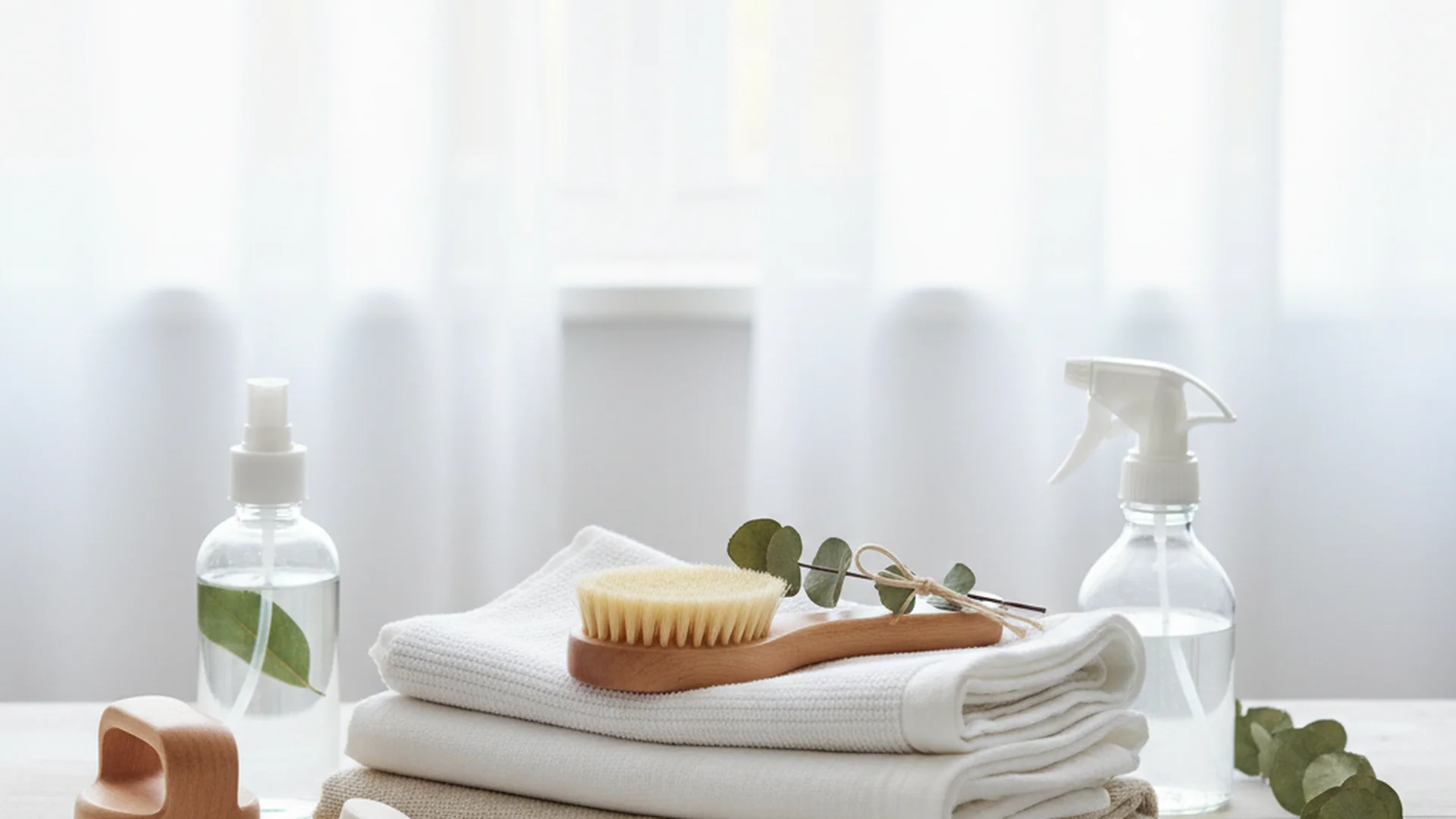
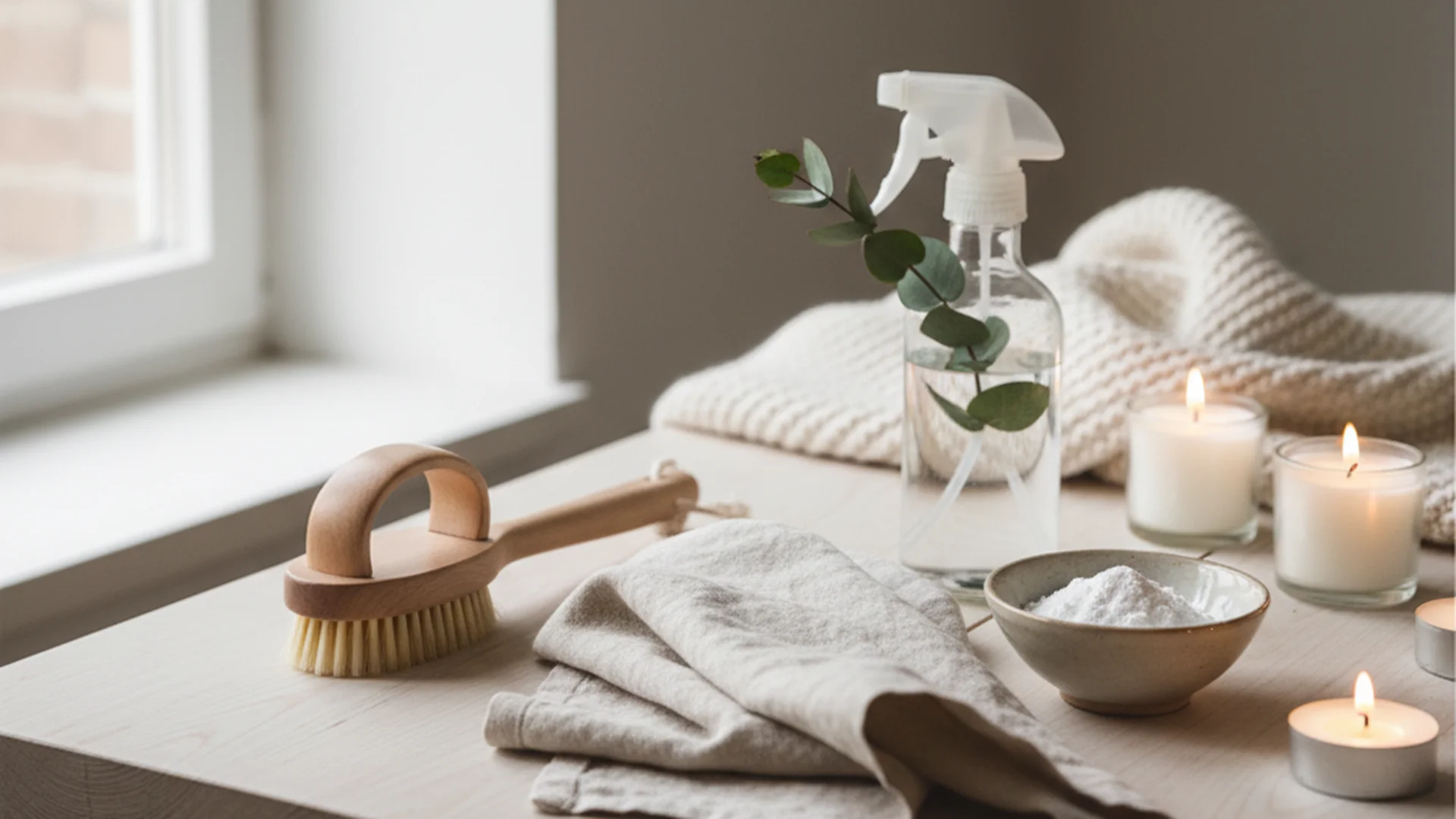
The tools you use can either enhance or detract from the hygge experience. Using broken vacuums or foul-smelling chemicals creates "friction" and stress. Hygge cleaning favors simple, high-quality, and sustainable tools.
The Power of Microfiber and Natural Elements
Switching to microfiber cloths and water-only cleaning is a staple of the Danish sustainable approach. This method can reduce chemical use by 90% and remove up to 99% of bacteria. Not only is this better for the environment, but it also protects your home's "inner hygge" by removing harsh, artificial smells.
| Tool Category | Hygge Recommendation | Why It Works |
|---|---|---|
| Brushes | Natural Wood/Bristle | Tactile, beautiful, and durable. |
| Cloths | Microfiber or Linen | Effective with just water; soft to touch. |
| Scents | Essential Oil Sprays | Calming (Lavender, Lemon Verbena). |
| Storage | Wicker or Felt Bins | Adds texture and warmth to a room. |
Warning: Avoid harsh chemical smells like bleach or heavy synthetic fragrances. These can trigger a "fight or flight" stress response, which is the opposite of the hygge goal.
2026 Trends: The Future of Cozy Maintenance
As we move into 2026, the philosophy of hygge is evolving to incorporate new technology and a better understanding of the home environment.
- Microbiome-Friendly Cleaning: We are moving away from the "kill all germs" mentality. New hygge-aligned products focus on preserving the home’s healthy bacteria, creating a biological harmony that mirrors the emotional harmony of the philosophy.
- Cleaning as "Body Doubling": A massive trend on platforms like TikTok involves "Clean With Me" videos. This allows people to clean "together" virtually, turning a solitary task into a social, communal experience.
- Eco-Refill Stations: To reduce plastic waste while keeping the aesthetic "hyggelig," more households are switching to glass bottles with concentrated, dissolvable tablets.
- Smart Maintenance: Many hygge practitioners are now using robot vacuums to handle the "baseline" cleaning. This allows the human "hygge time" to be spent on more tactile, enjoyable tasks like arranging fresh flowers or dusting a personal library.
Success: By automating the "gritty" tasks, you free up mental energy to focus on the elements of your home that bring you genuine joy.
Common Mistakes to Avoid
Even with the best intentions, it’s easy to fall into traps that break the hygge spirit. As a professional cleaning consultant, I often see clients make these three mistakes:
1. Chasing "Instagram Perfection"
There is a common misconception that a hygge home must look like a minimalist catalog. In reality, a "lived-in" look is more hygge. A stack of books you’re currently reading or a blanket draped over a chair isn't clutter—it's evidence of a life well-lived.
2. The "All-or-Nothing" Mentality
You don’t need to deep-clean your entire house to feel the benefits. Focus on your "Hygge-Zone"—the one area where you relax most, such as your sofa or a reading nook. Keeping this one space pristine provides an immediate mental health sanctuary.
3. Seeing it as a Shopping List
True hygge cannot be bought. You don't need expensive Danish candles or designer cleaning kits. Hygge is found in the contentment with what you already own and the care you put into maintaining those items.
Frequently Asked Questions
What is the difference between hygge and minimalist cleaning?
Can cleaning really be a form of self-care?
Is hygge cleaning only for the winter?
Do I need expensive Danish products to clean "hygge"?
Conclusion
Hygge cleaning is not about the pursuit of a spotless home; it is about the pursuit of a peaceful life. By treating your home like "a person you are nursing" and transforming your chores into mindful rituals, you can reclaim those hours of your life. Start small tonight: light a candle, open a window for five minutes, and clear just one surface with intention. You’ll find that as you care for your home, your home begins to care for you.
Success: Embracing these principles leads to a sustainable, low-stress lifestyle that prioritizes your mental health every single day.
Cleaning that keeps score
Every task earns points, every streak multiplies them, and Premium adds a household leaderboard plus a monthly Dustagorgon to beat.
- Free forever
- 30 badges to earn
- Up to 6 in a household
No card needed. Set up your rooms in a couple of minutes.