In this article
What you’ll learn
- Focus on logical and natural consequences rather than punitive punishments.
- Early introduction of chores (ages 3-4) is the best predictor of future relationship success.
- Use the "When-Then" phrasing to frame household tasks as a prerequisite to privileges.
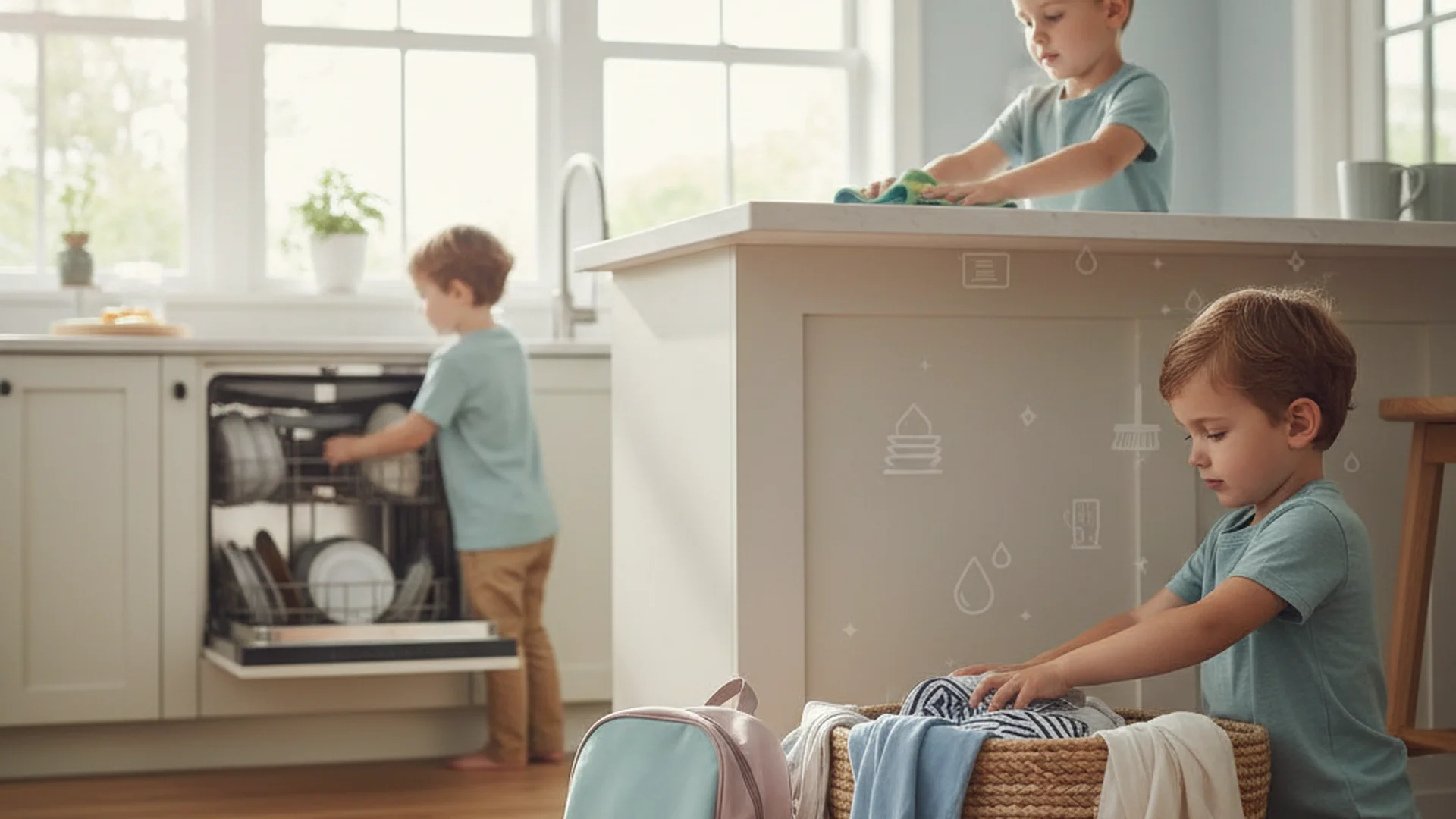
Every parent has been there: you stand in the middle of a cluttered living room, asking for the fifth time for someone to pick up their shoes. The "Chore War" is one of the most common stressors in modern households. However, establishing consequences for not doing chores isn't just about getting a clean floor—it is about brain development. Research increasingly shows that the way we handle household responsibilities today determines our children's success ten, twenty, and even fifty years from now.
By shifting our mindset from "policing" our children to "coaching" them, we can transform the daily grind into a masterclass in executive functioning. In this guide, we will explore evidence-based strategies, modern trends for 2025 and 2026, and a comprehensive list of consequences that actually work.
The Science of Why Chores Matter
Before we dive into the consequences, it is vital to understand what is at stake. According to an 85-year ongoing Harvard Study, professional success in adulthood is most strongly correlated with having done chores as a child. This isn't just because the house stays clean; it is because chores foster a "pitch-in" mindset and a robust work ethic that translates directly to the workplace.
Furthermore, research from the University of Minnesota highlights that the single best predictor of future relationship success is participating in household tasks as early as ages 3 and 4. Children who didn’t start contributing until their teens often struggled more in adult relationships, likely because they hadn't practiced the give-and-take necessary for a healthy partnership.
As we move through 2025, new data from Psychology Today reveals that kids with regular chores show significantly better working memory and inhibitory control. These are the core components of executive functioning, which are crucial for academic success and self-regulation in an increasingly distracted world.
Punishment vs. Consequences: The Expert Distinction
Many parents ask, "Should I punish my child for not doing chores?" The expert answer is a resounding no. There is a fundamental difference between punishment and consequences.
- Punishment: This is retribution. It is often unrelated to the task (e.g., "You didn't do the dishes, so no soccer practice"). It is designed to cause fear or resentment and often triggers a "fight or flight" response in the brain, which shuts down learning.
- Consequences: These are outcomes that teach responsibility. They are either natural (the inevitable result of an action) or logical (related to the behavior).
Tip: Treat the delivery of a consequence like a "cop giving a speeding ticket." Be dispassionate, calm, and matter-of-fact. This prevents the situation from escalating into a power struggle.
The Consequence Toolkit: Practical Ideas
When you are looking for consequences not doing chores ideas, it helps to categorize them by how they relate to the real world. This helps children see the "why" behind the "what."
Natural Consequences
Natural consequences are the most powerful teachers because the parent isn't the "bad guy"—reality is.
- The Laundry Stall: If a teen doesn't put their clothes in the hamper, those clothes don't get washed. Eventually, they have nothing to wear to school.
- The Empty Lunchbox: If a child is responsible for packing their lunch and forgets, they will be hungry (or have to eat a plain school-provided meal) that day.
- The Lost Toy: If toys aren't put away and they get stepped on or broken, they are gone.
Logical Consequences
Logical consequences are designed by the parent but are directly related to the neglected task.
- Toy Jail: If a child leaves their toys scattered in the living room after being asked to clean, those toys go into "toy jail" for 24 to 48 hours.
- The "Work First" Rule: If the kitchen isn't clean, the "kitchen is closed" for snacks or special treats until the work is done.
- The Delayed Outing: "We can go to the park as soon as the shoes are in the cubby." If it takes 20 minutes to put the shoes away, that’s 20 minutes less time at the park.
Success: Using "When-Then" phrasing (e.g., "When your room is clean, then you can watch TV") frames chores as a prerequisite to a privilege rather than a punishment.
Comprehensive Consequences Not Doing Chores List
Depending on the age and developmental stage of your child, the consequences not doing chores list should evolve. What works for a four-year-old will not work for a sixteen-year-old.
| Age Group | Recommended Chore | Logical Consequence Idea |
|---|---|---|
| Toddler (2-4) | Picking up toys | Toys go in a "timeout" bin for the afternoon. |
| Elementary (5-10) | Setting the table | Meal is delayed until the table is ready; "When-Then" with screen time. |
| Pre-Teens (11-13) | Emptying the dishwasher | No electronics until the task is complete. |
| Teens (14-18) | Doing own laundry | No "extra" rides to friends' houses until chores are current. |
Warning: Never use "extra chores" as a punishment for unrelated bad behavior (like talking back). This creates a lifelong negative association with cleaning and household care.
Modern Trends: Chores in 2025 and 2026
The landscape of household management is shifting. We are moving away from the "drill sergeant" model and toward a more integrated, tech-supported approach.
1. Time-Blocking for Kids
A major 2025 trend is moving away from the traditional, never-ending to-do list. Instead, parents are using "Chore Blocks." For example, the "Afternoon Reset" is a 15-minute window where everyone in the family—parents included—works together to tidy the common areas. This reduces procrastination by making the chore a predictable part of the daily rhythm.
2. Ditching the Mega-Chart
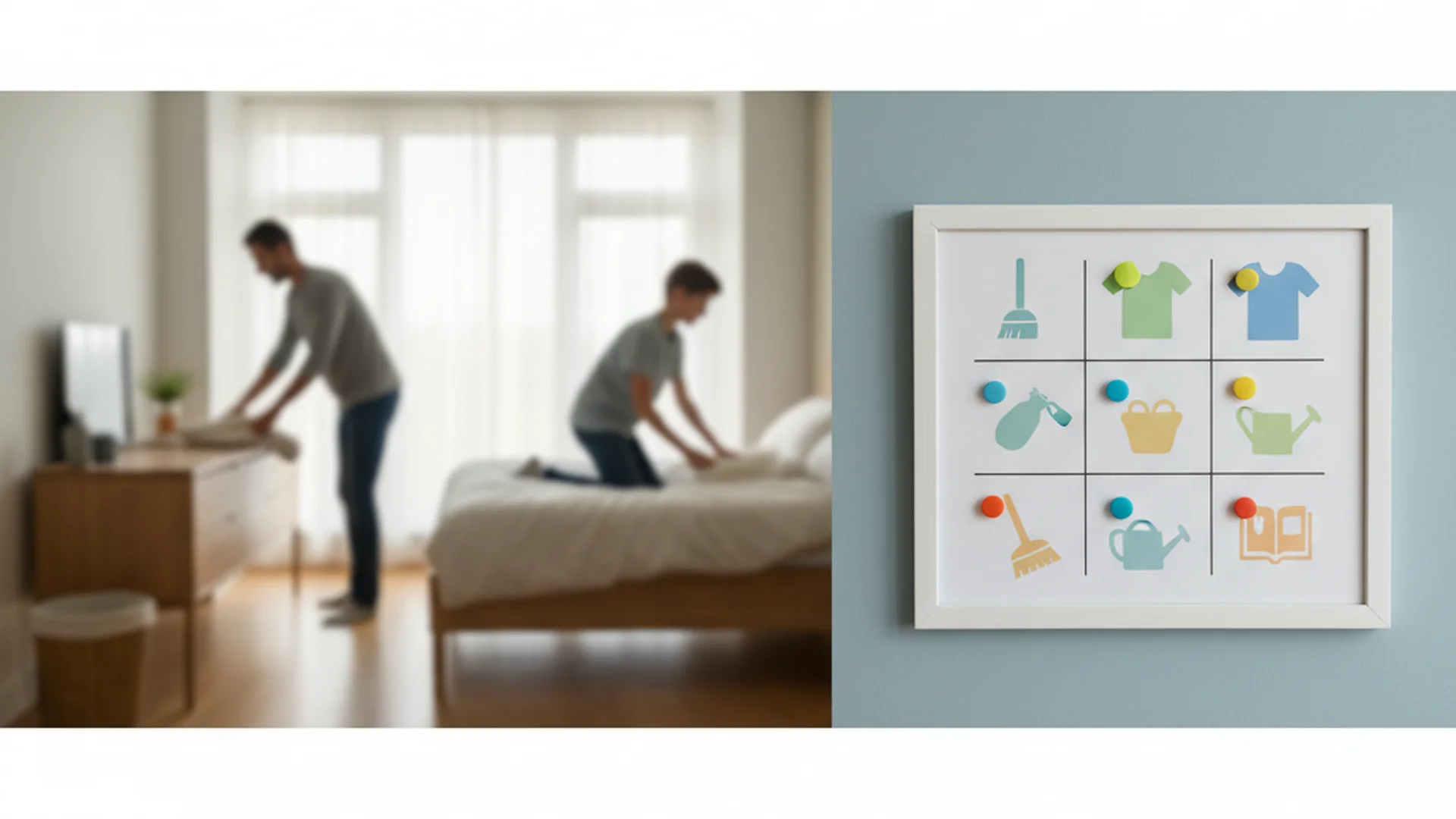
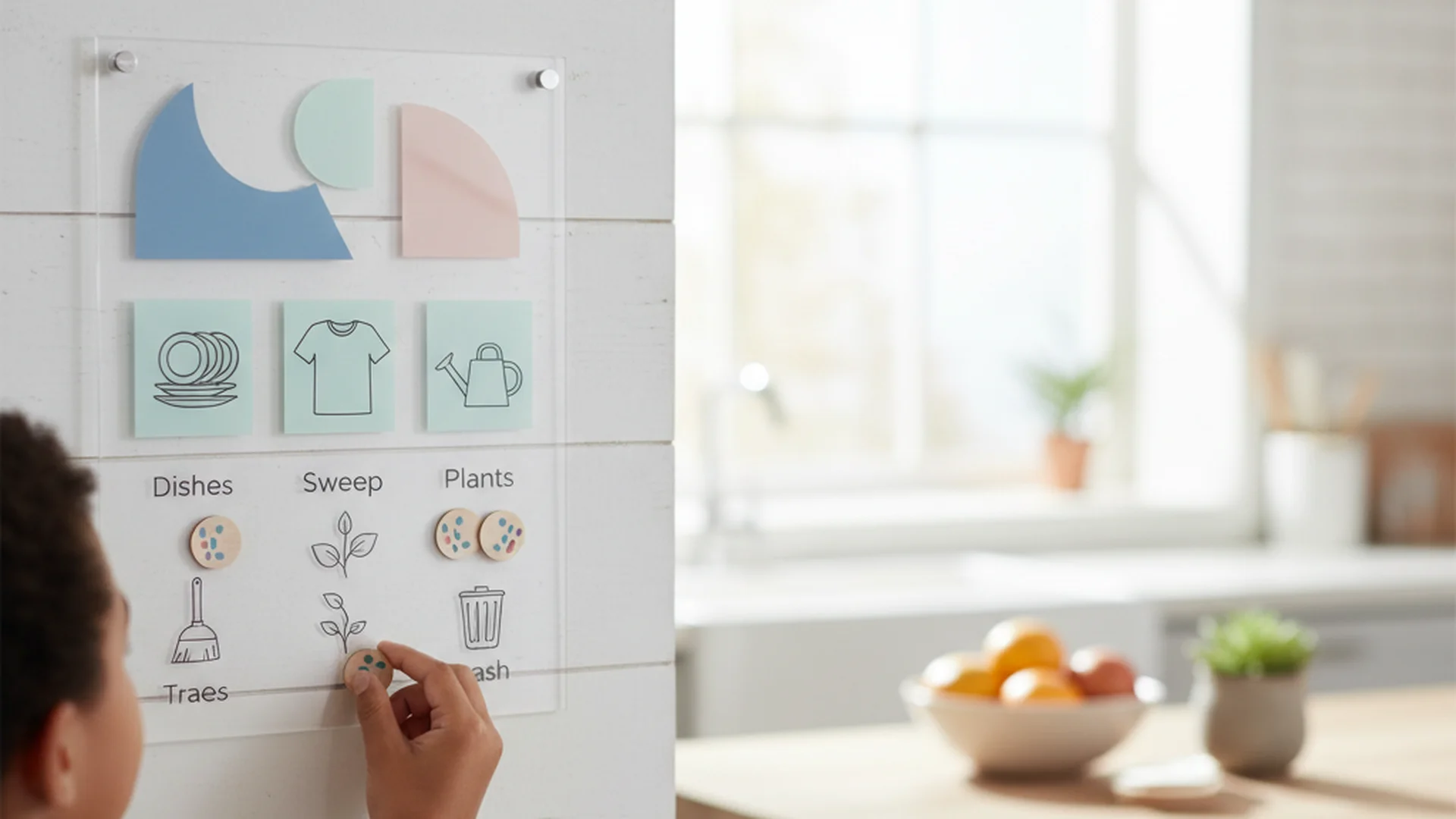
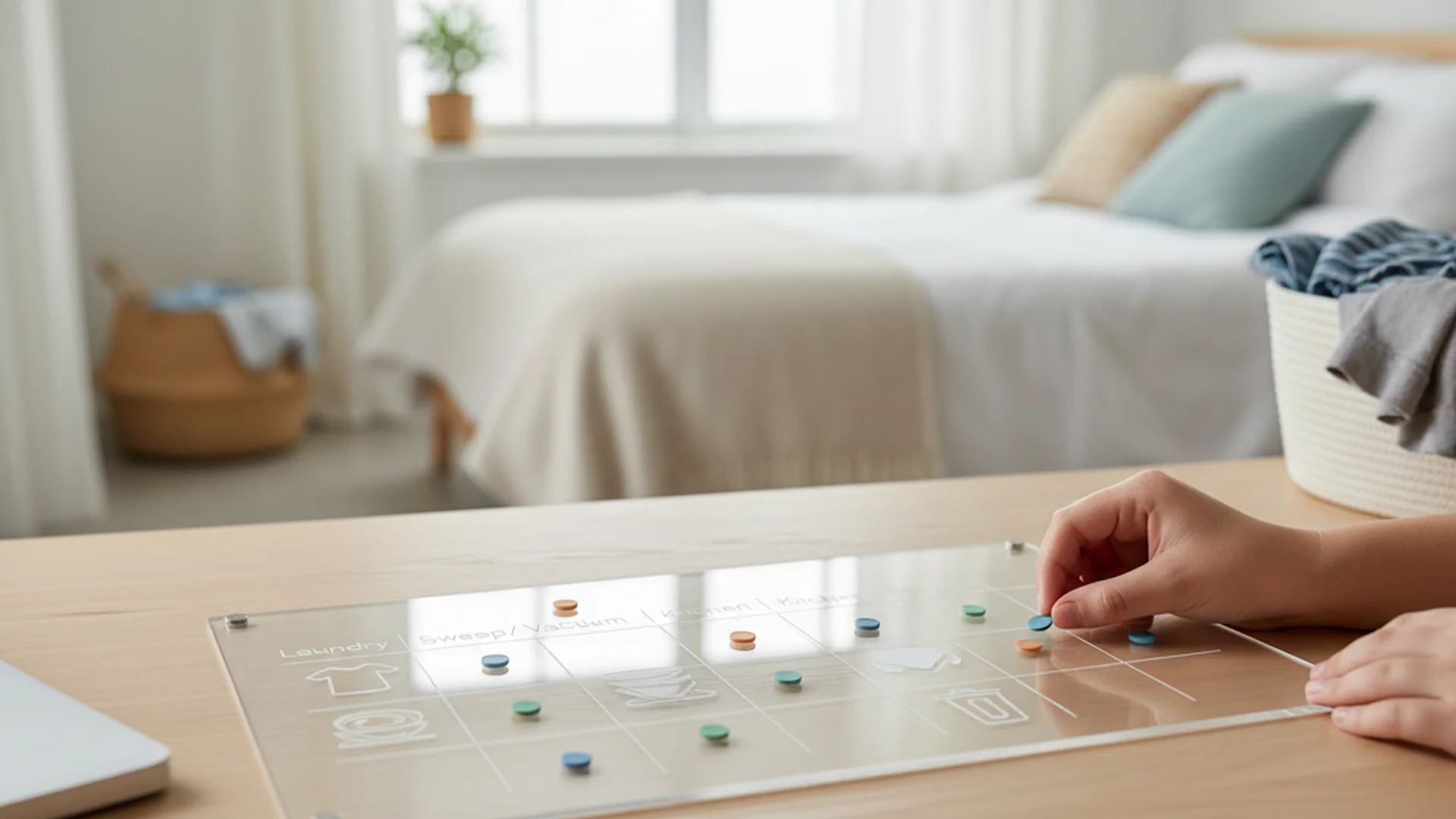
The era of the over-engineered, sticker-heavy chore chart is ending. By 2026, the trend is Simplicity. Parents are "quietly retiring" complex systems in favor of single dry-erase boards or shared family digital calendars like Skylight or Cozi.
3. AI as the "Home Admin"
In a viral 2025 parenting hack, families are using AI to generate "gamified" cleaning scripts. You can ask an AI to "Write a mission briefing for a secret agent who needs to neutralize the 'Dust Bunny Empire' in the living room." This makes the process fun for younger children and takes the "nagging" burden off the parent.
4. Gamification via Apps
Apps like KiddiKash and GoHenry are surging in 2026. These platforms automate the link between task completion and digital allowance or "Roblox credit," providing immediate, tangible consequences (or rewards) for completing tasks.
Note: Despite these advances, the gender gap remains a challenge. A 2025 Washington Post analysis reveals that women still spend double the time (1.9 hours/day) on chores compared to men (1 hour/day). Modeling equal distribution of labor is a powerful lesson for children.
Common Mistakes to Avoid
Even with the best intentions, it is easy to fall into traps that undermine the lessons chores are meant to teach.
- Inconsistent Enforcement: If you ignore a messy room for five days and then explode on the sixth, the child learns that chores are about your mood, not their responsibility. Consistency is more important than intensity.
- The "I'll Do It Myself" Trap: It is often faster to just do the chore yourself. However, experts in 2026 are urging parents to "romanticize the teaching" rather than the caretaking. Doing it yourself leads to "learned helplessness."
- Rescuing Your Child: If your teen forgets their gym clothes because they didn't do their laundry, do not drive the clothes to school for them. Rescuing them removes the consequence and the opportunity to learn.
- The One-Size-Fits-All Approach: A neurodivergent child may need chores broken down into much smaller, visual steps (e.g., "Put 5 cars in the bin" instead of "Clean the room").
Frequently Asked Questions
Is it okay to pay my children for doing chores?
How do I handle a teen who flat-out refuses to help?
What are some chores for a 3-year-old?
How often should I update our chore system?
Conclusion
The goal of establishing consequences for not doing chores isn't actually to have a perfectly clean house. The goal is to raise a "capable human"—someone who sees a need and fills it, who understands that their actions have an impact on the people around them, and who possesses the executive functioning skills to manage a life.
By moving away from punishment and toward logical, natural consequences, you are teaching your children that they are valuable members of a team. In 2025 and beyond, these "soft skills" of responsibility and cooperation are the most valuable assets a young person can have.
Success: When you stop nagging and start allowing consequences to do the teaching, you reclaim your relationship with your child.
Cleaning that keeps score
Every task earns points, every streak multiplies them, and Premium adds a household leaderboard plus a monthly Dustagorgon to beat.
- Free forever
- 30 badges to earn
- Up to 6 in a household
No card needed. Set up your rooms in a couple of minutes.