In this article
What you’ll learn
- Involving toddlers in chores builds responsibility that lasts into adulthood.
- Success depends on child-sized tools and managing adult expectations.
- The goal is developmental inclusion, not professional-grade cleanliness.
Trying to maintain a pristine home while raising a small child is often compared to shoveling snow while it is still snowing. It is an exercise in patience, persistence, and, quite frequently, absurdity. However, cleaning with toddlers doesn't have to be a source of constant frustration. As a professional cleaning consultant, I have seen a significant shift in how we approach household management in 2025. We are moving away from the "clean while they nap" era and into an age of inclusive, functional play where the "mess" becomes a classroom for life skills.
Involving your child in daily maintenance isn't just about getting the floor swept; it’s about nurturing a sense of belonging and competence. When you embrace cleaning with toddlers, you aren't just tidying a room—you are building a foundation for executive function, motor skills, and emotional regulation.
The Developmental Why: Why Your Future Self Will Thank You
It is tempting to wait until your child is older to assign chores. Many parents believe that doing it themselves is faster and more efficient. While that is true in the short term, failing to involve toddlers now is a missed developmental window.
Children who pitch in with household chores at three or four tend to carry that competence forward into their school years and beyond. This early involvement fosters a "can-do" attitude and a sense of responsibility toward the collective good of the family.
Helping with predictable household tasks also builds executive function. When a toddler helps you sort laundry or put toys in a bin, they are practicing multi-step directions and cognitive flexibility.
The "Helper" Window
Between 18 and 30 months, children enter what is often called a "sensitive period" for helping. During this time, they are biologically driven to imitate adult behavior. They don't see a broom as a chore; they see it as a fascinating tool that adults use. If you shut them out now to "save time," you may find that by age 7 or 8, when you want them to help, the intrinsic motivation has evaporated.
Tip: Focus on the process rather than the result. A toddler’s "clean" will never meet your standards, and that is perfectly okay.
Essential Gear: Tools for Tiny Hands
One of the most effective cleaning with toddlers tips is to provide tools that actually fit their bodies. Asking a 2-year-old to use a standard-sized broom is like asking an adult to sweep with a tool the size of a flag pole—it’s clumsy, frustrating, and ultimately ineffective.
| Tool | Recommended Type | Purpose |
|---|---|---|
| Handheld Dustpan | Small, rubber-edged | Fine motor practice for crumbs |
| Spray Bottle | 4oz travel size (Water only) | Strengthening grip and "wiping" skills |
| Microfiber Mitt | Child-sized or small sock | Dusting baseboards and low surfaces |
| Short-Handled Broom | 24-30 inches | Gross motor coordination |
| Wooden Tray | Montessori-style | Organizing "cleaning stations" |
Warning: Even "natural" cleaners can be skin irritants. For toddlers who still put their hands in their mouths, stick to food-grade cleaners like diluted lemon juice or plain water in their spray bottles.
Age-Appropriate Chores: What Can They Actually Do?
When implementing cleaning with toddlers hacks, you must align the task with their developmental stage. Pushing a child to do something beyond their motor capabilities leads to meltdowns, while giving them a task that is too easy leads to boredom.
18 to 24 Months: The Imitator
At this age, it’s all about gross motor movements and simple "put-away" tasks.
- Laundry Loader: Handing them damp clothes to drop into the dryer.
- The "Socks in the Box" Game: Finding socks and putting them into a laundry basket.
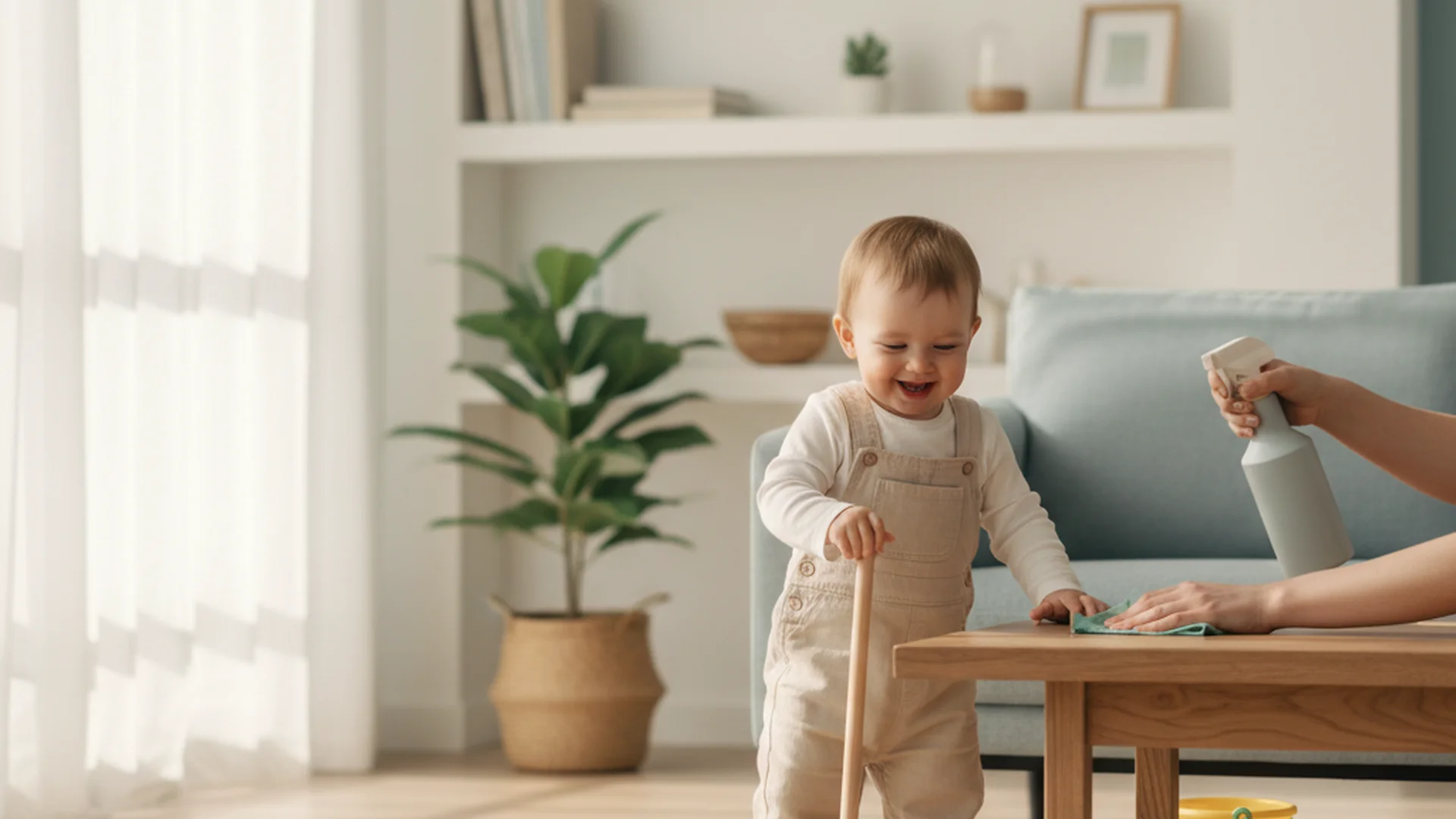
- Surface Wiping: Giving them a damp cloth to "wipe" the coffee table while you clean the kitchen.
2 to 3 Years: The Active Assistant
Toddlers in this bracket are developing better "pincher grasps" and can follow two-step directions.
- Sorting Large Items: Putting all the "blocks" in one bin and "stuffed animals" in another.
- Feeding Pets: Using a pre-measured scoop to put kibble in a bowl (with supervision).
- Table Clearing: Carrying their own (non-breakable) plate to the counter after a meal.
3 to 4 Years: The Functional Helper
By age three, toddlers can handle more complexity and even start to use "tools" with some level of accuracy.
- Dusting: Using a child-sized duster on baseboards or chair legs.
- Watering Plants: Using a small watering can to help with indoor greenery.
- Matching Socks: A great lesson in patterns and visual discrimination.
Note: Use visual checklists. Since toddlers can't read, a picture of a shoe next to a picture of a basket tells them exactly what needs to happen without you needing to repeat yourself.
The 2026 "Vibe": Modern Trends in Toddler Cleaning
As we move into 2026, the philosophy surrounding home maintenance has shifted. We are seeing a move away from "perfectionism" and toward "mindful inclusion."
Low-Demand Cleaning
This 2025 trend focuses on neuro-inclusive parenting. Instead of giving orders ("Go pick up your toys"), parents use "body doubling." You sit on the floor and start tidying, and the child naturally joins in. It removes the "demand" and turns the chore into a shared social activity.
Functional Play over Plastic Toys
Social media trends are showing a massive move toward "functional play." Instead of buying a plastic "toy" vacuum that makes noise but does nothing, parents are opting for real, sustainable, working tools made of wood and natural fibers. This teaches the child that their work has real value and a real effect on the environment.
The "Core Memory" Approach
To combat parental burnout, many are turning chores into "high-energy family dance parties." By using specific "cleaning playlists," you link the act of tidying with positive dopamine releases, making it a bonding experience rather than a point of contention.
Success: Children who grow up seeing cleaning as a collaborative, upbeat activity are less likely to experience "chore-based anxiety" as teenagers.
Common Mistakes to Avoid
Even with the best intentions, it is easy to fall into traps that discourage your toddler from helping.
- Redoing the Work in Front of Them: If your child "wipes" the table and leaves streaks, do not immediately wipe it again while they are watching. This communicates that their effort wasn't good enough. Wait until they leave the room or simply accept the streaks for a day.
- Using Cleaning as a Punishment: "You hit your brother, now go pick up the playroom." This creates a lifelong negative association with maintaining a home. Cleaning should be presented as a way we care for our things and each other.
- Expecting Marathon Sessions: Toddlers have an attention span of about 1-2 minutes per year of age. If you expect a 2-year-old to help for 30 minutes, you are setting yourself up for a tantrum. Use "cleaning bursts" instead.
- Prioritizing Speed Over Connection: Yes, you can sweep the kitchen in 30 seconds, and it takes the toddler five minutes. If you are in a rush, don't ask them to help. Only involve them when you have the "time budget" to go slow.
Real-World Examples of Cleaning Success
Example 1: The Spilled Milk Method
When 2-year-old Leo spills his milk, his mother doesn't sigh or grab the paper towels immediately. Instead, she says, "Oh, the milk is on the floor. We need to soak it up. Can you get your yellow cloth?" Leo fetches his cloth, and together they press it into the puddle. This teaches "natural consequences" and problem-solving without shame.
Example 2: The Scavenger Hunt Hack
To clean up a messy living room, Sarah tells her 3-year-old, "I’m looking for five blue things that belong in the toy bin! Can you find them?" This turns a boring task into a game of visual recognition. Once the blue things are gone, they move to "five soft things."
Example 3: The "Car Wash" Sensory Station
When deep cleaning the kitchen, Mark sets up a "car wash" for his toddler at the kitchen sink or in a plastic tub on the floor. He gives the child soapy water and their plastic cars or play dishes. The child is "cleaning" (sensory play) while Mark handles the heavy-duty oven cleaning nearby.
Frequently Asked Questions
How do I actually get my toddler to help instead of making more mess?
Is it okay to pay my toddler for cleaning?
What are the best non-toxic cleaners for toddlers?
How do I keep my toddler safe while I use heavy cleaners?
Conclusion
Cleaning with toddlers is rarely about the actual dirt. It is about the slow, sometimes messy process of raising a human who understands that a home is a shared responsibility. By using child-sized tools, gamifying the process, and lowering your expectations for perfection, you turn a daily chore into a powerful bonding tool.
Remember, you aren't just cleaning a floor; you are building a brain. The streaks on the mirror and the mismatched socks are temporary, but the confidence and competence your child gains by "helping" will last a lifetime.
Success: By the time your toddler reaches school age, these small habits will have formed a solid foundation for independence and household contribution.
Cleaning that keeps score
Every task earns points, every streak multiplies them, and Premium adds a household leaderboard plus a monthly Dustagorgon to beat.
- Free forever
- 30 badges to earn
- Up to 6 in a household
No card needed. Set up your rooms in a couple of minutes.