In this article
What you’ll learn
- Prioritize ventilation and fragrance-free products to protect infant respiratory health.
- Focus on "mouth-zone" hygiene for toys and high-touch surfaces.
- Implement 15-minute cleaning bursts rather than overwhelming deep cleans.
Bringing a new life into your home changes everything—including how you maintain your living space. For many new parents, the instinct to "nest" evolves into an urgent need to sterilize every surface. However, the reality of cleaning with baby in the house is a delicate balancing act. You need to maintain a hygienic environment to protect their developing immune system, but you must also avoid the hidden dangers of harsh chemicals and aerosolized particles. The very products we reach for to protect our children can pose risks of their own if they aren't handled correctly.
The "Dirty" Truth About Household Cleaners
When we think of a "clean" house, we often think of the scent of bleach or pine. However, in 2025, our understanding of indoor air quality has shifted significantly. There is a sobering reality behind that "fresh" smell: regular exposure to common household cleaning products is hard on infant airways, and is associated with more severe respiratory illness in babies.
The issue isn't just the dirt; it’s the Volatile Organic Compounds (VOCs) and fragrance chemicals that linger in the air. For a baby whose lungs are still developing, these irritants can be overwhelming. This is why the modern approach to cleaning with baby focuses on "clean, not sterile."
Warning: Never mix different cleaning products, such as bleach and ammonia. This can create toxic chloramine gas, which is lethal to infants and dangerous for adults.
Safety First: Essential Cleaning with Baby Tips
Before you pick up a spray bottle, you need a safety-first mindset. It isn't just about what you use, but how you use it.
The "Spray the Cloth" Rule
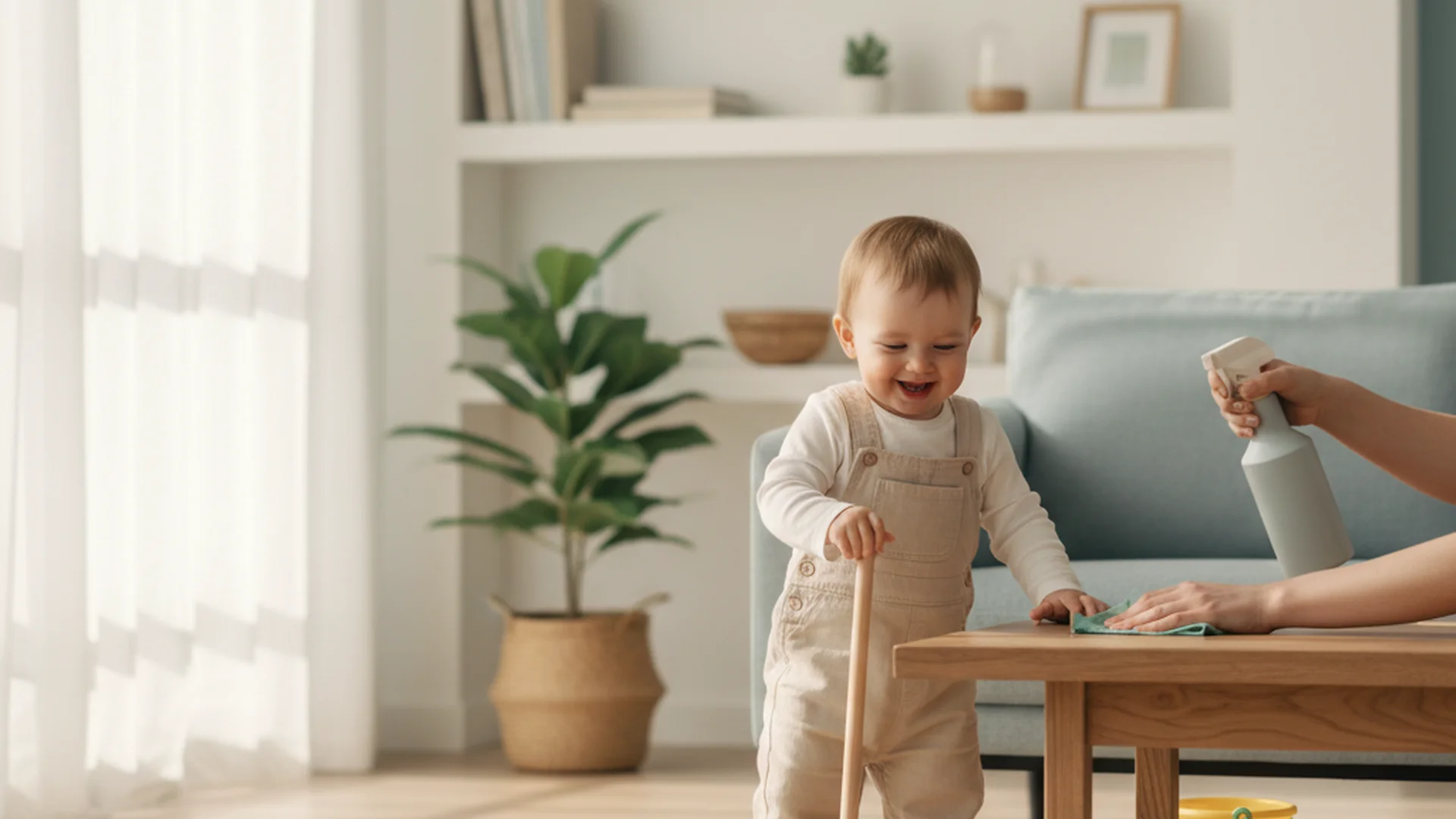
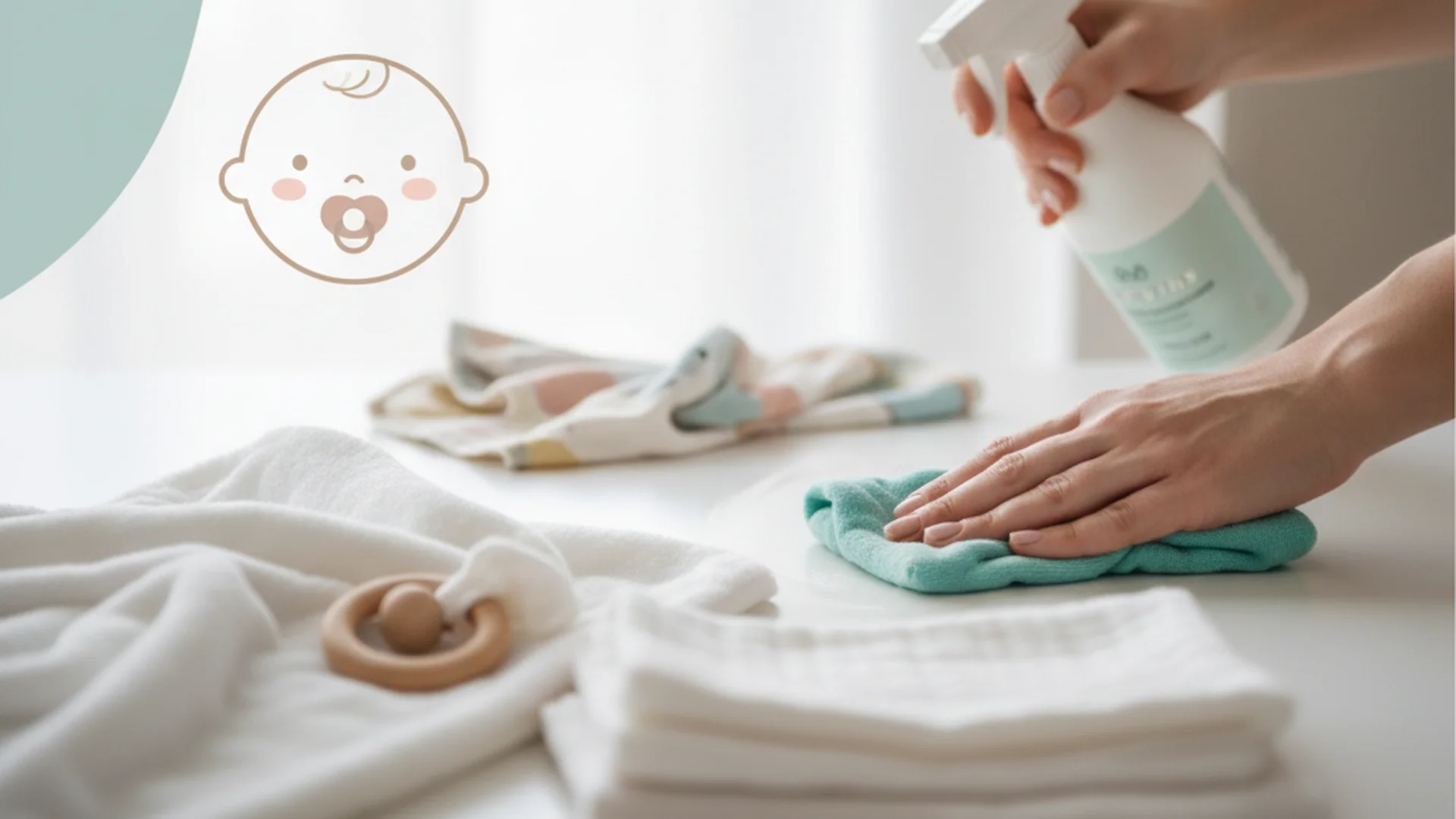
One of the most effective cleaning with baby hacks is to change your delivery method. Never spray a cleaner directly onto a surface if your baby is in the room. This action creates a cloud of aerosolized particles that the baby can easily inhale. Instead, spray the cleaning solution directly onto a microfiber cloth in a different room (or away from the baby), then use the dampened cloth to wipe the surface.
Mandatory Ventilation
Always open the windows before, during, and after a cleaning session. Even "natural" cleaners can release compounds that need to be dispersed. High-quality ventilation ensures that VOCs don't settle in the nursery or play area.
Fragrance-Free vs. Unscented
There is a massive difference between these two labels. "Unscented" products often contain masking chemicals to hide the smell of other ingredients. "Fragrance-free" products, however, contain no scent-related additives at all. For a baby’s sensitive respiratory system and skin, fragrance-free is the mandatory choice.
Note: Shoppers increasingly treat "non-toxic" and "antibacterial" as if they mean the same thing, which has driven a surge in microbiome-friendly cleaning formulations.
Room-by-Room Guide: Focusing on the "Mouth Zone"
When you have limited time and energy, you must prioritize. The most important areas to clean are those your baby interacts with directly—often referred to as the "Mouth Zone."
The Kitchen: High Chairs and Trays
Your baby’s high chair tray is essentially their dinner plate. Using harsh disinfectants here is counterproductive because of the chemical residue left behind.
- The Routine: Wipe the tray after every meal using simple soap and water.
- Real-World Example: If your baby is eating "finger foods" like steamed carrots directly off the tray, a food-grade sanitizer or a simple vinegar-and-water solution is safer than a standard countertop bleach spray.
The Living Room: Floors and Play Mats
Since babies spend a significant amount of time on the floor, this is where they encounter the most dust and allergens. Floor maintenance quietly becomes one of the biggest weekly time sinks in a house with children.
- The Hack: Use a vacuum equipped with a HEPA filter. Standard vacuums often suck up large debris but blow fine dust and allergens back out into the air. A HEPA filter captures 99.97% of those particles.
- Safe Mopping: Avoid using "steam mops" on certain treated woods, as they can release floor finish chemicals. A damp mop with a tiny bit of mild dish soap is often all you need for hard surfaces.
The Nursery: Cribs and Changing Tables
The nursery should be a sanctuary. Focus on dust-mitigation rather than heavy chemical usage.
- Laundry Separation: Wash baby clothes, cloth diapers, and bedding separately. Use hypoallergenic, enzyme-based detergents to prevent contact dermatitis.
| Item | Cleaning Method | Frequency |
|---|---|---|
| Plastic Toys | Soap & Water / Dishwasher | Weekly |
| Soft Toys | Hypoallergenic Wash | Monthly |
| High Chair Tray | Food-grade Wipe | After Each Use |
| Changing Pad | Mild Sanitizer | Daily |
Tip: If a toy has been in a baby's mouth, sanitize it daily. For non-mouthed items like bookshelves, a simple wipe with a dry microfiber cloth is sufficient.
The 15-Minute "Parent Hack" Routine
New parents rarely have the luxury of a four-hour deep clean. Instead, adopt the "CleanTok" trends of 2025, such as the "Closing Shift" and "15-Minute Resets."
The "Closing Shift" Cleaning
This happens once the baby is down for the night. It isn't about deep cleaning; it’s about resetting the "active" zones of the house so you don't wake up to chaos.
- Clear the "Landing Zone": Put away any toys that have migrated to the center of the room.
- Bottle/Pump Part Prep: Clean and sanitize feeding equipment for the next morning.
- The 5-Minute Floor Sweep: A quick run-through of the high-traffic areas to catch crumbs.
The Sunday Reset
Instead of a massive weekly clean, the Sunday Reset involves one "big" task that makes the rest of the week easier. This might be pre-portioning baby food or doing a dedicated load of baby-only laundry.
Success: Using "wipeable" minimalist gear—like high chairs made of medical-grade silicone—can reduce your daily cleaning time by up to 20 minutes because they don't have fabric "crumb-catchers."
Modern Trends: Probiotics and Minimalist Gear
The cleaning industry is moving away from the "kill 99.9% of bacteria" mindset. We now know that some exposure to beneficial bacteria is essential for building a child’s immune system.
Microbiome-Friendly Cleaning
2026 trends show a rise in probiotic cleaners. These products leave behind "good" bacteria that continue to clean surfaces long after you've finished wiping. This approach supports the "hygiene hypothesis," suggesting that a sterile environment can actually lead to increased allergies later in life.
Flameless Fragrance
Gone are the days of scented candles and soot-producing wax melts. Parents are now opting for electric scent pods and ultrasonic diffusers using baby-safe, VOC-free essential oils (though caution with oils around newborns is still warranted).
Common Mistakes to Avoid
Even with the best intentions, it is easy to fall into cleaning traps that are either ineffective or dangerous.
1. Aesthetic Decanting
The viral trend of transferring cleaning pods or liquids into "cute" unmarked glass jars is a major safety hazard. It removes essential medical information and ingredient lists. Furthermore, colorful pods in glass jars look like candy to a curious toddler. Always keep cleaners in their original, child-proof packaging.
2. Over-disinfecting
Disinfecting every single surface daily can prevent a baby from building a healthy immune response. Unless someone in the house is actively sick, simple soap and water are sufficient for 90% of household surfaces.
3. Relying on "Natural" Labels
"Natural" does not always mean safe. For example, some botanical extracts like tea tree oil or lavender can be endocrine disruptors or respiratory irritants for infants. Always look for "Baby-Safe" or "Third-Party Certified" labels rather than just "Natural."
4. The Bleach Misconception
Many parents believe bleach is the gold standard for a nursery. It should be reserved for high-risk contamination (like a stomach virus) and used only with extreme ventilation.
Warning: Aesthetic decanting of cleaning products increases the risk of accidental ingestion and hides vital emergency instructions. Keep chemicals in original containers.
Frequently Asked Questions
How often should I clean the house with a newborn?
Can I vacuum while the baby is in the room?
Are "natural" cleaners always safe for babies?
How do I clean toys that go in the baby's mouth?
What is the best way to handle "blowouts" on carpets?
Conclusion: Clean, Not Sterile
Navigating cleaning with baby in the house doesn't have to be a source of stress. The goal is to create a home that is hygienic enough to prevent illness but "dirty" enough to foster a strong immune system. By ditching harsh fragrances, embracing 15-minute cleaning bursts, and focusing on the "mouth zones," you can maintain a beautiful home without compromising your child's health.
Remember: less is often more when it comes to chemical intervention. Stick to the basics, prioritize air quality, and enjoy the precious time with your little one instead of scrubbing the baseboards.
Success: Adopting a "Clean, Not Sterile" philosophy reduces chemical exposure and helps support your child's long-term immune health.
Cleaning that keeps score
Every task earns points, every streak multiplies them, and Premium adds a household leaderboard plus a monthly Dustagorgon to beat.
- Free forever
- 30 badges to earn
- Up to 6 in a household
No card needed. Set up your rooms in a couple of minutes.