In this article
What you’ll learn
- Micro-cleaning habits prevent the "tipping point" of mess in tiny homes.
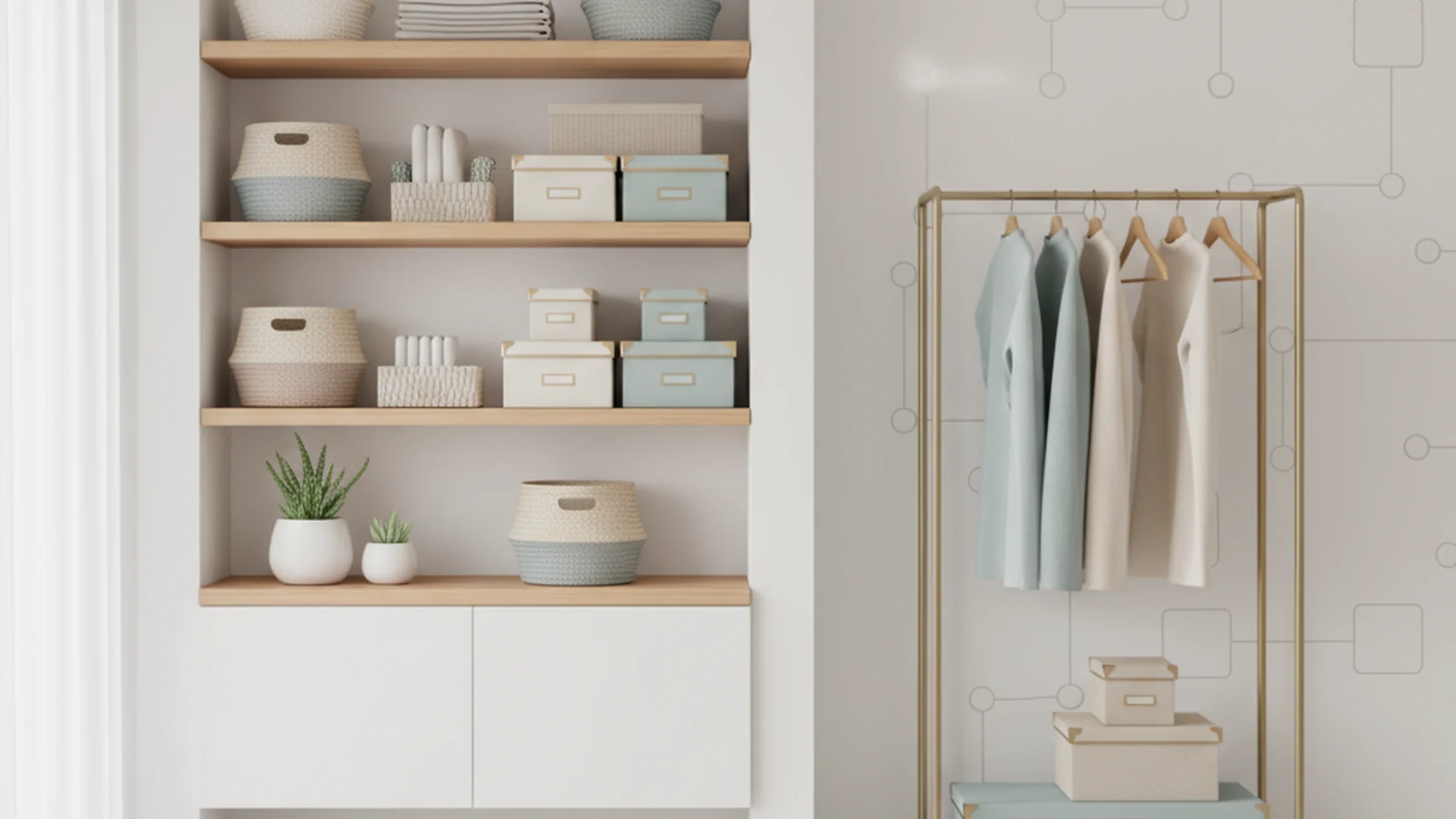
- Vertical storage and top-to-bottom cleaning are essential for small floor plans.
- Air quality management is a critical, often overlooked part of the cleaning routine.
Living in a smaller home—whether it’s a chic urban studio, a tiny house, or a compact apartment—offers a unique blend of coziness and efficiency. However, anyone who has ever lived in under 600 square feet knows that the stakes are higher. When cleaning small spaces, a single misplaced pair of shoes or a stack of mail isn't just a minor eyesore; it’s a logistical hurdle that can make your entire home feel unlivable. Because the "mess capacity" is so much lower, maintaining a tiny home requires a shift from traditional marathon cleaning to a more nuanced, high-efficiency strategy.
The Psychology of the Small Space
It isn't just in your head—clutter in a small space actively impacts your brain chemistry. Research from the UCLA Center on Everyday Lives of Families found that individuals living in cluttered environments have 30% higher cortisol levels throughout the day. In a small apartment, where your living, working, and sleeping quarters often overlap, this stress is magnified.
Furthermore, Princeton University Neuroscience Institute research indicates that clutter competes for your attention, reducing productivity by up to 20%. When every square inch is within your line of sight, a "clean" home is the primary driver of mental clarity.
Note: A disorganized kitchen doesn't just look bad—it affects your health. Studies show people in chaotic kitchens are 77% more likely to be overweight because the environmental stress triggers poor decision-making, such as reaching for high-calorie snacks.
Essential Habits for Tiny Living
To keep a small space pristine, you must adopt habits that prevent the "tipping point." This is the moment where the volume of items exceeds the storage capacity, leading to a cascade of clutter.
The "One-Touch" Rule
This is the gold standard of domestic efficiency. The rule is simple: handle an item only once. Instead of placing a coat on a chair to hang up later, hang it up immediately. Instead of leaving a coffee mug on the side table, take it directly to the dishwasher. In a small room, "surface creep"—the gradual accumulation of items on flat surfaces—is your primary enemy.
The "One In, One Out" Policy
Fixed square footage means fixed storage capacity. To maintain stasis, you must treat your home like a high-end gallery: one new item (a book, a gadget, a shirt) means one old item must be donated, recycled, or sold.
"Put the House to Bed"
A trend gaining significant traction for 2026 is the "shutdown routine." Every night, spend 10–15 minutes resetting your space. Plump the cushions, wipe the surfaces, and clear the sink. This ensures you wake up to a neutral environment rather than yesterday’s leftovers, which sets a productive tone for the morning.
Tip: Use a 15-minute timer on your phone. It turns the "nightly reset" into a game and prevents it from feeling like a chore.
A Strategic Guide to Cleaning Small Spaces
Cleaning a small home requires a different tactical approach than a sprawling suburban house. Because dust and dander have fewer places to settle, they concentrate quickly on the surfaces you use most.
1. Verticality is King
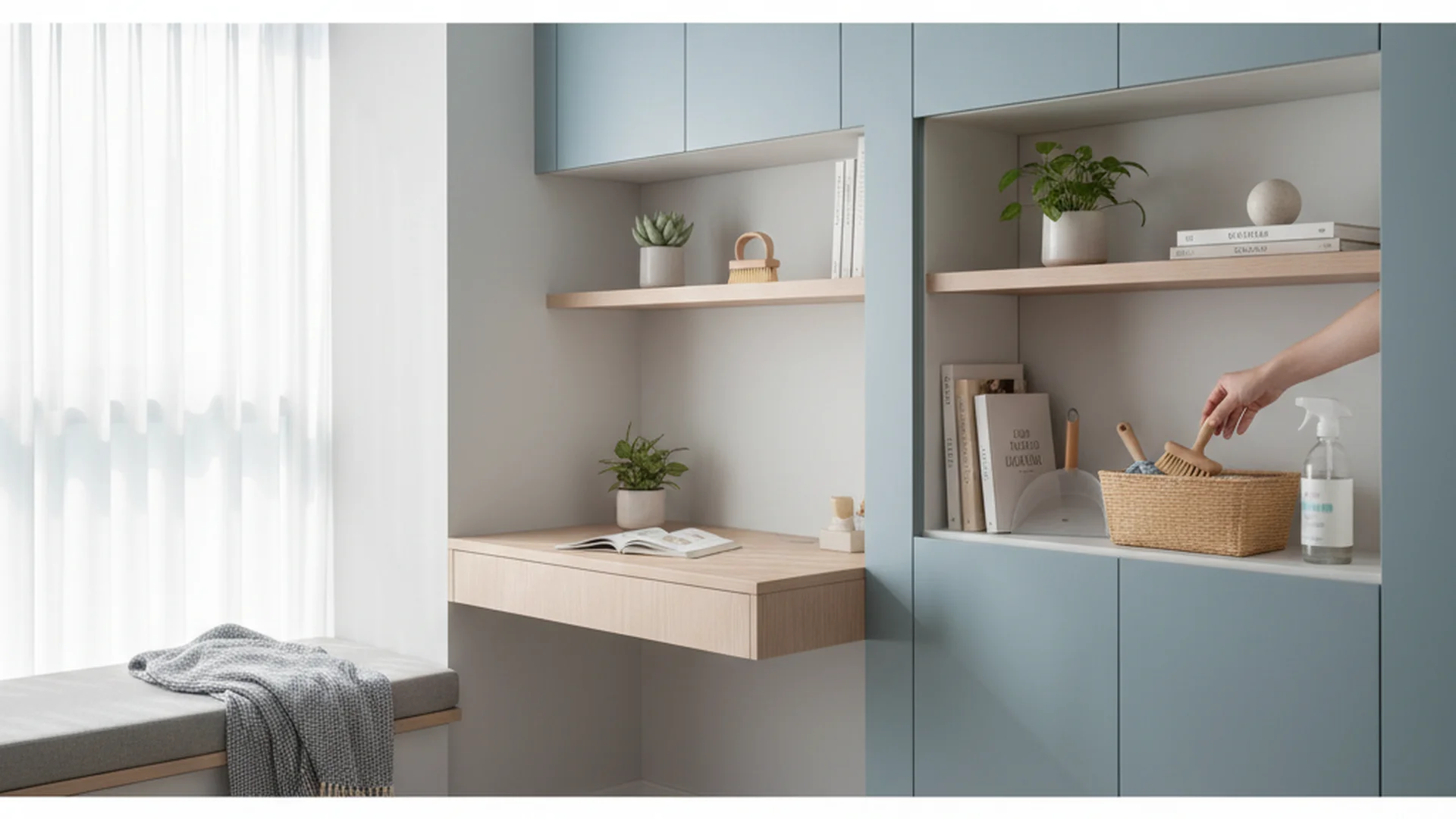
When you lack floor space, your walls are your greatest asset.
- Cleaning Stations: Instead of a bulky cleaning cupboard, use wall-mounted racks for your mop and broom.
- Over-the-Door Organizers: These are perfect for cleaning supplies, keeping bottles off the floor and out of valuable under-sink real estate.
2. The Top-to-Bottom Method
Always begin your cleaning session with high shelves, ceiling fans, and top cabinets. In a small room, dust travels horizontally across the entire space almost instantly. If you vacuum first and then dust the shelves, you’ll find a fresh layer of debris on your floor within minutes.
3. Surface-Specific Tactics
In a studio apartment, the "sludge" effect is real. Because small spaces are often more humid (especially during cooking or showering), spraying liquid cleaners directly onto surfaces can create a sticky residue when mixed with concentrated dust.
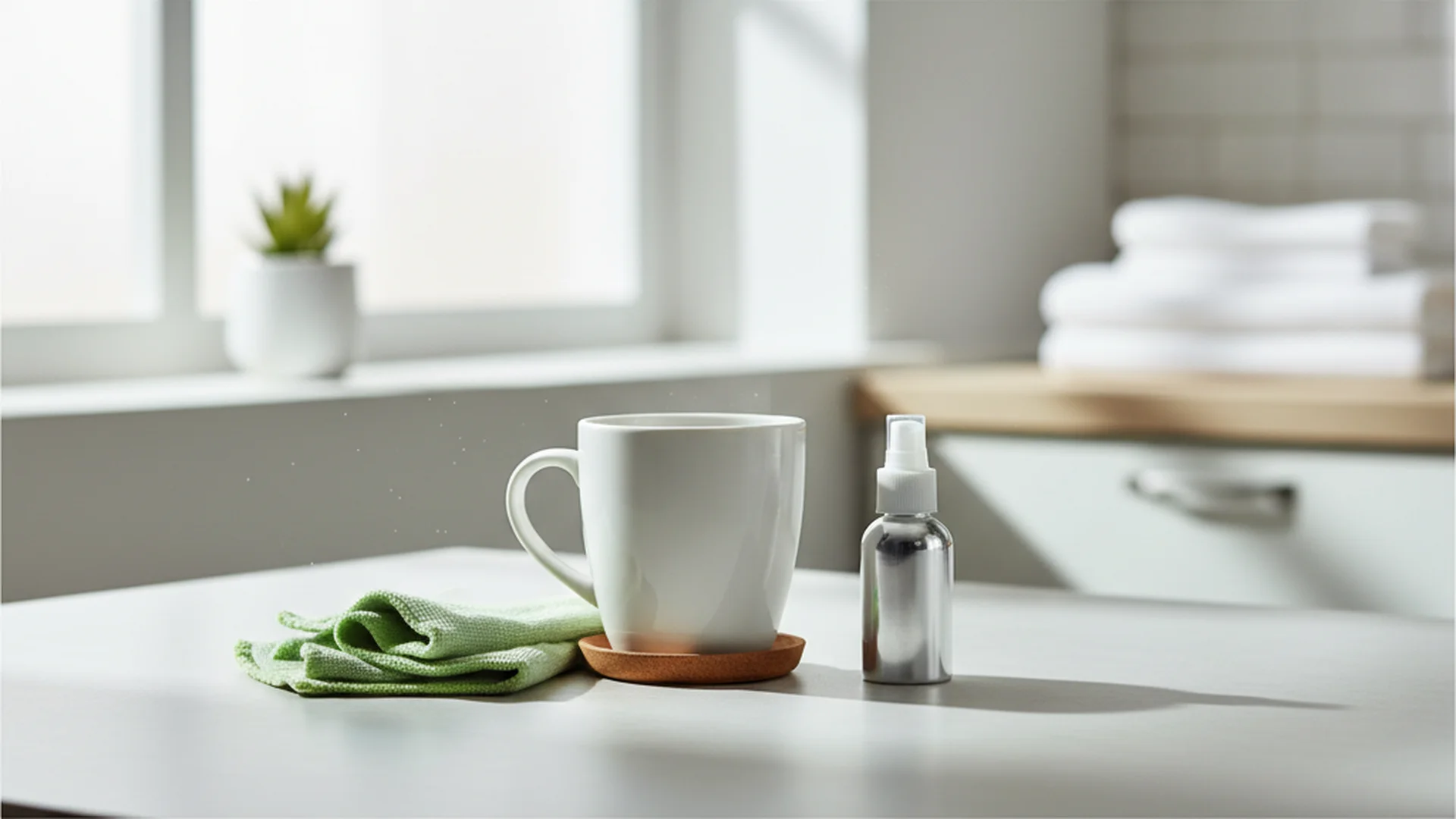
Warning: Always spray your microfiber cloth first, then wipe the surface. This prevents excess moisture from seeping into furniture joints or creating streaks in small, well-lit areas.
| Surface Type | Recommended Cleaner | Frequency |
|---|---|---|
| High-Gloss Cabinets | Microfiber + Water | Weekly |
| Quartz/Stone Counters | Enzymatic Multi-Surface | Daily |
| Windows/Mirrors | Distilled Vinegar/Water | Bi-Weekly |
| Flooring (Hard) | Steam or pH-Neutral | Weekly |
2025–2026 Trends in Compact Cleaning
The industry is rapidly evolving to meet the needs of the "micro-living" generation. If you are looking to upgrade your cleaning arsenal, consider these 2026-forward trends:
AI-Integrated Micro-Bots
Traditional robot vacuums are often too large to navigate the legs of compact furniture. New "micro-bots" hitting the market in 2025 are designed with a smaller diameter and higher clearance, specifically for studio apartments.
Multifunctional "Magic" Appliances
The era of the "one-job tool" is ending. 2026 is the year of the 3-in-1 device. Tools like the Polti Rollysteam—which vacuums, washes hard floors, and steam cleans—allow you to replace a vacuum, a mop bucket, and a steamer with a single footprint.
Eco-Concentrate Refill Stations
Under-sink space is precious. Consumers are moving away from bulky plastic bottles in favor of "just add water" tablets. These glass concentrate vials occupy 90% less storage space and are significantly better for the environment.
Air as a "Surface"
With increased urbanization, air quality tech is becoming a standard part of the cleaning routine. Treating the air as a surface that needs to be "scrubbed" via HEPA filtration is now considered essential maintenance for small-space dwellers to prevent odor buildup.
Common Mistakes to Avoid
Even the most dedicated cleaners can fall into traps that make small-space maintenance harder than it needs to be.
- Buying Storage Bins Before Decluttering: This is the most common error. You cannot organize clutter. If you buy bins first, you are simply paying to store items you don't need. Purge first, measure second, buy third.
- Cleaning Once a Week: In a 400-square-foot apartment, a single day’s mess can make the space feel unlivable. Small spaces require "micro-cleaning" (cleaning as you go) rather than "marathon cleaning."
- Using Harsh Chemicals: Small rooms often lack cross-ventilation. Using bleach or heavy ammonia in a tiny bathroom can lead to toxic vapor buildup quickly.
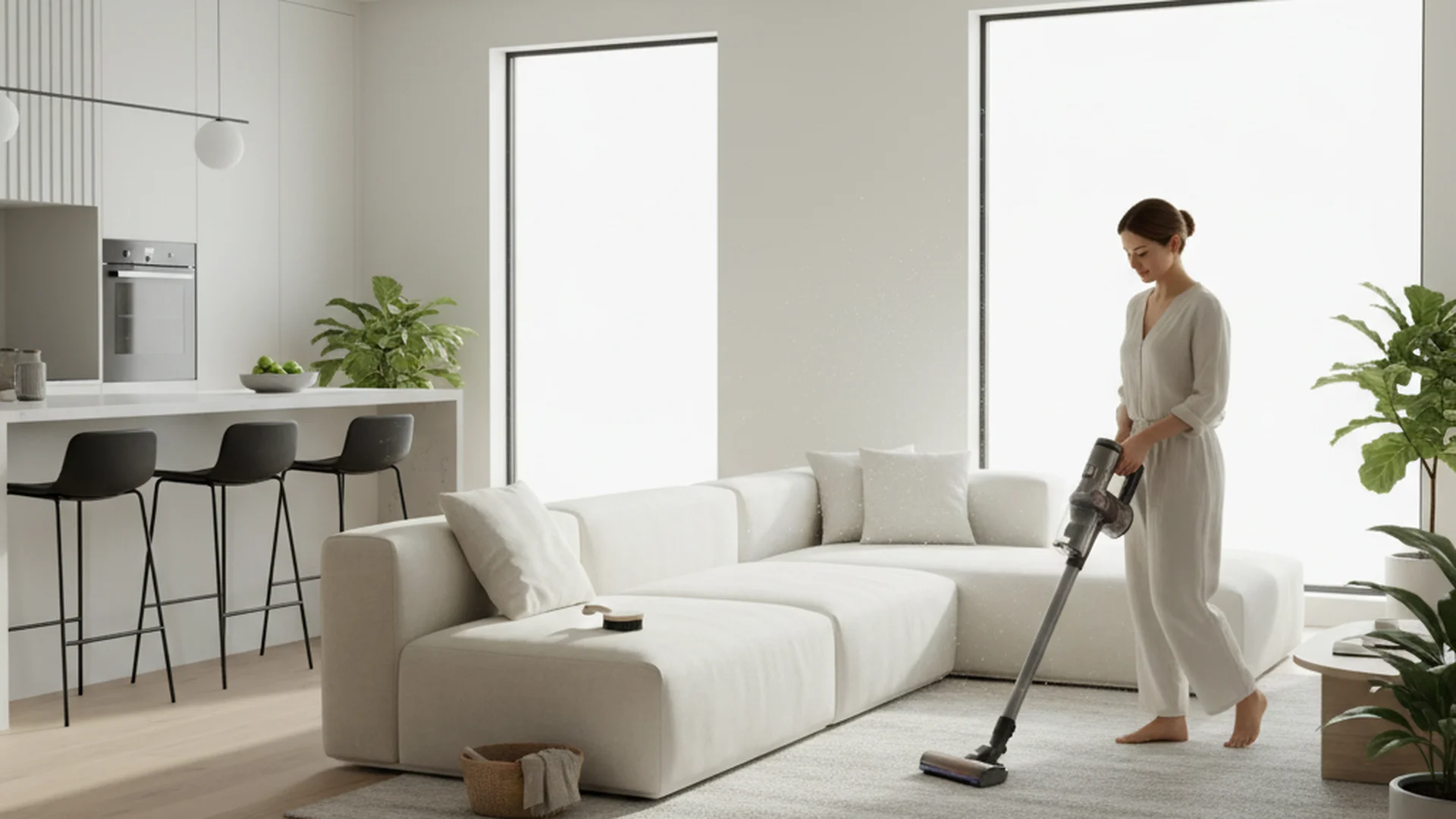
- Oversized Tools: A full-sized corded vacuum is a logistical nightmare in a tiny home. The physical friction of getting a heavy tool out of a cramped closet often prevents people from cleaning at all.
Success: Switching to a cordless stick vacuum and a single multi-surface enzymatic cleaner can reduce your total cleaning time by 40% simply by removing the "friction" of setup.
Real-World Examples of Efficiency
Example 1: The Entryway Reset
Sarah lives in a 350-square-foot studio. To prevent "floor creep," she installed a wall-mounted "landing strip." It consists of three hooks for her coat and bag, and a small floating shelf for keys and mail. By applying the One-Touch Rule the moment she walks through the door, her living area stays clear of daily debris.
Example 2: The "Just-in-Time" Kitchen
Mark, a professional chef living in a tiny apartment, uses the One In, One Out policy for his gadgets. When he wanted a new air fryer, he committed to donating his bulky toaster oven and slow cooker. This kept his counters clear, reducing the time it takes to wipe them down from five minutes to thirty seconds.
Example 3: The Vertical Cleaning Station
By moving her vacuum, mop, and cleaning sprays to an over-the-door rack in the bathroom, Elena reclaimed an entire kitchen cabinet. This allowed her to move her "messy" items (like trash bags and detergents) out of sight, instantly making her kitchen feel larger and more organized.
Frequently Asked Questions
How often should I clean a small apartment?
How do I make a small space smell good without overwhelming it?
What are the essential tools for tiny living?
- A high-quality cordless stick vacuum (wall-mounted).
- Color-coded microfiber cloths (to prevent cross-contamination between the bathroom and kitchen).
- A single multi-surface enzymatic cleaner to replace multiple specialized bottles.
Is minimalism the only way to keep a small space clean?
No. The 2026 trend of "Warm Minimalism" allows for personal items and "cozy" decor. The key is ensuring every item has a designated "home" (preferably in closed storage) so that surfaces remain clear for cleaning.
Conclusion
Cleaning small spaces is less about the "scrub" and more about the "system." By embracing vertical storage, high-efficiency tools, and the psychology of the "nightly reset," you can transform a cramped environment into a sanctuary of productivity. Remember: in a tiny home, you aren't just cleaning surfaces—you are reclaiming your mental space.
Success: Implementing these habits not only reduces your cortisol levels but can save you up to an hour of "searching time" every single week.
Cleaning that keeps score
Every task earns points, every streak multiplies them, and Premium adds a household leaderboard plus a monthly Dustagorgon to beat.
- Free forever
- 30 badges to earn
- Up to 6 in a household
No card needed. Set up your rooms in a couple of minutes.