In this article
What you’ll learn
- Micro-cleaning for 15 minutes daily prevents the 'Weekend Warrior' burnout.
- Smart home AI integration can now automate your cleaning reminders based on your work calendar.
- A tiered strategy (Daily, Weekly, Quarterly) is the most sustainable approach for high-performers.
For many high-achieving individuals, the home environment is the foundation of professional success. However, when you are balancing back-to-back meetings, tight deadlines, and a personal life, maintaining that foundation often falls to the bottom of the priority list. You might find yourself staring at a pile of laundry or a dusty coffee table at 8:00 PM, feeling the weight of a "second shift" of domestic chores.
Establishing a cleaning schedule for busy professionals isn't just about aesthetics; it is a vital productivity hack. Our physical environment directly dictates our mental bandwidth. If your home is in chaos, your cognitive load increases, making it harder to focus on the complex problems you solve at work. By shifting from reactive cleaning to a proactive, automated routine, you can reclaim your weekends and transform your living space into a sanctuary of focus.
The Psychology of a Tidy Space
Before diving into the logistics of the schedule, it is essential to understand why a cleaning routine for professionals is worth the investment. The link between mental health and environmental order is something you feel every single day.
A great many people feel anxious or on edge when living in a cluttered home. Conversely, most professionals find they are significantly more productive when their environment is organized. When you walk into a clean kitchen to make your morning coffee, you aren't just avoiding a mess; you are avoiding "decision fatigue." You don't have to decide which dish to wash or where to clear space for your mug.
Plenty of people also notice a better mood and a lighter outlook when their living space is tidy. In a world where professional burnout is at an all-time high, your home should be the place where you recharge, not another source of stress.
Success: A clean home acts as a "reset button" for your brain, allowing for deeper focus and faster recovery from work-related stress.
The 15-Minute Blueprint: A Tiered Strategy
The biggest mistake professionals make is the "Weekend Warrior" approach—saving every chore for Saturday morning. This effectively kills your rest days and turns your home into a workplace. Instead, we recommend a tiered cleaning strategy that breaks tasks into manageable "micro-blocks."
Daily "Non-Negotiables" (10–15 Minutes)
These are the tasks that keep the "clutter creep" at bay. They should be performed at the same time every day to build a habit loop.
- The Morning Reset (2 mins): Make the bed immediately. This sets a productive tone for the entire day.
- The Kitchen Sweep (5 mins): Wipe down high-touch surfaces and load/unload the dishwasher.
- The "Hot Spot" Clear (3 mins): Clear the entryway or coffee table where mail and bags tend to accumulate.
- The Laundry Cycle (5 mins): Start one load of laundry in the morning (if you work from home) or immediately upon returning.
The Weekly "Power Hour"
Instead of a marathon, divide your weekly deep-cleaning tasks into 20-minute sessions across three days, or one focused hour on a weeknight.
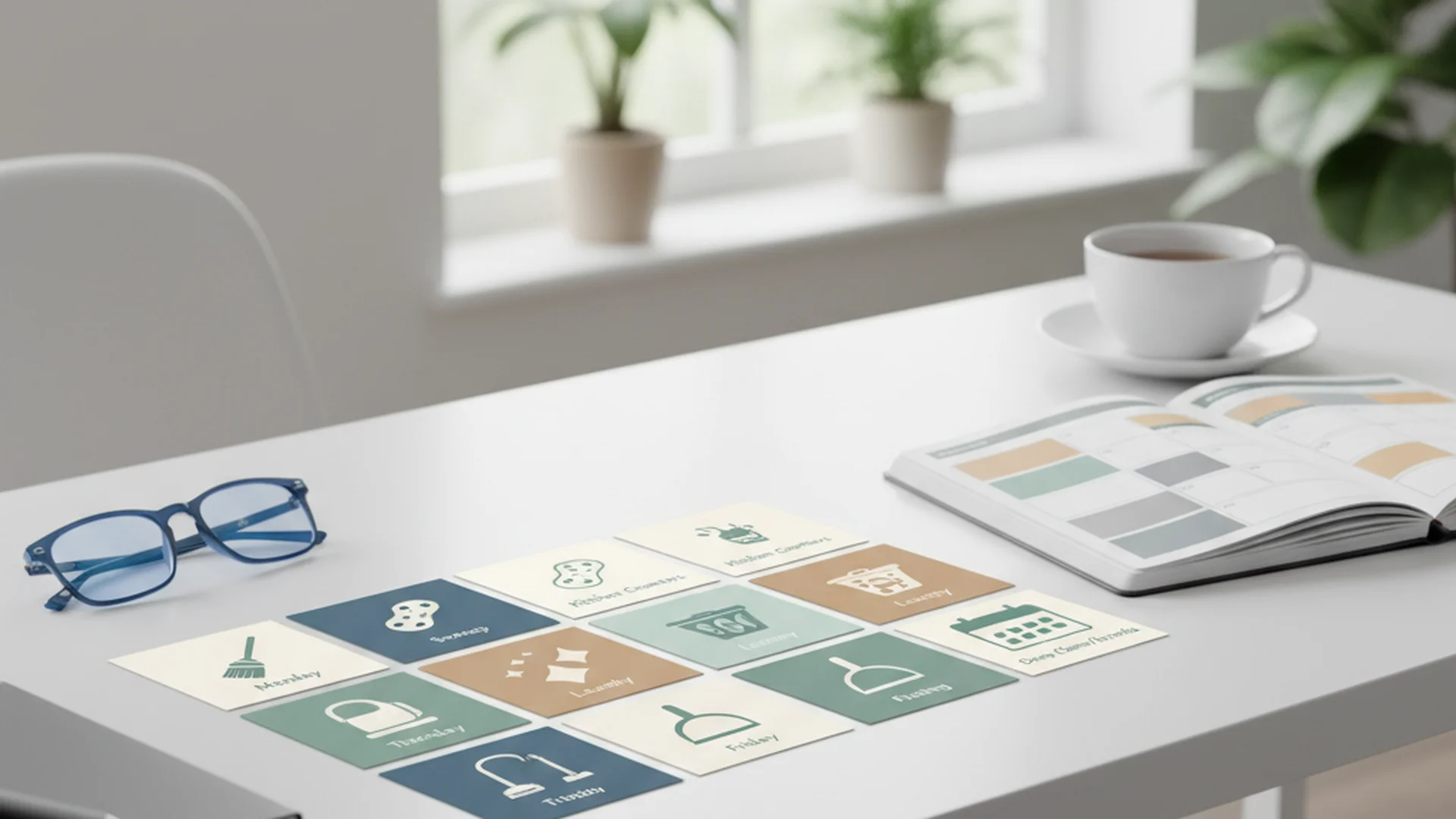
| Day | Zone | Key Tasks |
|---|---|---|
| Monday | Kitchen | Sanitize sink, wipe appliance exteriors, toss expired fridge items. |
| Wednesday | Bathrooms | Clean toilets, wipe mirrors, scrub the sink basin. |
| Friday | Floors | Vacuum high-traffic areas and a quick damp mop in the kitchen. |
Tip: Use your "low-energy" work windows—like that 4:00 PM slump—to knock out one of these 20-minute blocks. It provides a physical break from the screen.
Smart Tech & Automation: The 2025 Edge
In 2025, we are seeing a massive shift in how technology manages our homes. For the busy professional, automation is the key to consistency.
AI-Enhanced Scheduling
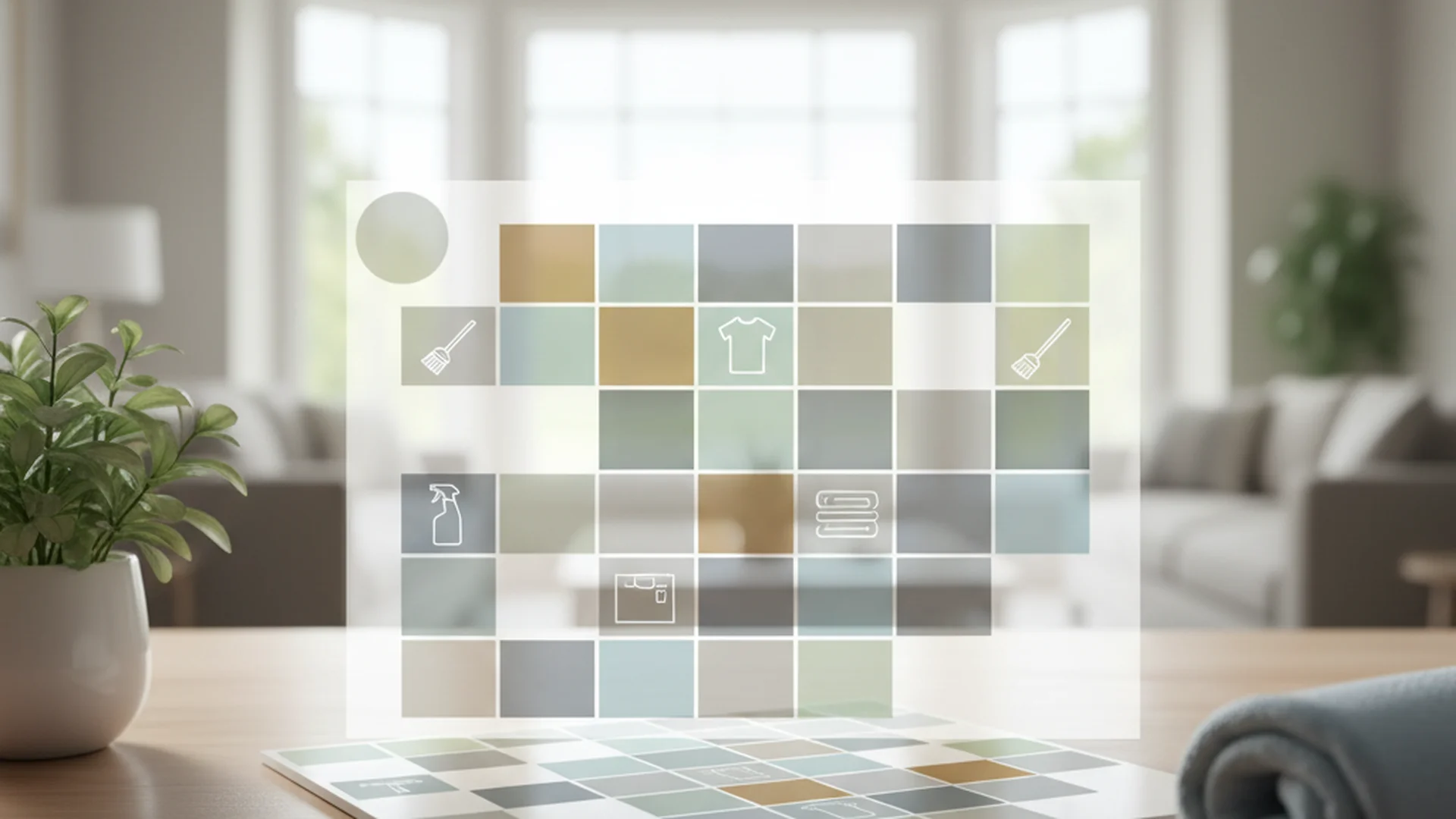
The latest trend in domestic efficiency is AI-integrated scheduling. New smart home applications now sync directly with your Outlook or Google Calendar. If the AI detects a 30-minute gap between meetings, it can send a notification to your phone or smart watch suggesting a "micro-clean" window. This removes the mental effort of deciding when to clean.
The Rise of Robotic Maintenance
Automation adoption has skyrocketed, and robot vacuums are now a fixture in a great many homes. For professionals, these aren't just gadgets; they are essential assistants. A high-end robot vacuum with a self-emptying base can handle 80% of floor maintenance, leaving you only the edges and deep-cleaning tasks to manage once a month.
Pathogen-Based Cleanliness
The "Cleaning for Health" movement of 2025 has moved beyond simple aesthetics. Professionals are now prioritizing HEPA filtration and UV-C sterilization tools. Using a vacuum with a HEPA filter ensures that while you clean, you aren't simply redistributing allergens that can cause brain fog or fatigue.
Note: As of 2025, eco-friendly "refill-at-home" cleaning concentrates have become the standard for apartment-dwelling professionals. They save storage space and reduce plastic waste significantly.
Expert Hacks for High-Performers
To make a cleaning routine for professionals truly sustainable, you need to work smarter, not harder. Here are three hacks worth adopting:
1. The "Two-Minute Rule"
This is a cornerstone of domestic efficiency. If a task takes less than two minutes—hanging up a coat, filing a piece of mail, wiping a spill, or loading a dish—do it immediately. This prevents small tasks from snowballing into an overwhelming weekend project.
2. The Caddy System
Don't waste time hunting for supplies. Keep a dedicated cleaning caddy in each major zone (e.g., one under the kitchen sink, one in the master bathroom). Each caddy should contain an all-purpose cleaner, a disinfectant, and microfiber cloths.
Real-World Example: James, a corporate lawyer, kept a small caddy in his home office. During long conference calls where he was only required to listen, he would use a microfiber cloth from his caddy to dust his monitors and desk surface, keeping his workspace pristine without dedicated "cleaning time."
3. The "Top-to-Bottom" Rule
Always dust higher surfaces like shelves, ceiling fans, and lampshades before cleaning the floors. Gravity dictates that debris will fall; cleaning the floors last ensures you capture everything in one pass.
Warning: Never clean before you declutter. Moving piles of paper to wipe a desk is an inefficient use of your limited time. Always "reset" the room visually before applying cleaning agents.
Common Mistakes to Avoid
Even the most organized professionals can fall into these common traps:
- The Perfectionist Barrier: Thinking that if you can’t deep-clean the entire bathroom, you shouldn't bother cleaning the sink. A "good enough" daily wipe is infinitely better than a month of neglect.
- Over-Buying Products: You do not need a different chemical for every surface. A high-quality All-Purpose Cleaner, a disinfectant, and microfiber cloths will cover 90% of your tasks.
- Ignoring "High-Touch" Points: Many people vacuum the floors but forget light switches, door handles, and remote controls. These are the areas most likely to harbor germs and oils that can lead to illness.
- The Weekend Warrior Trap: As mentioned, dedicating your entire Saturday to cleaning leads to burnout. It turns your "days off" into a second job.
Real-World Example: Maria, a tech executive, used to spend 5 hours every Sunday cleaning. She felt resentful and exhausted by Monday morning. By switching to a 15-minute daily routine and hiring a professional deep-clean service once a quarter, she regained her weekends for hiking and family time.
Frequently Asked Questions
How can I keep my house clean while working 40+ hours a week?
Is it better to clean room-by-room or task-by-task?
What is the 'Two-Minute Rule' in cleaning?
How often should I professionally deep clean?
Does working from home change my cleaning routine?
Conclusion: Grace Over Perfection
The goal of a cleaning schedule for busy professionals is not to live in a showroom; it is to create a functional, healthy environment that supports your career and well-being. There will be weeks when a major project at work takes precedence and the routine slips. When this happens, practice "Grace over Perfection." Simply return to your daily non-negotiables as soon as you can.
By utilizing the 15-minute blueprint, leveraging 2025's automation tools, and following the Two-Minute Rule, you can maintain a home that fuels your success rather than draining your energy.
Real-World Example: Consider "The Friday Finish." Many professionals now dedicate the last 15 minutes of their Friday work-from-home day to a quick "floor sweep" and "desk clear." This physical transition helps signal the brain that the work week is over, allowing for a truly restful weekend.
Success: Transitioning to a micro-cleaning habit gives you back whole days every year—time that can be reinvested into your career, family, or health.
Cleaning that keeps score
Every task earns points, every streak multiplies them, and Premium adds a household leaderboard plus a monthly Dustagorgon to beat.
- Free forever
- 30 badges to earn
- Up to 6 in a household
No card needed. Set up your rooms in a couple of minutes.