In this article
What you’ll learn
- Transition from 'cleaning as a chore' to 'cleaning as a system.'
- Implement the one-load-a-day laundry rule to avoid the 'Rhino' pile-up.
- Use daily 'Closing Duties' to maintain a functional baseline for the home.
For many parents, maintaining a clean home feels like trying to brush your teeth while eating Oreos. When you have four, five, or six children, the entropy of a household scales exponentially. The traditional "all-day Saturday deep clean" is no longer a viable strategy; it is a recipe for burnout. To survive and thrive, you need a cleaning schedule for a large family that functions as a background operating system rather than a looming weekend execution.
In my work as a Domestic Efficiency Specialist, I have seen that the most successful large households don't necessarily work harder—they work systematically. As we move into 2025 and 2026, the trend has shifted away from manual labor and toward integrated daily resets, smart technology, and equitable delegation.
The Reality of the Large Household Load
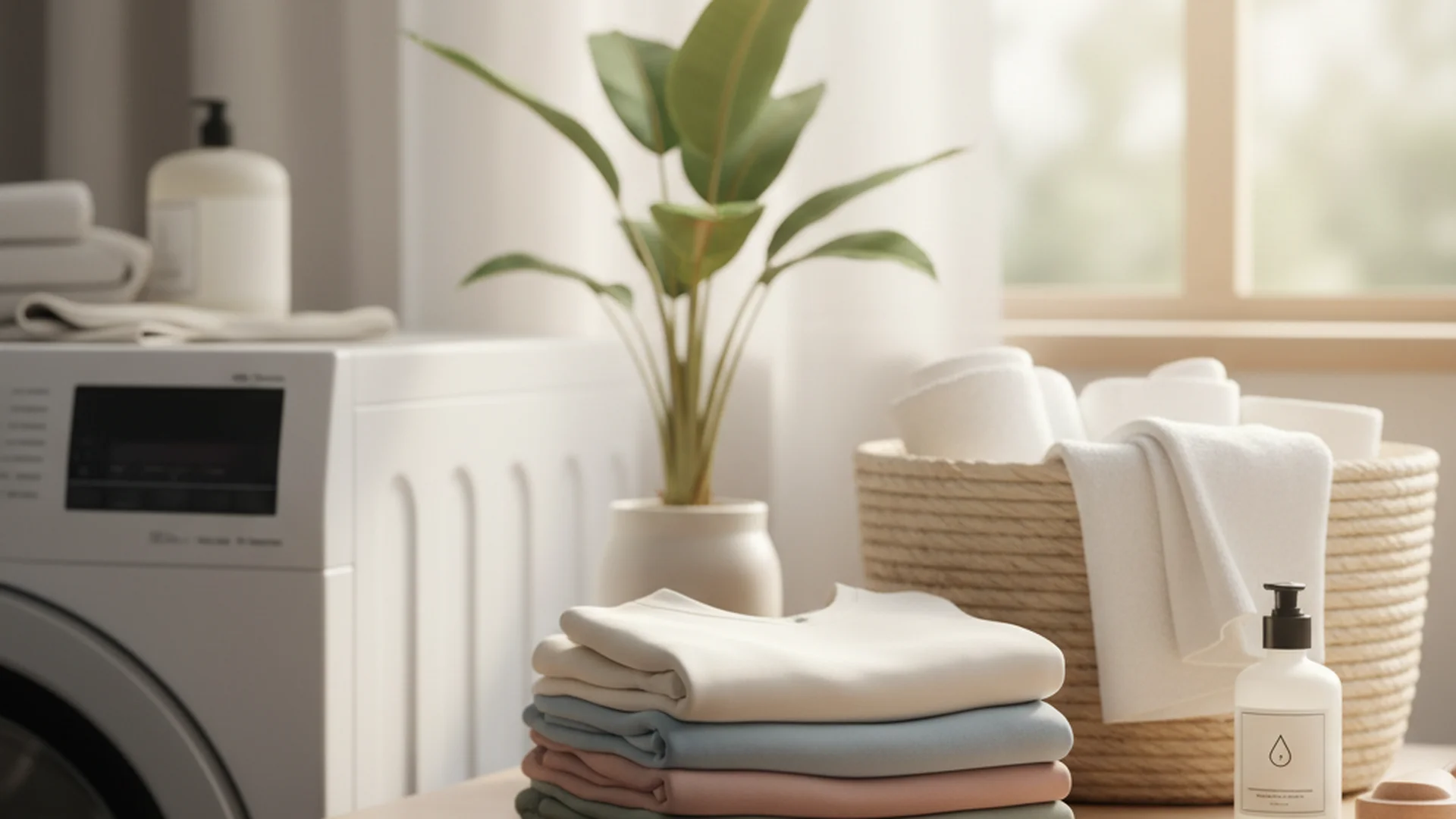
Before we dive into the schedule, it is vital to acknowledge the sheer volume of labor involved in a large home. Research from Whirlpool indicates that the average family processes approximately 2,184 pounds of laundry annually—roughly the weight of a black rhinoceros. In a family of seven, that figure can easily double.
Furthermore, the kitchen in a large home is cleaned an average of 20 to 25 times per month. This isn't just "tidying"; it is a high-traffic industrial operation. If you are trying to manage this alone, you aren't just a parent; you are an unpaid, full-time facility manager. To reclaim your time, we must shift the focus to "Functional Clean" over "Visual Perfection."
Note: A "Functional Clean" means the home is sanitized, organized, and ready for the next day’s activities, even if every toy isn't perfectly color-coded.
Phase 1: The Non-Negotiable Daily Resets
The biggest mistake large families make is waiting for the mess to become "worth" cleaning. In a large house, "cleaning as you go" is a survival skill. The following three habits form the foundation of any sustainable cleaning routine family members can actually stick to.
The "One Load a Day" Laundry Rule
In a large family, skipping even a single day of laundry causes a "laundry mountain" that takes days to conquer.
- Morning: Start a load immediately upon waking.
- Afternoon: Move it to the dryer before school pickup or after lunch.
- Evening: Fold and put away during a 15-minute family "basket party" while listening to music or a podcast.
Nightly "Closing Duties"
Borrowed from the restaurant industry, "Closing Duties" are the 15-20 minutes spent before bed resetting the common areas. This includes loading the dishwasher, wiping the kitchen hub, and a quick sweep of the living room floor.
The 5-Minute Room Sweep
Set a physical timer. For five minutes, every family member enters a designated room and puts away as many items as possible. When the timer dings, you stop. This prevents "cleaning fatigue" and teaches children that tidying is a sprint, not a marathon.
Success: One family of six reported that implementing "Closing Duties" reduced their morning stress levels by 40% because they no longer woke up to a "yesterday mess."
Phase 2: The Weekly Zone Cleaning Method
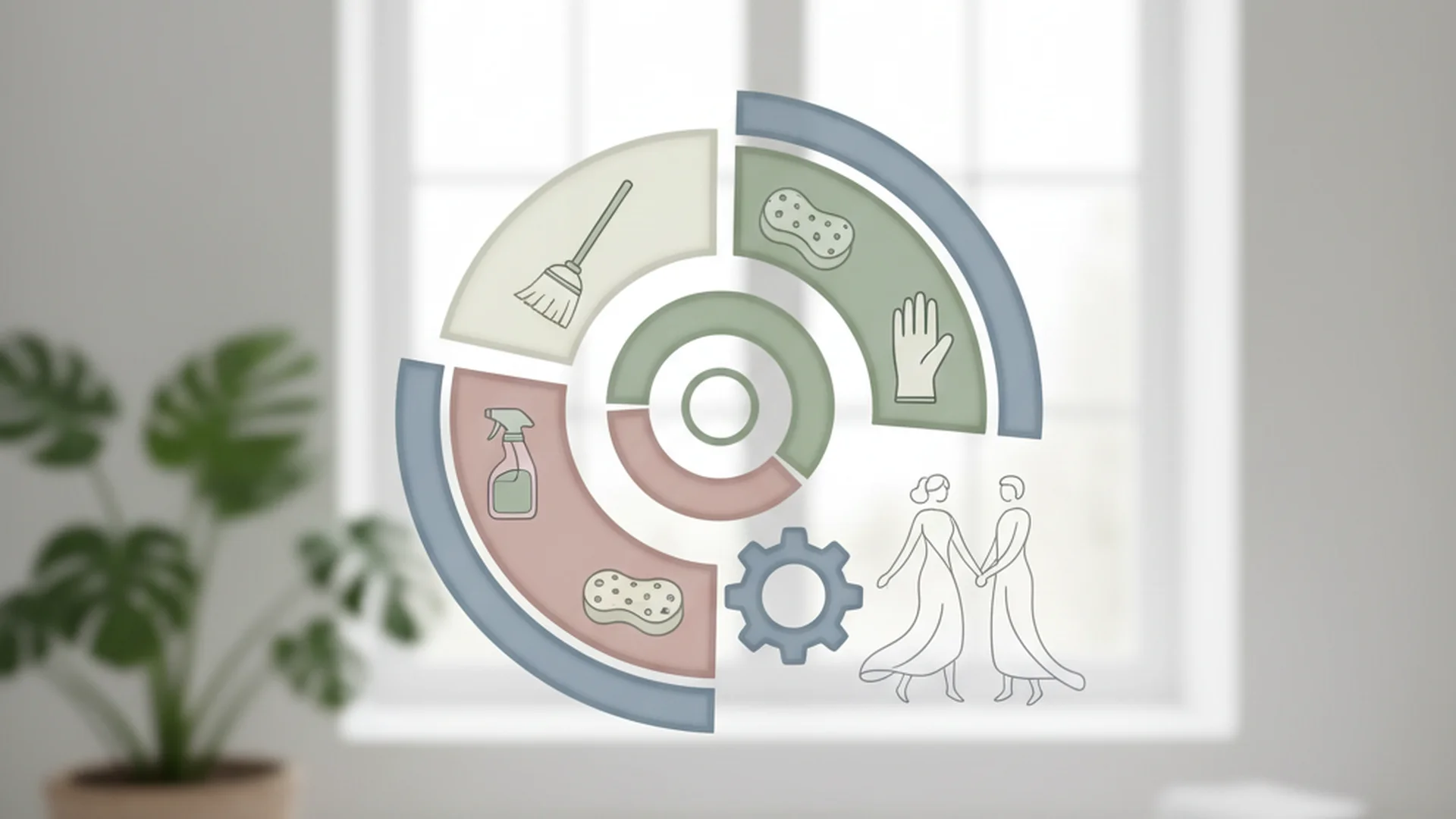
Instead of trying to clean the entire house in one day, assign one "zone" to each day of the work week. This ensures that deep cleaning happens on a rotating basis without occupying your entire Saturday.
| Day | Zone | Tasks |
|---|---|---|
| Monday | The Kitchen Hub | Degrease stovetop, wipe fridge exterior, mop floors. |
| Tuesday | Bathrooms | Scrub toilets, wipe mirrors, replenish towels. |
| Wednesday | Living Areas | Dust surfaces, vacuum under cushions, clean glass. |
| Thursday | Bedrooms | Change linens (rotating), dust fans, declutter toys. |
| Friday | Entry & Outdoors | Sweep porch, organize shoe racks, mail sorting. |
Tip: Use "habit stacking" during Zone Cleaning. Only allow yourself to listen to your favorite true-crime podcast or audiobook while you are working on your assigned zone.
Phase 3: Delegation by Capability
A common mistake for the "manager" of the house is failing to delegate. If the children live there, they are stakeholders in the environment. However, delegation in 2025 is moving away from "chores" and toward "ownership."
The "Ownership" Model
Instead of asking a teenager to "clean the bathroom" once a week, give them "ownership" of the upstairs bathroom. This means they are responsible for its state 24/7. They check for toilet paper, they wipe the sink when it’s dirty, and they ensure it is presentable for guests. This builds a sense of pride and reduces the "mental load" of the parent having to check every task.
Age-Appropriate Task Examples
- Toddlers (Ages 2-4): Putting toys in bins, matching socks, "dusting" with a clean sock on their hand.
- Young Children (Ages 5-8): Clearing the table, feeding pets, watering plants, emptying small trash cans.
- Pre-Teens (Ages 9-12): Loading/unloading the dishwasher, vacuuming, folding their own laundry.
- Teenagers (Ages 13+): Cooking one meal a week, cleaning bathrooms, mowing the lawn, deep-cleaning appliances.
Warning: Avoid the "Perfectionist Fallacy." If a six-year-old folds the towels and they are slightly crooked, leave them. Re-doing their work teaches them that their contribution isn't valued.
Tools of the Trade: 2025 Tech and Eco-Hacks
Large family cleaning in 2025 is significantly assisted by advancements in smart home technology and eco-minimalism.
AI-Driven Chore Management
New apps like Tody or Sweepy now integrate with LLMs to automatically adjust your schedule based on your family’s availability. If your teenager has a soccer tournament, the app redistributes their "zones" to other days or family members, preventing the schedule from breaking entirely.
High-Performance Robotics
For large families, a self-emptying robot vacuum/mop is no longer a luxury—it is an essential tool. Maintaining clean floors with 10+ feet walking around is a full-time job. A robot that mops and then washes its own mop pads can save a parent 5-7 hours of labor per week.
Eco-Minimalism
Large families are moving away from having 15 different plastic bottles under the sink. The trend is toward "all-in-one" eco-friendly concentrates. Using glass spray bottles with dissolvable tablets reduces clutter, saves money, and is safer for households with many small children.
Tip: Keep a "cleaning kit" (caddy with essentials) on every floor of the house to eliminate the excuse of "the supplies were downstairs."
Common Mistakes to Avoid
Even with the best cleaning schedule for a large family, certain habits can derail your progress.
- The "Wait for the Weekend" Trap: As mentioned, daily messes in a large home compound. If you don't clean as you go, your Saturday becomes a "cleaning prison," leading to resentment toward the family.
- Misjudging "Tidying" for "Cleaning": Putting things away (tidying) is not the same as scrubbing and sanitizing (cleaning). If your home is cluttered, you will spend all your energy moving items around and never actually get to the surfaces.
- Doing It All Alone: The "martyr" complex is the fastest way to burnout. A large family is a team; the home is the training ground for life skills.
- Neglecting the "Entryway Avalanche": In big families, the entryway is the first point of failure. If shoes and bags aren't managed the second people walk in, the mess migrates to the rest of the house.
Frequently Asked Questions
How do I keep the house clean with 4+ kids?
Should I use a chore chart or a cleaning app?
How can I stop the laundry from piling up?
Is it possible to have a 'perfect' house with a big family?
Conclusion
Transitioning to a systematic cleaning schedule for a large family isn't about scrubbing harder—it's about managing the flow of the household. By implementing daily resets, rotating through zones, and delegating ownership to every family member, you can transform your home from a source of stress into a sanctuary.
Remember, the goal of these systems is to buy you more time with the people who live inside those walls. Let go of perfectionism, embrace the "Functional Clean," and use the tools available in 2025 to make the mental load lighter for everyone.
Success: By automating floors with a robot vacuum and implementing the ownership model, many large families report gaining back over 10 hours of "leisure time" per week.
Cleaning that keeps score
Every task earns points, every streak multiplies them, and Premium adds a household leaderboard plus a monthly Dustagorgon to beat.
- Free forever
- 30 badges to earn
- Up to 6 in a household
No card needed. Set up your rooms in a couple of minutes.