In this article
What you’ll learn
- Always clean from the roof down to prevent re-washing surfaces.
- Avoid direct sunlight and bleach-based cleaners on rubber seals.
- Use the cleaning process as an opportunity to inspect for leaks and damage.
Owning an RV is the ultimate ticket to freedom, but that freedom comes with a significant responsibility: maintenance. Whether you are a full-timer or a weekend warrior, keeping your rig spotless is about more than just "curb appeal" at the campsite—it is a vital financial strategy to protect an investment that can cost thousands in annual upkeep.
Preparing for Your RV Deep Clean
Before you grab a hose, you need a plan. The scale of an RV makes it a much different beast than a standard car or a traditional home. As we move into 2025, the industry is seeing a massive shift toward specialized products designed for the unique materials found in modern campers, from TPO roofs to high-gloss fiberglass.
Essential Supplies and Materials
To follow a professional cleaning rv camper guide, you need the right kit. While many owners reach for whatever is in the garage, using the wrong chemicals can lead to expensive repairs.
- pH-Neutral Soap: Gentle on wax and ceramic coatings.
- Long-Handle Soft Bristle Brush: Essential for reaching the high points of the exterior.
- Microfiber Mitts and Towels: To prevent swirl marks on the finish.
- Aerospace-Grade UV Protectant: For seals and tires.
- Waterless Wash Spray: For cleaning in drought-prone regions.
Tip: If you are on a budget, many experts at the RV Cleaning Academy suggest that pH-neutral dish soaps like Dawn are safe for most surfaces and highly effective at cutting through road grease and bug splatter.
The Exterior: Starting from the Top
The golden rule of cleaning rv camper exteriors is the "Top-Down" Rule. Dirt, grime, and soapy residue will inevitably run down the sides of your vehicle. If you wash the walls first and then the roof, you’ll find yourself washing the walls a second time to remove the roof's runoff.
Roof Maintenance and Safety
The roof is the most critical part of your RV. Neglected roofs are the leading cause of leaks, which can result in water damage repairs costing between $800 and $2,800 per incident.
- Inspect First: Before applying water, walk the roof (if it is a walk-on roof) and check the lap sealant around vents and air conditioners. Look for cracks or "bubbling."
- Gentle Scrubbing: Use a dedicated roof cleaner or a mild detergent. Avoid petroleum-based products on rubber (EPDM) roofs, as they can cause the material to swell and detach.
- Rinse Thoroughly: Ensure all debris is washed off the edges.
Warning: Exercise extreme caution when using a pressure washer. While efficient, a high-pressure pinpoint stream can peel decals, damage delicate seals, and force water into vents where it doesn't belong. Always use a wide-fan spray.
Washing the Body Panels
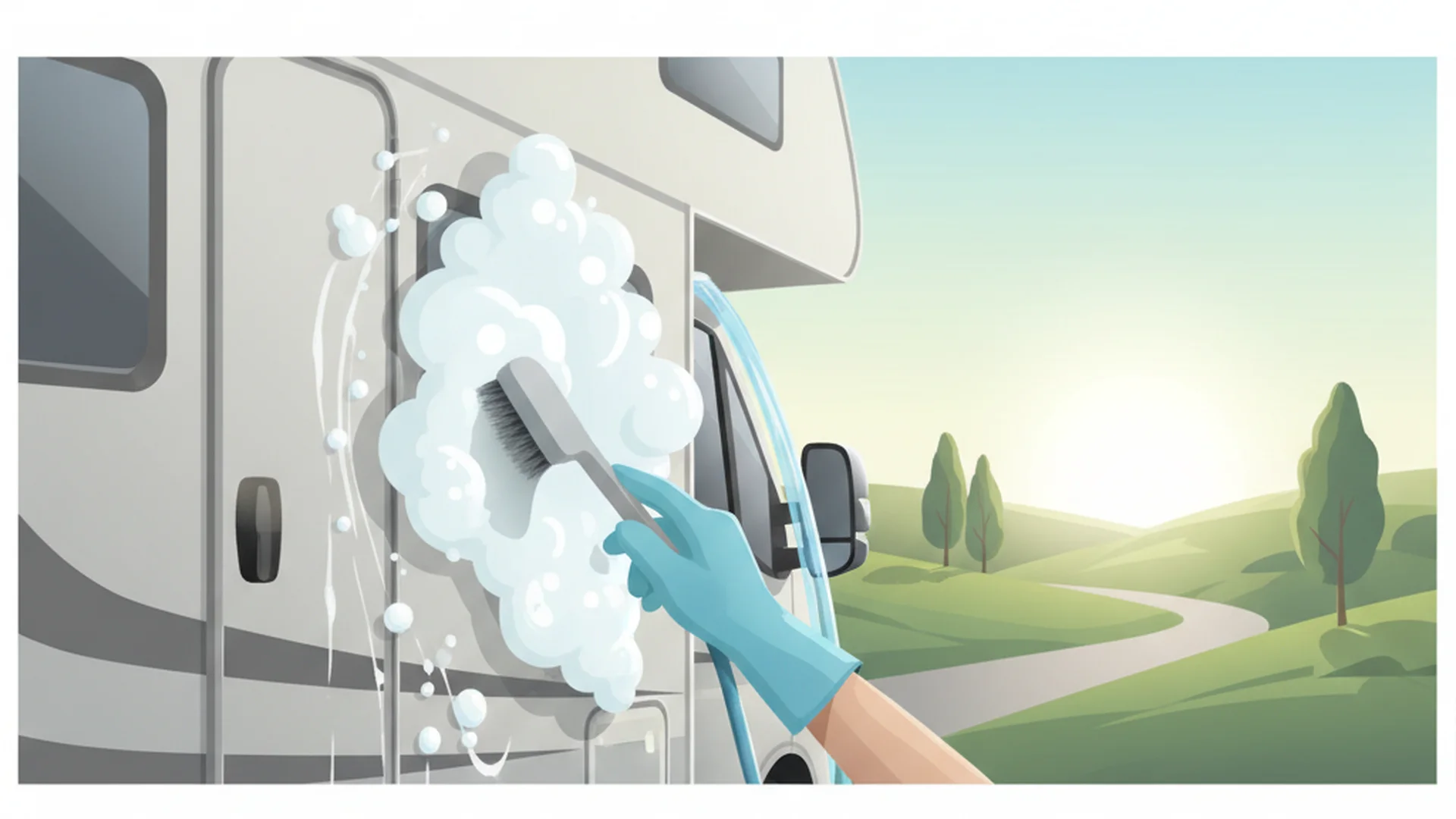
Once the roof is clear, move to the sides. This is where you should implement sectional cleaning. Wash and rinse in small sections (approximately 5x5 feet) to prevent soap from drying on the surface. Drying soap is the primary cause of stubborn etching and water spots.
Success: For a professional finish, many owners are now moving away from traditional paste waxes in favor of ceramic coatings or graphene sealants. These provide 1–2 years of UV protection and make future cleanings significantly faster.
Interior Deep Cleaning Strategies
The interior of a 2025 or 2026 model RV—such as those from Winnebago or Newmar—often features lighter, brighter aesthetics. While these look stunning, they are magnets for scuffs and dirt.
The "Dry Run" Strategy
Before you bring out any liquid cleaners, perform a "Dry Run." Remove all household items, cushions, linens, and clutter. This allows you to reach hidden nooks where dust and road vibration debris collect.
Upholstery and Surfaces
Modern RVs use a variety of materials including vinyl, faux leather, and performance fabrics. Use a high-quality upholstery cleaner and keep a "magic eraser" on hand for scuffs on the walls. However, be careful with abrasive sponges on high-gloss cabinetry.
Note: During storage or after a deep clean, place open boxes of baking soda in closets and the refrigerator. This absorbs moisture and prevents the "stale camper" smell that often plagues rigs during the off-season.
Maintaining the "Invisible" Systems
A complete cleaning rv camper tips list must include the plumbing system. A clean interior doesn't mean much if your sensors are misreading or your tanks are producing odors.
The Geo Method for Black Tanks
Many experienced RVers swear by the "Geo Method" to keep waste tanks clean. This involves using a combination of water softener (like Calgon) and laundry detergent. The softener makes the tank walls "slick," preventing waste and tissue from sticking to the sensors.
| Component | Cleaning Frequency | Recommended Method |
|---|---|---|
| Roof | 2x Per Year | Mild Soap & Soft Brush |
| Black Tank | After Every Trip | Geo Method / Flushing |
| Awning | Monthly | Mild Soap & Air Dry |
| Seals | Every 3 Months | UV Protectant Wipe |
Success: One RV owner in Florida reported that switching to the Geo Method and regular seal conditioning saved them over $1,200 in professional sensor repairs and leak mitigation over three years.
2025-2026 Cleaning Trends
The world of RV maintenance is evolving rapidly. Here are the trends to watch:
1. Eco-Friendly "Green" Cleaning
There has been an 825% surge in search interest for sustainable cleaning. As campers, we have a responsibility to the land. Phosphate-free, biodegradable cleaners are now the standard for those washing their rigs at campsites to ensure local water sources remain uncontaminated.
2. Waterless Wash Systems
With many regions facing water restrictions, high-lubricity waterless wash products are trending. These allow you to clean the entire exterior using only a spray bottle and a stack of microfiber towels—no hose required.
3. Smart Maintenance Integration
Newer 2025 models are featuring AI-integrated sensors. These can alert your smartphone when interior air quality is low (often due to high VOCs from harsh cleaning products) or when your tanks require a deep flush.
Common Mistakes to Avoid
Even seasoned travelers make mistakes that can devalue their rig. Avoid these common pitfalls:
- Washing in Direct Sunlight: This is the most frequent error. The sun evaporates water too quickly, leaving spots that are nearly impossible to remove without a machine polisher.
- Using Bleach on Seals: Never use bleach on rubber gaskets or window seals. It dries them out, leading to cracks and eventually catastrophic leaks.
- Leaving the Black Tank Valve Open: When hooked up at a park, keep the valve closed until the tank is full. Leaving it open allows liquids to drain while solids harden, creating the dreaded "poop pyramid."
- Retracting a Damp Awning: Rolling up a wet awning is a recipe for mold and mildew. Always ensure it is bone-dry before storing.
- Waxing Oxidized Fiberglass: Applying wax to "chalky" or faded fiberglass won't help. You must remove the oxidation with a rubbing compound first to restore the shine.
Frequently Asked Questions
Can I use dish soap to wash my RV?
How often should I clean my RV roof?
What is the best way to clean the awning?
Should I use a pressure washer on my camper?
Conclusion
Cleaning your RV is about more than just looking good at the trailhead; it is a fundamental part of the RV lifestyle that ensures your home-on-wheels remains safe, functional, and valuable. By following the "top-down" approach, embracing new eco-friendly technologies, and staying diligent with seal inspections, you can avoid the common pitfalls that lead to expensive repairs. Whether you are prepping for a cross-country journey or winterizing for the season, a clean rig is a happy rig.
Success: Regular cleaning can increase your RV’s resale value by as much as 15–20% compared to neglected units.
Cleaning that keeps score
Every task earns points, every streak multiplies them, and Premium adds a household leaderboard plus a monthly Dustagorgon to beat.
- Free forever
- 30 badges to earn
- Up to 6 in a household
No card needed. Set up your rooms in a couple of minutes.