In this article
What you’ll learn
- Always clean from the top floor down to the bottom to manage dust migration.
- Duplicate cleaning supplies on every level to reduce physical strain and save time.
- Utilize modern multi-floor mapping technology in robot vacuums for efficiency.
Owning a home with multiple floors offers beautiful architectural variety and separated living spaces, but it also presents a significant logistical challenge when it comes to maintenance. Successfully cleaning multi level home environments requires more than just a mop and a bucket; it requires a strategic approach to navigate stairs, manage heavy equipment, and combat the unique way dust travels through vertical spaces. In this 2025 guide, we will explore how to streamline your workflow so you can spend less time on the stairs and more time enjoying your home.
The Physics of Vertical Cleaning: Why Order Matters
One of the most common mistakes homeowners make is cleaning floors in a random order. In a multi-level environment, gravity is your biggest enemy—or your greatest ally. Because dust, pet hair, and dander naturally migrate downward through stairwells and air vents, your cleaning path must mirror this flow.
The Top-Down Workflow Strategy
To master a cleaning multi level home guide, you must embrace the "Top-Down" rule. This applies both to the house as a whole and to individual rooms. By starting on the highest floor, any debris that is kicked up or falls during the process will eventually be captured as you move to the lower levels.
- Phase 1: High Dusting: Begin at the highest point of the top floor (ceiling fans, crown molding, and vents).
- Phase 2: Mid-Level Surfaces: Wipe down counters, furniture, and windowsills.
- Phase 3: Floors and Stairs: Save the floors for last, working your way toward the staircase.
Tip: When cleaning vents, use a vacuum with a HEPA filter to prevent dust from blowing out and settling on the floors you just cleaned below.
Essential Equipment for Multi-Level Efficiency
Transporting a heavy, corded upright vacuum up and down three flights of stairs is not only exhausting—it’s a safety hazard. Stairways are one of the riskiest places in the house to lose your footing, and a bulky machine in your arms makes that far more likely. Minimizing the weight you carry is essential.
The Multi-Caddy System
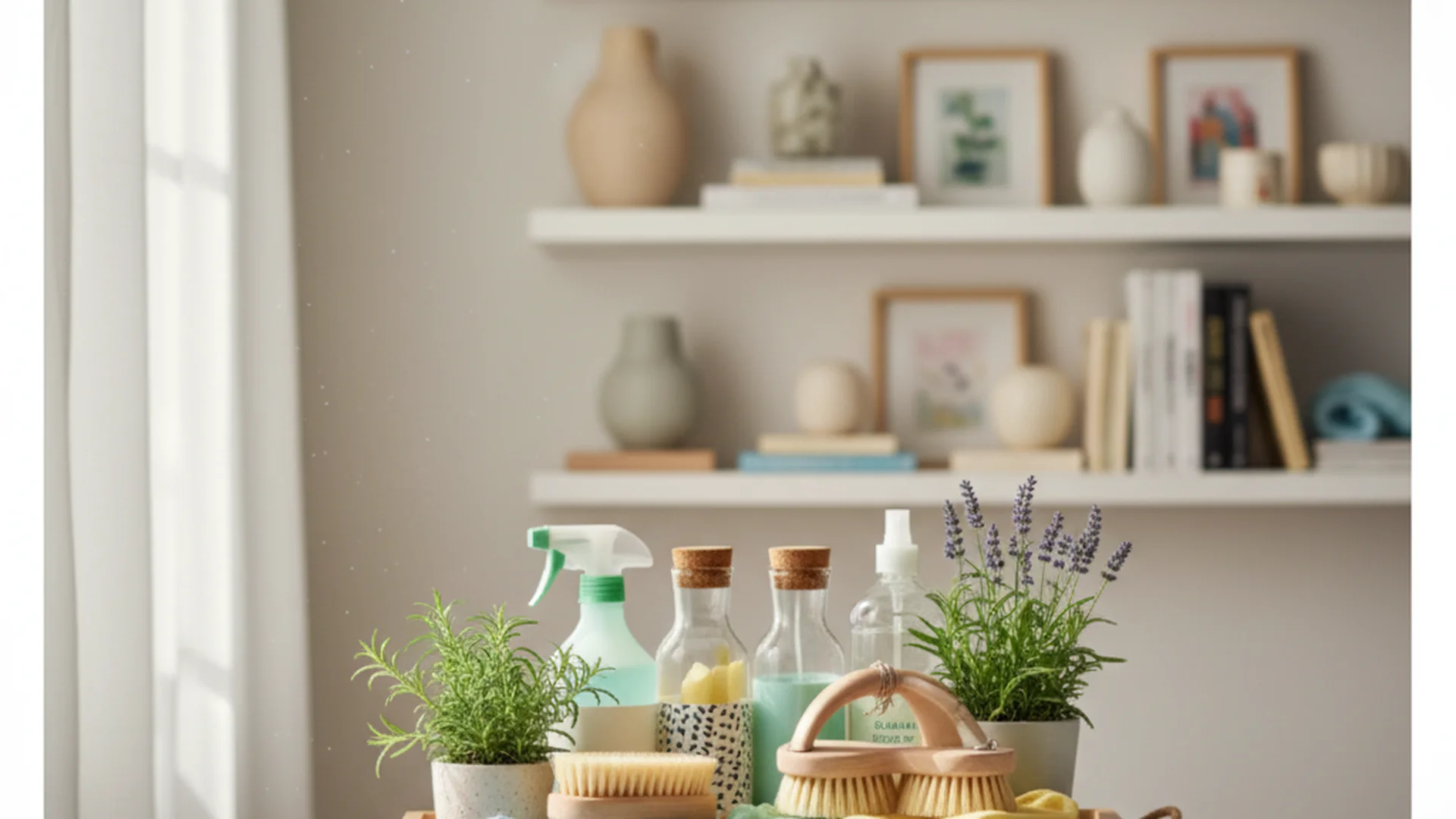
Instead of lugging a single bag of supplies across levels, duplicate your essentials. Place a small cleaning caddy on every floor, ideally tucked away in a linen closet or bathroom cabinet.
Each caddy should contain:
- All-purpose cleaner and glass cleaner
- Microfiber cloths (color-coded for different tasks)
- A small hand-held duster
- Disinfectant wipes for high-touch points
Vacuum Solutions for 2025
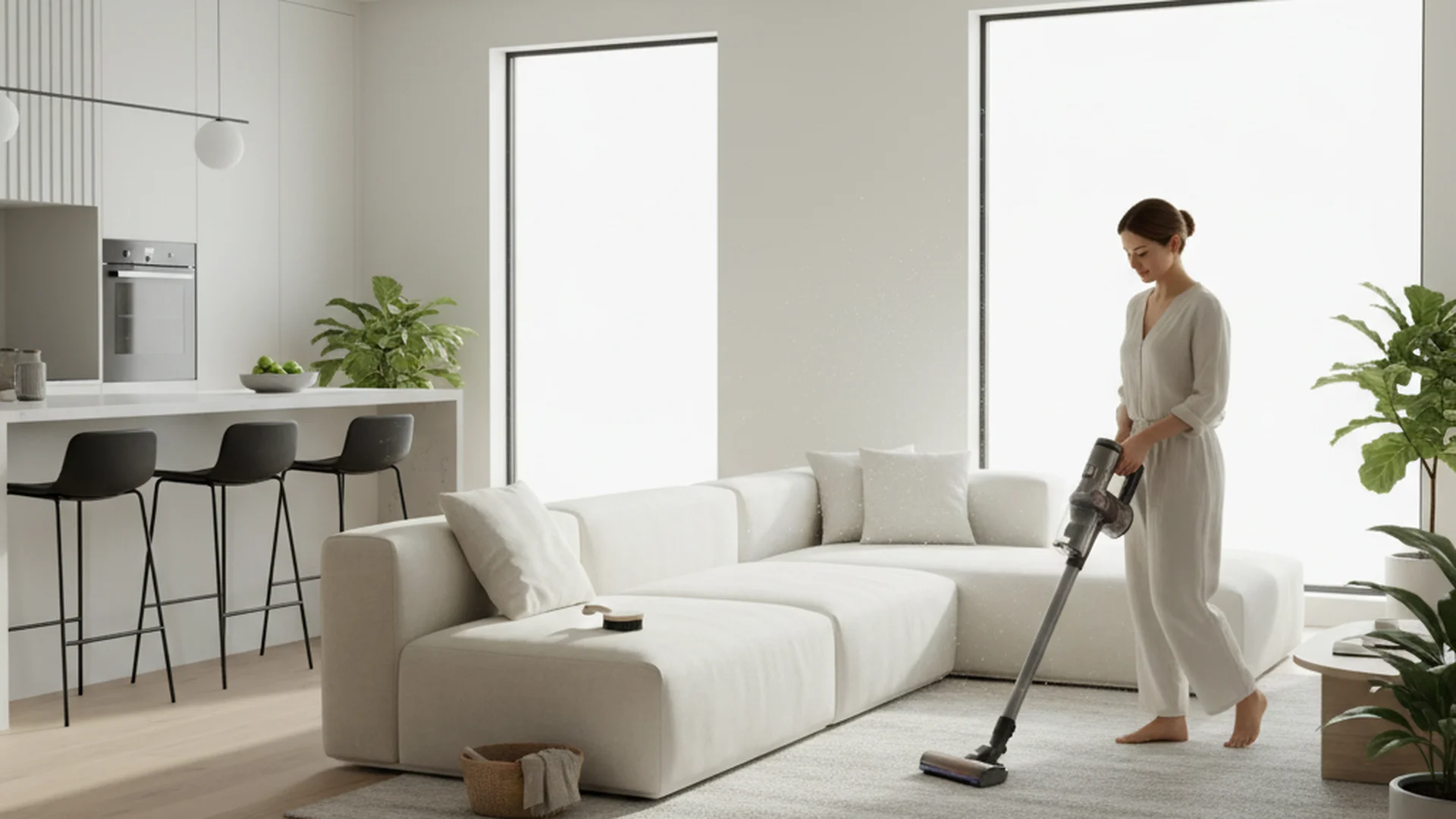
While you don't necessarily need a full-sized vacuum for every floor, having a lightweight cordless stick vacuum on upper levels can be a game-changer. For those who prefer automation, modern robot vacuums now feature sophisticated multi-floor mapping.
Note: Most 2025–2026 robot vacuum models (like those from Roborock or Dreame) allow you to save up to 4-5 different floor plans. You simply carry the unit to the new floor, and it will automatically recognize its location.
| Equipment Type | Best Use Case | Benefit |
|---|---|---|
| Cordless Stick Vacuum | Stairs and quick pickups | Lightweight and portable |
| Robot Vacuum | Open floor plans | Set-and-forget maintenance |
| Backpack Vacuum | Large multi-story homes | Maximum mobility for stairs |
| Probiotic Cleaners | All surfaces | Continues cleaning for 72 hours |
Mastering the Stairs: The High-Traffic Highway
Stairs are the most frequently used areas of a multi-level home and often the most neglected during a quick clean. They act as a "transfer zone" for dust and allergens.
Step-by-Step Stair Cleaning
When cleaning multi level home tips are discussed, the stairs deserve their own protocol. Start at the top step and work your way down. This ensures that any dirt pushed off a step falls onto a tread that has yet to be cleaned.
- Corners and Edges: Use a crevice tool. Dust tends to "dead zone" in the corners where the tread meets the riser.
- Handrails: These are among the most contaminated surfaces in a home. Use a disinfectant to wipe the entire length of the rail.
- Treads: For carpeted stairs, use a motorized hand tool. For hardwood, use a microfiber damp mop to avoid water pooling in the joints.
Warning: Never leave cleaning bottles or tools on the steps while you work. This is a leading cause of trips and falls during home maintenance.
Real-World Examples: Strategic Cleaning Scenarios
Example 1: The "Zone Cleaning" Busy Professional
James lives in a three-story townhouse. Instead of spending his entire Saturday cleaning, he uses the Zone Method. On Tuesday, he cleans the top-floor bedrooms. On Thursday, he tackles the middle-floor kitchen and living area. On Saturday, he only has to clean the ground-floor entryway and garage. This prevents "cleaning burnout" and keeps the home consistently tidy.
Example 2: The Multi-Floor Robot Deployment
The Rodriguez family uses a single high-end robot vacuum with "Multi-Floor Management." Every Monday morning, they place the robot on the third floor. While they eat breakfast, the robot maps and cleans. Before leaving for work, they move it to the second floor. By the time they return, two-thirds of the home's floors are finished without manual labor.
Example 3: Seasonal Deep Cleaning
During the spring, Sarah (our author) recommends a "Vertical Purge." Start at the attic or highest storage point and move items down and out. This ensures that dust from old boxes doesn't settle on newly cleaned lower levels during the decluttering process.
Modern Trends in Multi-Level Maintenance (2025–2026)
The cleaning industry has seen massive shifts heading into 2026. Two major trends are changing how we handle multi-story properties:
1. Stair-Climbing Robots
The most anticipated tech of 2026 is the emergence of autonomous stair-climbing vacuums. New models use bionic tracks or modular platforms to move between floors independently. While still premium-priced, they eliminate the need to manually move devices between levels.
2. Microbiome-Friendly Cleaning
There is a 2026 shift toward "bio-based" cleaners. These use probiotics to create a microscopic layer of "good bacteria" on your surfaces. These bacteria continue to consume organic matter (like skin cells and dust) for up to 72 hours after you finish wiping, which is particularly helpful for high-traffic stairwells.
Success: Utilizing probiotic cleaners can reduce the frequency of deep cleans by up to 30%, as surfaces stay biologically "active" and cleaner for longer.
Common Mistakes to Avoid
Even the most diligent cleaners can fall into traps when dealing with multiple levels. Avoid these common errors to keep your home in top shape:
- Cleaning the Stairs Last: Because stairs connect the floors, cleaning them last often means you've already tracked dust from the top floor onto the bottom floor's clean carpets. Clean stairs between floors.
- Forgetting the Handrails: As one of the most touched surfaces, neglecting handrails allows for the rapid spread of germs between family members.
- Carrying Heavy Corded Vacuums: This is a major safety risk. If you must use a corded vacuum, keep one on each floor or switch to a lightweight cordless model.
- Ignoring the HVAC Filters: In multi-level homes, the air return vents are often located on different floors. If filters are dirty, your cleaning efforts are wasted as the system circulates dust vertically.
Frequently Asked Questions
Should I start cleaning at the top floor or the bottom?
Do I really need a vacuum for every floor?
How do I handle a robot vacuum in a multi-level home?
How often should I clean the stairs?
Conclusion
Cleaning a multi-level home doesn't have to be an uphill battle. By implementing a top-down workflow, duplicating your supplies to minimize trips, and leveraging the latest 2026 cleaning technology, you can maintain a pristine home with half the effort. Remember that consistency is key—using the zone method to tackle one floor at a time can make the task feel manageable rather than monumental.
Success: A systematic approach to your multi-level home ensures a healthier living environment and protects your investment in your property.
Cleaning that keeps score
Every task earns points, every streak multiplies them, and Premium adds a household leaderboard plus a monthly Dustagorgon to beat.
- Free forever
- 30 badges to earn
- Up to 6 in a household
No card needed. Set up your rooms in a couple of minutes.