In this article
What you’ll learn
- Implement a 'Deep Before, Light After' approach to prevent re-entry shock.
- Utilize smart home technology like AI vacuums and smart thermostats for active maintenance.
- Prevent mold and odors by managing stagnant water and humidity levels.
For many of us, the thrill of frequent travel is often dampened by the reality of returning to a home that feels stale, dusty, or even neglected. If you find yourself cleaning travel often, you know that traditional cleaning schedules simply don’t work when you are away for two weeks out of every month. Maintaining a home while living a nomadic or high-travel lifestyle requires a fundamental shift from manual labor to "systems management."
In 2025, the goal isn't just to have a clean house; it’s to prevent stagnation, deter pests, and eliminate the psychological "re-entry shock" that occurs when you walk through the door after a long flight. By implementing proactive rituals and leveraging the latest in smart home technology, you can ensure your sanctuary remains pristine, no matter how many miles you are from home.
The Psychology of the Pre-Departure Clean
Why do we feel the need to scrub the baseboards right before heading to the airport? It turns out there is a significant psychological component to the pre-trip tidy. The overwhelming majority of frequent travelers make a point of cleaning their home before they leave.
The top priorities are almost always laundry, dishes, and bathrooms. This isn't just about aesthetics; it's about mental health. Plenty of travelers openly dread the thought of cleaning upon their return. By investing a few hours before departure, you effectively gift your "future self" a stress-free homecoming.
Note: The "re-entry shock" of a messy home can cut your "vacation glow" short, since your stress spikes the moment you see a pile of dirty dishes.
The "Fresh Start" Pre-Departure System
To master the art of cleaning travel often tips, you need a repeatable system. This system ensures that the organic elements of your home (food, water, fabrics) don't turn into liabilities while you are gone.
The 24-Hour Laundry Rule
One of the biggest mistakes frequent travelers make is leaving a "quick load" in the washer or dryer. In humid environments, mold and mildew can begin to grow on damp surfaces in as little as 24 to 48 hours.
Real-World Example: Consider a business consultant who travels every Monday. By finishing all laundry by Sunday morning, they ensure everything is dry and put away. If they left a damp load in the washer, they would return Friday night to a house that smells like mildew—a scent that is notoriously difficult to remove from drywall and upholstery.
The "Clean Sheets" Strategy
There is no better feeling than returning from a hotel to a bed that feels just as luxurious. Always change your bedding the morning of your departure. This serves two purposes: it ensures you aren't leaving skin cells and sweat to settle for weeks, and it provides the #1 way to reduce travel fatigue upon your return.
Zero-Waste Fridge Audit
Instead of a scorched-earth policy where you throw everything away, use the "Eat, Freeze, or Compost" method.
- Eat: Plan your last three meals around perishables (eggs, milk, greens).
- Freeze: Items like bread, butter, and even some hard cheeses can be frozen.
- Compost: Get rid of anything that will liquefy while you're away.
Tip: Wipe down your fridge shelves with a diluted vinegar solution before you leave. This kills bacteria that thrive in the dark, closed environment of a fridge that isn't being opened regularly.
Smart Home Automation: Your Virtual Cleaning Crew
Smart home tech is now a fixture in a huge share of households. For those who are cleaning travel often, this technology is the primary method for "active" cleaning while the house is empty.
AI-Integrated Robotic Vacuums
The latest 2025 models, such as the Dreame X40 or Roborock S8 series, have revolutionized the best cleaning travel often strategies. These devices no longer just bounce off walls; they use AI to detect "high-dirt" areas and will automatically clean those zones more frequently while you are away.
Warning: While modern robots have AI obstacle avoidance, it is best to schedule them for mid-day. This allows you to check the camera feed (if equipped) to ensure the vacuum hasn't encountered a "surprise" like a leaked pipe or a stray cable.
Climate and Air Management
A common misconception is that turning off the HVAC system saves money. In reality, it can lead to disaster. In 2025, the industry standard is to use a smart thermostat to keep the home between 55°F (winter) and 78°F (summer). This prevents pipes from freezing or humidity from reaching the 60% threshold where mold spores become active.
| Feature | Travel Setting (Summer) | Travel Setting (Winter) | Purpose |
|---|---|---|---|
| Thermostat | 78°F | 55°F | Prevent mold/pipe bursts |
| Air Purifier | Auto / Low | Auto / Low | Filter "travel dust" |
| Dehumidifier | 45% Humidity | Off | Prevent dampness |
Preventing the "Stale Home" Smell
Have you ever walked into your home after a week away and noticed a funky, metallic, or "old" smell? This is usually caused by stagnant water in P-traps and drains. When water evaporates from these traps, sewer gases can enter the home.
Sink and Disposal Sanitation
Before you head out, run a few lemon wedges or a cup of ice through the garbage disposal. This clears out organic matter that would otherwise rot and attract fruit flies.
Success: Pouring a tablespoon of vegetable oil into your drains (especially floor drains or guest showers) creates a thin film on top of the water. This prevents evaporation, keeping the P-trap sealed and the sewer smells out for weeks at a time.
The Dust Myth
Many travelers believe that because the windows are closed, the house won't get dusty. However, "travel dust" is actually composed of up to 60% outdoor soil and pollutants that settle when air circulation stops. To combat this, leave your HEPA air purifiers on "Auto" mode. They will kick in if pollutants rise, keeping the air moving and filtered.
Recent Trends in Travel-Friendly Homes (2025-2026)
As we move into 2026, home design is shifting to accommodate the "lock-and-leave" lifestyle. If you are renovating, consider these low-maintenance options:
- Quartz Countertops: Unlike marble or granite, quartz is non-porous. It won't harbor bacteria or require sealing, making it perfect for long absences.
- SPC (Stone Plastic Composite) Flooring: This is the gold standard for frequent travelers. It is waterproof and won't warp if a localized leak occurs while you are away.
- UV-C Sanitizing Gadgets: A rising trend for 2026 is the use of small UV-C light sanitizers in bathrooms. These devices periodically sanitize toilets and sinks without the need for harsh chemicals that can evaporate or lose potency.
- Concentrate Cleaning Tablets: Sustainability is key, with travelers increasingly prioritizing eco-friendly choices. Brands like Blueland offer cleaning tablets that don't expire or leak, which is ideal for a "travel-ready" cleaning kit.
Common Mistakes to Avoid
Even the most seasoned travelers make errors that can lead to a cleaning nightmare upon return. Here are the most frequent pitfalls:
1. Closing the Dishwasher Fully
A tightly sealed, slightly damp dishwasher is essentially a greenhouse for mold.
Tip: Leave the dishwasher door cracked by an inch. This allows air circulation and prevents that swampy smell from developing in the filter.
2. Leaving the Main Water On
For any trip longer than seven days, leaving the main water valve open is a massive risk. A small leak in a toilet flapper or a fridge line can cause catastrophic damage. The Fix: Install a smart water shut-off valve. You can control these via an app, allowing you to turn the water off as you pull out of the driveway and back on just before you arrive home.
3. Forgetting the "Travel Gear"
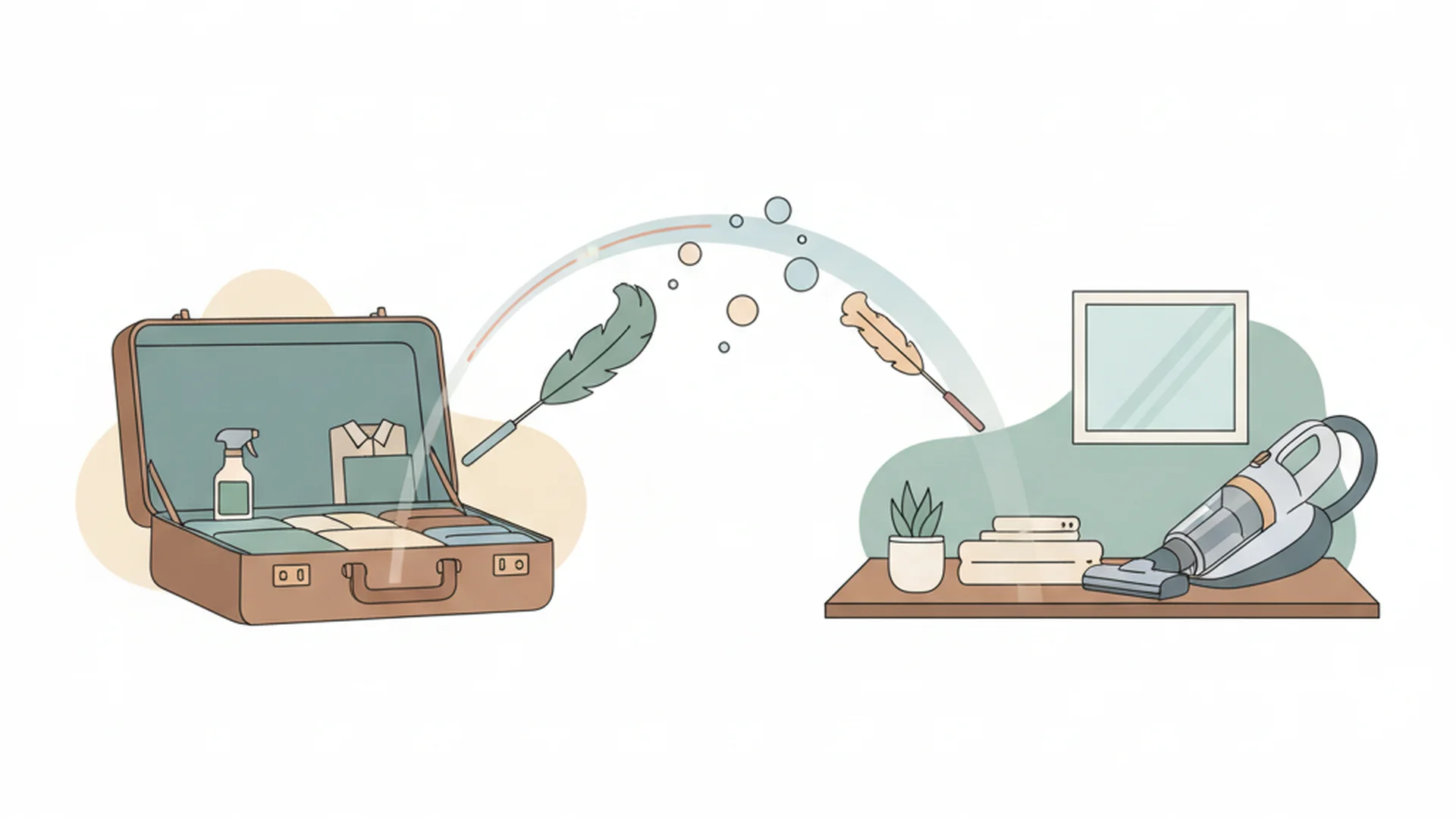
You clean your house, but do you clean what you bring into it? Luggage is a primary carrier for bedbugs and outdoor germs. Real-World Example: A frequent traveler to New York City may inadvertently pick up pathogens on the subway or hotel carpets. If they roll their suitcase directly into their bedroom, they are bypassing all their home cleaning efforts. Always use a disinfecting wipe on suitcase wheels and handles before bringing them inside.
Frequently Asked Questions
Should I clean before or after my trip?
Is it safe to leave a robot vacuum running while I’m away?
How do I prevent fruit flies while I'm traveling?
Should I unplug all my electronics?
Conclusion
Mastering the art of cleaning travel often is about working smarter, not harder. By establishing a 24-hour laundry rule, utilizing the latest in AI-integrated cleaning technology, and making small adjustments like cracking the dishwasher door, you can ensure your home remains a welcoming sanctuary rather than a source of post-travel stress.
As the "lock-and-leave" lifestyle becomes more common in 2025 and 2026, these systems-based approaches are no longer just for the elite traveler—they are essential tools for anyone who values their time and their home's longevity.
Success: By following this "Fresh Start" system, you’ll find that the "re-entry shock" disappears, allowing you to transition from your travel adventures back to home life with ease and comfort.
Cleaning that keeps score
Every task earns points, every streak multiplies them, and Premium adds a household leaderboard plus a monthly Dustagorgon to beat.
- Free forever
- 30 badges to earn
- Up to 6 in a household
No card needed. Set up your rooms in a couple of minutes.