In this article
What you’ll learn
- Move from marathon cleaning to a 20-minute "Closing Shift" system.
- Utilize 2025 smart tech to automate hours of manual labor every week.
- Involve children through gamification to reduce the long-term mental load.
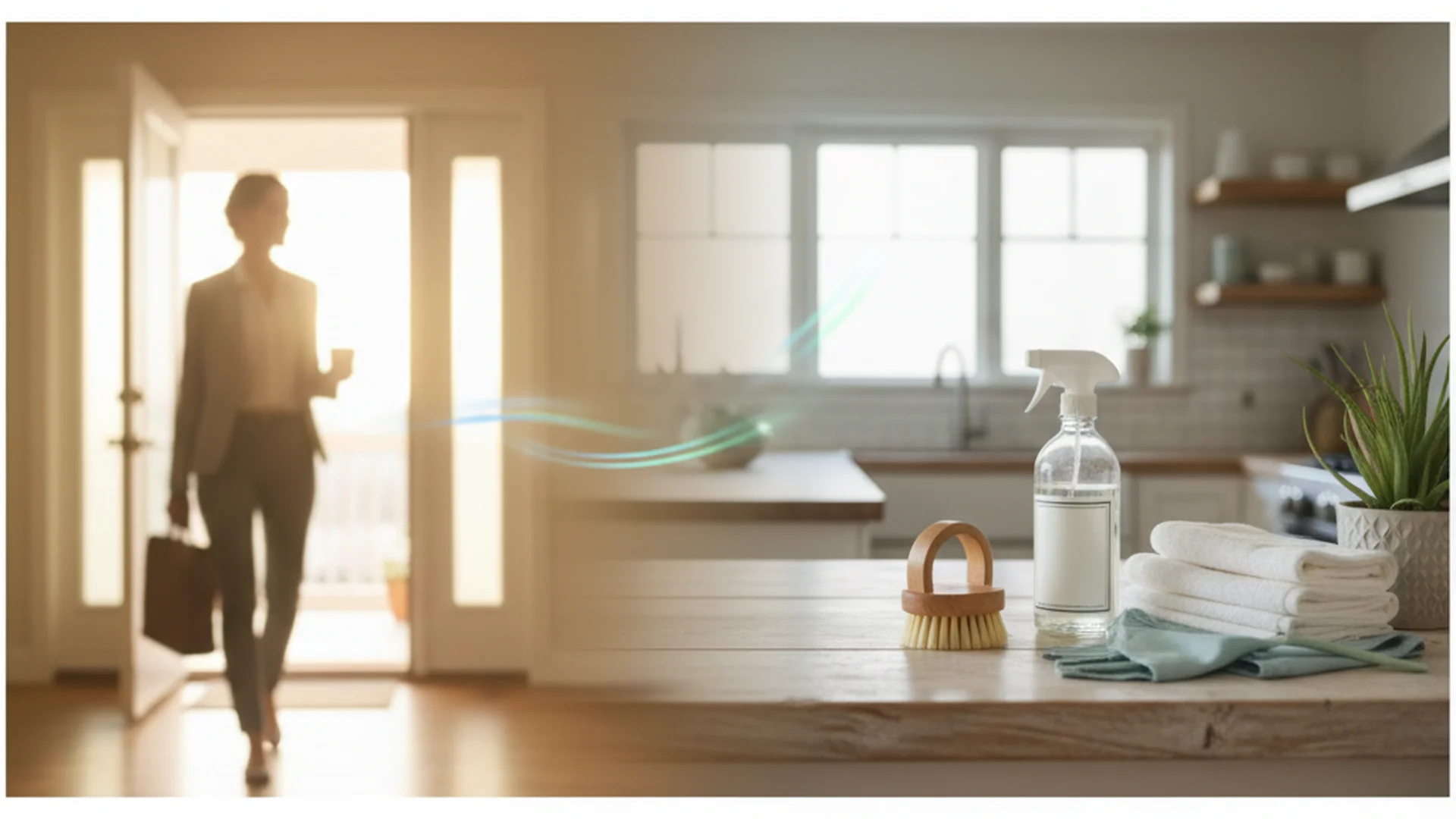
For many professional men, the workday doesn’t end when the laptop closes; it simply transitions into the "second shift." Balancing professional KPIs with the demands of fatherhood is a constant juggling act, and often, the state of the home is the first thing to suffer. Establishing a cleaning routine working dad professionals can actually stick to is not just about aesthetics—it’s about mental clarity and family leadership. When you return home to a cluttered environment, your brain remains in a high-alert state, making it impossible to truly decompress and engage with your children.
The Science of the Clean Home for Fathers
Before diving into the "how," we must understand the "why." In my work as a Domestic Efficiency Specialist, I often see dads who view cleaning as a low-value chore that takes time away from their kids or their career. However, the opposite is true.
Fathers employed full time already sink a serious chunk of every single day into household activities. While that is an increase on previous generations, many dads still feel "behind." By implementing the best cleaning routine working dad households rely on, you aren't just cleaning a floor; you are taking the friction out of the hours you spend at home and protecting yourself from work-related burnout.
Furthermore, your participation in the home has a "force multiplier" effect. Children take their cue from what they see modelled far more than from what they are told. You are essentially training your future support team.
Success: Active fathers create a culture of contribution, reducing their own workload over time as children age into more complex responsibilities.
The System: The 15-Minute Daily Reset and The Closing Shift
The biggest mistake most working dads make is "Marathon Cleaning." This is the habit of ignoring the house all week and then spending six hours on Saturday scrubbing baseboards. This ruins your weekend and creates a cycle of resentment. Instead, we use two industry-proven concepts: The Closing Shift and the 15-Minute Daily Reset.
The Closing Shift (20 Minutes)
Borrowed from the service industry, the "Closing Shift" happens after the kids are in bed. This is not a deep clean; it is a "reset" for the following morning.
- Clear the Surfaces: Wipe down the kitchen island and dining table.
- The Dishwasher Cycle: Load and start the dishwasher so it’s ready to be emptied while the coffee brews the next morning.
- The "5-Minute Sweep": Walk through the main living area with a basket, picking up stray toys, shoes, or mail.
The 15-Minute Daily Reset
This occurs immediately after work or during a transition period. Use this time for high-impact zones—entryways, kitchen counters, and the living room floor.
Tip: Use the "2-Minute Rule." If a cleaning task takes less than two minutes (like hanging up a coat or rinsing a protein shaker), do it immediately. This prevents "clutter creep."
High-Tech Efficiency: The 2025 Dad’s Toolkit
We are living in the golden age of domestic automation. These days, most dual-income households use at least one smart cleaning device. If you aren't utilizing these, you are essentially choosing to do manual labor that a machine could handle for pennies on the hour.
The Robot Ecosystem
Modern "All-in-One" docks are the standard for the best cleaning routine working dad efficiency. These units don’t just vacuum; they wash and dry their own mops. This reduces your manual maintenance to once a week (emptying the dust bin and refilling the water tank).
AI-Integrated Scheduling
Apps like Tody or Sweepy can now sync with your professional calendar (Outlook or Google). If the AI sees you have a day packed with back-to-back meetings, it will suggest only a 5-minute task. On a "light" Friday, it might suggest a 20-minute bathroom scrub.
Note: Technology is a force multiplier, but it is not a replacement for a routine. A robot vacuum cannot pick up socks; you must clear the path for the tech to work.
Zone Cleaning: The Weekly Breakdown
Instead of trying to clean the whole house at once, assign one "zone" to each day of the week. This keeps the daily commitment low while ensuring the entire home stays maintained.
| Day | Zone | Tasks |
|---|---|---|
| Monday | Bathrooms | Wipe mirrors, scrub toilets, replace towels. |
| Tuesday | Floors | Vacuum/Mop high-traffic areas, shake out rugs. |
| Wednesday | Kitchen | Deep wipe appliances, clean out the fridge of expired items. |
| Thursday | Bedrooms | Change linens, dust nightstands, clear floor clutter. |
| Friday | Entryway/Garage | Organize shoes, sweep porch, clear out car trash. |
| Weekend | Power Hour | One 60-minute "deep" focus on a rotating project. |
Warning: Never mix bleach with ammonia-based cleaners. When cleaning bathrooms or kitchens, always ensure proper ventilation, especially with children nearby.
Involving the Family: Gamification and Body Doubling
A common frustration for working dads is feeling like the "janitor" of the house rather than the leader. To fix this, you must change how you delegate.
Gamification
Children respond to challenges, not orders. Use a "Beat the Clock" system. Set a timer for 10 minutes and see if the family can get the living room "reset" before the buzzer.
Body Doubling
This is a productivity technique where you work alongside someone else. Instead of telling your kids to clean their rooms while you watch TV, tell them, "I'm going to fold laundry in the living room while you organize your Lego bins." Your presence provides the focus they need to stay on task.
Real-World Examples of Efficiency
Example 1: The "Morning Commute" Micro-Clean John, a software engineer and father of two, cleans his microwave every Tuesday while his coffee is brewing. He wipes the bathroom mirror every morning while brushing his teeth. These "habit-stacked" moments mean he never has to "schedule" these tasks.
Example 2: The Saturday Morning Power Hour Mark, a sales director, puts on a high-energy podcast at 9:00 AM every Saturday. For exactly 60 minutes, he works at maximum speed on that week's "Zone." When the timer hits 60:00, he stops—regardless of perfection. This protects his Saturday afternoon for family time.
Example 3: Standardizing Supplies Keep a cleaning caddy on every floor of the house. Dads often lose 10-15 minutes just looking for the right glass cleaner or a microfiber cloth. By having a "standardized kit" in every bathroom and the kitchen, you remove the friction of starting the task.
Common Mistakes to Avoid
- The Perfectionism Trap: Many dads think, "If I can't do it perfectly, I won't do it at all." Remember: A "good enough" clean on a Tuesday is significantly better than a "perfect" clean that never happens.
- The Tool Trap: Buying every gadget in the world (cordless vacuums, steam mops, power scrubbers) won't help if you don't have a system. Tools support the routine; they don't create it.
- Ignoring the Mental Load: Cleaning isn't just physical labor; it's noticing what needs to be done. The most successful dads take the initiative to see a full trash can and empty it, rather than waiting for their partner to ask.
- The "Hero" Complex: Trying to do everything yourself to "save" your partner or kids. This leads to burnout and a family that doesn't know how to maintain their own environment.
Frequently Asked Questions
How can I clean the house when I only have 15 minutes after work?
What is the most efficient order to clean a room?
How do I get my kids to help without it becoming a shouting match?
Is a deep clean once a month better than daily maintenance?
Conclusion
Mastering a cleaning routine working dad lifestyle isn't about becoming a professional cleaner; it’s about becoming a more efficient man. By implementing the "Closing Shift," leveraging 2025 automation tech, and involving your family in the process, you reclaim your most valuable asset: your time. Stop spending your Saturdays catching up on housework and start spending them making memories with your children.
Success: By following this structured approach, you will cut hours off your weekly cleaning time while maintaining a higher standard of living.
Cleaning that keeps score
Every task earns points, every streak multiplies them, and Premium adds a household leaderboard plus a monthly Dustagorgon to beat.
- Free forever
- 30 badges to earn
- Up to 6 in a household
No card needed. Set up your rooms in a couple of minutes.