In this article
What you’ll learn
- Cleaning meditation helps bring down everyday stress levels
- Mindful movement provides a physical anchor for those who struggle with sitting meditation
- The goal is the process of cleaning, not just the result of a tidy room
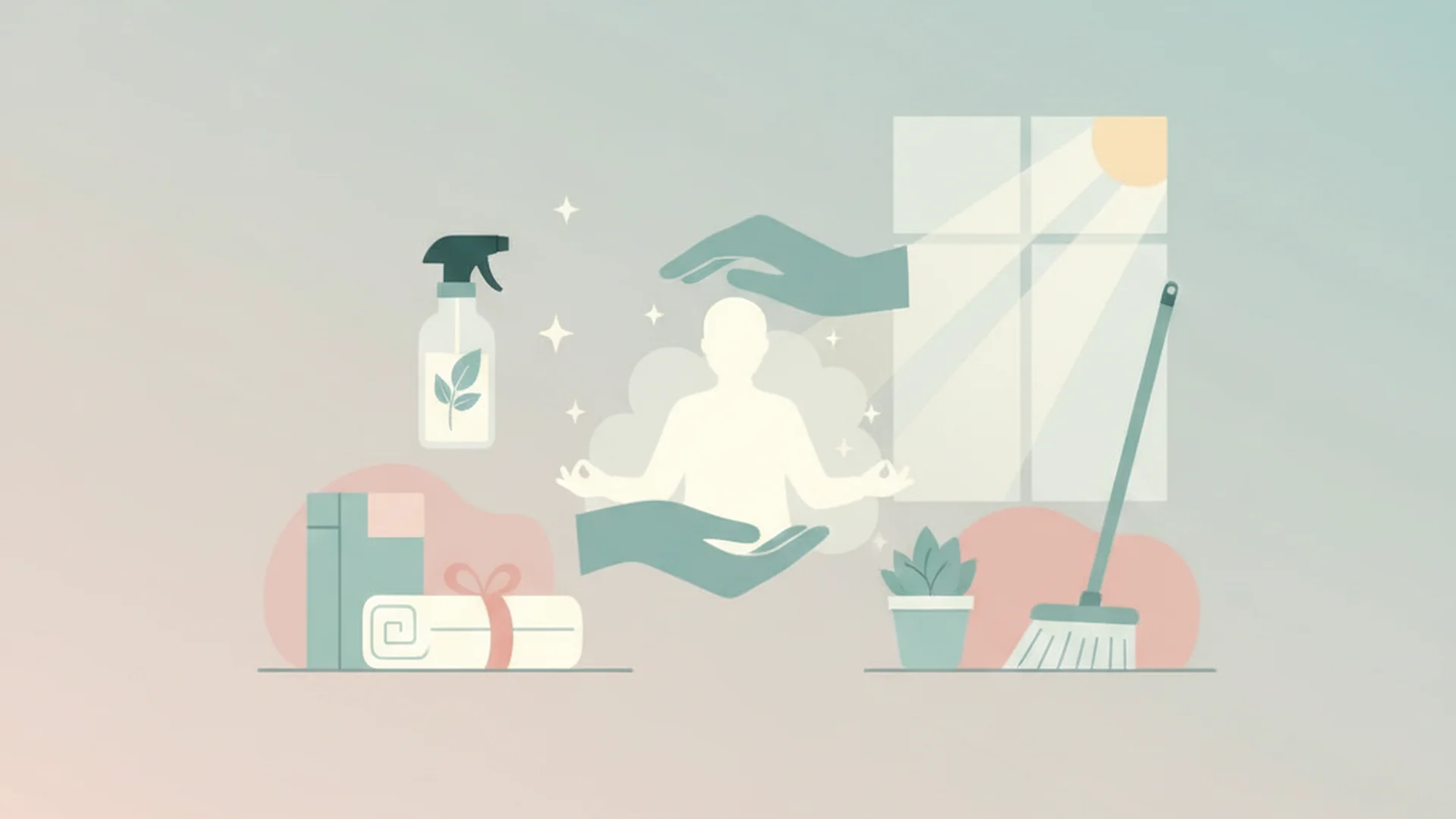
In our fast-paced, digitally saturated world, the act of cleaning is often viewed as a burdensome chore—something to be rushed through or outsourced. However, a growing movement in wellness and mental health is reclaiming the broom and the sponge. This practice, known as cleaning meditation, shifts the focus from the "destination" of a clean room to the "journey" of the cleaning process itself. By approaching housework with intentionality and presence, we can transform mundane tasks into a powerful tool for stress reduction and mental clarity.
Whether you are looking for cleaning meditation help to manage a busy mind or simply want to find more peace in your daily routine, understanding the intersection of mindfulness and home maintenance is the first step toward a more harmonious life. In this guide, we will explore why it works, the philosophy behind it, and the practical steps to turn your home care into a restorative ritual.
Why a Mindful Home Feels Different
The concept of "Zen cleaning" has roots in ancient monastic traditions, but you don't need to take it on faith to notice the effect. The relationship between our physical environment and our mental state is profound.
The Cortisol-Clutter Connection
Our physical surroundings shape our internal stress levels. Living in a cluttered, disorganized home keeps the body's stress response quietly switched on in a way that an ordered space does not. When we practice cleaning meditation, we aren't just tidying a room; we are actively winding that response back down.
Reducing Cognitive Load
Physical clutter acts as "visual noise." It competes for your brain’s attention, which limits your ability to process information and reduces your overall focus. By engaging in cleaning meditation, you are essentially "muting" this noise, allowing your prefrontal cortex to function more efficiently.
The "Mindful Dishwashing" Effect
Consider one of the most dreaded chores: the dishes. People who wash dishes mindfully—focusing on the scent of the soap, the warmth of the water, and the feel of the porcelain—consistently describe feeling calmer and more mentally refreshed afterwards. Any chore, no matter how small, can serve as a potent meditative anchor.
Success: Practicing cleaning meditation for just 15 minutes a day can help lower daily anxiety levels and improve your ability to focus on complex tasks.
Why Cleaning is the Best Meditation for ADHD
For many people, particularly those with ADHD or high-energy temperaments, traditional sitting meditation can be an exercise in frustration. The instruction to "sit still and clear your mind" often leads to increased restlessness.
This is where cleaning meditation offers a distinct advantage. Because it involves movement, it provides a physical "anchor" for the mind. Movement-based mindfulness stimulates the prefrontal cortex and increases dopamine levels—neurotransmitters that are often lower in those with ADHD. By focusing on the rhythmic motion of a broom or the circular pattern of a polishing cloth, individuals with ADHD can achieve a "flow state" that sitting meditation rarely provides.
Note: If you find sitting still impossible, don't force it. Use cleaning as your primary mindfulness practice to engage your body and mind simultaneously.
Expert Recommendations: The Monk’s Guide to a Clean Mind
Shoukei Matsumoto, a Buddhist monk and author of A Monk's Guide to a Clean House and Mind, suggests that the way we treat our home reflects the way we treat our souls. Here are the core principles of his approach:
1. The Morning Ritual
Matsumoto recommends performing your main cleaning tasks in the morning. This is not about productivity; it is about "purification." By cleaning early, you set a disciplined, calm tone for the rest of the day. It prepares the "temple" of your home for the day's activities.
2. Respect the "Soul" of Objects
In the Zen tradition, there is no distinction between "sentient" and "non-sentient" when it comes to care. Treating your tools—your brooms, cloths, and sponges—with respect is vital. If you throw your tools into a messy cupboard, you are practicing disrespect. Matsumoto argues that "people who don't respect objects don't respect people."
3. The 5-Sense Scan
As you clean, do a conscious check-in with your senses to maintain presence:
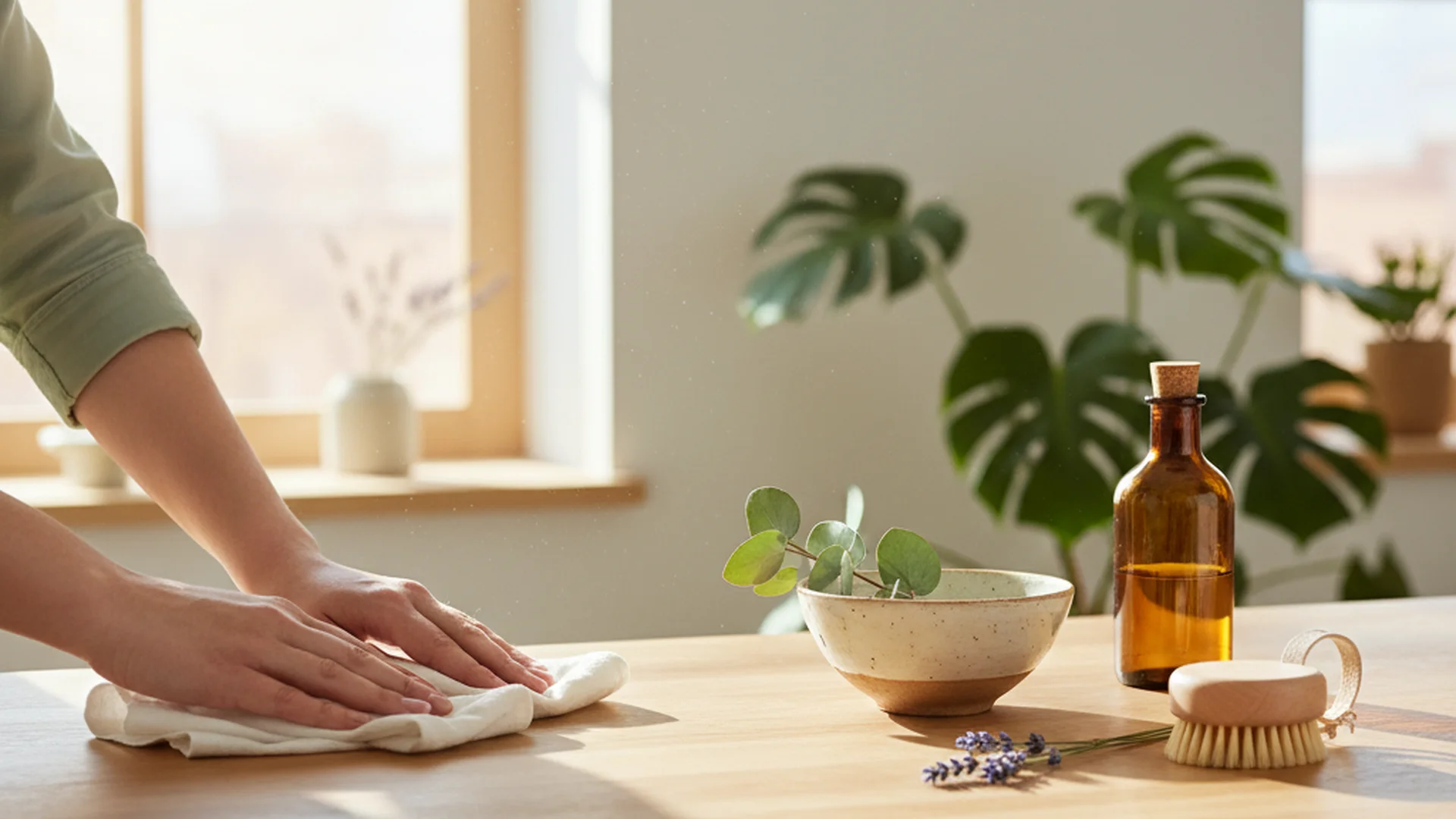
- Touch: Notice the texture of the wood under your cloth or the warmth of the water on your hands.
- Smell: Choose natural scents like citrus, lavender, or eucalyptus to stimulate the olfactory system.
- Sight: Observe the visual transformation. Watch the dust disappear or the glass become clear.
- Sound: Listen to the rhythmic "swish-swish" of the broom or the low hum of the vacuum.
- Taste: While not always applicable, notice the clean air you breathe after a room is refreshed.
Tip: Match your movements to your breathing. Exhale as you push a mop or broom away from you, and inhale as you bring it back. This synchronization anchors you firmly in the present moment.
Real-World Examples of Cleaning Meditation
Example 1: The Rhythmic Vacuum
Instead of trying to finish the living room as fast as possible, focus on the lines you are creating in the carpet. Listen to the change in pitch of the vacuum motor as it moves across different surfaces. Feel the vibration in the handle. This turns a loud, intrusive chore into a focused exercise in sensory awareness.
Example 2: The Mindful Laundry Fold
Folding laundry is an excellent opportunity for "Slowmaxxing." Instead of watching TV while you fold, sit in silence. Feel the different textures of the fabrics—the softness of cotton, the crispness of linen. Focus on making each fold precise and intentional. Treat each garment as if it were a valuable treasure.
Example 3: The Window of Clarity
Wiping down a window or mirror is a perfect metaphor for clearing the mind. As you remove the smudges and dirt, visualize yourself removing the mental fog or "visual noise" that has been clouding your thoughts. The physical act of creating clarity outside creates a sense of clarity inside.
| Task | Sensory Focus | Mental Benefit |
|---|---|---|
| Dishwashing | Temperature & Texture | Reduced Nervousness |
| Sweeping | Rhythm & Sound | Physical Grounding |
| Dusting | Visual Detail | Increased Focus |
| Folding Laundry | Tactile Sensation | Patience & Presence |
2025-2026 Trends: The Future of Mindful Home Care
As we move through 2025 and into 2026, the way we view our homes is shifting toward a more "holistic" and "sensory" experience.
Silent Cleaning & "Slowmaxxing"
After years of "productivity hacking" and "efficiency at all costs," we are seeing a surge in the Tech-Abstinence Movement. People are intentionally choosing cleaning as a "phone-free" ritual to recover from digital burnout. This "slowmaxxing" approach encourages taking twice as long to do a task, simply to enjoy the process of being unplugged.
Sensorial Synergy and Functional Fragrance
The wellness trends for 2026 emphasize "functional fragrance." This involves using specific scents in "fragrance zones" to trigger different mental states during cleaning meditation. Use citrus in the kitchen for energy, and rosemary or eucalyptus in home offices or bedrooms to sharpen focus and promote calm during your mindful tidying.
The "Joy-First" Home
Moving away from the sterile, beige minimalism of the early 2020s, the 2026 "Joy-First" trend encourages keeping items that tell a personal story. Cleaning meditation is now focused on "tending to your treasures" rather than just "eliminating mess." It is an act of gratitude for the things you own.
Warning: Avoid using harsh, chemical-heavy cleaners that have overpowering artificial smells. These can trigger a "fight or flight" sensory response rather than the "rest and digest" response needed for meditation.
Common Mistakes to Avoid
To get the most out of your cleaning meditation, be aware of these common pitfalls:
The "Speed" Trap
Most of us are conditioned to view cleaning as a race to get to the "reward" (the clean room). In meditation, the process is the reward. Rushing through the task keeps the brain in a high-stress mode. If you find yourself rushing, stop, take three deep breaths, and slow your physical movements down by half.
Perfectionism
A common misconception is that the space must be "spotless" to be Zen. The goal is to clear the mind, not necessarily to achieve a showroom-standard home. Judging your own mess or criticizing your "poor" cleaning skills while you work creates mental friction and defeats the purpose.
Multitasking
Listening to a business podcast or a news report while cleaning creates cognitive overload. This is the opposite of meditation. While soft, instrumental music can be a helpful bridge for beginners, the ultimate goal is to engage with the sounds of the environment itself.
Treating it as a Punishment
Many of us grew up being told to "clean your room" as a penalty. This creates a negative neurological association. Reframe the practice as "Self-Care for my Space." You are not cleaning because the house is "bad"; you are cleaning because you deserve a peaceful place to exist.
Frequently Asked Questions
Can cleaning actually count as meditation?
Is cleaning meditation better than sitting meditation?
Do I need to clean my whole house to feel the benefits?
Can I listen to music or podcasts while doing it?
How often should I practice cleaning meditation?
Conclusion
Cleaning meditation is more than just a way to keep your home tidy; it is a profound act of self-care. By slowing down and engaging with the physical reality of our living spaces, we lower our cortisol, reduce our cognitive load, and foster a deeper sense of gratitude for our surroundings. Remember that in this practice, there is no such thing as a "perfectly clean" room—only the peaceful mind you cultivate while you work.
Success: By reframing your chores as a ritual, you turn a source of stress into a source of strength. Your home becomes not just a place you live, but a tool for your mental well-being.
**CTA: Ready to Start? | Transform your daily chores into a path toward peace and clarity. | Download the Zen Guide | /auth/signup
Cleaning that keeps score
Every task earns points, every streak multiplies them, and Premium adds a household leaderboard plus a monthly Dustagorgon to beat.
- Free forever
- 30 badges to earn
- Up to 6 in a household
No card needed. Set up your rooms in a couple of minutes.