In this article
What you’ll learn
- Utilize the 'Top-Down' method and 'Spoon Theory' to manage energy levels.
- Invest in AI-driven 2026 cleaning technology to automate heavy labor.
- Set up satellite cleaning stations to reduce 'step-debt' and physical strain.
Maintaining a clean and organized home is about more than just aesthetics; it is a fundamental pillar of health, safety, and independence. However, for millions of individuals, the physical demands of traditional housework present significant challenges. As we move into 2025 and 2026, the landscape of cleaning limited mobility is undergoing a radical transformation. No longer is the conversation centered on "struggling to keep up." Instead, the focus has shifted toward high-tech automation, ergonomic tool design, and strategic energy management that empowers everyone to manage their space with dignity and ease.
Whether you are navigating the natural changes of aging, managing a chronic illness, or recovering from an injury, these modern cleaning limited mobility tips and innovative cleaning limited mobility hacks are designed to help you reclaim your environment without compromising your physical well-being.
The Changing Landscape of Accessible Cleaning
The demand for accessible cleaning solutions is at an all-time high. The population over the age of 65 keeps growing, and that group, alongside individuals living with disabilities, is driving a massive shift in the cleaning industry.
Beyond the demographics, there is a profound mental health connection. Most adults feel that cleaning has a positive impact on their mental health. Conversely, for those who find cleaning physically difficult, "cleaning-induced stress" can become a major barrier to well-being. By utilizing the right tools and strategies, we can bridge this gap.
Note: Proper cleaning is the primary preventative measure against falls, which remains a leading cause of injury for those with mobility issues. Removing clutter and spills promptly is a safety necessity.
Strategic Frameworks: Cleaning Smarter, Not Harder
The foundation of cleaning with limited mobility isn't about the tools you buy, but the strategy you employ. Two primary frameworks dominate the field in 2025: Energy Pacing (Spoon Theory) and the Top-Down Method.
Adaptive Pacing and the Spoon Theory
Occupational therapists frequently recommend "adaptive pacing," often referred to as the Spoon Theory. Imagine you start your day with 12 spoons. Every task—getting dressed, making breakfast, checking mail—costs one spoon. Traditional cleaning might cost four or five spoons, leaving you exhausted by noon.
To manage this, schedule high-energy tasks, such as changing bed linens or deep-cleaning a bathroom, for "high-spoon" days—usually the day following a period of complete rest. Never attempt to use all your spoons on cleaning in a single afternoon.
The Top-Down Method
Always clean higher surfaces first. This ensures that dust and debris fall to the floor. Why does this matter for mobility? Because once the dust is on the floor, it can be handled by an automated robot vacuum, completely eliminating the need for you to re-clean lower surfaces or bend down to use a dustpan.
Tip: Use the "15-minute rule." Set a timer for 15 minutes once or twice a day rather than attempting a multi-hour "cleaning day." This prevents the "crash and burn" fatigue cycle.
Essential 2025–2026 Technology and Tools
This technological boom has brought forward tools that were once considered science fiction but are now essential for independent living.
AI-Enhanced Robotic Assistants
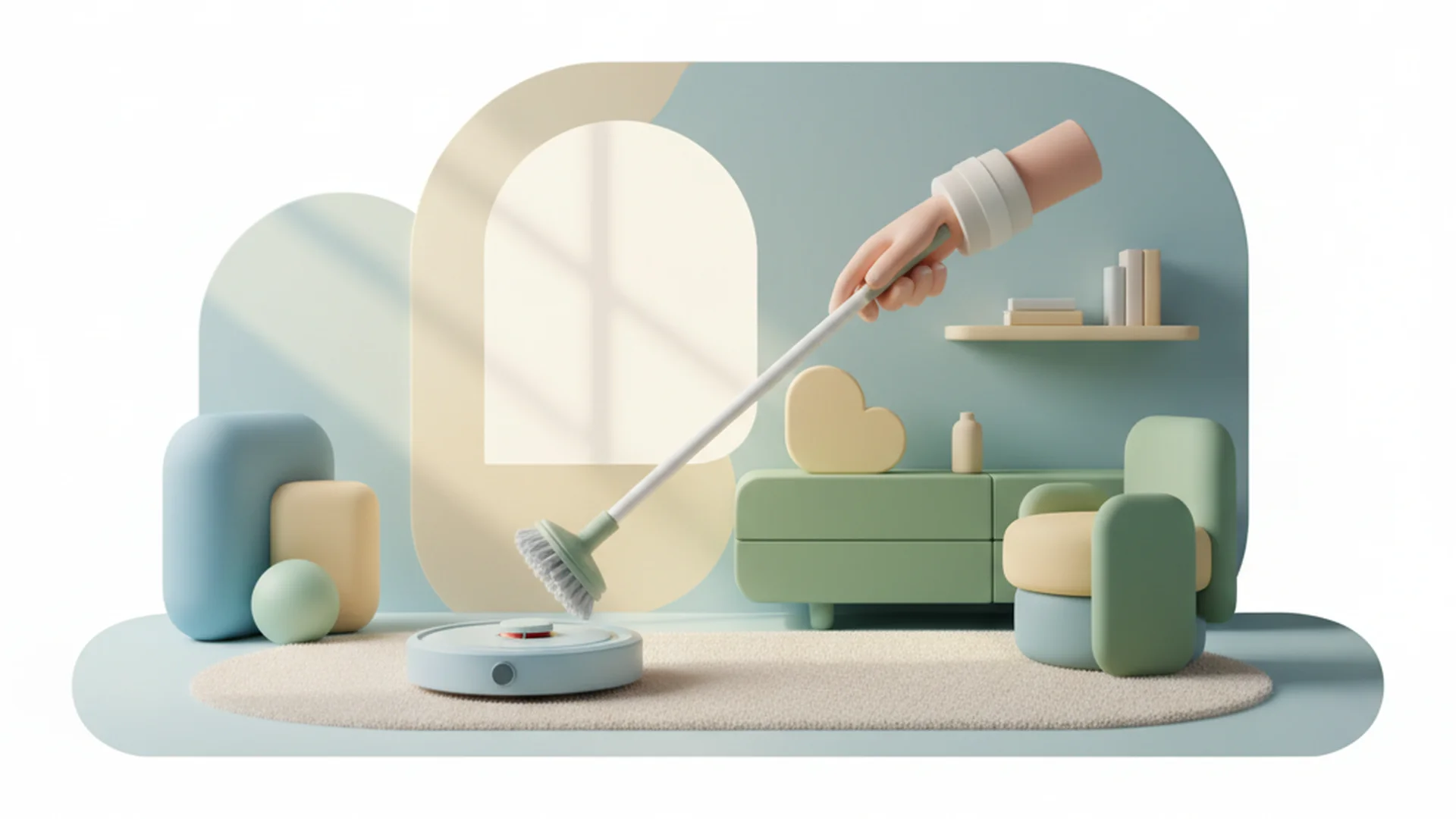
Modern 2026 robot vacuums, such as the latest Dyson and iRobot iterations, utilize LiDAR and advanced AI navigation. These units can map a home with 99% accuracy and—crucially—identify and avoid obstacles like rug tassels, power cords, and even pet waste. For a user with limited mobility, this means you no longer have to "pre-clean" or pick up items off the floor before the robot can run.
Voice-Activated Chore Management
Integration with Matter and Thread protocols allows for seamless voice control. In a 2026 smart home, you can simply say, "Hey Google, clean the kitchen spill," and a robot mop will deploy specifically to a pre-defined zone to handle the mess.
Ergonomic and "Trigger-Free" Tools
Arthritis and grip strength issues can make standard spray bottles painful to use. Switch to electric continuous sprayers or "trigger-free" bottles that require only a light touch to activate.
| Tool Type | Traditional Version | 2026 Adaptive Version |
|---|---|---|
| Vacuum | 15lb Upright Corded | 3lb Cordless Stick / AI Robot |
| Mopping | Bucket and String Mop | Steam Mop / Robot Mop |
| Scrubbing | Manual Hand Brush | Power Scrubber with Extension Pole |
| Dusting | Handheld Duster | Extendable Microfiber Wand |
Warning: Avoid using heavy, corded upright vacuums. They present a significant trip hazard and the 15-pound weight can cause unnecessary strain on the back and shoulders.
Room-by-Room Hacks for Maximum Efficiency
The Kitchen: Minimizing Movement
One of the best cleaning limited mobility hacks is the creation of "Satellite Cleaning Stations." Instead of keeping all your supplies in a central cabinet under the sink, keep a small kit (wipes, a spray bottle, and a microfiber cloth) in every major area. This prevents "step-debt"—the physical exhaustion caused by walking back and forth to fetch supplies.
The Dishwasher Multi-Tasker: In 2025, we recommend using the dishwasher for much more than just plates. It can be used to sanitize:
- Plastic pet toys
- Hairbrushes (with hair removed)
- Refrigerator bins and shelves
- Vent covers
- Silicon oven mitts
This saves hours of manual scrubbing over a sink, which can be taxing on the lower back.
The Bathroom: Safety and Steam
Cleaning a shower often requires bending and kneeling—two high-risk movements. To avoid this, use a "dish wand" filled with a 50/50 mix of dish soap and vinegar. Keep it in the shower and give the walls a quick wipe while you are already in there (and seated on a shower bench if necessary).
For deep cleaning, 2026 trends favor "dry steam" cleaners. These tools use high-heat vapor to loosen grime and kill bacteria without the need for "elbow grease" or harsh chemicals.
The Living Area: Clutter Control
Clutter is the enemy of mobility. Use a "perching stool"—a high-seated chair—to allow you to reach surfaces like coffee tables and bookshelves from a seated position.
Success: Utilizing a robot vacuum for daily floor maintenance can reduce the presence of allergens and dust by up to 70%, significantly improving indoor air quality for those who spend more time at home.
Common Mistakes to Avoid
Even with the best intentions, certain habits can make cleaning more dangerous or difficult than it needs to be.
- The "All-At-Once" Trap: Trying to clean the entire house in one day is the most common mistake. This leads to debilitating fatigue that can sideline you for several days. Break tasks into tiny, manageable chunks.
- Ignoring the Grip: Many people persist with tools that require a tight "pinch grip." Using ergonomic "D-handles" or adding foam tubing to existing handles can significantly reduce joint inflammation.
- Creating Slippery Floors: Over-mopping or using too much soap creates a major slip hazard. Modern advice focuses on "micro-misting," which uses a fraction of the water and dries almost instantly.
- The "Shame" Barrier: Many people feel they should be able to clean the way they used to. Transitioning to adaptive tools is not "giving up"—it is a strategic move to maintain long-term independence.
Warning: Never mix cleaning chemicals, especially in small, poorly ventilated spaces like bathrooms. Stick to one product at a time or use steam.
Recent Trends: The Future of Maintenance
As we look toward 2026, two major trends are making home maintenance easier than ever:
- Self-Cleaning Surfaces: The "Lotus Effect" coatings are now being applied to countertops and glass. These biomimetic coatings repel water and oils, meaning a simple wipe with a dry cloth is often enough to maintain a sterile surface.
- Micro-Cleaning Subscriptions: Services like GoGoGrandparent and Caring Senior Service have expanded to offer 30-minute "micro-visits." These sessions focus only on the tasks that are physically impossible for the homeowner, such as changing high lightbulbs or flipping a mattress.
Frequently Asked Questions
How can I clean floors without bending or kneeling?
Is a robot vacuum worth the investment?
How do I clean a bathroom safely?
How often should I clean if I fatigue easily?
Conclusion
Cleaning with limited mobility in 2025 is no longer an insurmountable hurdle. By embracing the "Spoon Theory" of energy management, setting up satellite cleaning stations, and leveraging the power of AI-driven tools, you can maintain a home that is both beautiful and safe. Remember that the goal isn't just a clean house—it's the freedom and independence that a well-maintained environment provides. Start small, upgrade your tools where possible, and most importantly, be patient with yourself as you find the rhythm that works for your body.
Success: By implementing just two of these hacks—like the satellite stations and the 15-minute rule—you can meaningfully reduce your weekly physical exertion.
Cleaning that keeps score
Every task earns points, every streak multiplies them, and Premium adds a household leaderboard plus a monthly Dustagorgon to beat.
- Free forever
- 30 badges to earn
- Up to 6 in a household
No card needed. Set up your rooms in a couple of minutes.