In this article
What you’ll learn
- Prioritize energy conservation (pacing) over traditional deep cleaning schedules.
- Leverage 2025 innovations like AI-driven robots and probiotic cleaners to reduce manual labor.
- Shift your mindset from perfectionism to "functional clean" to avoid Post-Exertional Malaise.
Living with Myalgic Encephalomyelitis/Chronic Fatigue Syndrome (ME/CFS) means that every ounce of energy is a precious resource. When you are cleaning chronic fatigue becomes more than just a physical hurdle—it becomes a high-stakes game of energy management. For those navigating this condition, a simple task like loading the dishwasher can lead to a multi-day "crash" known as Post-Exertional Malaise (PEM). As a professional cleaning consultant, I have seen how traditional cleaning advice fails the chronic illness community. We don't need "hustle"; we need high-efficiency, low-impact systems.
The Reality of Cleaning with ME/CFS
The impact of chronic fatigue on household maintenance is often underestimated by those outside the community. ME/CFS affects a meaningful share of the population, and a great many of those people remain undiagnosed. This lack of recognition often leads to internal guilt or external pressure to maintain a "standard" home.
The reality is that nearly everyone with the condition is significantly limited in their ability to perform "usual activities," which includes basic tidying and deep cleaning. A substantial minority will be housebound or bed-bound at some point. This makes traditional cleaning not just difficult, but physically impossible without a strategic overhaul of your home environment.
Note: Chronic fatigue is a biological multi-system impairment. It is not a lack of motivation or "laziness." If your body says no, the cleaning must wait.
Pacing: The Gold Standard for Energy Management
The most effective tool for cleaning chronic fatigue help is Pacing. You may have heard of the "Spoon Theory," where energy is represented by a limited number of spoons. In 2025, we refer to this as maintaining a "Heart Rate Ceiling" or "Energy Envelope."
The 10-Minute Tidy Approach
Instead of "Cleaning Saturdays," adopt a rhythm-based approach. If you feel you have the energy, set a timer for 10 minutes. When the timer goes off, you must stop—even if you feel you could do more. This prevents the delayed onset of PEM, which often strikes 24 to 48 hours after the activity.
The Resting Rule
For every 10 minutes of light activity, plan for at least 20 minutes of horizontal rest. This isn't just "sitting down"; it's allowing your nervous system to reset.
Success: By stopping before you feel tired, you preserve energy for essential self-care tasks like cooking or bathing.
High-Tech Help: 2025 Cleaning Innovations
The cleaning landscape has shifted dramatically between 2024 and 2026. We are moving away from manual labor and toward "predictive maintenance" and "passive cleaning."
AI-Driven Precision Robots
Modern 2025 robot vacuums are a far cry from the bumping machines of the past. New models feature advanced object avoidance that recognizes power cords, pet waste, and even laundry left on the floor. This means you don't have to "clean for the robot" before it can run, saving you the energy of picking up the floor first.
Probiotic and Bio-Based Cleaners
One of the most significant trends in 2026 is the rise of microbiome-friendly cleaning. Products using beneficial bacteria (probiotics) continue to work for days after the initial application. These microbes consume organic matter (dirt and grime) on surfaces, meaning you have to manually scrub much less frequently.
| Technology Type | Benefit for Chronic Fatigue | Human Effort Required |
|---|---|---|
| AI Robot Vacuum | Daily floor maintenance | Very Low |
| Probiotic Sprays | Keeps surfaces clean longer | Low |
| Smart Sensors | Alerts for full bins/filters | Minimal |
| Self-Cleaning Glass | Reduces shower scrubbing | None |
Tip: Look for "No-VOC" or fragrance-free labels. Many people with CFS also experience Multiple Chemical Sensitivity (MCS), and strong scents can trigger a flare-up.
Strategic Room-by-Room Tips
Managing a home with limited energy requires "working smarter" in the most literal sense. Here are three real-world examples of how to modify your environment for maximum efficiency.
Example 1: The "Sitting Rule" in the Kitchen
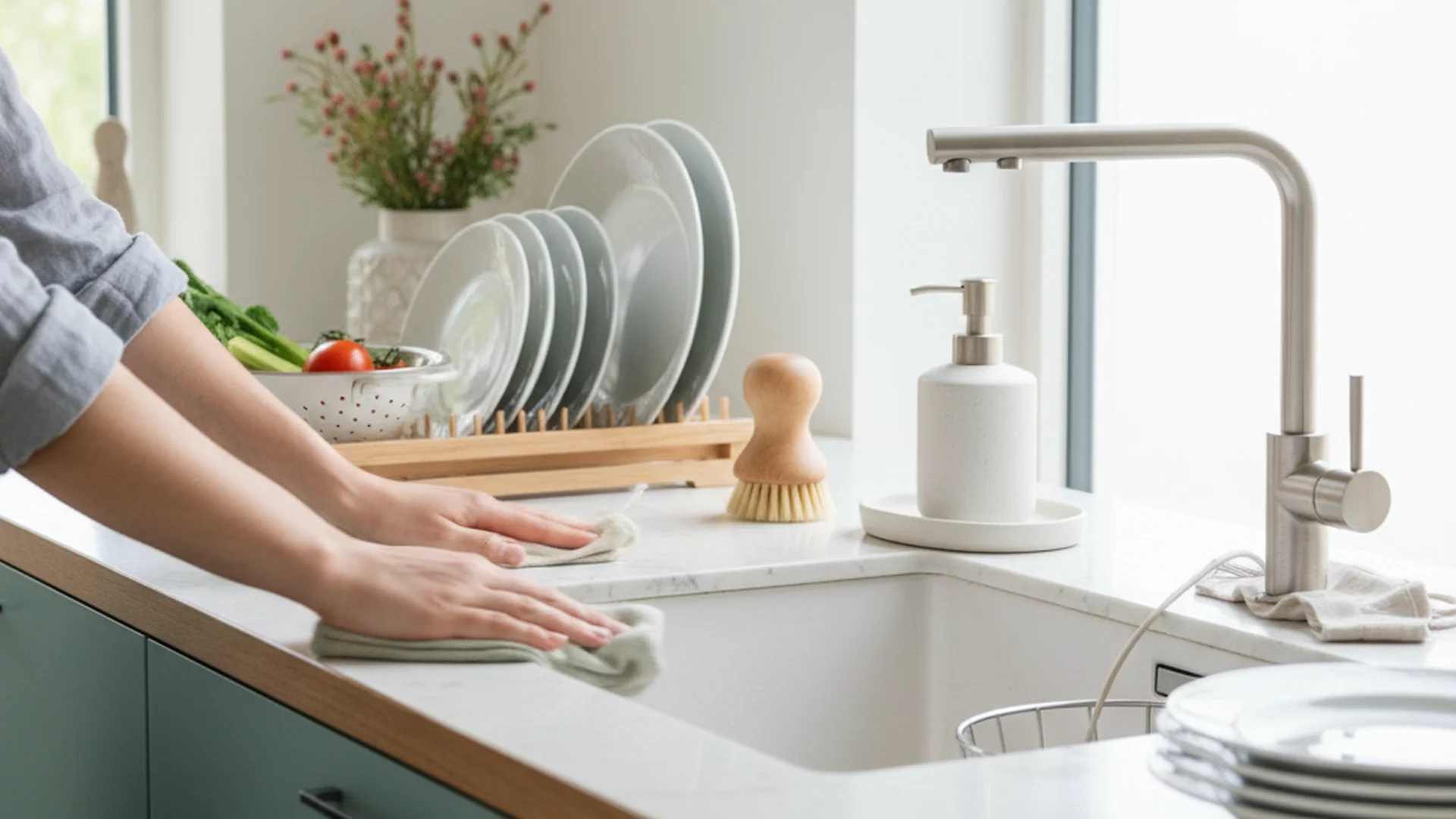
Traditional cleaning assumes you are standing. For chronic fatigue help, we must break this rule. Keep a perch stool or a lightweight chair in the kitchen.
- The Strategy: Sit while you load the dishwasher. Sit while you chop vegetables. Sit while you wipe down the counters.
- The Result: By staying off your feet, you reduce your heart rate and extend your "active" window significantly.
Example 2: Product Staging (The Multi-Floor Kit)
Carrying a heavy caddy of cleaning supplies up and down stairs is a massive energy drain.
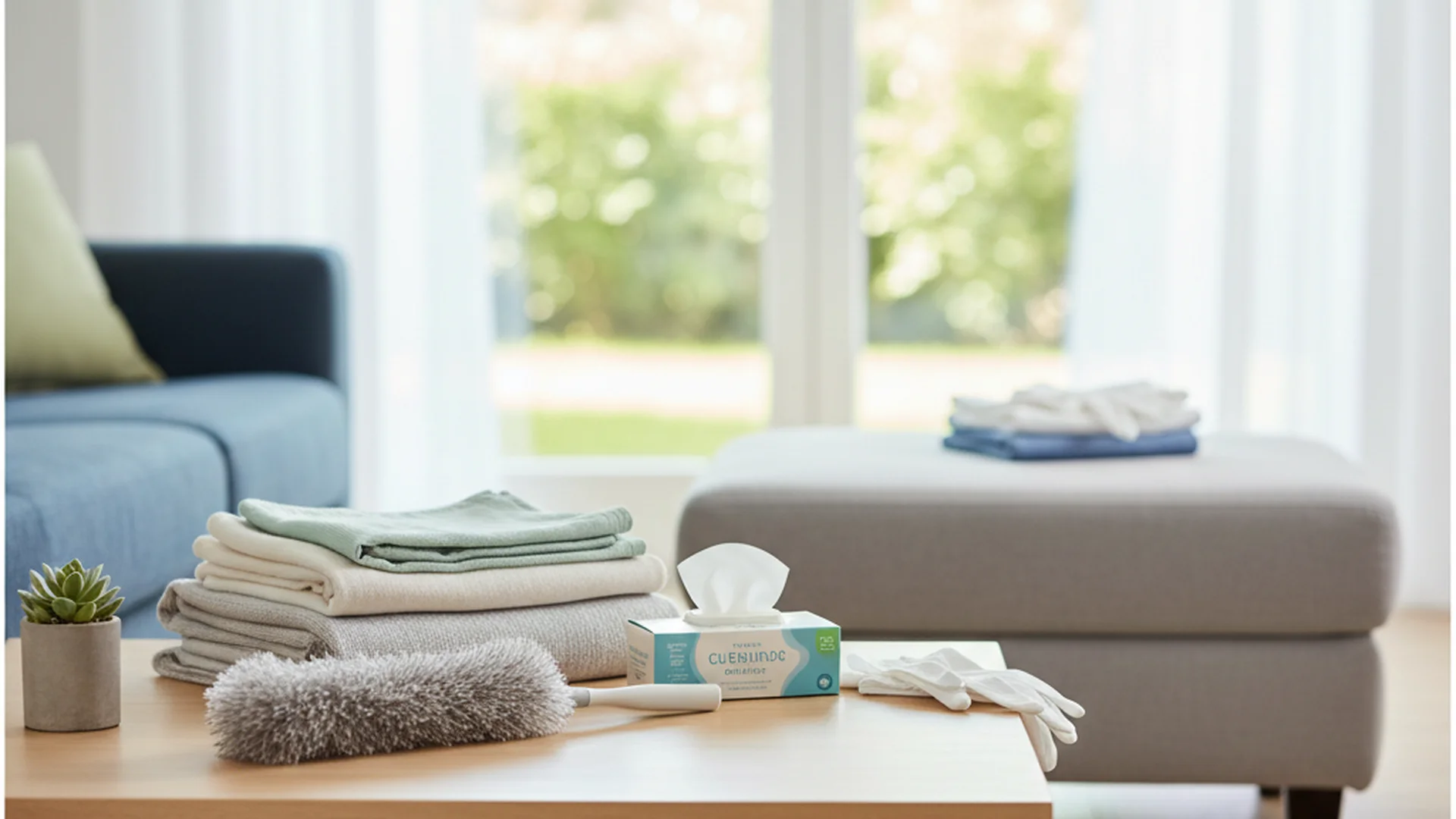
- The Strategy: Duplicate your supplies. Keep a set of basic cleaning tools (glass cleaner, microfiber cloths, all-purpose spray) in every bathroom and on every floor of the house.
- The Result: You eliminate the "transportation cost" of cleaning. If you have 2 minutes of energy while in the upstairs bathroom, the tools are already there.
Example 3: The Spray-and-Leave Method
Scrubbing is one of the most physically demanding cleaning tasks.
- The Strategy: Use "no-scrub" foaming cleaners for showers and ovens. Apply the product, then walk away for 30 minutes. Let the chemistry do the heavy lifting.
- The Result: You only need to rinse the surface with a handheld showerhead or a wet cloth, requiring zero "elbow grease."
Warning: Never mix different cleaning chemicals, especially bleach and ammonia, even if you are trying to "boost" their power.
Common Mistakes to Avoid
When you are desperate to have a clean home, it is easy to fall into traps that ultimately harm your health.
- "Pushing Through": This is the most dangerous mistake. In ME/CFS, pushing through a "wall" of exhaustion doesn't build stamina; it causes cellular-level damage and can lead to a permanent lower baseline of health.
- Using Heavy Upright Vacuums: Standard vacuums can weigh 15–20 pounds. The physical effort of pushing and pulling that weight is equivalent to a high-intensity workout. Switch to an ultra-lightweight stick vac (under 5 lbs) or a robot.
- The "Exercise" Misconception: Well-meaning friends might suggest that cleaning is "good exercise" to help your fatigue. For those with ME/CFS, exercise is often contraindicated and can be dangerous. Cleaning should be viewed as a chore to be minimized, not a workout to be embraced.
- Perfectionism: Holding your home to the standards of a healthy person is a recipe for mental distress. The 2025 mantra for the chronic illness community is "Progress Over Perfection." A sink with a few dishes but a clean counter is a victory.
Tip: If you can afford it, prioritize hiring help for the "heavy" tasks like mopping or cleaning bathrooms, even if it's only once a month.
Frequently Asked Questions
How can I keep my house clean without causing a crash?
What are the best lightweight cleaning tools for people with limited energy?
How do I explain to my family that I’m not being lazy, I’m just fatigued?
Are there cleaning products that don’t trigger chemical sensitivities?
Should I prioritize the kitchen or the bathroom when I only have 10 minutes?
Conclusion
Cleaning with chronic fatigue is not about working harder; it is about engineering your life to require less work. By embracing the 2025 trends of AI assistance, probiotic cleaners, and radical pacing, you can maintain a functional home without sacrificing your health. Remember that your value is not tied to the cleanliness of your floors. If you managed to wipe one counter today, that is a success. If you needed to stay in bed all day, that is also a valid choice in the management of your illness.
Success: Adopting a "low-energy" cleaning mindset reduces physical stress and helps prevent the debilitating cycles of Post-Exertional Malaise.
Cleaning that keeps score
Every task earns points, every streak multiplies them, and Premium adds a household leaderboard plus a monthly Dustagorgon to beat.
- Free forever
- 30 badges to earn
- Up to 6 in a household
No card needed. Set up your rooms in a couple of minutes.