In this article
What you’ll learn
- Understand that cleaning is a morally neutral care task.
- Use the 5 Things Method to break down overwhelming rooms.
- Leverage AI tools and body doubling to overcome executive dysfunction.
If you have ever stood in the middle of a messy room, feeling physically unable to move while your brain screams at you to "just pick something up," you aren't lazy. You are likely experiencing task paralysis. For many people, cleaning overwhelmed neurodivergent brains is a daily struggle that goes far beyond simple tidying. Whether you have ADHD, Autism, AuDHD, or another form of neurodivergence, the traditional "just do it" advice doesn't just fail—it often makes the shame and overwhelm even worse.
The Science of the Struggle: Why It’s Harder for You
Before we dive into the strategies, we have to address the "why." Neurotypical cleaning advice assumes your brain can easily sequence tasks, maintain focus, and regulate the emotions associated with boredom or sensory discomfort. For the neurodivergent community, these are exactly the areas where the brain functions differently.
Executive Dysfunction and Task Paralysis
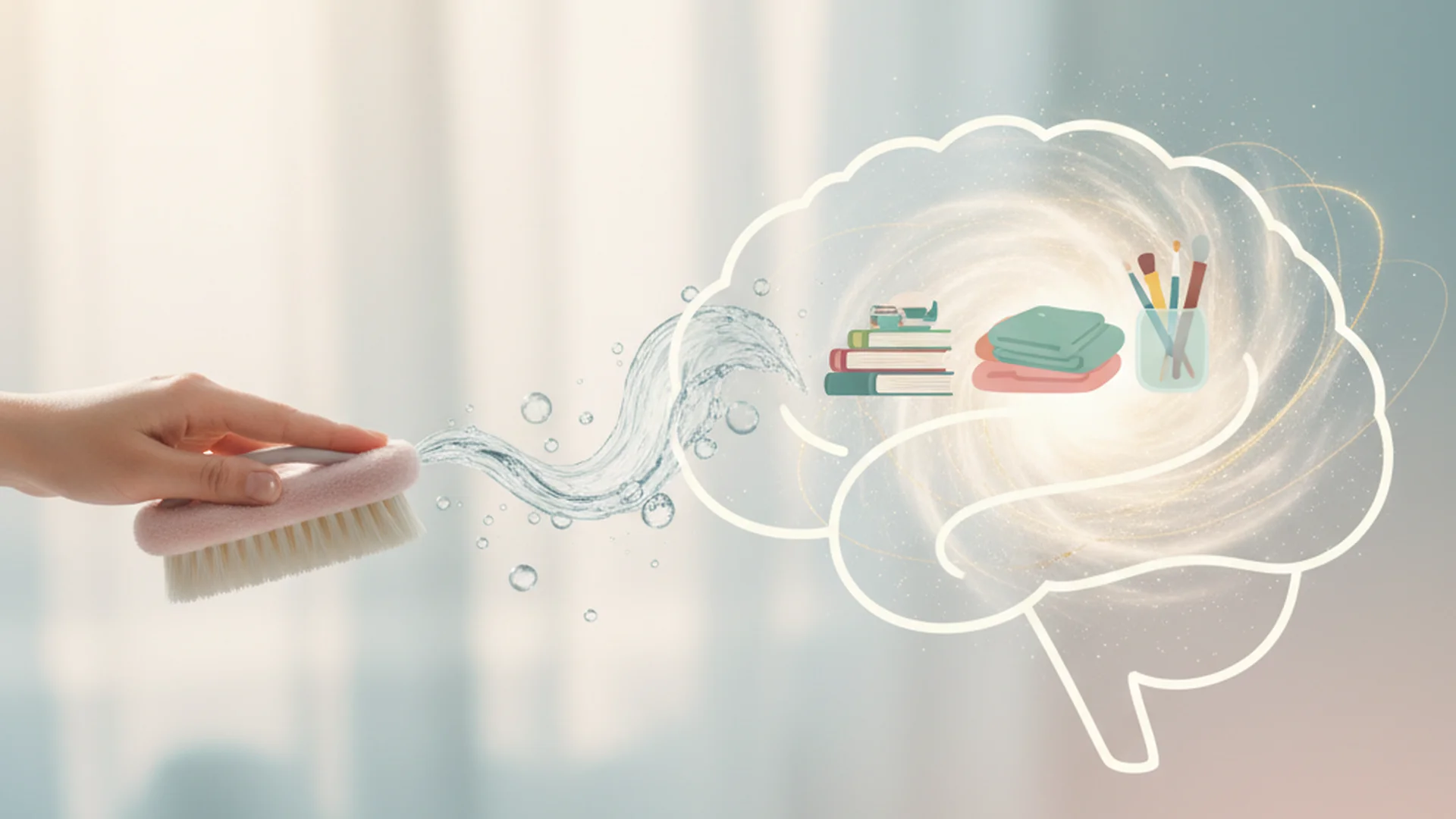
Executive function is the management system of the brain. It controls task initiation (starting), sequencing (knowing what step comes first), and working memory (remembering where you were going with that pile of laundry). ADHD affects a meaningful share of the adult population, and it is a condition fundamentally linked to difficulties in organizing and maintaining environments. When your executive functions are overloaded, your brain hits a "glitch" state often called task paralysis. You want to clean, you know you should clean, but the connection between your intent and your motor skills is severed.
Sensory Processing Sensitivity
Sensory processing differences are extremely common among autistic individuals. For a neurotypical person, the smell of a cleaning product is "fresh." For a neurodivergent person, it might be a migraine-inducing chemical assault. The "squish" of old food in the sink, the high-pitched whine of a vacuum, or even the feeling of dry dust on fingertips can trigger a fight-or-flight response. When cleaning feels like a sensory nightmare, it is natural for your brain to avoid it at all costs.
The Ultimate Mindset Shift: Care Tasks are Morally Neutral
One of the most revolutionary concepts to emerge in the 2024–2025 home management space is the idea that care tasks are morally neutral. Popularized by experts like KC Davis, author of How to Keep House While Drowning, this philosophy posits that having a messy house does not make you a "bad" person, and having a clean house does not make you a "good" one.
Your home exists to serve you; you do not exist to serve your home. If your kitchen is a disaster, it simply means you are a person who lives there and perhaps had a hard week. Shifting the internal dialogue from "I am a failure because I can't do dishes" to "I deserve a clean surface to make coffee on" reduces the emotional friction that causes overwhelm.
Note: A "functional" home is the goal, not a "perfect" home. If your laundry is clean but lives in a basket instead of a dresser, it is still functional.
The "Emergency" Plan: The 5 Things Method
When you are completely spiraling and the cleaning overwhelmed neurodivergent tips you've tried before aren't working, use the "5 Things Method." This technique, developed by KC Davis, acknowledges that there are only five things in any messy room:
- Trash: Grab a bag and move through the room only looking for things that go in the garbage.
- Dishes: Once the trash is gone, gather every plate, cup, and utensil. Put them in the sink or near it. Do not wash them yet.
- Laundry: Gather all clothes and linens and put them in a basket or a designated pile.
- Things that have a place: Items that belong in this room and have a clear "home." Put them away.
- Things that don’t have a place: Items that belong in another room or don't have a designated spot. Put them in a single pile or "doom box" to deal with later.
By categorizing the mess, you stop "ping-ponging" (moving a toy to the playroom, then seeing a dirty cup, then going to the kitchen, then realizing the trash is full). You stay focused on one category at a time, which protects your limited executive function energy.
| Method | Best For | Level of Effort |
|---|---|---|
| 5 Things Method | Total Overwhelm | Low-Medium |
| Junebugging | Maintaining Focus | Medium |
| Closing Duties | Preventing Tomorrow's Stress | Low |
| Body Doubling | Motivation Boost | Medium |
2025 Tech and Sensory Hacks
We are living in a golden age of cleaning overwhelmed neurodivergent help thanks to new technology and a better understanding of sensory needs.
AI-Driven Task Breakdown
The biggest trend of 2025 is using AI to combat task paralysis. Tools like Goblin.tools (specifically the "Magic Task" feature) allow you to type in a vague, overwhelming task like "Clean the living room." The AI then breaks that task down into tiny, manageable steps—like "pick up three pieces of paper" or "put the remote on the stand." This removes the "sequencing" burden from your brain.
Gamification Apps
If your brain requires dopamine to function, turn cleaning into a Role Playing Game (RPG). Apps like Habitica or Finch allow you to earn rewards, level up a character, or care for a virtual pet by completing "quests" like "Load the dishwasher."
Accommodating Your Senses
Don't try to "tough it out" through sensory discomfort. Treat cleaning like a specialized job that requires Personal Protective Equipment (PPE):
- Gloves: Wear latex or silicone gloves to avoid the "ick" factor of wet food or sticky surfaces.
- Headphones: Use noise-canceling headphones or "Loop" earplugs to dull the roar of the vacuum or the clatter of dishes.
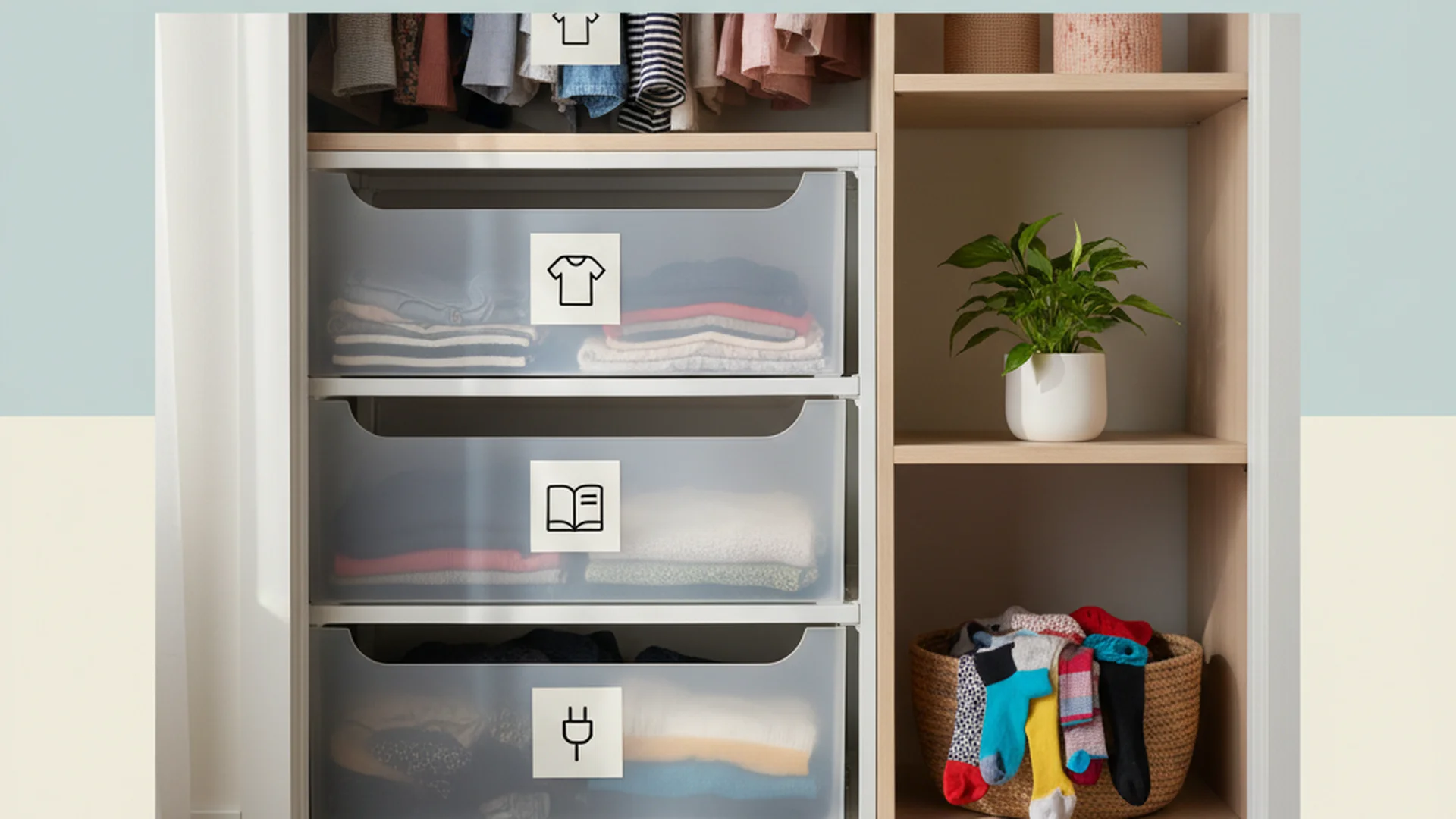
- Visual Stimuli: If "out of sight is out of mind" (object permanence issues), use clear bins and open shelving. This is known as the "Functional Aesthetic" trend—prioritizing visibility over a minimalist, hidden look.
Tip: Keep a "Cleaning PPE Kit" in a visible spot. If the tools to make cleaning comfortable are hard to find, you won't use them.
Advanced Strategies for Long-Term Success
Junebugging: Your Anchor Point
"Junebugging" is a technique where you pick one "anchor" spot—usually the kitchen sink or the bed. You start cleaning there. If you find an item that belongs in the bathroom, you go put it in the bathroom, but like a June bug hitting a screen, you immediately "bounce" back to your anchor. You can wander as much as you need to, as long as you always return to the center until that one spot is finished.
Body Doubling
Body doubling is the practice of working alongside someone else. They don't even have to help you clean; they just need to be present. You can do this virtually through platforms like Focusmate, or simply by calling a friend on FaceTime while you fold laundry. Having another person "witness" your work helps anchor the neurodivergent brain to the task at hand.
Closing Duties
Borrowed from the restaurant industry, "Closing Duties" are 2–3 small tasks you do at night to "set up" your future self for success. This isn't a deep clean. It might just be:
- Clearing the kitchen island.
- Setting the coffee maker.
- Putting one load of laundry in the dryer. By doing these, you reduce the morning "entry hurdle" that often triggers overwhelm.
Warning: Avoid the "Power Through" mentality. Trying to clean for five hours straight usually leads to a "vulnerability hangover" or burnout that can last for days. Work in 15-20 minute bursts instead.
Common Mistakes to Avoid
Even with the best cleaning overwhelmed neurodivergent tips, it is easy to fall into common traps that lead to burnout.
- Procrasti-planning: This is when you spend three hours researching the "perfect" label maker or buying twenty clear bins instead of actually clearing the clutter. Remember: Organizing is what you do after you’ve managed the mess, not before.
- Starting with Sentimental Items: Never start with a "junk drawer" or a box of old photos. These require high emotional energy and "decision-making" fuel. Start with trash or dishes—tasks with zero emotional weight.
- The "All or Nothing" Fallacy: Many ND individuals feel that if they can't scrub the baseboards, there is no point in sweeping. A "half-done" task still makes your environment more functional than a task not started at all.
- Ignoring the "Doom Piles": DOOM stands for Didn't Organize, Only Moved. We all have them. Instead of shaming yourself for them, give them a home. A "doom basket" is better than a "doom floor."
Frequently Asked Questions
Why can't I just start cleaning even when I want to?
Where do I start when the whole house is a mess?
How do I deal with "Doom Piles" without getting overwhelmed?
Is there an app that actually helps neurodivergent people clean?
Conclusion: You Deserve a Functional Space
Managing a home while neurodivergent is playing the game of life on "Hard Mode." The goal is not to have a home that looks like a magazine cover; the goal is to have a home that supports your mental health and daily needs. By using tools like the 5 Things Method, accommodating your sensory needs, and embracing the "morally neutral" nature of chores, you can find a rhythm that works for your unique brain.
Be kind to yourself. You deserve a functional space, even if there are dishes in the sink and a "doom pile" in the corner.
Success: By implementing just one of these strategies—like using Goblin.tools or wearing gloves—you are already reducing the friction between you and a functional home.
Cleaning that keeps score
Every task earns points, every streak multiplies them, and Premium adds a household leaderboard plus a monthly Dustagorgon to beat.
- Free forever
- 30 badges to earn
- Up to 6 in a household
No card needed. Set up your rooms in a couple of minutes.