In this article
What you’ll learn
- Utilize 15-minute high-intensity intervals to prevent mental fatigue.
- Combat the Zeigarnik Effect by closing small "task loops" daily.
- Prioritize "dwell time" for disinfectants to ensure a hygienic surface.
In the fast-paced world of 2025, the traditional "Saturday morning deep clean" is becoming a relic of the past. For busy professionals and individuals managing neurodivergent traits like ADHD, the prospect of a four-hour cleaning marathon is not just daunting—it is often impossible. This is where the cleaning burst method comes into play. By shifting the focus from grueling, all-day sessions to short, high-intensity intervals, this method transforms home maintenance from a source of anxiety into a manageable, even rewarding, part of your daily routine.
The cleaning burst method is a productivity-focused approach that emphasizes "bursts" of activity, usually lasting about 15 minutes. It leverages psychological principles such as task-batching and the Pomodoro Technique to help you maintain a spotless home without the associated burnout. Instead of waiting for the clutter to become overwhelming, you tackle it in small, concentrated doses that fit perfectly into the gaps of a modern schedule.
The Science Behind the Cleaning Burst Method
Understanding why the cleaning burst method works requires a look at both psychology and environmental health. Our brains are not designed to focus on repetitive, low-stimulation tasks for hours on end. By setting a hard time limit, we trigger a "sprint" mentality that increases focus and speed.
Combatting the Zeigarnik Effect
The Zeigarnik Effect is a psychological phenomenon where our brains tend to remember uncompleted tasks more than completed ones. This creates a "mental load"—that nagging feeling in the back of your mind that the dishes are still in the sink or the mail is piling up. The cleaning burst method guide emphasizes completing small "loops." When you spend 15 minutes finishing a specific task, you "close the loop" in your brain, significantly reducing daily stress levels.
Productivity and Mental Health
Our physical environment directly impacts our mental state. Ask almost anyone and they will tell you the same thing: a clean home makes them more productive and leaves them feeling less stressed and anxious.
The cleaning burst method provides a low-barrier entry point to achieving these benefits. It’s much easier to commit to 15 minutes of tidying than to commit to "cleaning the whole house."
How to Execute a Perfect Cleaning Burst
To get the most out of this method, you cannot simply wander through your home. It requires a strategic, "one-zone" focus. Here is how to structure your sessions for maximum efficiency.
Step 1: Set a Hard Timer
The most critical component of the cleaning burst method explained is the timer. Whether you use a smart home device, a kitchen timer, or a specialized app, the ticking clock creates "positive pressure." This pressure prevents "distraction creep"—the tendency to start cleaning the kitchen and end up organizing a bookshelf three rooms away.
Tip: Use a physical timer that you can see. Watching the seconds count down gamifies the experience and encourages you to move faster.
Step 2: Choose Your Zone
For a burst to be effective, it must be localized. Instead of saying "I'm going to clean the living room," specify "I'm going to clear and polish the coffee table and organize the media console."
| Burst Duration | Recommended Task | Intensity |
|---|---|---|
| 10 Minutes | Entryway/Mudroom Tidy | High |
| 15 Minutes | Kitchen Surface Reset | Medium |
| 20 Minutes | Master Bathroom Detail | Medium |
Step 3: Respect Dwell Time
A common mistake in rapid cleaning is spraying a surface and wiping it immediately. However, professional-grade cleaning requires "dwell time." Most disinfectants need 5–10 minutes of wet contact time to actually kill bacteria and viruses.
Warning: Wiping away disinfectant immediately after spraying only removes visible dirt; it does not sanitize the surface.
In a cleaning burst, your workflow should look like this:
- Enter the zone and spray all hard surfaces (counters, sinks, etc.).
- Spend the next 7 minutes tidying clutter, loading the dishwasher, or emptying the trash.
- Spend the final 3 minutes wiping down the surfaces that have been soaking.
Real-World Examples of the Cleaning Burst Routine
To see how the cleaning burst method fits into a lifestyle, consider these three common daily "pro" routines.
1. The Morning Momentum Burst (15 Minutes)
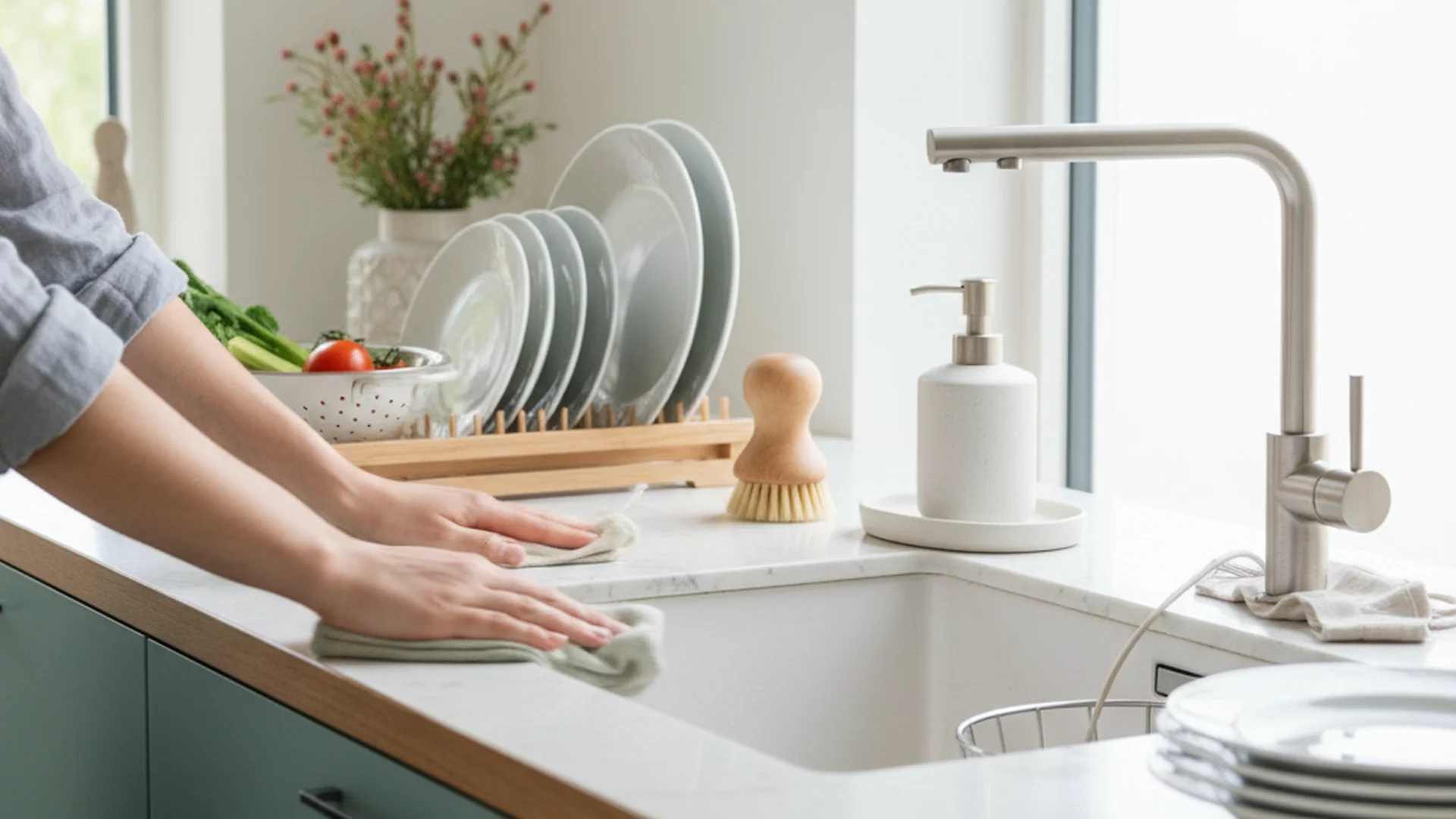
Target: The Kitchen. As the coffee brews, set the timer. Empty the dishwasher from the night before, wipe down the breakfast bar, and clear any "homeless" items from the counters. Starting the day with a clean kitchen sets a productive tone for the rest of your work hours.
2. The Post-Work Transition Burst (15 Minutes)
Target: The Living Area. Before you sit down to relax, do a "sweep" of the common areas. Fold blankets, fluff pillows, and put away shoes. This "resets" the space, signaling to your brain that the workday is over and it is time to rest.
3. The "Laundry Sprint" (10 Minutes)
Target: Laundry Room. Instead of letting laundry pile up for the weekend, use a 10-minute burst to fold one single load. The goal isn't to do all the laundry, but to keep the cycle moving so it never becomes an overwhelming mountain.
Success: By implementing just two 15-minute bursts a day, you contribute 3.5 hours of cleaning per week—enough to keep most homes in "guest-ready" condition permanently.
Best Practices and Professional Recommendations
To elevate your cleaning bursts from simple tidying to professional-level maintenance, follow these tips.
Use Microfiber over Sponges
Microfiber cloths are the right tool for bursts because they trap more dirt and dry faster. This allows you to move through surfaces quickly without leaving streaks that you have to go back and fix later. Microfiber is also more sustainable, as it can be washed and reused hundreds of times.
The "Transit Basket" Rule
If you find an item in the kitchen that belongs in the bedroom, do not leave the kitchen to put it away. This breaks your "zone focus." Instead, place all out-of-place items in a "transit basket" at the edge of the room. Move the basket only after the timer ends.
Pair with Dopamine Triggers
For many, cleaning is a chore. To make the 15 minutes fly by, pair your burst with a "dopamine trigger." Listen to a high-tempo playlist, a 15-minute news podcast, or an audiobook. This turns the session into a timed "game" rather than a mundane task.
Note: If you find yourself consistently avoiding a specific zone, it may be because you lack the right tools in that area. Keep a small "burst kit" (all-purpose cleaner and two cloths) in every major room to reduce friction.
Future Trends: The Cleaning Burst in 2025–2026
As we move into 2026, the cleaning burst method is evolving alongside technology and a greater focus on health.
Hybrid Human-AI Cleaning
A major trend for 2025 is the integration of AI into home maintenance. Smart home systems now use air quality sensors and occupancy data to suggest "burst prompts." For example, if your hallway sensors detect high foot traffic on a rainy day, your smart watch might suggest a "5-minute vacuum burst" to prevent mud from tracking into the carpets.
The Rise of "Dust Bursts"
There is a shifting focus from "visual tidiness" to "respiratory health." In 2026, many practitioners are adopting "dust bursts"—short sessions focused solely on HEPA vacuuming and wiping surfaces with damp cloths to remove allergens. This is particularly popular in urban areas where indoor air quality (IAQ) is a primary concern.
Sustainable "Micro-Habits"
The "zero-waste burst" is the next frontier of sustainable living. This involves using only refillable, plant-based concentrates and reusable cloths. By cleaning in small bursts, you use less product overall, minimizing the chemical footprint of your home maintenance routine.
Common Mistakes to Avoid
Even with a timer, it is easy to fall into traps that make your cleaning burst ineffective.
1. The "More is Better" Cleaning Myth
Many people believe that using more cleaning product results in a better clean. In reality, too much soap leaves a sticky residue. This residue acts like a magnet, attracting more dirt and making the surface get dirty faster than if you had used the correct amount.
2. Using Vinegar on Everything
While vinegar is a staple of "green" cleaning, it is highly acidic. It can etch marble and granite countertops and eventually degrade the rubber seals in your dishwasher or washing machine. Always check the manufacturer's guidelines for your surfaces.
3. Forgetting the "Reset"
A burst is not just about cleaning away dirt; it’s about resetting the space for its next use. A clean counter is a great start, but if the dishwasher is still full of clean dishes, the "loop" isn't fully closed because you can't easily put away the next round of dirty dishes.
Frequently Asked Questions
How long should a "burst" actually be?
Is the cleaning burst method better than deep cleaning?
Can I do multiple bursts a day?
Do I need a specific checklist?
What if I don't finish the task before the timer goes off?
Conclusion
The cleaning burst method is more than just a way to tidy up; it is a lifestyle shift that prioritizes mental well-being and consistent progress over the unattainable goal of constant perfection. By breaking chores down into 15-minute intervals, you reclaim your weekends and reduce the "clutter anxiety" that plagues so many modern households. Whether you are using AI-prompted "dust bursts" or simple kitchen resets, the power of the method lies in its simplicity.
Start today by picking one zone, setting your timer for 15 minutes, and seeing how much you can achieve. You might be surprised at how quickly your home—and your mindset—begins to transform.
Cleaning that keeps score
Every task earns points, every streak multiplies them, and Premium adds a household leaderboard plus a monthly Dustagorgon to beat.
- Free forever
- 30 badges to earn
- Up to 6 in a household
No card needed. Set up your rooms in a couple of minutes.