In this article
What you’ll learn
- Cleaning is a morally neutral care task, not a reflection of your worth.
- The "5 Things Method" and "Junebugging" can bypass executive dysfunction.
- Somatic exercises help prevent the "freeze" response when facing a messy room.
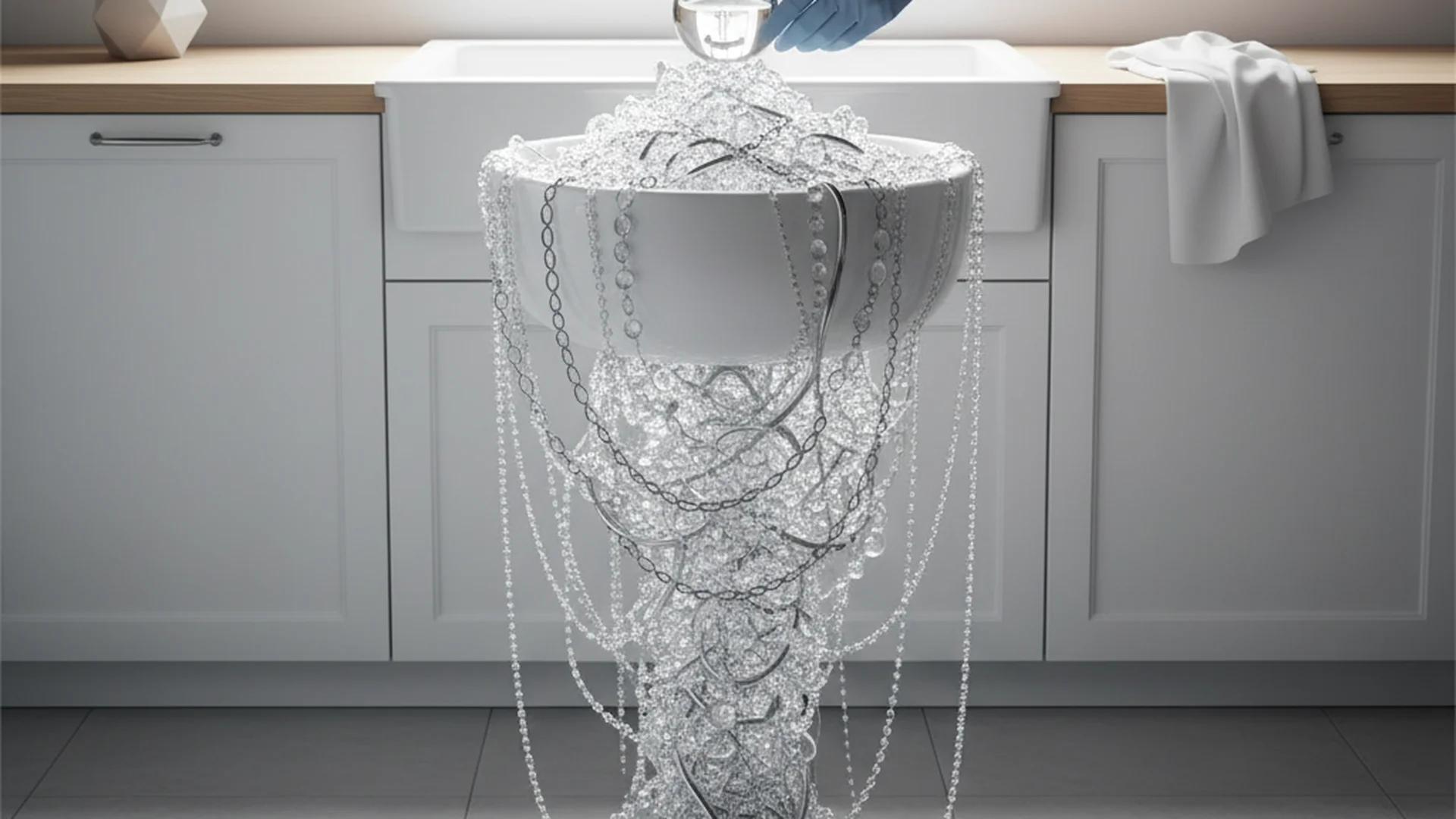
For many of us, walking into a cluttered living room isn't just a minor annoyance—it’s a physical trigger. If your heart races at the sight of an overflowing laundry basket or you feel a sense of paralysis when looking at a messy kitchen, you are likely experiencing cleaning anxiety. This specific type of stress occurs when the state of your home environment overwhelms your nervous system, leading to a cycle of guilt, avoidance, and further mess.
In 2025, we are seeing a significant shift in how we discuss home maintenance. We are moving away from the "perfectionist museum" look and toward "functional living." Yet, the weight of a messy home remains heavy. Most of us feel overwhelmed by the amount of clutter in our homes, and for many, a messy house is a genuine source of daily stress. If you've been looking for cleaning anxiety help, you’re not alone, and more importantly, your struggle is not a personal failure.
The Science of Why Mess Causes Anxiety
It isn't "just in your head." There is a real link between your environment and how your body handles stress. A home packed with objects tends to keep stress levels elevated, and that effect is often most pronounced for whoever carries the "mental load" of household management.
When your home is disorganized, it creates "visual noise." Your brain is constantly bombarded by excessive stimuli, telling your subconscious that there is "unfinished work" everywhere you look. This drains your cognitive bandwidth, making it significantly harder to focus on work, parenting, or relaxation.
Note: Disorganized environments take a real bite out of your productivity, thanks to the constant distraction of visual clutter.
The "Freeze" Response
When cleaning anxiety hits its peak, many people experience a "freeze" response. This is a survival mechanism where the nervous system perceives the mess as a threat it cannot fight or flee from. Instead of cleaning, you might find yourself sitting on the couch, staring at the mess, feeling unable to move. Understanding this as a physiological reaction—rather than laziness—is the first step toward recovery.
12 Practical Cleaning Anxiety Tips for a Calmer Home
Managing cleaning anxiety requires a blend of psychological reframing and practical, low-energy strategies. Here are the most effective methods to try for 2025-2026.
1. Practice Vagus Nerve Activation
Before you pick up a single item, address your nervous system. If you are in a state of "freeze," your brain cannot access the executive functions needed to organize.
- The Technique: Try "box breathing" (inhale 4s, hold 4s, exhale 4s, hold 4s) or splash cold water on your face. This signals to your brain that you are safe, lowering your heart rate and allowing you to approach the task with a clearer mind.
2. The "5 Things" Method
Popularized by KC Davis, this method is a game-changer for cleaning anxiety help. Instead of seeing a "messy room," you train your eyes to see only five categories:
- Trash
- Dishes
- Laundry
- Things that have a place
- Things that don't have a place
Tip: Focus only on one category at a time. Do not pick up a stray toy while you are doing the "trash" pass. This prevents "context switching" fatigue, which is a major driver of anxiety.
3. Use the "Houdini Hack"
Sometimes we become "clutter blind" to the things that stress us out. Take a photo of your room on your phone. Looking at the space through a screen allows you to see it with "fresh eyes," helping you identify the "background noise" clutter that you’ve stopped noticing but that still weighs on your subconscious.
4. Give Yourself "Permission Mode"
In 2026, the trend of "gentle productivity" is taking over. Give yourself permission to be "judiciously messy." This might mean having a "doom box" (Didn't Organize, Only Moved) for items you aren't ready to sort, or a designated "clothes chair." Not everything has to be perfect to be functional.
5. Try "Junebugging"
If you struggle with ADHD-related cleaning anxiety, try Junebugging. Pick one "anchor point," like the kitchen sink. You can leave the sink to put something away in another room, but like a June bug hitting a screen, you always return to your center point. This prevents you from ending up in the garage cleaning a toolbox when you meant to just do the dishes.
6. Embrace "Body Doubling"
Cleaning can feel incredibly isolating. Body doubling involves having someone else present—either in person or via a video call—while you work. You don't even have to talk; simply knowing someone else is "there" provides accountability and reduces the dread of the task.
7. Implement "Micro-Closings"
Instead of the dreaded "Sunday Reset" which can take all day and cause massive pre-week anxiety, try "closing the kitchen" at night. Think of it as a gift to your future self. It’s not about scrubbing every surface; it’s about making sure the morning version of you doesn’t wake up to a sink full of old food.
Success: A simple 20-minute tidying session can take the edge off, providing immediate relief from the anxiety cycle.
8. Shift to Biophilic Cleaning
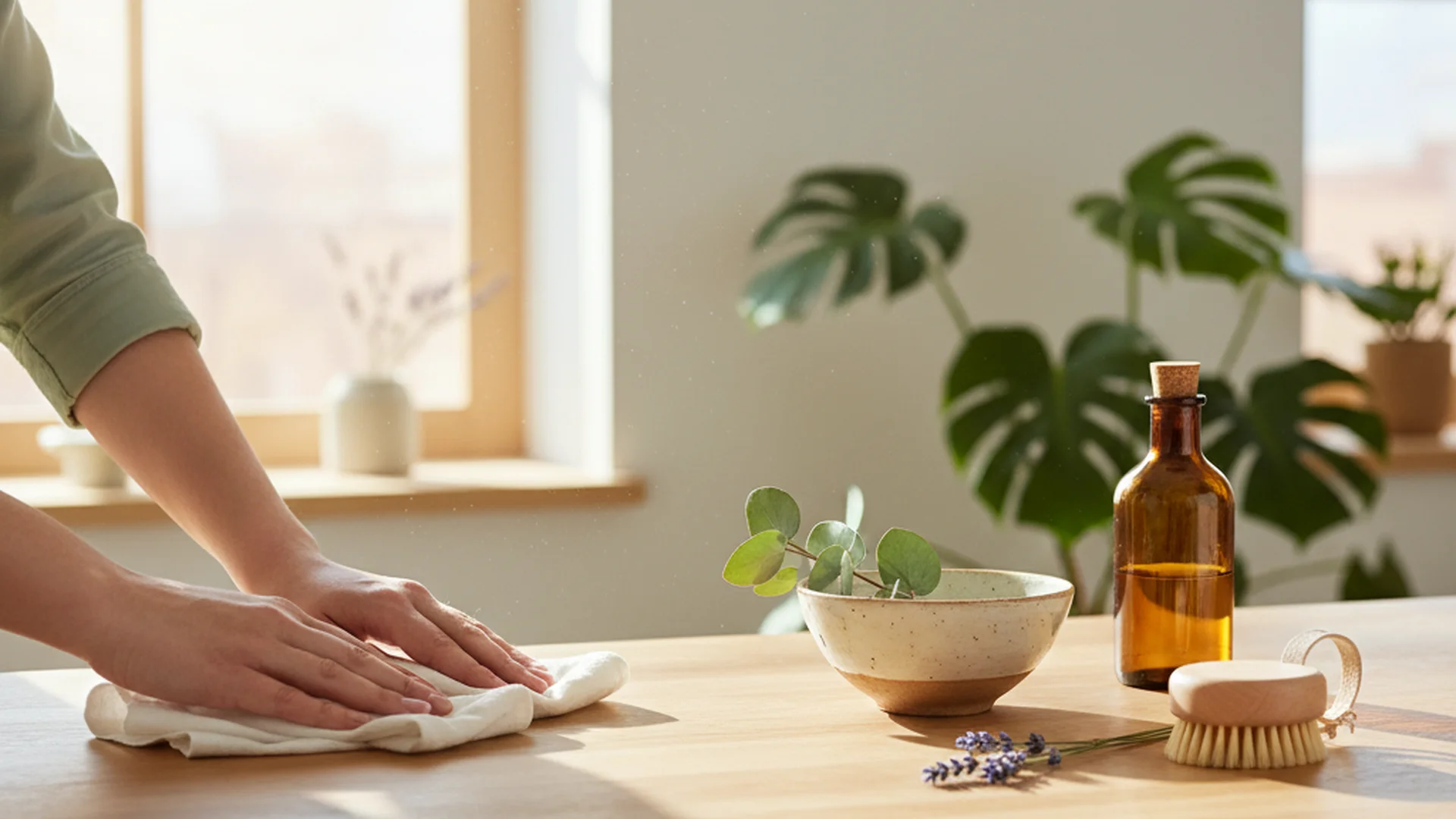
Make cleaning a multi-sensory wellness experience rather than a chore. This is a major 2025 trend.
| Element | Action | Benefit |
|---|---|---|
| Scents | Use essential oils (lemon, peppermint) | Uplifts mood and energy |
| Light | Open all curtains before starting | Increases serotonin levels |
| Air | Crack a window, even in winter | Reduces "stale" feeling of a room |
| Sound | Play a specific "cleaning playlist" | Creates a dopamine association |
9. Reject the "Moral Virtue" Myth
One of the most important cleaning anxiety tips is to decouple your worth from your home's cleanliness. A clean house does not make you a "good" person, and a messy house does not make you "lazy." These are care tasks designed to make your life function, not to pass a moral exam.
10. Focus on "High-Impact" Flat Surfaces
If you only have 10 minutes of energy, clear the flat surfaces (kitchen island, coffee table, dining table). Clear surfaces send a signal to the brain that the room is "under control," which can instantly lower cortisol levels.
11. Design for Your Current Brain
Stop organizing for a "hypothetical future buyer" or according to how you "should" do it. If you always leave your mail on the counter, put a beautiful basket there. If you hate folding socks, stop folding them and just throw them in a bin. Design for your actual habits to reduce friction.
12. Use AI-Integrated Tidying
In 2025, many are using AI assistants to generate low-energy cleaning schedules. You can tell an AI, "I have 15 minutes and very low energy, what are the three most impactful things I can do in my bedroom?" This removes the "decision fatigue" that often triggers anxiety.
Warning: Avoid the "All-or-Nothing" mindset. If you can't clean the whole kitchen, just washing three forks is still a win. Doing 1% is always better than 0%.
Real-World Examples of Overcoming Cleaning Anxiety
Case Study 1: The "Freeze" Response
Sarah, a graphic designer, often found herself unable to enter her home office because of the paper clutter. She felt "frozen" at the door. By implementing Vagus Nerve Activation (breathing exercises) and the 5 Things Method, she stopped seeing "a mountain of paper" and started seeing "one bag of trash." Breaking the visual into categories allowed her to regain control.
Case Study 2: The Working Parent
Mark and Elena felt constant guilt over their children's toy clutter. They shifted to Functional Over Aesthetic (Dopamine Decor). Instead of hiding toys in difficult-to-reach closets, they used open bins. They accepted that a "lived-in" home was a sign of a happy family, which immediately lowered their collective cleaning anxiety.
Case Study 3: The Perfectionist Trap
Jason believed that if he couldn't deep-clean the baseboards, there was no point in vacuuming. This "all-or-nothing" thinking left his house in disrepair. He started "Junebugging" with his kitchen island as the anchor. By giving himself permission to do "half-finished" jobs, he maintained a much cleaner home than when he was waiting for the perfect "cleaning day."
Common Mistakes to Avoid
- Waiting for a "Burst of Energy": Energy often comes after you start. Use the "5-minute rule"—commit to just five minutes, and allow yourself to stop after that if you still feel anxious.
- Buying More Storage to Fix a Clutter Problem: You cannot organize your way out of having too much stuff. Focus on "trash" and "things that don't have a place" first.
- Comparison Trap: Social media "clean-tok" often features minimalist homes that aren't functional for real life. Remember that those videos are curated and often don't show the "doom piles" just off-camera.
- Ignoring Sensory Overload: Sometimes the anxiety isn't the mess itself, but the sound of the vacuum or the smell of harsh chemicals. Switch to quiet tools and natural, unscented cleaners if you are sensory-sensitive.
Frequently Asked Questions
Why does a messy house give me anxiety?
Is cleaning anxiety a symptom of OCD?
How do I clean when I’m too depressed or anxious to move?
Where do I start cleaning when every room is a mess?
Conclusion
Cleaning anxiety is a modern challenge that requires a compassionate, neuro-inclusive approach. By reframing cleaning as a way to care for your future self—rather than a chore you "must" do to be a "good" adult—you can break the cycle of overwhelm. Whether you use the 5 Things Method, try body doubling, or simply give yourself permission to leave the laundry unfolded, remember that your home should serve you, not the other way around.
Success: Reclaiming your space starts with one small step. By applying these cleaning anxiety tips, you are choosing your mental health over a perfect image.
Cleaning that keeps score
Every task earns points, every streak multiplies them, and Premium adds a household leaderboard plus a monthly Dustagorgon to beat.
- Free forever
- 30 badges to earn
- Up to 6 in a household
No card needed. Set up your rooms in a couple of minutes.