In this article
What you’ll learn
- Understand the porous nature of plastic to choose the right cleaning method.
- Use the "TikTok Shake" for instant removal of greasy food stains.
- Restore yellowed electronics using the Retrobrighting technique with UV light.
We have all been there: you pack a delicious batch of spaghetti bolognese for lunch, and by the time you've finished, your favorite clear container has been dyed a permanent, stubborn shade of orange. For years, the common consensus was that once plastic is stained, it stays stained. However, as we move into 2025, our understanding of material science and "circular cleaning" has evolved. Learning how to clean stained plastic is no longer just about aesthetics; it is a vital part of a sustainable lifestyle that keeps waste out of landfills.
In this guide, we will explore the most effective, research-backed methods to tackle everything from turmeric-stained lids to yellowed vintage electronics. By mastering these techniques, you can reduce your household’s plastic waste by up to 15 lbs annually simply by choosing restoration over replacement.
Why Does Plastic Stain So Easily?
To find the best way clean stained plastic, we first have to understand the enemy. While plastic surfaces like Polypropylene (PP) look smooth and solid to the naked eye, they are actually porous at a microscopic level. These tiny pores act like "traps" for oils and pigments.
The primary culprit in the kitchen is the "carotenoid" problem. Carotenoids are the pigments found in tomatoes, carrots, and pumpkins. Because these molecules are fat-soluble, they bond with the oils in your food. When the warm oil hits the plastic, it carries the pigment deep into those microscopic pores, effectively "dyeing" the container from the inside out.
Furthermore, if you have noticed your white kitchen appliances or old gaming consoles turning a sickly shade of yellow, you are witnessing oxidation. This chemical reaction is often triggered by UV exposure or the breakdown of flame retardants like bromine.
Note: Modern plastics like Eastman Tritan™ are engineered to be less porous and more stain-resistant, but they still require proper care to maintain their clarity over several years.
The Most Effective Methods for Food Stains
When it comes to daily kitchen use, speed and efficiency are key. Here are the top-rated methods for lifting food-based pigments.
The "TikTok" Shake Method
This method went viral for a reason—it works incredibly well for fresh grease and tomato stains. The secret lies in the friction created by the paper.
- Add a few drops of concentrated dish soap to the stained container.
- Fill it about one-third of the way with warm (not boiling) water.
- Tear up a single sheet of paper towel and place the pieces inside.
- Seal the lid tightly and shake vigorously for 60 to 90 seconds.
- Rinse with cool water.
Success: The paper towel acts as a gentle abrasive and an absorbent medium, "wicking" the lifted oils and pigments away from the plastic pores before they can settle back down.
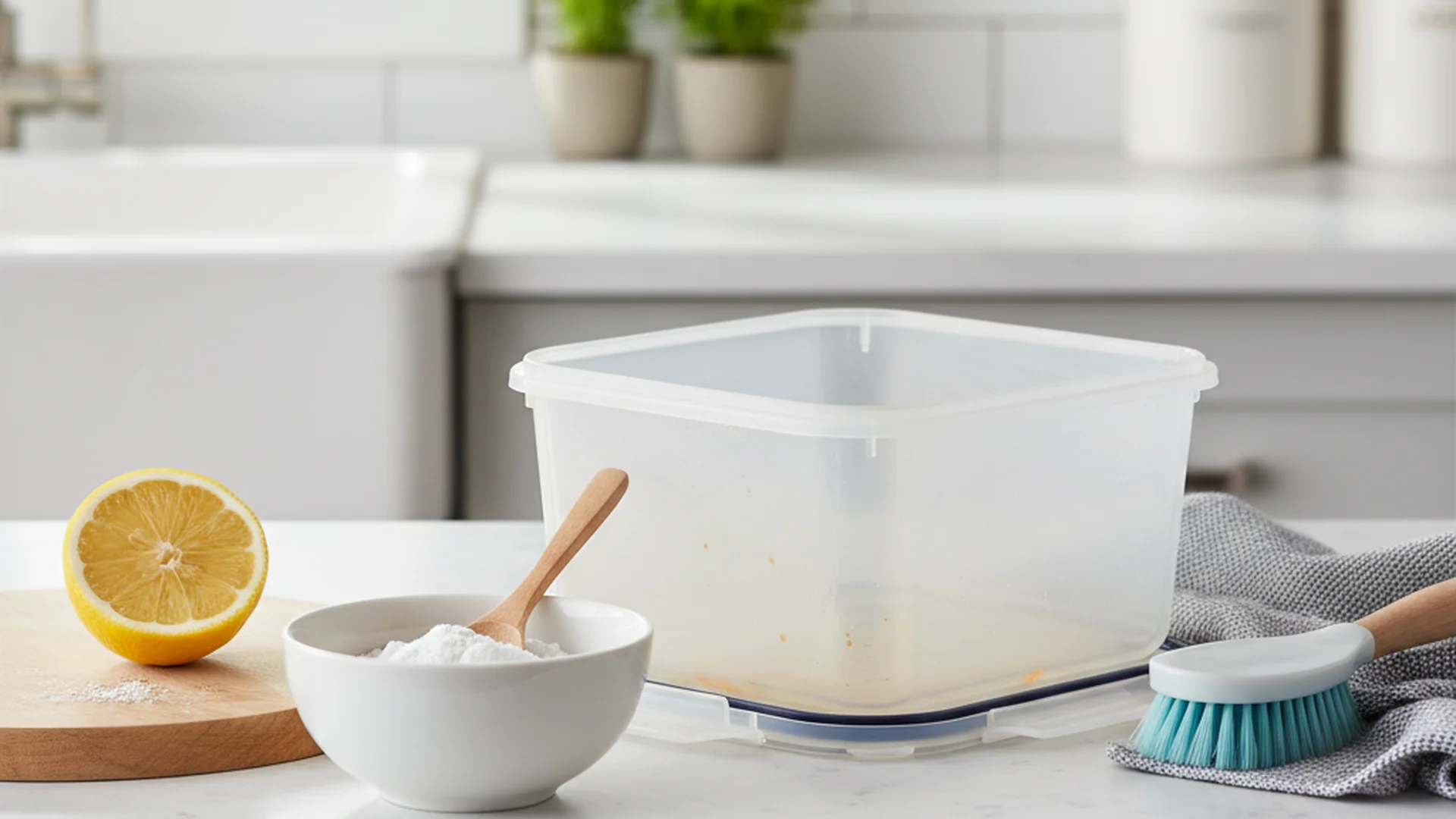
The Baking Soda Paste
For older stains or lingering odors (like onions or garlic), baking soda is your best friend. It acts as a mild alkaline abrasive that neutralizes acids and lifts surface pigments.
- Process: Mix 2 tablespoons of baking soda with 1 teaspoon of water to create a thick paste. Spread the paste over the stained areas and let it sit for at least 30 minutes. Scrub gently with a soft sponge and rinse.
Hand Sanitizer and Rubbing Alcohol
If you are dealing with ink, permanent markers, or the dreaded turmeric stain, traditional soap won't cut it. You need a solvent. Alcohol breaks down the chemical bonds of these specific pigments.
- Example: A common real-world scenario is getting turmeric-stained fingerprints on a white plastic food processor. Applying a small amount of 70% isopropyl alcohol to a cotton pad and buffing the area will often lift the yellow tint instantly.
Tip: If the stain is deep, pour enough rubbing alcohol to cover the bottom of the container and let it soak for 45 minutes before washing.
Restoring Yellowed Plastic (Retrobrighting)
By 2025, the "Retrobrighting" subculture has exploded as people look to restore vintage electronics and white appliances to their original glory. This isn't just cleaning; it's a chemical reversal of oxidation.
The Hydrogen Peroxide & UV Method
This method is the gold standard for restoring the "bright white" look to plastics that have yellowed due to age or heat.
- Clean the surface: Remove all dust and oils with mild soap.
- Apply Peroxide: Use a 12% hydrogen peroxide cream (often sold as "hair developer"). Apply an even coat over the plastic.
- Seal it: Wrap the item in clear plastic cling film to prevent the cream from drying out.
- UV Exposure: Place the item in direct sunlight for 4–8 hours. Alternatively, use a high-powered UV-C lamp or light box.
- Rinse: Wipe away the cream to reveal the restored white surface.
Warning: Wear gloves when handling high-volume hydrogen peroxide, as it can cause chemical burns on the skin.
2025 Trends: The Rise of Bio-Enzymatic Cleaners
As we move toward "Green Chemistry," many homeowners are ditching harsh bleaches for bio-enzymatic solutions. These cleaners contain specialized enzymes—proteases and lipases—that literally "eat" organic matter.
These are particularly effective for "set-in" stains where the plastic has been repeatedly heated in a dishwasher. Look for products with the EPA Safer Choice or Green Seal labels to ensure your cleaners are free from PFAS and other "forever chemicals" that can leach into your food supply.
| Method | Best For | Effort Level |
|---|---|---|
| Paper Towel Shake | Fresh Tomato/Grease | Low |
| Baking Soda Paste | Odors & Surface Stains | Medium |
| Rubbing Alcohol | Turmeric, Ink, Marker | Low |
| Retrobrighting | Yellowed Appliances | High |
| Sun Bleaching | Natural Pigments | Low |
Common Mistakes to Avoid
Even with the best intentions, you can accidentally ruin your plastic items if you use the wrong technique.
- Using Boiling Water: Never use boiling water to clean a stain. High heat opens the plastic's pores further, allowing the pigment to sink even deeper into the material, effectively "setting" the stain forever.
- Abrasive Steel Wool: Using heavy-duty scouring pads creates microscopic scratches. While it might remove the stain today, those scratches will trap bacteria and food particles tomorrow, making the plastic impossible to sanitize.
- The Vinegar Fallacy: While vinegar is an amazing descaler for hard water stains, it is largely ineffective against oil-based food pigments like carotenoids.
- Reusing Single-Use Plastics: Avoid trying to deep-clean "take-out" containers (Type 6 PS). The heat and chemicals required to remove stains can cause these lower-grade plastics to leach harmful chemicals like BPA or phthalates.
Warning: Never mix bleach with any ammonia-based cleaners or vinegar, as this creates toxic chloramine gas.
Frequently Asked Questions
Can I use bleach on all types of plastic?
Why did my plastic turn yellow even though it wasn't in the sun?
Is sun bleaching actually effective?
How do I maintain "stain-free" containers?
Conclusion
Mastering the art of how to clean stained plastic is a small but impactful way to maintain a beautiful, organized home while contributing to a more sustainable planet. Whether you are using the quick "TikTok Shake" for your lunch containers or embarking on a Retrobrighting project for a vintage appliance, these methods ensure your plastic items last for years rather than weeks.
By understanding the chemistry of your containers and avoiding common pitfalls like boiling water and abrasive scrubbers, you can keep your kitchenware looking brand new.
Success: By restoring your current containers rather than buying new ones, you are actively participating in the circular economy and reducing your household environmental footprint.
Cleaning that keeps score
Every task earns points, every streak multiplies them, and Premium adds a household leaderboard plus a monthly Dustagorgon to beat.
- Free forever
- 30 badges to earn
- Up to 6 in a household
No card needed. Set up your rooms in a couple of minutes.