In this article
What you’ll learn
- Aluminum pans should never go in the dishwasher due to oxidation.
- Polymerized grease is best removed with abrasives like Bar Keepers Friend or baking soda.
- Modern 2026 sustainability trends favor restoration over replacement.
We have all been there: you pull a tray of roasted vegetables out of the oven, and while the food looks delicious, the pan looks like a battlefield. Over time, that shiny silver surface transforms into a patchwork of brown, sticky stains and dull grey patches. Knowing how to clean sheet pans properly isn’t just about aesthetics—it’s about kitchen efficiency, food safety, and sustainability.
As a professional cleaning consultant, I have seen thousands of pans discarded prematurely. However, as we move into 2025 and 2026, the industry is shifting. We are moving away from the "toss and replace" culture, with professional kitchens increasingly prioritizing longevity and restoration. Whether you are dealing with a professional-grade Nordic Ware aluminum sheet or a modern ceramic-coated tray, restoring your gear to its former glory is easier than you think when you use the right chemistry.
Identify Your Material Before You Scrub
Before you reach for the scouring pad, you must identify what your pan is made of. Using the "best way to clean sheet pans" for stainless steel on a non-stick surface is a recipe for disaster.
Natural Aluminum
This is the workhorse of the professional kitchen. Aluminum is an excellent heat conductor but is highly reactive. If your pan has turned a dull, chalky grey, it has likely been through a dishwasher. Dishwasher detergents are highly alkaline, which causes a chemical reaction called oxidation.
Stainless Steel
Heavy and durable, these pans can handle the most aggressive cleaning methods. They don't heat as evenly as aluminum, but they are "tank-like" in their resistance to corrosion.
Non-Stick and Ceramic Coated
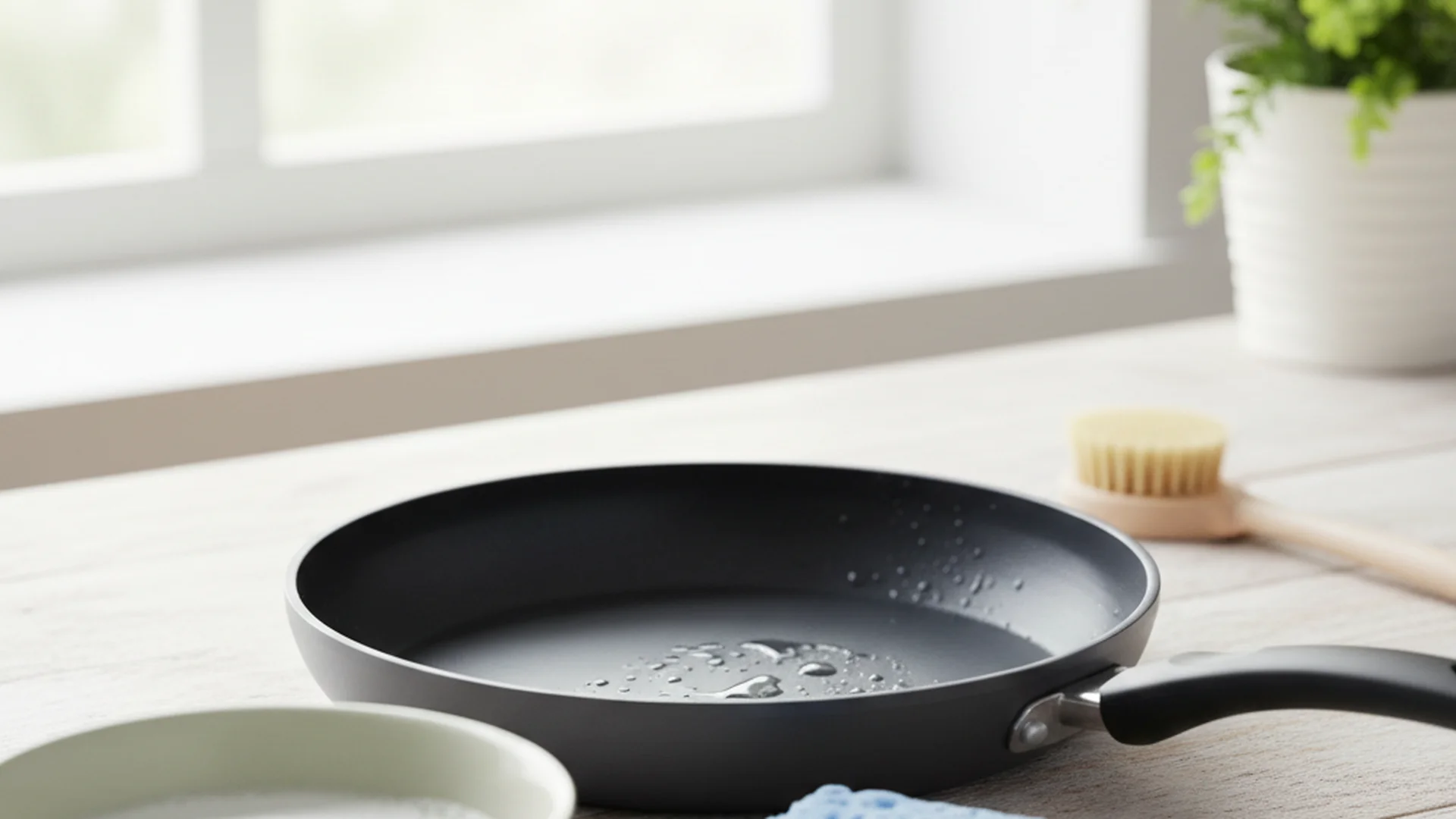
These require the gentlest touch. In 2026, we are seeing a massive move toward PFAS-free ceramic coatings. These materials are safer for your health but can lose their "slick" property if scrubbed with harsh abrasives or exposed to extreme heat.
Warning: Never put aluminum sheet pans in the dishwasher. The alkaline salts will oxidize the metal, leaving a grey residue that can rub off onto your food.
The Deep Clean Guide: Two Professional Methods
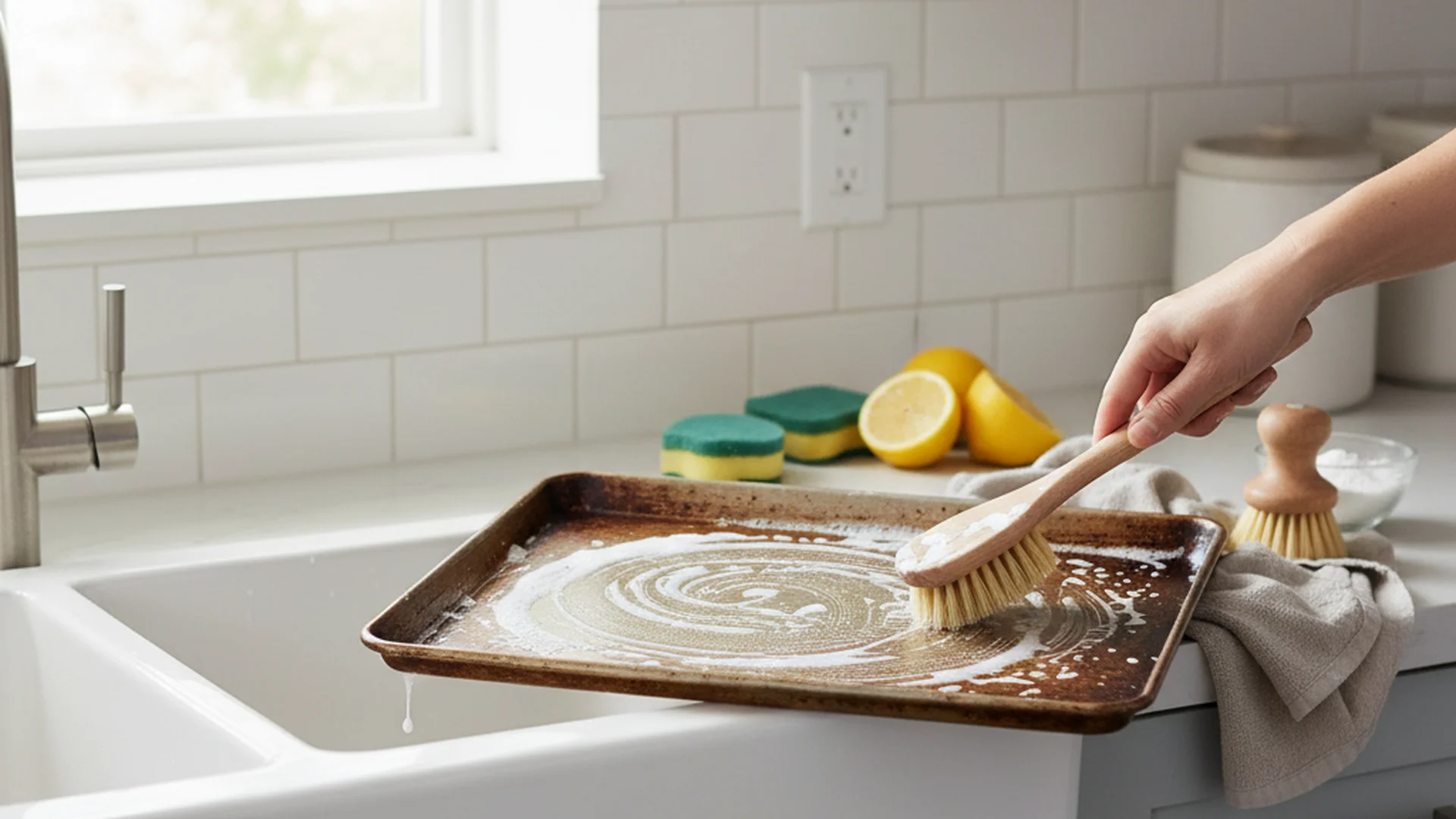
If your pans have the dreaded "brown sticky stuff"—which is actually polymerized oil—soap and water won't cut it. Polymerized oil occurs when fat is heated to its smoke point and bonds to the metal. Here are the two most effective ways to break that bond.
The "Gold Standard" Bar Keepers Friend Method
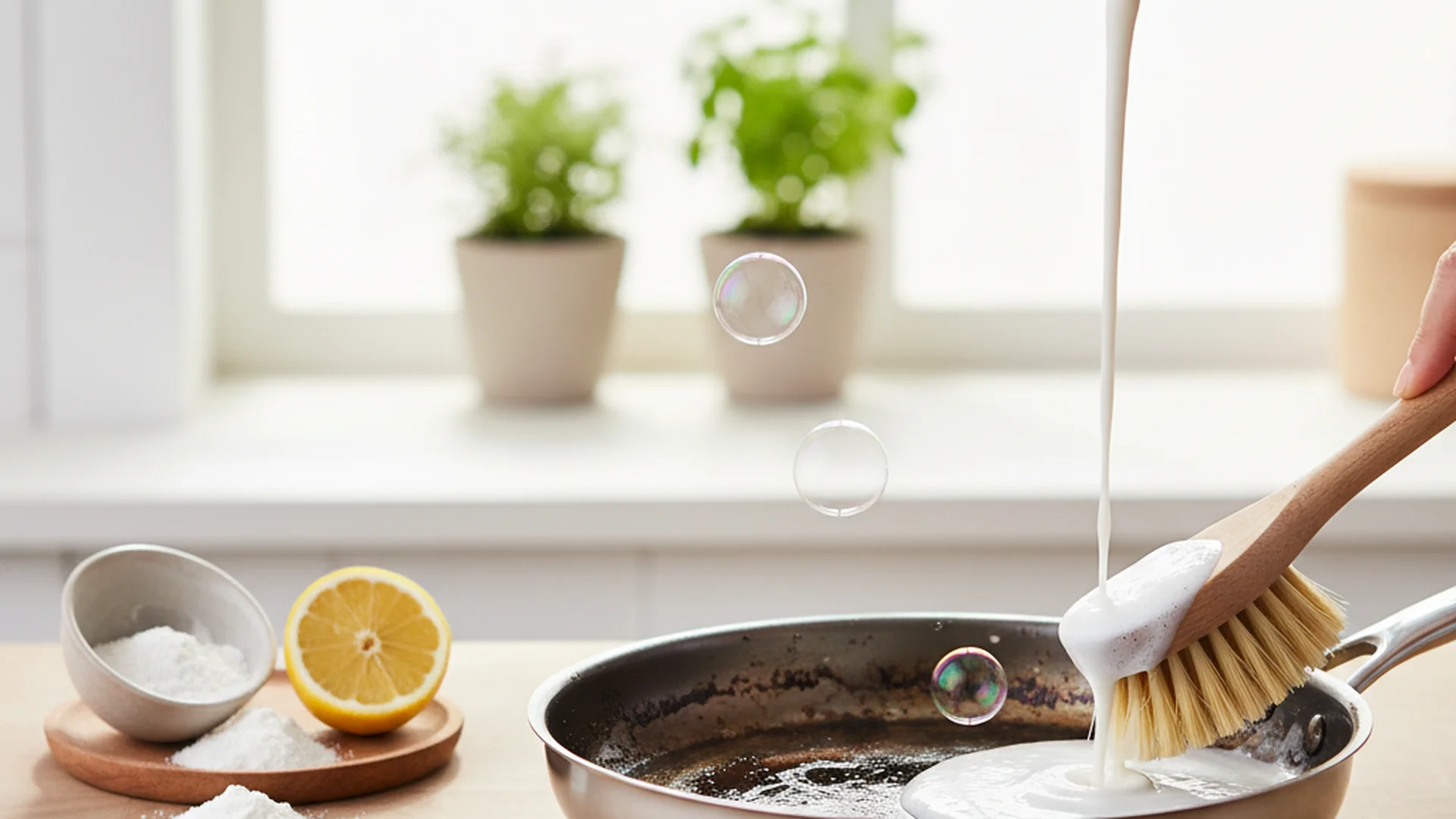
This is my go-to recommendation for uncoated aluminum. Bar Keepers Friend contains oxalic acid, which breaks down mineral deposits and burnt-on grease at a molecular level.
- Apply: Wet the pan and sprinkle a generous layer of Bar Keepers Friend (powder version).
- Paste: Add a few drops of water to create a thick paste.
- Wait: Let it sit for exactly 60 seconds. Do not let it dry completely.
- Scrub: Use a non-scratch blue scouring pad and scrub in a circular motion.
- Rinse: Wash with warm soapy water and dry immediately.
The "Viral" Baking Soda and Peroxide Method
If you have a pan that looks like it belongs in the trash, this "soak-free" method is a miracle worker. This is particularly effective for those stubborn corners where grease accumulates.
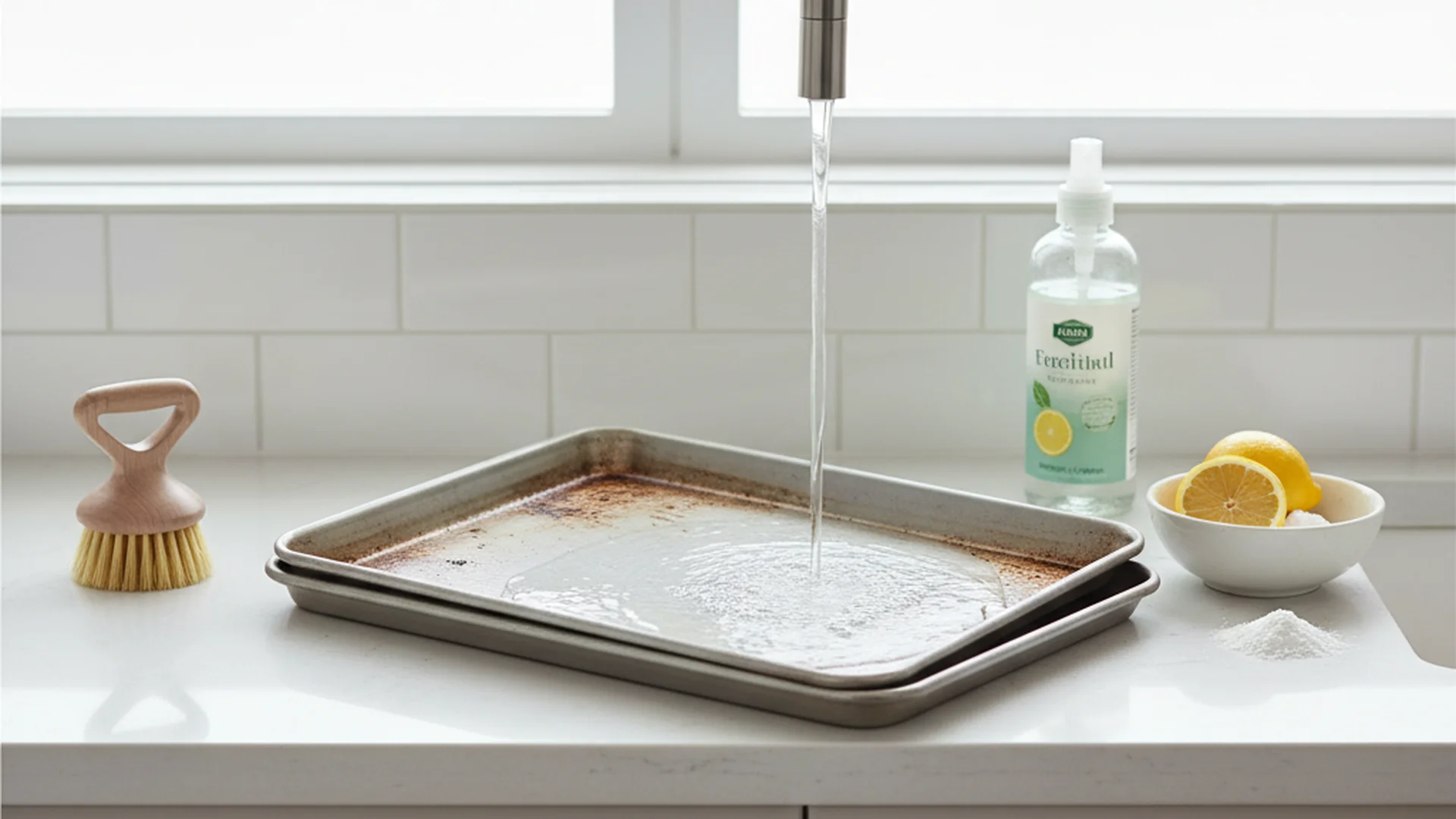
- Layer: Sprinkle a thick layer of baking soda over the stained areas.
- Spray: Mist the soda with hydrogen peroxide until it’s damp.
- Top: Add another light dusting of baking soda.
- Dwell: Let this sit for 2 to 8 hours.
- Wipe: You will see the white soda turn brown as it lifts the grease. Simply wipe it away with a sponge.
Success: This method often restores pans to 90% of their original shine without any heavy elbow grease.
2026 Trends in Kitchen Maintenance
The world of kitchen cleaning is evolving. We are seeing a move away from harsh aerosols and toward mechanical and bio-based solutions.
The Rise of Eco-Pastes
Products like The Pink Stuff have surged in popularity. These bio-based abrasive pastes use natural particles to provide the friction needed to remove grease without the fumes associated with traditional oven cleaners. They are a fantastic middle-ground for home cooks who want professional results with eco-friendly ingredients.
Steam Cleaning Hacks
With high-powered handheld steam cleaners becoming a household staple in 2026, many are ditching chemicals entirely. A 200°F blast of concentrated steam can "flash-melt" semi-polymerized grease in seconds, especially around the "rolled edges" of the pan where bacteria often hide.
Engineered "Open-Bead" Rims
Manufacturers like Chicago Metallic are now designing pans with open-bead rims. Traditional pans have a rolled edge that traps water, leading to internal rusting. The newer open-design allows for better airflow and drainage, making the "dry immediately" rule less of a burden.
| Cleaning Method | Best For | Effort Level | Eco-Friendly? |
|---|---|---|---|
| Bar Keepers Friend | Aluminum | Medium | Moderate |
| Baking Soda/Peroxide | Heavy Grease | Low (Wait time high) | Yes |
| The Pink Stuff | General Stains | Medium | Yes |
| Steam Cleaning | Corners/Gunk | Low | Excellent |
Common Mistakes to Avoid
Even seasoned cooks make errors that can ruin high-quality cookware. Avoid these common pitfalls to ensure your pans last a lifetime.
1. Mixing Vinegar and Baking Soda
You see this in "hack" videos constantly. The "fizz" looks like it's working, but chemically, an acid (vinegar) and a base (baking soda) neutralize each other. You end up with salty water. The Fix: Use them sequentially. Scrub with baking soda first for the abrasive power, then rinse with a vinegar solution to remove streaks and add shine.
2. Soaking Aluminum Overnight
While a short soak can help, leaving an aluminum pan in plain water for 12+ hours can cause pitting. This creates tiny "craters" in the metal where bacteria and grease can hide even deeper.
3. Using Steel Wool on Everything
Steel wool is fantastic for stainless steel, but it is too aggressive for aluminum. It creates microscopic scratches that actually make the pan more likely to stick in the future. Always opt for a non-scratch synthetic pad first.
Note: If your pan is warped, it’s likely due to "thermal shock." This happens when you put a cold pan into a screaming hot oven or run a hot pan under cold water.
Real-World Restoration Examples
Example 1: The Inherited Heirloom
A client of mine inherited a set of 20-year-old heavy-gauge aluminum pans that were completely black. Instead of recycling them, we used the Baking Soda and Peroxide method overnight. By morning, the "black" layer peeled off like a skin, revealing perfectly functional pans underneath.
Example 2: The Bakery Standard
A local bakery was struggling with "rancid" tasting crusts. We discovered their pans had a layer of oxidized, semi-polymerized oil. By switching to a weekly Bar Keepers Friend deep clean, they eliminated the free radicals and improved the flavor profile of their pastries.
Example 3: The Non-Stick Nightmare
A home cook used a metal fork to scrape roasted potatoes off a ceramic-coated pan. The scratches began to flake. In this case, the recommendation was to replace the pan, as flaking coatings can enter the food supply—a reminder that prevention is the best cleaning method.
Frequently Asked Questions
Is my discolored pan safe to use?
Can I use oven cleaner on my sheet pans?
Why is my pan warping in the oven?
How do I get the "sticky" feeling off?
Conclusion
Mastering how to clean sheet pans is a fundamental skill for any serious home cook or professional. By understanding the science of polymerized oil and the reactivity of aluminum, you can save money and reduce waste. Remember: avoid the dishwasher, embrace the power of baking soda, and never underestimate the value of a 60-second scrub with the right agent.
Success: With these methods, your pans will not only look better but will also provide more consistent heat distribution and safer, better-tasting food for years to come.
Cleaning that keeps score
Every task earns points, every streak multiplies them, and Premium adds a household leaderboard plus a monthly Dustagorgon to beat.
- Free forever
- 30 badges to earn
- Up to 6 in a household
No card needed. Set up your rooms in a couple of minutes.