In this article
What you’ll learn
- Immediate blotting is critical to prevent urine from penetrating wood pores.
- Enzymatic cleaners are necessary to break down uric acid crystals that cause lingering odors.
- Avoid steam mops and ammonia-based cleaners, which can set stains and encourage re-soiling.
For many of us, our pets are cherished members of the family. However, even the most well-behaved dog or cat can have an accident. When dealing with pet urine hardwood floors are particularly vulnerable. With so many homes sharing their living space with a dog or cat, accidents on wood floors are a common problem. If not handled properly, a simple accident can lead to permanent structural damage, lingering odors, and costly professional repairs.
The Science Behind the Smell: Why Hardwood is Different
Cleaning urine off a tile or laminate floor is relatively straightforward, but hardwood presents a unique set of challenges. To understand the best way pet urine hardwood issues should be addressed, you first have to understand the chemistry of the "accident."
Pet urine is composed of urea, urochrome, and uric acid. While urea and urochrome are water-soluble and easily wiped away, uric acid is the real culprit. Uric acid forms microscopic crystals that are insoluble in water or traditional soap. These crystals lodge themselves deep within the porous fibers of the wood.
The Role of Humidity and Uric Acid
Have you ever noticed that your home smells like a kennel on a rainy day, even if you cleaned the floors weeks ago? This is because humidity reactivates the uric acid crystals. When moisture in the air increases, the crystals "off-gas," releasing that pungent ammonia scent. Without a specialized cleaner to break down these crystals, the odor will persist for years.
Structural and Aesthetic Damage
Hardwood is naturally porous. When urine sits on the surface, it begins to penetrate the polyurethane or wax finish. Once it reaches the wood grain, it can cause the boards to swell, warp, or even rot. Furthermore, the ammonia in the urine reacts with the natural tannins in the wood (especially in species like Oak). This chemical reaction often results in a distinctive blackish-green stain that is significantly more difficult to remove than a standard gray water mark.
Warning: Never use a steam mop on pet urine stains. The intense heat and moisture push the urine deeper into the wood grain and "set" the protein stains and odors permanently.
Step-by-Step: The Best Way to Clean Pet Urine from Hardwood
If you catch the accident in real-time, your chances of a full recovery are high. Follow these pet urine hardwood tips to ensure the liquid doesn't become a permanent part of your flooring.
Step 1: The "Golden Rule" of Blotting
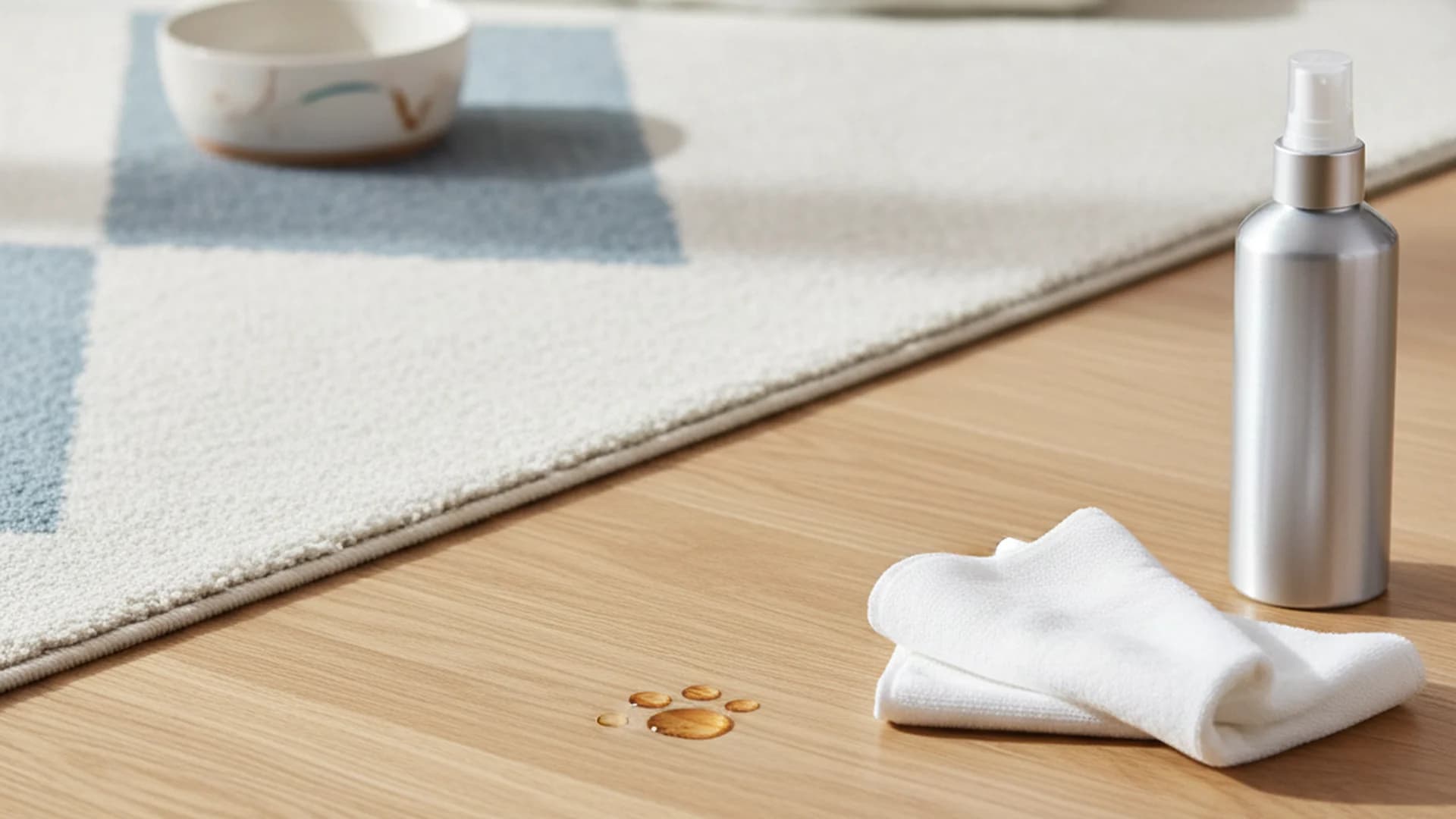
The moment you spot a puddle, grab a stack of microfiber cloths or highly absorbent paper towels. Blot, never rub. Rubbing creates friction that pushes the liquid into the wood joints and deeper into the grain. Apply firm downward pressure to soak up as much moisture as possible.
Step 2: Neutralize with Vinegar or Enzymatic Cleaners
For fresh accidents, a 1:1 mixture of white vinegar and lukewarm water can help neutralize the ammonia. However, for the most effective results, you must use a wood-safe enzymatic cleaner. These products contain bio-engineered "good" bacteria that produce enzymes specifically designed to "eat" the uric acid crystals.
Step 3: Deep Treatment for Stubborn Stains
If the urine has already begun to discolor the wood, you may need a more aggressive approach using 3% hydrogen peroxide.
- Lightly dampen a clean rag with hydrogen peroxide.
- Place the rag over the stain.
- Let it sit for no more than 10 minutes.
- Remove the rag and wipe the area dry immediately.
Note: Leaving hydrogen peroxide on the wood for too long can bleach the natural color of the flooring. Always test a small, inconspicuous area first.
Step 4: Deodorize and Dry
Once the area is clean, sprinkle a thin layer of baking soda over the spot. This will help pull out any remaining moisture and neutralize surface odors. Let it sit overnight, then vacuum it up the following morning.
| Method | Best For | Effectiveness |
|---|---|---|
| Vinegar & Water | Fresh spills only | Moderate |
| Enzymatic Cleaner | All urine stains/odors | High |
| Hydrogen Peroxide | Black/Dark stains | Very High |
| Baking Soda | Moisture removal | Moderate |
Real-World Examples: Case Studies in Urine Removal
To better understand how these techniques work in practice, let’s look at three common scenarios homeowners face in 2025.
Example 1: The "New Puppy" Scenario
A homeowner in Seattle discovered a fresh puddle on their white oak floors. Following the "Golden Rule," they immediately blotted the area and applied a plant-based enzymatic cleaner. Because they acted within 15 minutes, the urine didn't have time to penetrate the polyurethane finish. Result: Zero staining and no lingering odor.
Example 2: The "Rainy Day" Mystery
A family in Florida noticed a strong ammonia smell every time the humidity rose, despite the floors looking clean. Using a UV blacklight, they identified several "invisible" spots where uric acid crystals had settled into the cracks between floorboards. They treated these gaps with a deep-penetrating enzymatic foam. Result: The "ghost" smell was eliminated by breaking down the hidden crystals.
Example 3: The "Hidden Black Stain"
A renter moved a rug to find a large, blackish-green circle where an old pet accident had occurred months prior. They used a controlled hydrogen peroxide soak for 8 minutes, followed by a light sanding and a touch-up of aluminum oxide-infused finish. Result: The stain was reduced by 90%, avoiding a full $2,000 floor replacement.
Success: Acting within the first 15–30 minutes of an accident is the single most effective way to prevent permanent damage to your hardwood.
2025–2026 Trends in Pet-Friendly Flooring Care
The world of home maintenance is evolving, and new technologies are making it easier to manage pets and hardwood floors simultaneously.
- "Green" Enzyme Technology: Modern enzymatic formulas are now 100% biodegradable and scent-free. Consumers are moving away from heavy "masking" scents like pine or lemon, which can irritate a pet's sensitive nose, in favor of "clean label" hypoallergenic products.
- Smart Home Integration: We are seeing the rise of smart flooring sensors. These low-profile devices can be installed near subfloors or baseboards to monitor humidity spikes. If a pet has a hidden accident, the sensor sends an alert to your smartphone, allowing you to clean it before it rots the wood.
- Waterproof Rug Pads: One of the best preventative measures today is the specialized waterproof rug pad. Unlike traditional pads, these have a solid barrier that prevents liquid from seeping through an area rug and onto the hardwood below.
- Aluminum Oxide Finishes: For those refinishing their floors, experts now recommend finishes infused with aluminum oxide. These are significantly more moisture-resistant than traditional polyurethane, providing a longer "window of opportunity" to clean up spills.
Common Mistakes to Avoid
When you are stressed about a stain, it is easy to reach for the nearest cleaning bottle. However, using the wrong chemicals can make the situation much worse.
- Cleaning with Ammonia: Since urine contains ammonia, using an ammonia-based cleaner will actually make the spot smell more like a bathroom to your pet. This encourages them to "re-mark" the territory.
- Mixing Vinegar and Bleach: This is a dangerous chemical reaction that creates toxic chlorine gas. Similarly, mixing vinegar and hydrogen peroxide creates corrosive peracetic acid. Stick to one method at a time.
- Over-Saturating the Wood: Hardwood’s greatest enemy is standing water. Never "mop" a urine stain with a soaking wet bucket. Use targeted applications and dry the area thoroughly.
- Ignoring the Subfloor: If urine has seeped through the cracks and into the subfloor, surface cleaning won't be enough. In extreme cases, the subfloor may need to be sealed with an odor-blocking primer.
Tip: If you can't find the source of a smell, use a handheld UV blacklight in a dark room. Urine will glow a dull yellow or green, revealing exactly where you need to treat.
Frequently Asked Questions
Can I use a steam mop on urine stains?
Is my floor ruined if it turns black?
Why does the smell come back on rainy days?
Is vinegar or hydrogen peroxide better?
How much does it cost to repair urine-damaged hardwood?
Conclusion
Managing pet urine hardwood challenges doesn't have to be a nightmare. By understanding the science of uric acid and acting quickly with the right tools—specifically enzymatic cleaners and microfiber cloths—you can maintain beautiful floors and a happy home for your pets. Remember the "Golden Rule" of blotting, avoid the temptation to use heat or harsh ammonia, and keep an eye on modern "green" solutions that make cleaning safer for every member of your family.
Success: With consistent care and the right enzymatic treatments, even the most stubborn pet odors can be eliminated for good.
Cleaning that keeps score
Every task earns points, every streak multiplies them, and Premium adds a household leaderboard plus a monthly Dustagorgon to beat.
- Free forever
- 30 badges to earn
- Up to 6 in a household
No card needed. Set up your rooms in a couple of minutes.