In this article
What you’ll learn
- Morning cleaning leverages peak cortisol for better focus and decision-making.
- Evening cleaning acts as a psychological "reset" that improves sleep quality.
- Mid-day is actually the best time for specific tasks like dusting and mopping.
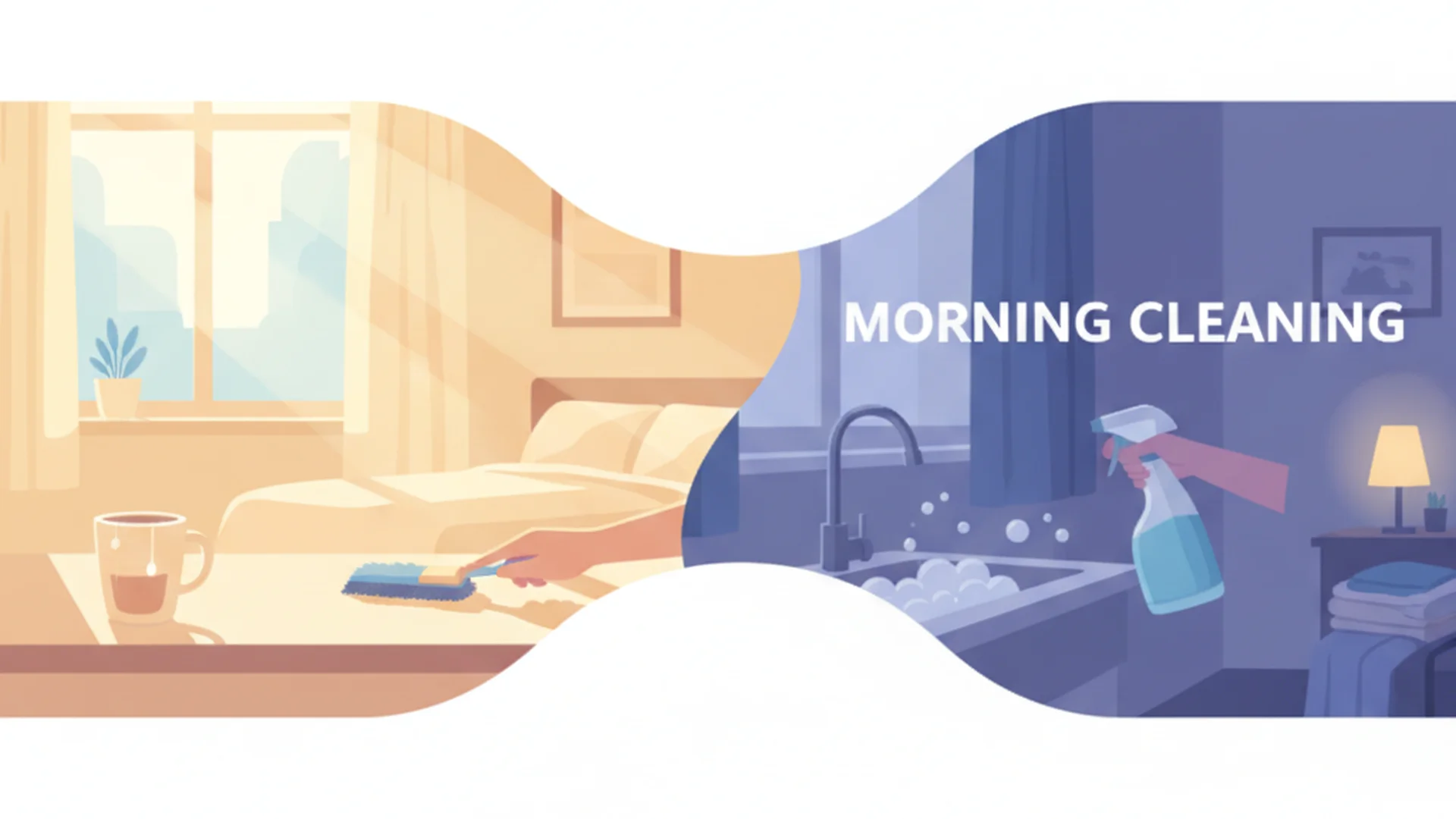
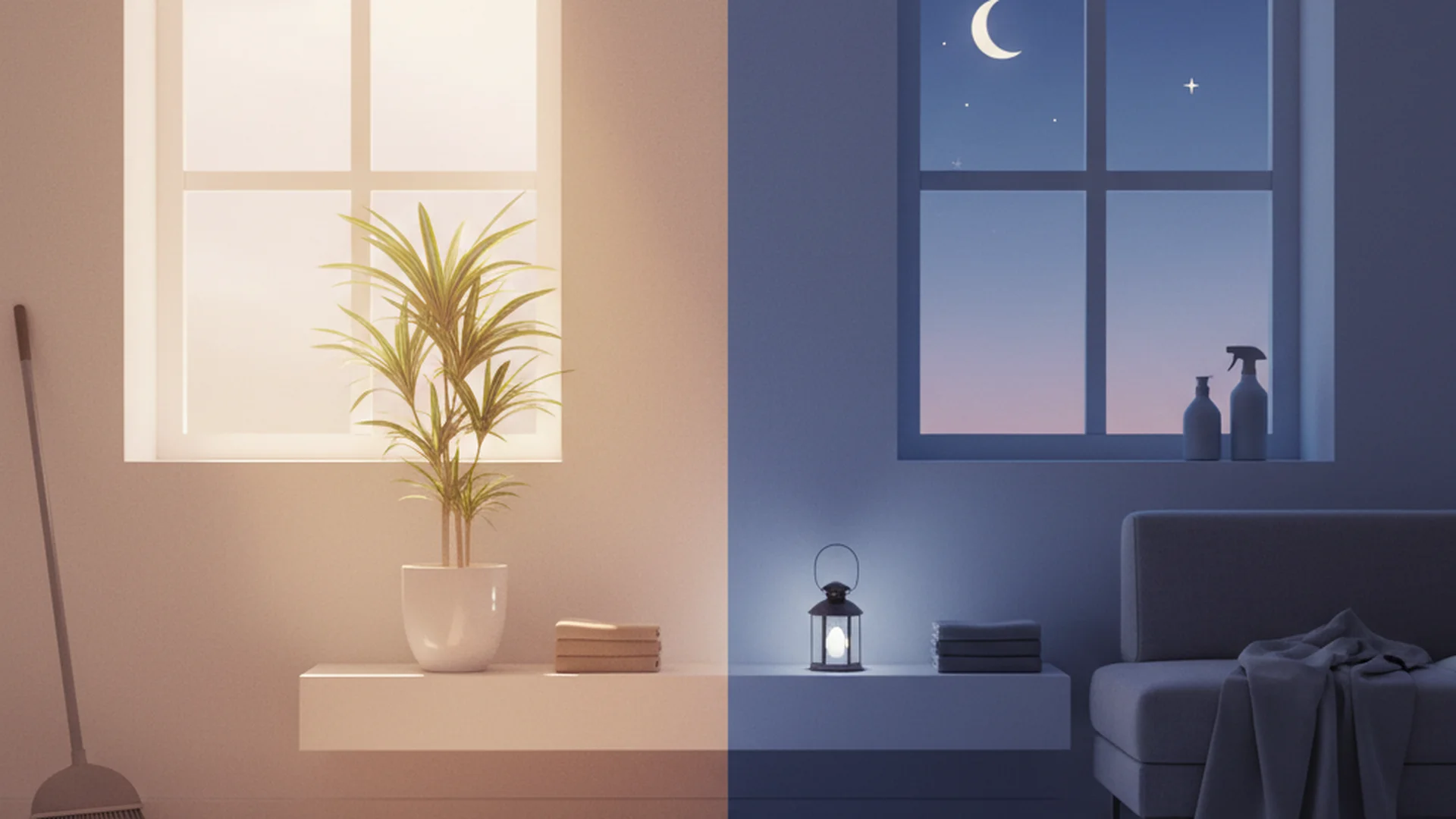
One of the most frequent questions I receive as a home organization expert is whether it is better to clean morning or evening. While it might seem like a matter of personal preference, the science of 2025 suggests that the timing of your chores can significantly impact your mental health, your sleep quality, and even your long-term cognitive function. Deciding to clean morning or evening is less about the dirt itself and more about balancing your biological energy peaks against your psychological need for a "clean slate."
Research shows that our brains are wired differently at 8:00 AM than they are at 8:00 PM. While morning light and high cortisol levels make us more efficient at high-focus tasks, the evening transition is often better suited for lower-intensity "resets" that signal to our brains that the day is over. In this guide, we will break down the data-driven answer to the cleaning-time debate.
The Science of Morning Cleaning
If you are looking for the most efficient way to tackle your home, the morning often holds the "Mental Edge." A landmark 2025 study published in BMJ Mental Health followed nearly 50,000 adults and found that participants reported their best frame of mind in the morning, with depressive and anxiety symptoms at their lowest shortly after waking and at their worst around midnight.
When you clean in the morning, you are working with your body's natural chemistry. Cortisol, often called the "stress hormone," actually serves a vital purpose in the morning by peaking shortly after you wake up. This peak enhances your focus and decision-making capabilities. If you have a cluttered junk drawer or a mountain of paperwork to sort through, the morning is the optimal time to handle it because your cognitive load is at its lowest.
Furthermore, a clean environment acts as a productivity multiplier. By tidying up first thing, you set a high-performance tone for the rest of your workday.
Tip: Start your morning by making your bed. According to the National Sleep Foundation's Bedroom Poll, people who do this are 19% more likely to say they get a good night's sleep because it establishes an early sense of order.
The Case for the Evening Reset
While the morning is great for focus, the evening is all about the "Psychological Reset." For many professionals and parents, cleaning at night isn't about deep scrubbing—it’s about closing the loop on the day's chaos.
The "evening reset" involves a 15-minute power burst where you clear surfaces, load the dishwasher, and put away stray items. This creates a fresh start for the next morning, preventing that "clutter-induced paralysis" that many feel when they walk into a messy kitchen at 6:00 AM.
However, you must be careful with intensity. While light tidying can lower stress and help you unwind, vigorous deep cleaning (like scrubbing a bathtub or vacuuming the whole house) can raise your heart rate and body temperature. This physiological spike can actually delay your sleep onset, making it harder to fall asleep.
Note: The goal of evening cleaning should be "sensory decluttering"—removing visual noise so your brain can enter a recovery state.
Circadian-Aligned Cleaning Tasks
To get the most out of your home maintenance, you should align specific tasks with your energy levels throughout the day. Not every chore is suited for every hour.
| Time of Day | Energy Level | Best Cleaning Tasks |
|---|---|---|
| Morning | High | Decluttering, deep cleaning, organizing paperwork |
| Midday | Moderate | Loading/unloading dishwasher, high-traffic zone resets |
| Afternoon | Transition | Dusting, window cleaning (out of direct sun) |
| Evening | Low | Wiping counters, folding laundry, "5-minute reset" |
The "Top-to-Bottom" Rule
Regardless of when you clean, you must follow the top-to-bottom rule. Always start with the highest points in a room—ceiling fans, top shelves, and molding—and work your way down to the floors. This ensures that any dust or debris you displace falls onto surfaces you haven't cleaned yet, preventing the need for re-cleaning.
Success: Using the morning sun for deep-cleaning tasks allows you to see dirt and grime that artificial evening light often hides, leading to a much more thorough result.
Recent Trends: Cleaning as Self-Care (2025-2026)
In the current landscape of 2025, cleaning has evolved from a dreaded chore into a well-being ritual. We are seeing a massive shift toward "Mindful Cleaning." This involves performing chores without the distraction of phones or podcasts, focusing entirely on the sensory experience—the warmth of the dishwater, the scent of the citrus cleaner, and the rhythm of the movement.
Another rising trend is "Micro-Rotations." Instead of dedicating a whole Saturday to a "deep clean," 2026 trends favor multiple light-touch cleans daily. This keeps the home at a consistent level of cleanliness and prevents the stress levels associated with "mess reaching a threshold."
We are also seeing the rise of AI-Scheduled Cleaning. Smart home ecosystems now analyze when a house is least occupied to suggest the best "midday reset" times, which is particularly useful for those who work from home.
Warning: While "over-sterilizing" was a trend in the past, the 2025 "Hygiene Theory" suggests that using harsh chemicals for every minor spill can weaken your home's healthy microbiome. Stick to simple soap and water or vinegar for daily maintenance.
Common Mistakes to Avoid
Even with the best timing, certain habits can sabotage your efforts. Here are the most common pitfalls I see as an organization expert:
- Dusting with a Dry Cloth: This is a major mistake. Using a dry rag simply redistributes dust into the air, where it settles back down an hour later. Always use a damp microfiber cloth or an electrostatic tool to actually trap and remove allergens.
- Cleaning in a "Busy House": Trying to deep clean while your children or pets are running around is highly inefficient—you end up re-cleaning the same stretch of floor twice. Save the floors for when the house is quiet.
- The "All-Day Cleaning" Myth: You do not need an 8-hour window to get a clean house. "Exercise snacks"—cleaning in 2 to 5-minute bursts—are far more effective for long-term maintenance and prevent the burnout associated with marathon cleaning sessions.
- Mopping First Thing: It is tempting to mop in the morning, but it is often better to wait until mid-morning or afternoon. Morning foot traffic is usually the heaviest, and mopping too early leads to footprints on damp floors.
Frequently Asked Questions
Is morning cleaning better for productivity?
Should I mop the floors first thing in the morning?
Will cleaning at night keep me awake?
What is the best time for dusting?
How does cleaning affect long-term health?
Conclusion
So, is it better to clean morning or evening? The clean morning or evening answer is actually a combination of both. Use your high-energy morning hours for "high-focus" tasks like decluttering and deep cleaning to take advantage of your mental peak. Save your low-energy evening hours for a "15-minute power reset" to clear away the day's visual noise and prepare your mind for rest.
By aligning your cleaning schedule with your biological rhythms, you stop fighting against your energy levels and start working with them. Your home will stay cleaner, your stress levels will drop, and you will finally reclaim the time you used to spend on "all-day" cleaning marathons.
Success: Finding the right balance between a morning focus and an evening reset will turn your home into a sanctuary rather than a source of stress.
Cleaning that keeps score
Every task earns points, every streak multiplies them, and Premium adds a household leaderboard plus a monthly Dustagorgon to beat.
- Free forever
- 30 badges to earn
- Up to 6 in a household
No card needed. Set up your rooms in a couple of minutes.