In this article
What you’ll learn
- Use microfiber cloths and mild dish soap for daily maintenance.
- Avoid excessive water near seams to prevent warping and bubbling.
- Never use bleach or abrasive pads which can permanently damage the resin.
Laminate countertops have seen a massive resurgence in 2025 and 2026. Once considered a "budget-only" option, modern high-pressure laminate (HPL) has evolved into a designer favorite due to its incredible versatility and improved durability. However, despite their resilience, knowing how to clean laminate counters properly is the difference between a kitchen that looks brand new for a decade and one that shows its age within months.
Whether you have the latest soft-touch matte finish or a classic stone-look laminate, maintaining that factory-fresh glow requires a specific touch.
Why Modern Laminate Requires Special Care
In 2025, the composition of laminate has shifted. Designers are now recommending laminate to over 93% of their clients, not just for cost-effectiveness, but because modern HPL is engineered with cellulose layers and melamine resin. This makes them significantly more scratch-resistant than the countertops your parents had in the 1990s.
However, this resin-based surface is non-porous but chemically sensitive. Using the wrong cleaner can lead to "etching" or a permanent cloudiness that no amount of scrubbing can fix. To find the best way clean laminate counters, we have to look at both the chemistry of the material and the physical construction of the countertop itself.
Note: Modern laminate often features antimicrobial silver-ion coatings. Using harsh chemicals can actually strip away these protective layers, leaving your surface less hygienic over time.
The Daily Cleaning Routine
For 99% of your cleaning needs, simplicity is your best friend. The goal of daily cleaning is to remove food particles, grease, and bacteria without leaving behind a film that attracts more dust.
The Microfiber Advantage
If you are still using a yellow-and-green sponge, it is time for an upgrade. Microfiber is the gold standard for laminate. Because it is designed to trap particles within its fibers rather than just pushing them around, it provides a deeper clean with less physical pressure.
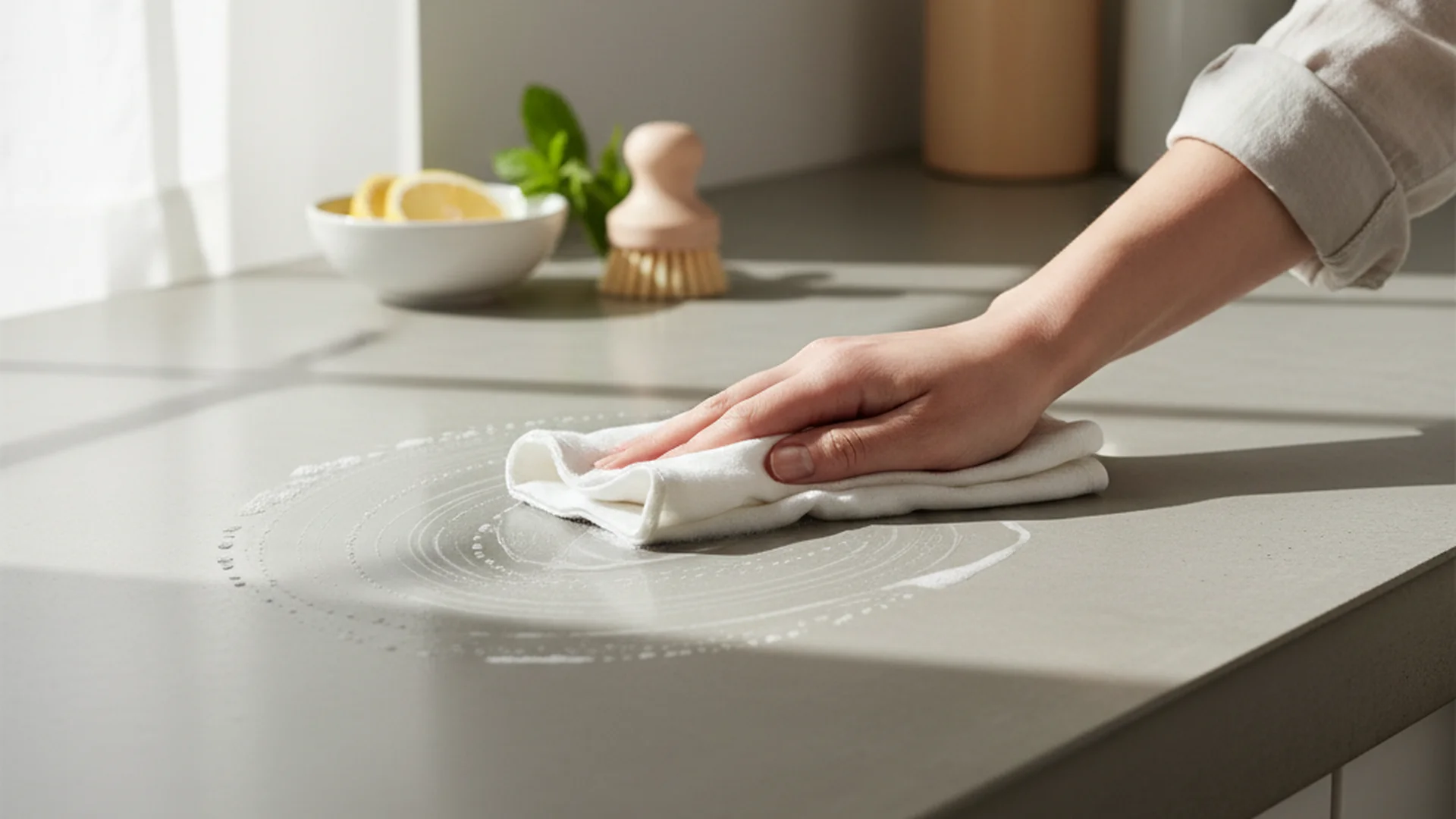
- Prep your solution: Mix warm water with a single drop of mild, pH-neutral dish soap.
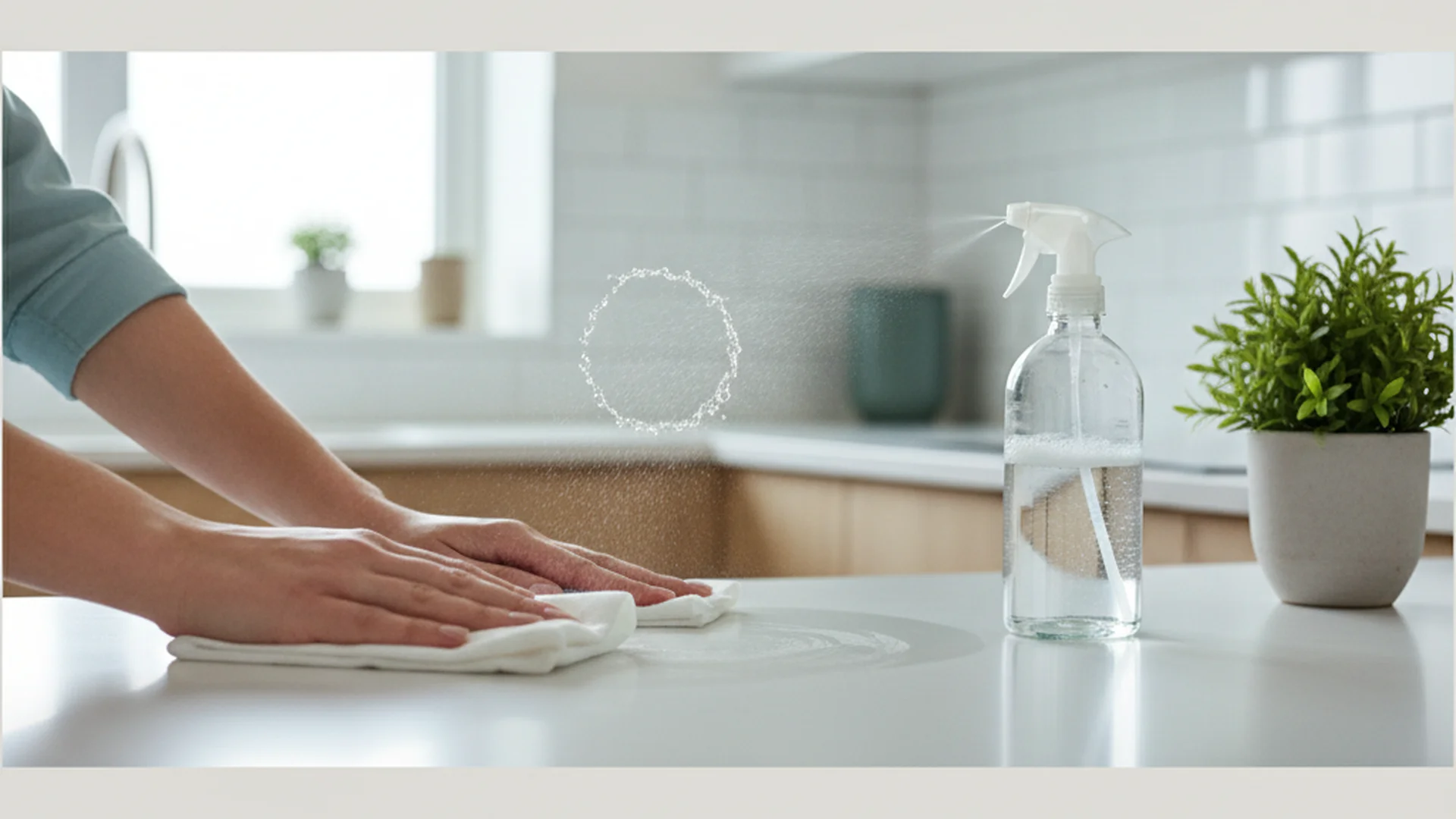
- Wipe in circles: Using a damp (not soaking) microfiber cloth, wipe the surface in a circular motion. This is especially important for the matte and honed finishes popular in 2026, as it prevents the linear streaking often seen on "soft-touch" surfaces.
- The "Dry-Down" Rule: This is the most critical step. Always follow your wet wipe with a dry, clean microfiber towel.
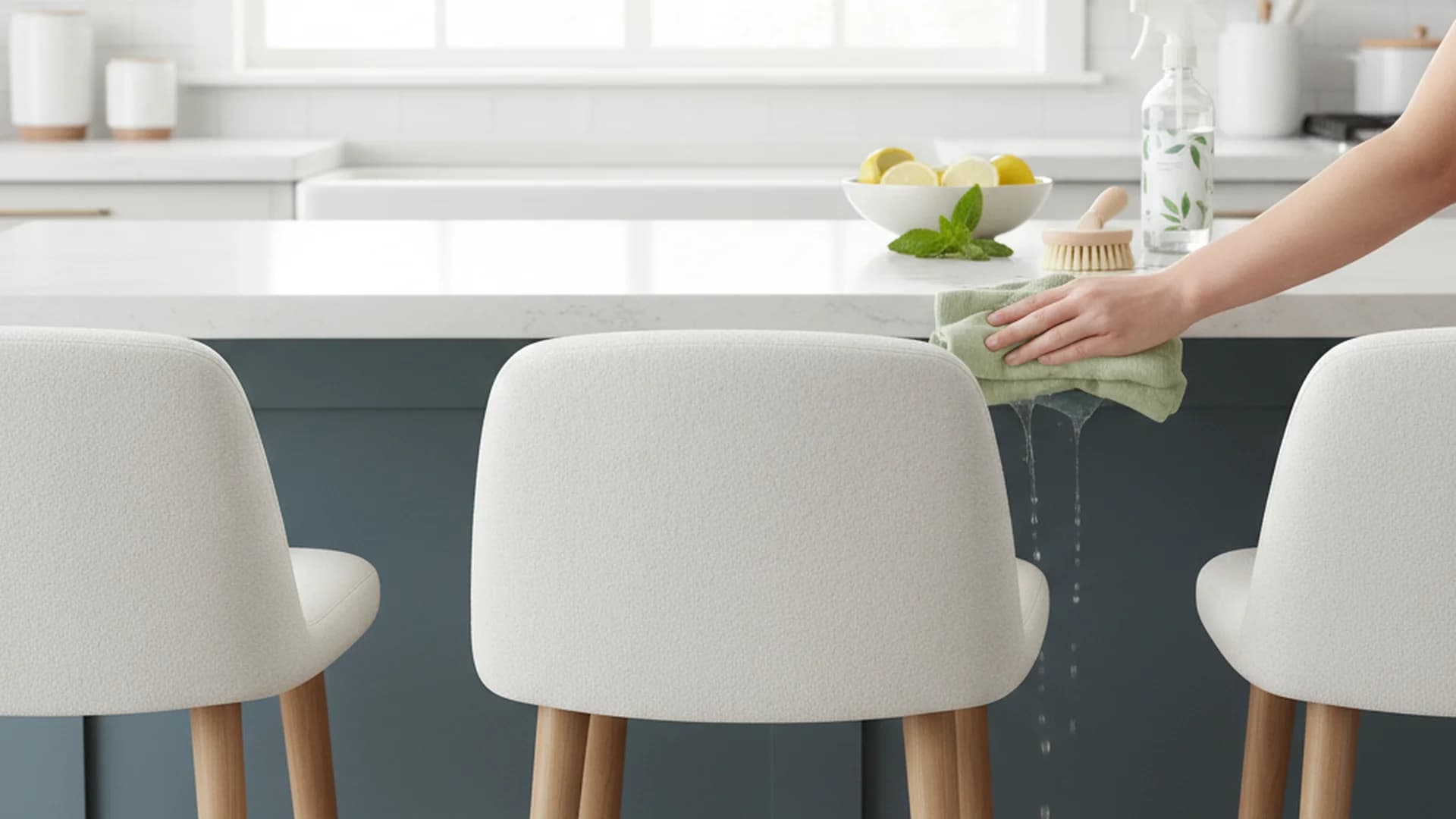
Warning: Never leave standing water on your laminate, especially near the sink or where the counter meets the backsplash. Water can seep into the seams, causing the wood substrate to swell—a process known as delamination that cannot be reversed.
Dealing with Stubborn Stains
Even the most careful cook deals with the occasional wine spill or coffee ring. Because laminate is non-porous, stains usually sit on top of the surface rather than soaking in. However, if left too long, they can bond with the resin.
The Baking Soda Method
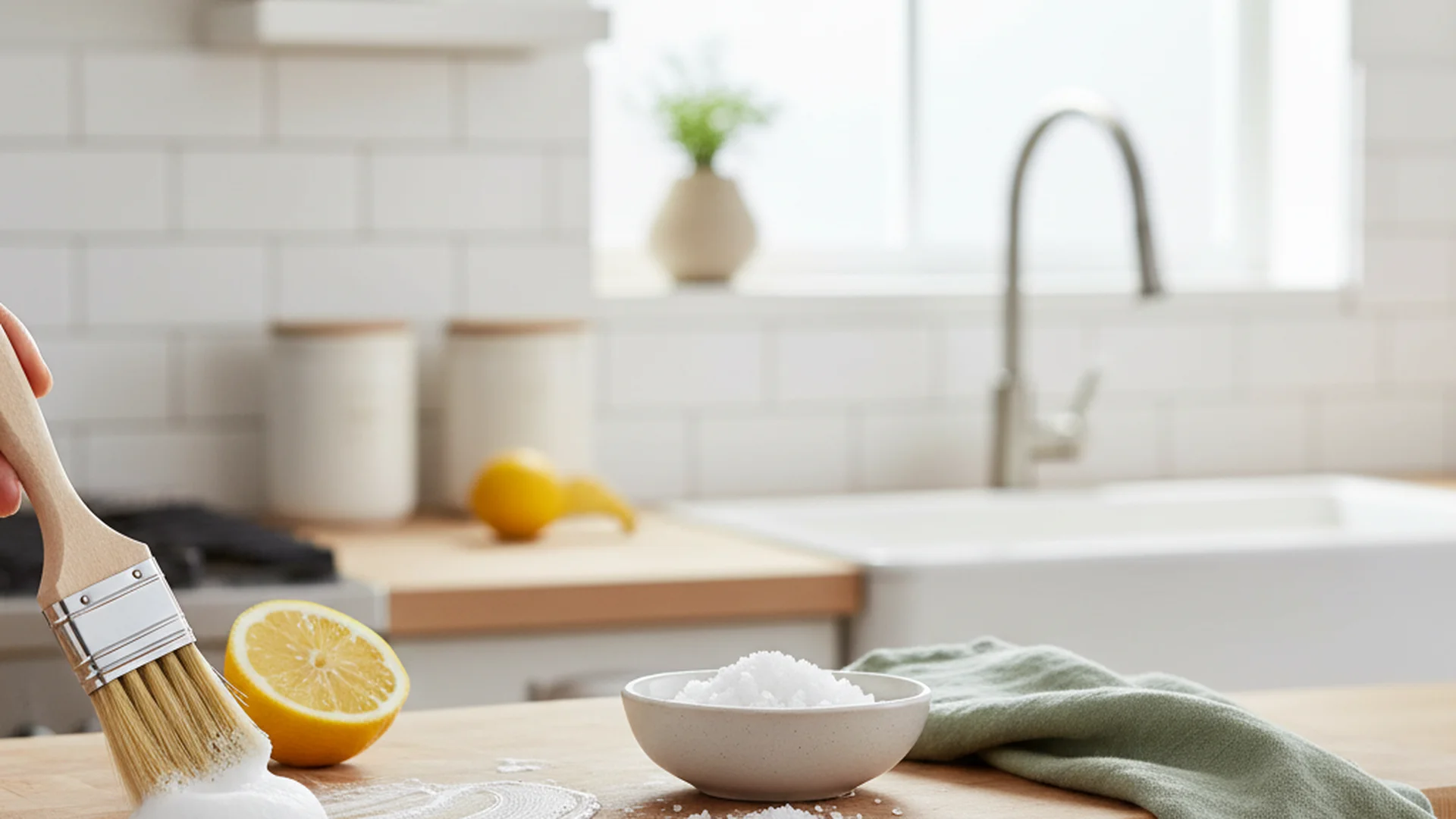
When soap and water fail, reach for the baking soda. This is an effective "green" cleaning solution that aligns with the 2025 trend toward plant-based, eco-friendly home care.
- Step 1: Create a paste using three parts baking soda and one part water.
- Step 2: Gently dab the paste onto the stain.
- Step 3: Let it sit for no more than five minutes.
- Step 4: Wipe it away with a damp cloth.
Tip: Do not scrub the baking soda paste. While it is a mild abrasive, vigorous scrubbing can create micro-scratches that dull the finish of your laminate over time.
Real-World Example: The Wine Spill
Imagine a Saturday night dinner party where a glass of red wine sits unnoticed on the counter until Sunday morning. Instead of reaching for a chemical spray, the baking soda paste can lift the pigment out of the textured "honed" finish without damaging the protective melamine layer.
Restoring the Shine to Dull Counters
If your countertops have lost their luster, it’s likely due to "product buildup" from using wax-based polishes or oily cleaners.
To restore the shine, create a solution of one part white vinegar to three parts water. Mist the surface lightly and buff it immediately with a dry cloth. The acidity of the vinegar breaks down the soap scum and mineral deposits from hard water, leaving a streak-free finish.
| Cleaner Type | Recommended? | Reason |
|---|---|---|
| Mild Dish Soap | Yes | Safe, pH-neutral, effective. |
| White Vinegar | Yes | Best for removing film/buildup. |
| Glass Cleaner | Sometimes | Only if ammonia-free; check label. |
| Bleach | No | Causes yellowing and resin damage. |
| Steel Wool | No | Creates permanent scratches. |
Common Mistakes to Avoid
Many homeowners inadvertently damage their counters by treating them like granite or quartz. Here are the most common pitfalls to avoid:
- The "Wet Mop" Approach: Treating your counters like a floor by using excessive water. This leads to "bubbling" at the edges where the laminate is glued to the particle board.
- Cutting Directly on the Surface: While modern HPL is tough, it is not knife-proof. Always use a cutting board to prevent deep gouges that trap bacteria.
- The Heat Trap: Laminate can handle a warm mug of coffee, but it cannot withstand a pot straight from the stove. Anything over 150°F can melt the adhesive or cause the surface to blister.
- Chemical Etching: Avoid cleaners containing hydrochloric, sulfuric, or phosphoric acid (common in bathroom cleaners). These will permanently eat into the laminate surface.
Warning: Avoid using "magic" melamine sponges on high-gloss laminate. They are essentially extremely fine sandpaper and will turn a glossy finish into a dull, matte patch.
2026 Technology: Smart Counters and Antimicrobial Surfaces
As we move through 2026, laminate technology is integrating with smart home features. Many new installations now include integrated wireless charging zones hidden beneath the laminate.
When cleaning these "smart" zones, it is vital to use as little moisture as possible. Excess liquid can penetrate the thin wear layer over time and damage the induction coils underneath. Furthermore, always ensure the surface is completely dry before placing your device down to charge, as heat from the charger can "bake" any moisture into the surface, causing a permanent cloudy ring.
Success: Homeowners who follow a dry-cleaning-first approach (dusting before wiping) report that their laminate surfaces maintain their original color and texture for over 15 years.
Frequently Asked Questions
Can I use bleach on laminate?
How do I make my dull laminate shine again?
Is it safe to use a steam cleaner on laminate?
How do I remove permanent marker from laminate?
Conclusion
Maintaining a beautiful kitchen doesn't require expensive chemicals or hours of labor. By understanding that moisture is the primary enemy and that a gentle, pH-neutral approach is the best way clean laminate counters, you can keep your kitchen looking professional and pristine. Remember the "Dry-Down" rule, stay away from the bleach, and always use a cutting board to ensure your laminate stays as durable as it is beautiful.
Success: Following this routine ensures your countertops remain hygienic, scratch-free, and aesthetically pleasing for years to come.
Cleaning that keeps score
Every task earns points, every streak multiplies them, and Premium adds a household leaderboard plus a monthly Dustagorgon to beat.
- Free forever
- 30 badges to earn
- Up to 6 in a household
No card needed. Set up your rooms in a couple of minutes.