In this article
What you’ll learn
- Use cornstarch and vinegar for the most effective all-natural grease removal.
- Avoid steel wool to prevent micro-scratches and potential glass shattering.
- Understand the difference between hard water clouds and permanent dishwasher etching.
There is nothing quite as satisfying as pulling a bubbling lasagna or a golden peach cobbler out of the oven. However, that satisfaction often turns to dread once the meal is over and you’re left staring at a glass pan covered in stubborn, brown, "baked-on" grease. Learning how to clean glass baking dish surfaces effectively is a skill that saves both your time and your cookware. In 2025, as more households move away from chemical-leaching plastics toward sustainable glass bakeware, keeping these kitchen workhorses crystal clear has become a top priority for home cooks.
The challenge is real: glass is porous on a microscopic level, and at high temperatures, fats undergo a process called polymerization, turning into a plastic-like film that defies standard dish soap. If you’ve ever wondered about the best way clean glass baking dish residue without spending hours scrubbing, you’re in the right place.
The Growing Importance of Glass Care
The move back to glass is driven by a health-conscious public looking for non-toxic alternatives to non-stick coatings. Yet, maintaining that "brand-new" sparkle is harder than it looks. Plenty of people quietly replace perfectly good bakeware simply because their old dishes are too stained or cloudy to put on the table in front of guests.
By mastering the right cleaning techniques, you can extend the life of your dishes indefinitely, preventing the "stuck-on grease" that so many home cooks name as one of the most frustrating chores in the kitchen.
Expert Methods to Restore Your Glassware
The "Winner" Method: Cornstarch and Vinegar
A surprising kitchen staple turns out to be the ultimate grease-cutter. While vinegar is a known acid, adding cornstarch creates a very mild abrasive that grips onto polymerized oils without scratching the glass surface.
- Mix: Combine 1 teaspoon of cornstarch, 1 part white vinegar, and 1 part warm water in a spray bottle or bowl.
- Apply: Coat the stained areas of the dish.
- Scrub: Use a nylon mesh scrubber to work the paste into the brown spots.
- Rinse: Wash with standard dish soap and warm water.
Tip: For extra-stubborn stains, let the cornstarch and vinegar mixture sit for 15 minutes before you begin scrubbing.
The Boiling Water and Baking Soda Paste
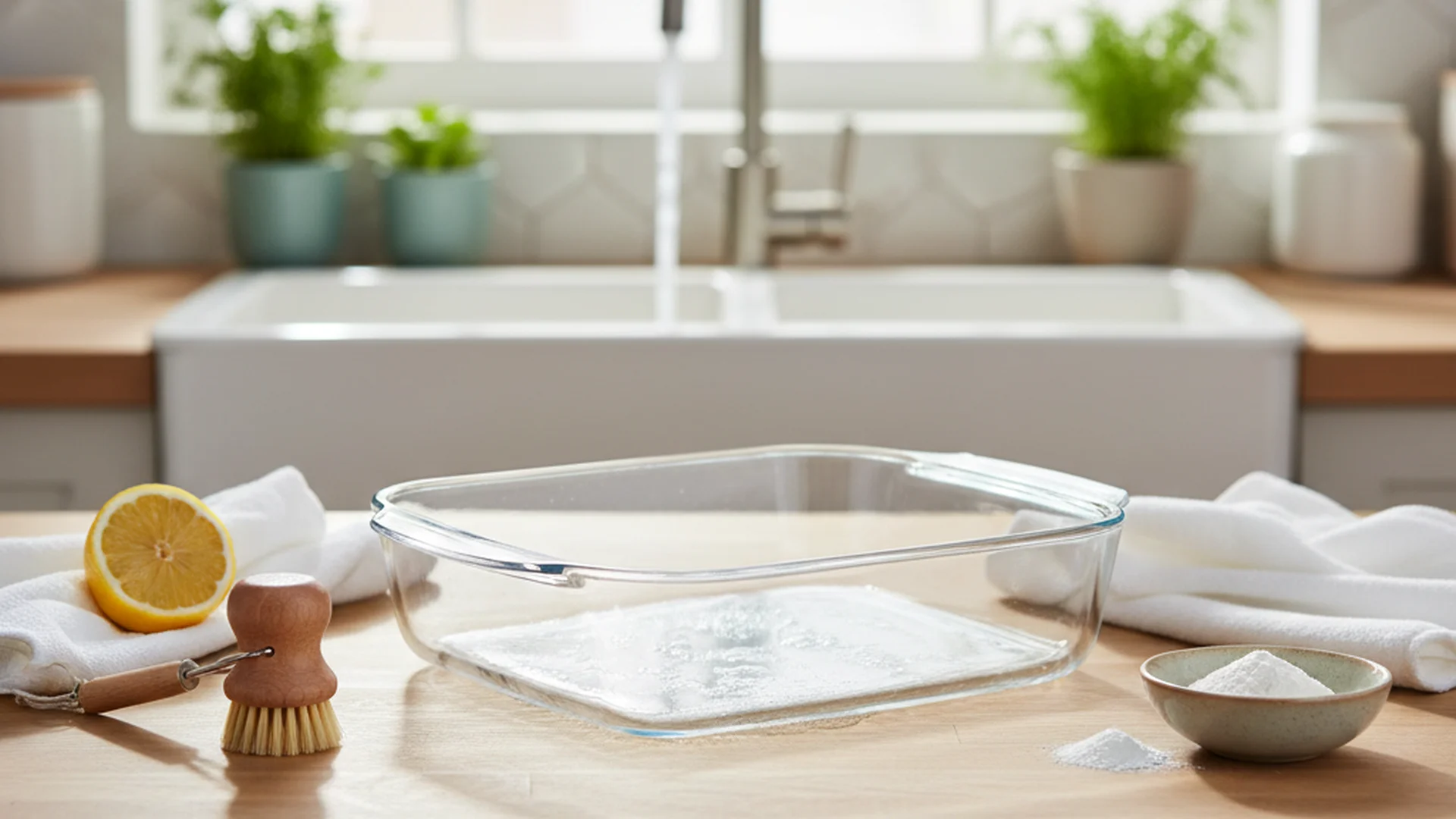
For heavy-duty grime that seems fused to the glass, heat is your best friend. Baking soda acts as a mild alkaline agent that helps break down the acidity of old grease.
- Sprinkle a generous layer of baking soda over the entire bottom of the dish.
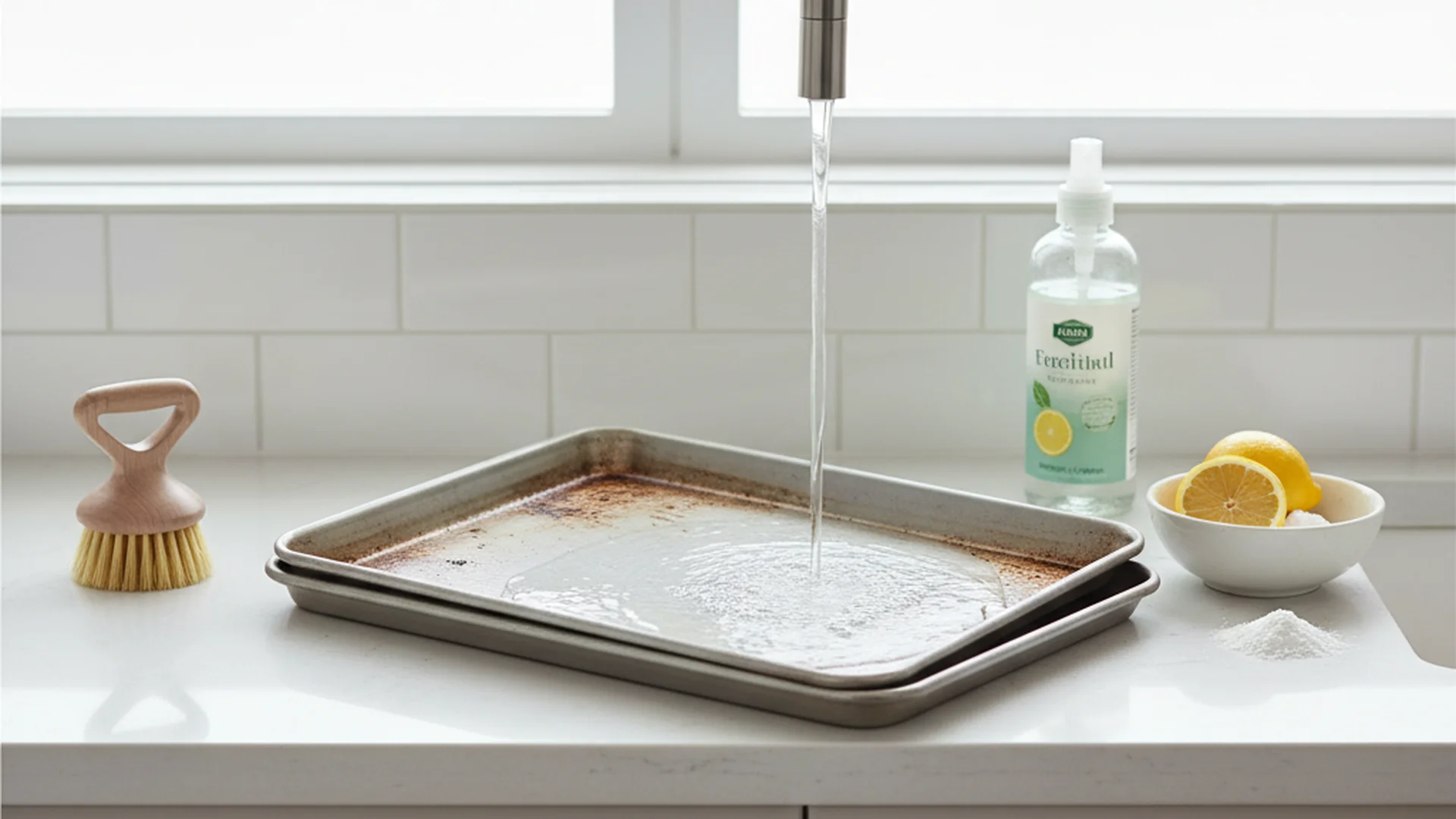
- Slowly pour a small amount of boiling water over the powder until a bubbling paste forms.
- Let the dish sit for 30 to 60 minutes. As the water cools, the chemical reaction loosens the bond between the grease and the glass.
Warning: Never pour boiling water into a cold glass dish or place a hot glass dish into cold water. This can cause "thermal shock," leading the glass to shatter instantly.
The Magic Eraser Technique
If you have yellowed grease stains around the handles or corners, a melamine sponge (commonly known as a Magic Eraser) is incredibly effective. It acts like extremely fine sandpaper to lift residue at a microscopic level.
Success: This method is particularly useful for "spot-cleaning" heritage or vintage pieces where you want to avoid soaking the entire item.
Recent Trends in Kitchen Cleaning (2025–2026)
The cleaning landscape has shifted significantly this year. Consumers are now prioritizing "Transparent Chemistry" and bio-based solutions.
Bio-Based Enzyme Cleaners
In 2025, enzyme-based dish soaps have gone mainstream. Brands like AspenClean and Seventh Generation utilize natural proteases and lipases. These enzymes literally "eat" through proteins and fats at a molecular level, making the "soak and wait" method far more effective than traditional petroleum-based soaps.
The Power of Alcohol-Based Foams
"Dawn Powerwash" and similar alcohol-based spray foams remain a cult favorite. The alcohol formula begins breaking down grease on contact, often eliminating the need for a full sink soak. This is especially helpful for quick-turnaround baking sessions.
Sustainable Refills
The trend for 2026 is moving away from single-use plastic. Many home cooks are now using concentrated "pods" (like those from Etee) that are mixed with water in permanent glass dispensers, reducing waste while maintaining high cleaning performance.
| Cleaning Agent | Best For | Eco-Friendliness |
|---|---|---|
| Baking Soda | Burnt-on Food | Excellent |
| Enzyme Soap | Daily Grease | High |
| Vinegar/Cornstarch | Clarity & Shine | Excellent |
| Melamine Sponge | Corner Stains | Low (Microplastics) |
Common Mistakes to Avoid
Even the most experienced cooks can make mistakes that permanently damage their glassware. Here are the most frequent errors:
1. Using Steel Wool
While it’s tempting to grab a metal scourer for that burnt-on lasagna, don't. Steel wool creates micro-scratches on the surface of the glass. Over time, these scratches weaken the structural integrity of the dish, significantly increasing the risk of spontaneous shattering during future use.
2. The "Fizz" Myth (Mixing Vinegar and Baking Soda)
We’ve all seen the viral videos: mix vinegar and baking soda to watch it fizz and "clean" the pan. In reality, the fizzing is just the two ingredients neutralizing each other into salt water. For the best way clean glass baking dish surfaces, use them sequentially: use the baking soda to scrub (abrasion), then rinse with vinegar (acidic shine).
3. Dishwashing Vintage Pyrex
If you own heritage or vintage patterned glass, keep it out of the dishwasher. Modern dishwasher detergents are highly abrasive, and the high-heat drying cycle will eventually "dishwasher etch" the glass, stripping away the beautiful designs and leaving the glass permanently dull.
Note: Permanent "cloudiness" is often etching (physical damage) rather than a film. If vinegar doesn't remove the cloudiness, the glass is likely etched and cannot be restored to its original clarity.
Frequently Asked Questions
How do I remove the brown "baked-on" stains?
Why is my glass dish cloudy after cleaning?
Is it safe to use oven cleaner on my Pyrex?
Can I prevent stains before they happen?
Conclusion
Keeping your glass bakeware pristine doesn't require harsh chemicals or hours of labor; it simply requires the right technique. By understanding the science of polymerized grease and utilizing modern tools like enzyme cleaners or the cornstarch-vinegar method, you can keep your kitchen looking professional and your food tasting its best. Remember to avoid thermal shock and abrasive metal tools to ensure your glass lasts for decades.
Success: Consistent care and immediate soaking (once the dish is cool!) are the secrets to a kitchen full of sparkling, guest-ready glassware.
Cleaning that keeps score
Every task earns points, every streak multiplies them, and Premium adds a household leaderboard plus a monthly Dustagorgon to beat.
- Free forever
- 30 badges to earn
- Up to 6 in a household
No card needed. Set up your rooms in a couple of minutes.