In this article
What you’ll learn
- Clean the water tank weekly and filters every two weeks for optimal efficiency.
- Use a 1:1 vinegar-to-water solution to disinfect naturally without damaging plastics.
- Ensure all components are 100% dry before reassembly to prevent mold regrowth.
As we move into 2025, indoor air quality has become a top priority for homeowners, especially with recent climate-related humidity spikes across North America. Your dehumidifier is the unsung hero of your home, pulling gallons of moisture from the air to prevent mold, mildew, and structural damage. However, many owners overlook one critical fact: a dirty dehumidifier doesn't just work poorly—it can actually become a source of the very allergens you're trying to eliminate. Knowing how to clean dehumidifier units properly is the difference between a fresh home and a musty, energy-draining machine.
In this comprehensive guide, we will walk you through the professional-grade steps to maintain your unit, including how to clean dehumidifier naturally using household staples like vinegar. By following these protocols, you can ensure your air remains crisp and your utility bills remain low.
Why Regular Maintenance is Non-Negotiable
A dehumidifier is essentially a vacuum for moisture, and like any vacuum, it collects debris. When dust and bio-matter combine with water, they create a "biofilm"—a slimy layer of bacteria and mold that thrives in the dark, damp corners of your machine.
According to industry data, a well-maintained dehumidifier can last 10–15 years, whereas a neglected unit typically fails within 3–5 years due to motor strain from clogged filters. Furthermore, cleaning a dirty filter can improve the unit's energy efficiency by up to 15%. In an era of rising energy costs, that is a significant saving for a task that takes less than ten minutes.
Success: Regular cleaning prevents the unit from recirculating dust mites and mold spores into your home, keeping humidity levels safely below 50%.
Essential Supplies for Natural Cleaning
You don't need harsh industrial chemicals to get a professional clean. In fact, many manufacturers now advise against using bleach because it can degrade the plastic components over time. Instead, we recommend a natural approach.
- White Vinegar: The gold standard for breaking down mineral deposits and killing mold.
- Mild Dish Soap: For general cleaning of the exterior and filters.
- Soft-Bristled Brush: An old toothbrush or a specialized coil brush.
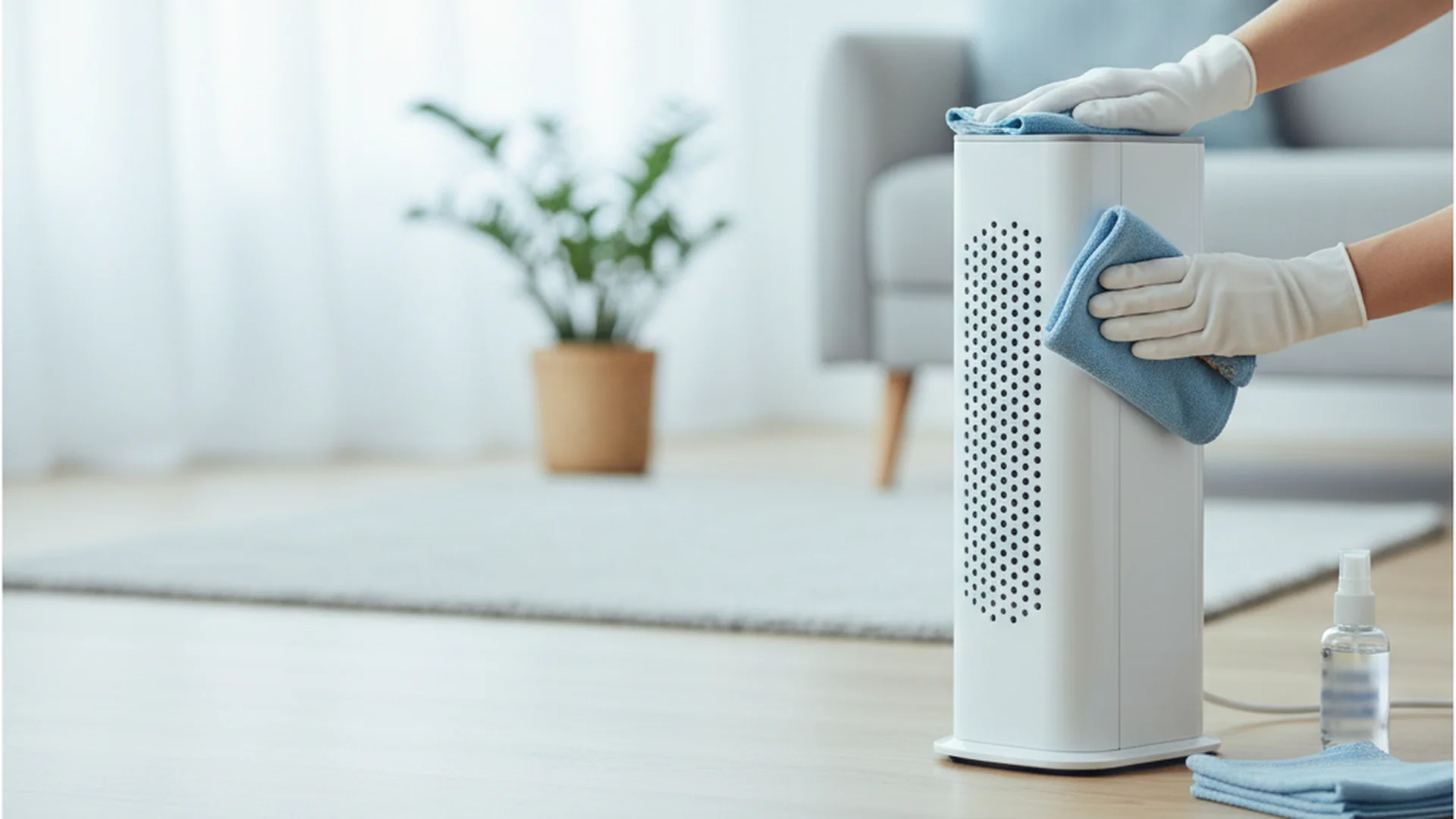
- Microfiber Cloths: To wipe down the exterior without scratching the finish.
- Vacuum with Brush Attachment: For safely cleaning internal cooling fins.
How to Clean Dehumidifier: Step-by-Step
Step 1: The Safety First Protocol
Before you touch a single screw or water tank, you must disconnect the power. Water and electricity are a fatal combination.
Warning: Always unplug the unit from the wall outlet before cleaning. Never attempt to clean the unit while it is plugged in, even if it is turned "off."
Step 2: Empty and Disinfect the Water Reservoir
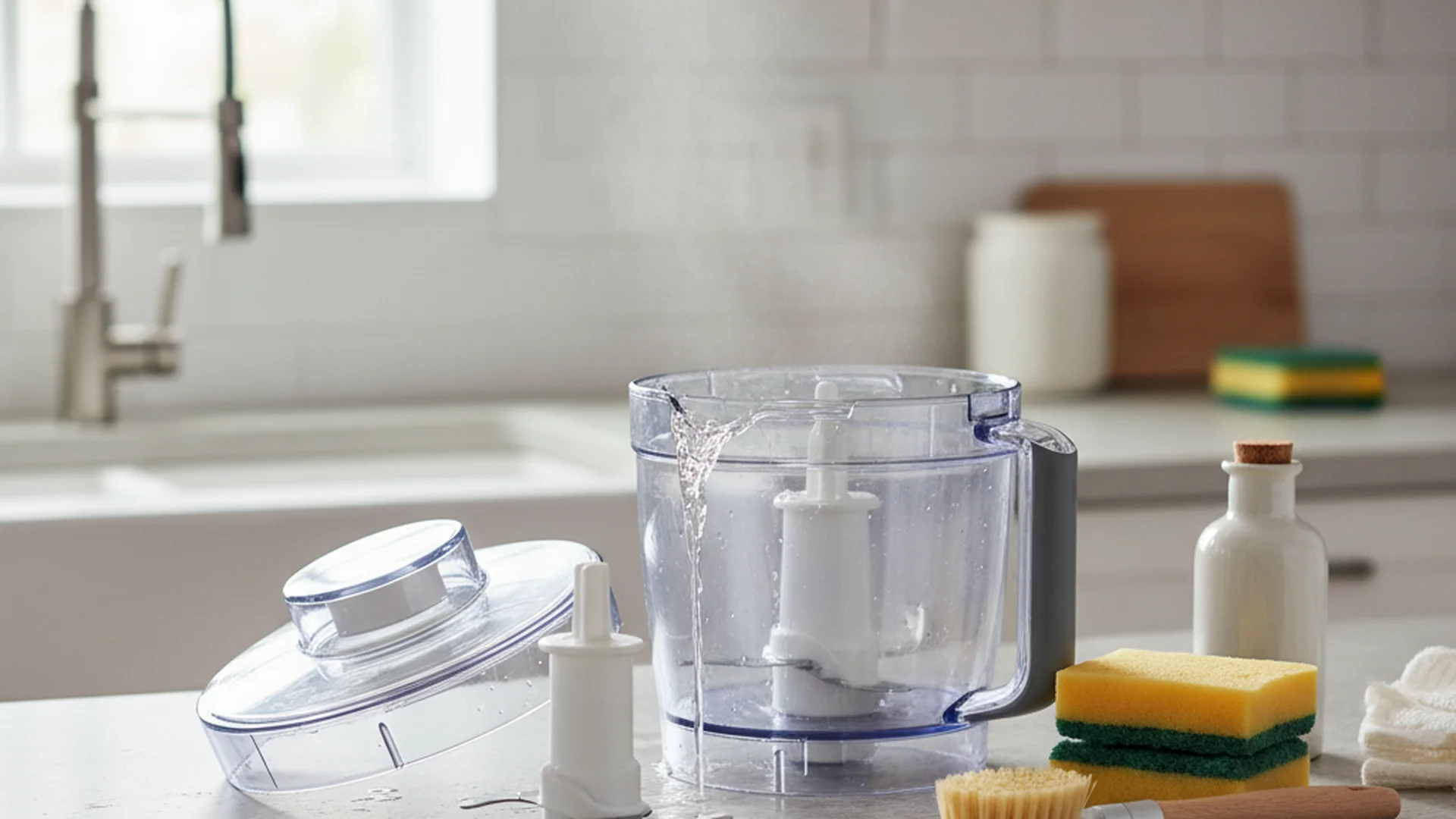
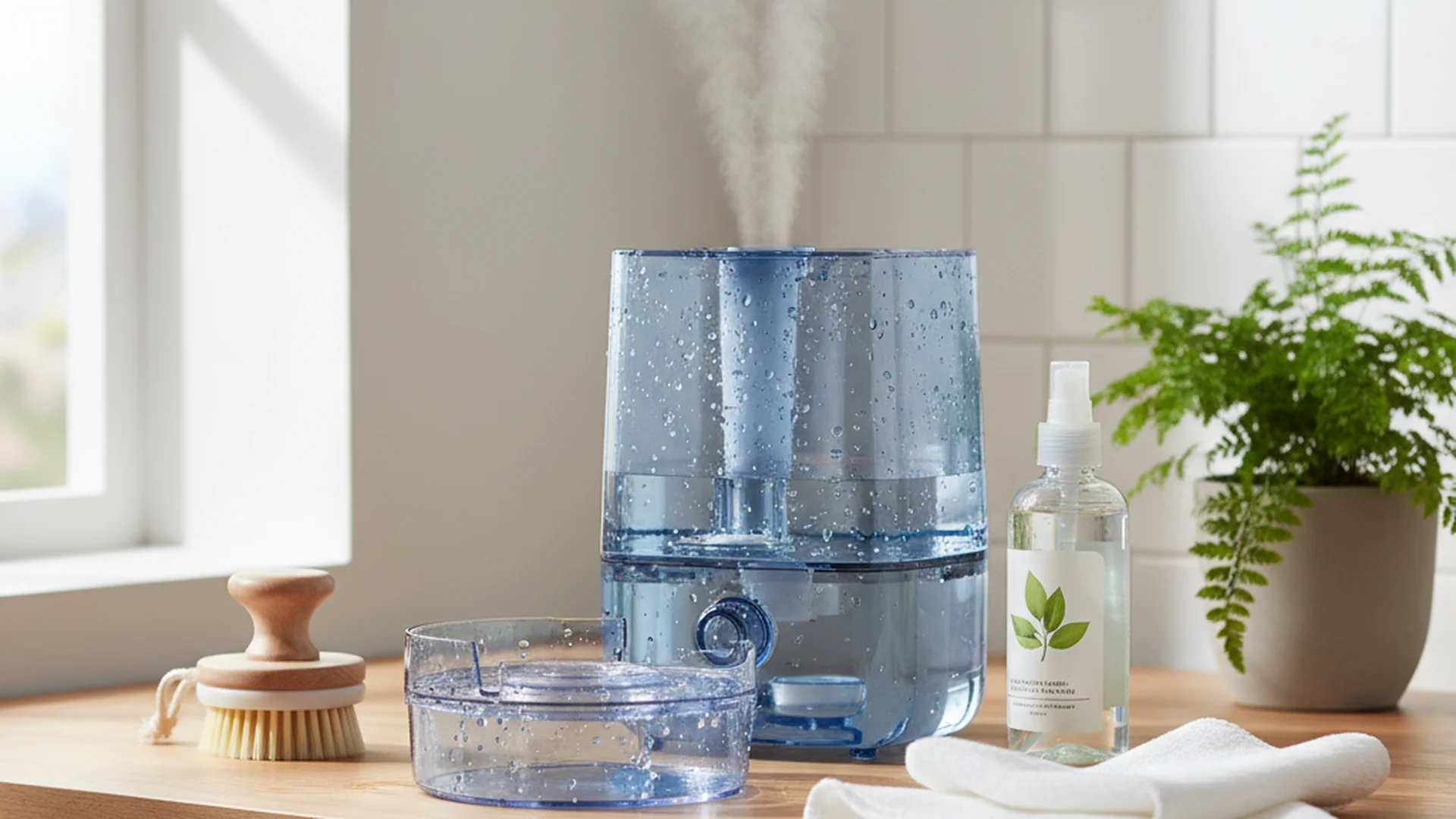
The water tank (or bucket) is the most common site for mold growth. To clean dehumidifier with vinegar, follow this natural protocol:
- Remove the tank and empty any standing water.
- Fill the reservoir with a 1:1 ratio of warm water and white vinegar.
- Let the solution sit for 30–60 minutes. This allows the acidity of the vinegar to break down hard water minerals and kill microscopic mold spores.
- Scrub the corners with a soft brush to remove any visible slime or biofilm.
- Rinse thoroughly with fresh water and dry completely.
Step 3: Revitalize the Air Filter
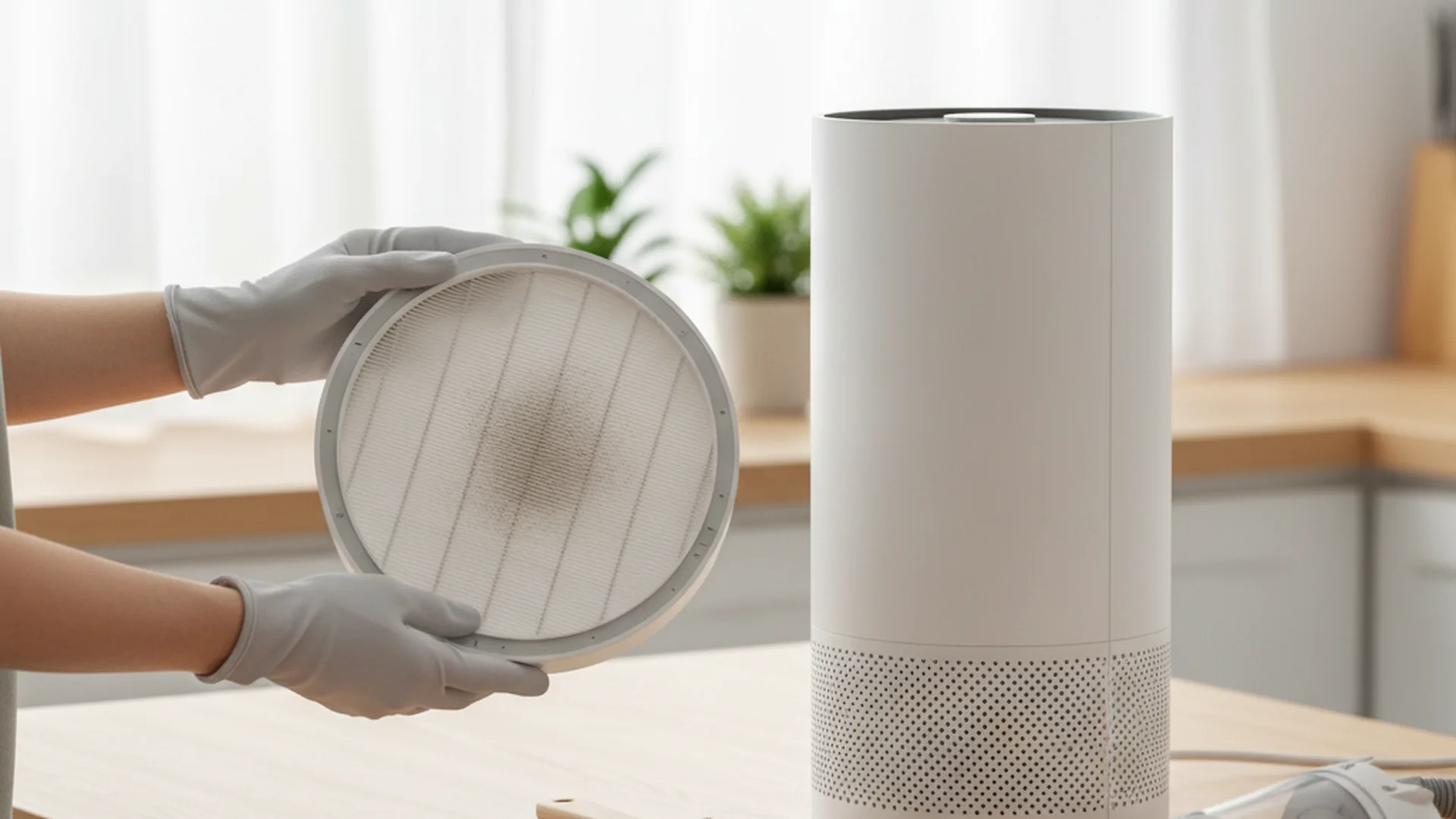
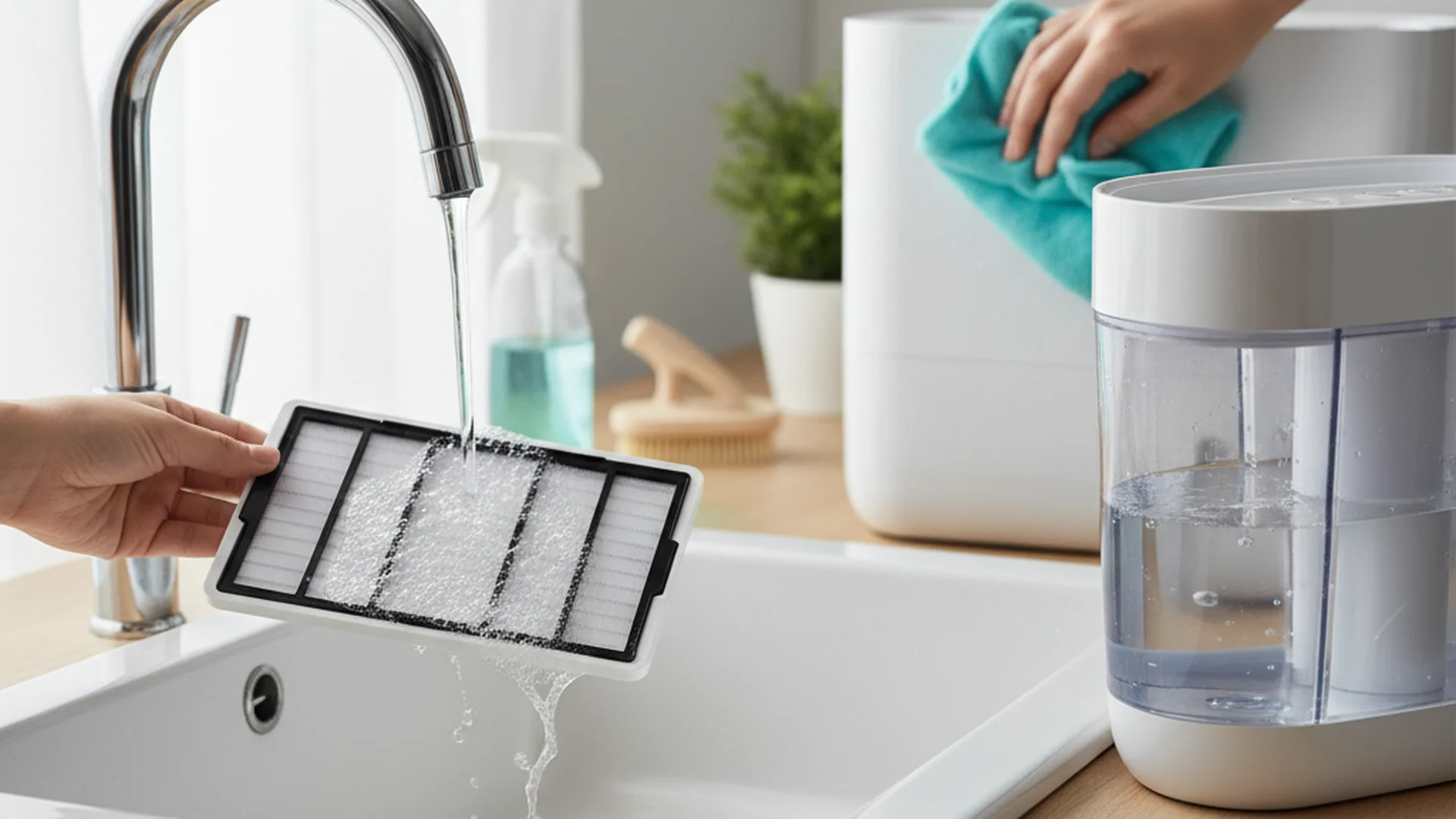
Most modern units feature a washable mesh filter. If this filter is clogged, your compressor has to work twice as hard to pull in air, which leads to overheating.
- Slide the filter out (usually located at the back or side).
- Rinse it under warm running water. If it’s particularly greasy or dusty, use a drop of mild dish soap.
- Shake off excess water and lay it flat to dry.
Note: Reinstalling a damp filter is the fastest way to grow black mold inside your machine. Let the filter air-dry for a full 24 hours before putting it back in.
Step 4: Dusting the Internal Coils
The cooling coils (evaporator) and heating coils (condenser) are the heart of the machine. Over time, dust passes through the filter and settles on these fins.
- Use a vacuum with a soft brush attachment to gently pull dust away from the coils.
- If there is stubborn debris, use a soft-bristled brush to nudge it loose.
Tip: Never use a wire brush or high-pressure water on the coils. The aluminum fins are extremely fragile and easily bent, which can permanently ruin the unit's airflow.
Real-World Examples: Maintenance in Action
To understand why these steps matter, let's look at three common scenarios homeowners face in 2025.
1. The "Basement dweller" Scenario
Mark noticed his basement dehumidifier had a persistent musty smell. Despite the unit running 24/7, the humidity wouldn't drop below 60%. Upon inspection, the "permanent" filter was completely matted with gray dust. After a deep clean with vinegar and a thorough vacuuming of the coils, the unit’s efficiency returned, and the smell vanished within 48 hours.
2. The Smart Home Integration
Sarah uses a 2025 DREO 512S, which sends "Clean Filter" notifications to her smartphone. By following the app's alerts, she maintains a strict bi-weekly schedule. Because she never allows the biofilm to harden, her cleaning process takes only 5 minutes compared to the hours required for a neglected machine.
3. The Eco-Conscious Family
The Lopez family avoids bleach due to chemical sensitivities. By using the vinegar method to clean their MeacoDry Arete Two, they’ve successfully maintained a mold-free environment for three years without introducing synthetic fragrances or harsh fumes into their living space.
2025-2026 Trends in Dehumidifier Maintenance
The technology behind these appliances is evolving rapidly. Here is what to look for in the latest models:
- Vertical Pump Innovation: Newer high-end models now include built-in vertical pumps. This allows you to drain water up to 15 feet away (even into a sink above the unit), reducing the frequency of manual tank cleaning.
- UV-C Sanitization: Some 2026 models are integrating internal UV-C lights. These lights continuously bathe the coils and water reservoir in germicidal light, significantly slowing the growth of mold and reducing the need for deep cleans.
- IoT Maintenance Alerts: Smart units now track actual "fan-on" hours rather than just calendar days, giving you a much more accurate window of when the filter actually needs attention.
Common Mistakes to Avoid
Even with the best intentions, a few common errors can ruin your appliance:
- Running Vinegar through the System: While vinegar is great for soaking the tank, never pour it into the internal mechanics while the unit is operating. The acidity can corrode internal seals over time.
- Submerging the Main Housing: Only the removable tank and washable filters should touch water. The main body contains the motor and sensitive electronics that must stay dry.
- Ignoring the "Permanent" Filter: Just because a filter doesn't need replacing doesn't mean it doesn't need cleaning. A "permanent" filter that is clogged will eventually cause the compressor to overheat and fail.
- Opening the Casing: Most manufacturer warranties (such as those from Frigidaire, GE, or Midea) are voided if you unscrew the main housing. Stick to cleaning the parts accessible through the standard panels.
Frequently Asked Questions
Can I clean my dehumidifier with vinegar?
How often should I clean the coils?
Why does my dehumidifier smell musty even after cleaning?
Is it safe to use bleach for mold?
Conclusion
Cleaning your dehumidifier is one of the simplest ways to protect your home’s air quality and your wallet. By spending just a few minutes every two weeks to rinse the filter and disinfect the tank with vinegar, you ensure your unit operates at peak efficiency for a decade or more. Remember to always prioritize safety by unplugging the unit and allowing every part to dry completely before reassembly.
Success: Following this 2025 maintenance protocol will keep your home comfortable, dry, and free of allergens for years to come.
Cleaning that keeps score
Every task earns points, every streak multiplies them, and Premium adds a household leaderboard plus a monthly Dustagorgon to beat.
- Free forever
- 30 badges to earn
- Up to 6 in a household
No card needed. Set up your rooms in a couple of minutes.