In this article
What you’ll learn
- Never use acidic cleaners like vinegar or lemon juice on concrete.
- Concrete requires pH-neutral cleaners to protect the sealer and prevent etching.
- Regular waxing and resealing every 1–2 years are essential for longevity.
Concrete countertops have transformed from a niche industrial choice to a staple of the "Modern Organic" kitchen aesthetic. Their durability and tactile warmth are unmatched, but they come with a unique set of rules. Unlike granite or quartz, concrete is a "living" surface that reacts to its environment. If you are wondering how to clean concrete counters effectively while preserving their handcrafted beauty, you must balance routine hygiene with chemical awareness.
In this guide, we will explore the best way clean concrete counters using the latest 2025 standards, ensuring your surfaces remain stain-free and structurally sound for decades to come.
Understanding the Nature of Concrete
Before grabbing a sponge, it is vital to understand that concrete is calcium-based and highly alkaline. This chemical composition makes it sensitive to acids. When an acidic substance hits the surface, it triggers a reaction that dissolves the cement paste, a process known as "etching."
Furthermore, concrete is naturally porous. Without a high-quality sealer, unsealed concrete can absorb up to 10% of its weight in water. This porosity is why "cleaning" concrete is actually more about "protecting the sealer" than scrubbing the stone itself.
Note: The U.S. countertop market is projected to reach $86.4 billion by 2025, with concrete remaining a top choice for homeowners seeking high levels of customization.
The Daily Cleaning Routine
The secret to maintaining concrete is consistency. Because the sealer acts as a sacrificial barrier, your goal is to remove debris and oils before they have a chance to penetrate the microscopic pores of the finish.
Step 1: Clear Debris
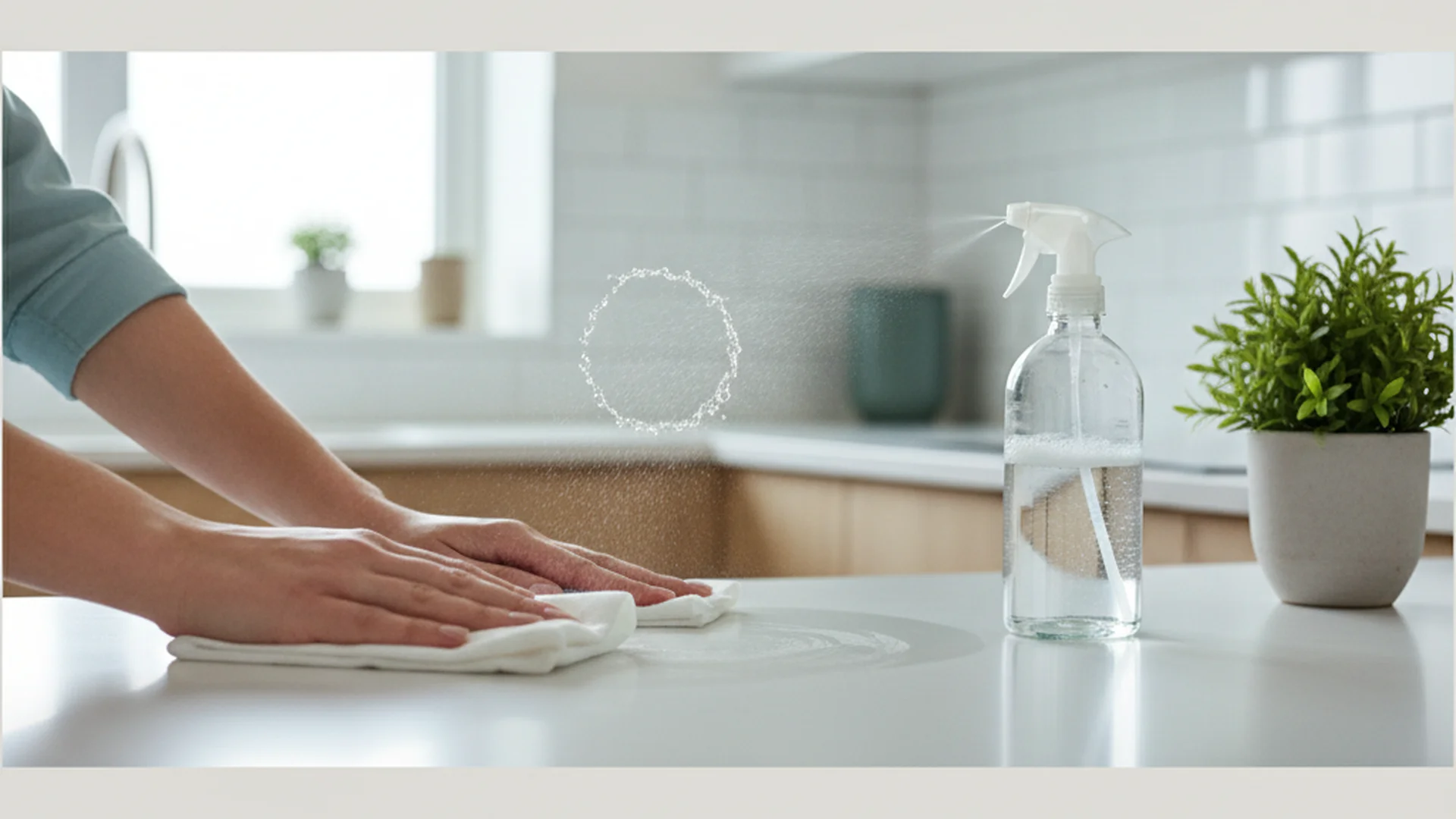
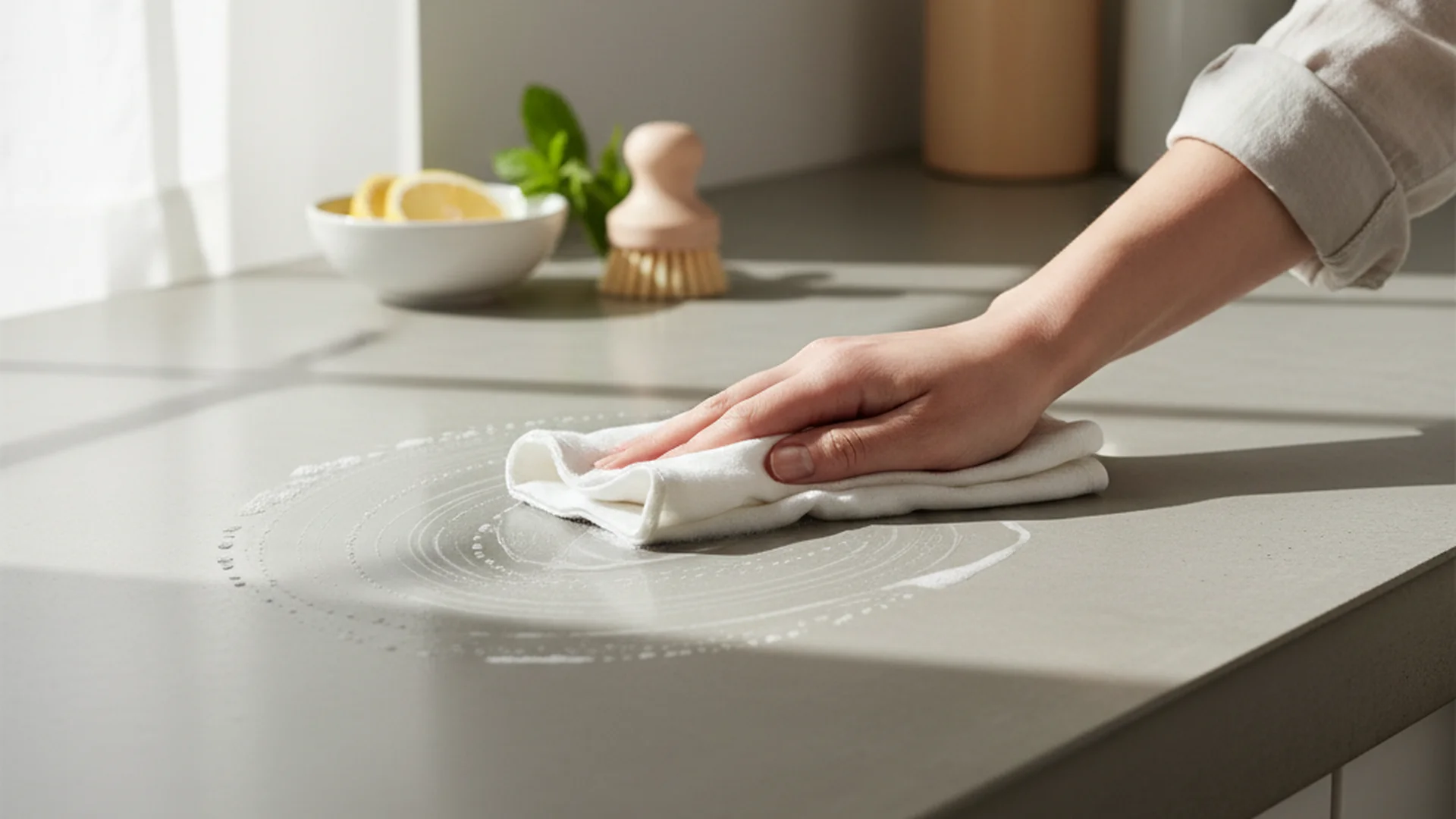
Start by wiping away crumbs and dry debris with a dry microfiber cloth. Avoid using your hands or a rough paper towel, as small particles of salt or sugar can act as an abrasive, creating micro-scratches in the sealer.
Step 2: Spray and Wipe
Use a pH-neutral cleaner specifically formulated for stone or concrete. While many homeowners reach for dish soap, it isn't always the best way clean concrete counters for the long term.
Warning: While mild dish soap is technically safe, it often contains surfactants that leave a film or "soap scum" behind. Over time, this makes the surface look dull and dingy.
Step 3: The "Buff Dry" Technique
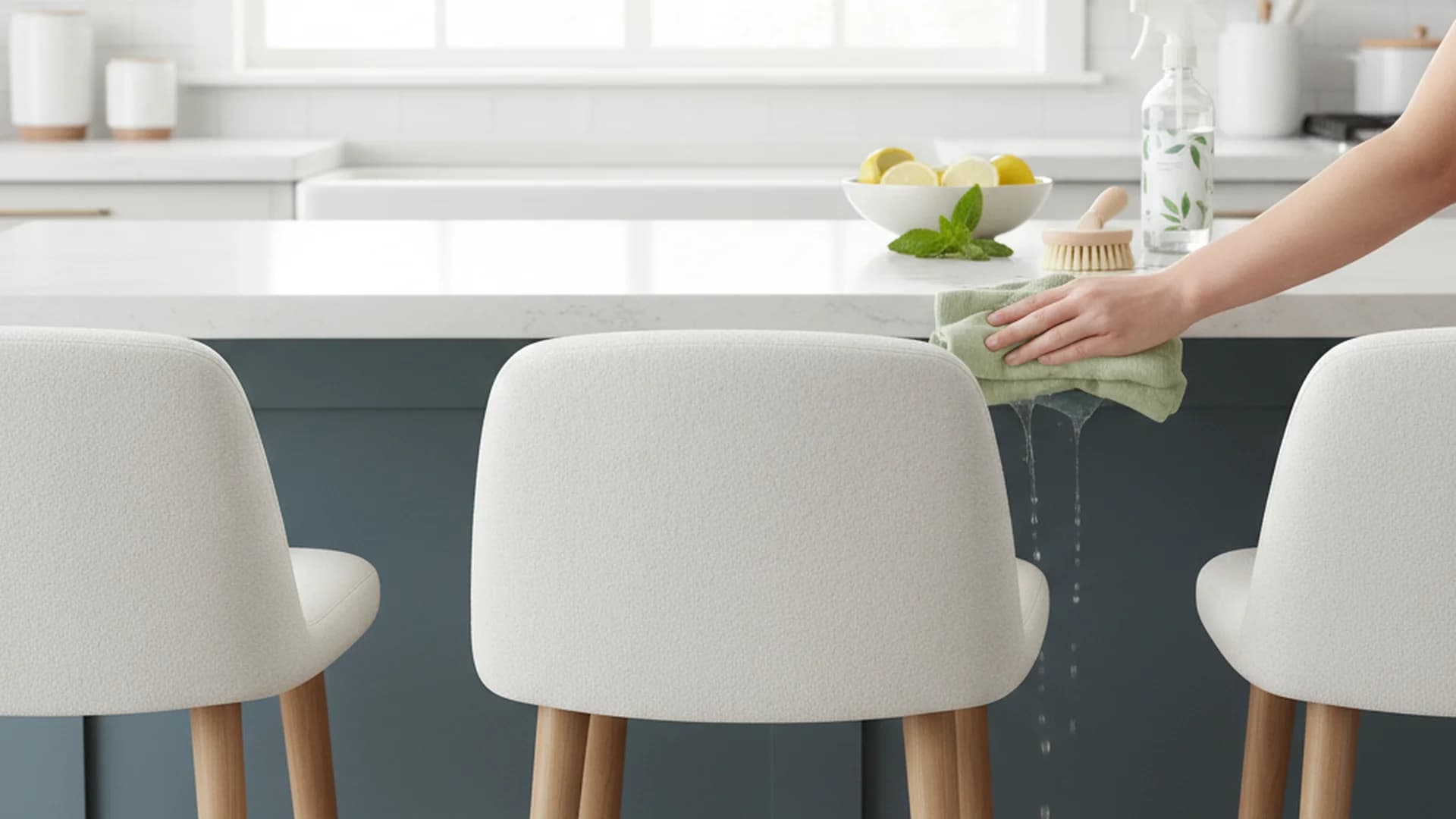
Never let your concrete countertops air-dry. Water contains minerals that can leave "ghosting" marks or white scales on the surface. Always buff the counter dry with a fresh microfiber cloth to maintain its natural luster.
| Cleaning Tool | Recommended? | Why? |
|---|---|---|
| Microfiber Cloth | Yes | Non-abrasive and highly absorbent. |
| Scouring Pad | No | Will permanently scratch the sealer. |
| pH-Neutral Spray | Yes | Protects the chemical balance of the concrete. |
| Vinegar/Lemon | No | Causes immediate chemical etching. |
Disinfecting Without Damage
In a kitchen environment, disinfection is non-negotiable. However, standard household disinfectants—like bleach or many "all-natural" citrus sprays—are the enemies of concrete.
To safely disinfect your counters, use a mixture of 70% isopropyl alcohol and water in a 1:1 ratio.
- Spray the solution across the surface.
- Let it sit for 2–3 minutes (dwell time is necessary to kill bacteria).
- Wipe clean and buff dry.
Tip: This alcohol solution is also excellent for removing oily fingerprints from matte-finish concrete, which is the trending texture for 2025.
Maintenance and Long-Term Care
Cleaning is only half the battle. To keep your concrete looking new, you must maintain the protective barrier.
Monthly Waxing
Expert consensus for 2025–2026 recommends applying a food-safe, carnauba-based wax once a month. This creates a "water-beading" effect. If you notice that water no longer beads on the surface but instead creates a dark spot, your sealer is compromised and needs immediate attention.
The Resealing Cycle
Even with perfect cleaning habits, most concrete counters require resealing every 1–2 years. However, a new trend in late 2024 and 2025 is the rise of "Smart Sealers." These use polymer technology to "flow" back into minor scratches when exposed to mild heat (like a warm cloth), significantly extending the time between full reseals.
Real-World Examples: Handling Common Spills
To understand how to clean concrete counters in high-pressure situations, consider these three common scenarios:
- The Red Wine Spill: You’re hosting a dinner party and notice a red wine ring the next morning. Because concrete sealers only increase "dwell time" (the time you have to clean a spill), the wine may have left a faint mark. Do not scrub. Instead, use a poultice of baking soda and a tiny bit of water to gently draw the pigment out.
- The Leaky Soap Dispenser: A dish soap bottle sits in a puddle of water for three days. This often causes "ghosting"—a dark, cloudy patch where water has saturated the sealer. The best remedy here is heat and patience. Use a hairdryer on a low setting to encourage the moisture to evaporate out of the stone.
- The Hot Pizza Box: You place a steaming hot pizza box directly on the counter. While concrete is heat-resistant, most sealers are not. They generally only handle up to 150°F–200°F. The heat can cause the sealer to bubble or discolor. To prevent this, always use a trivet.
Success: Using trivets and cutting boards consistently can extend the life of your sealer by up to 40%, reducing the need for professional refinishing.
Common Mistakes to Avoid
- Using "Green" Vinegar Cleaners: Many people assume vinegar is a safe "natural" cleaner. For concrete, vinegar acts like "liquid sandpaper," eating through the finish in minutes.
- Abrasive Scrubbing: Reaching for a green scrubby sponge or steel wool will permanently scratch the sealer. Only use non-abrasive sponges.
- Letting Water Sit: Leaving a wet dishcloth on the counter for days will eventually cause darkening where water has penetrated.
- Cutting Directly on the Surface: This will dull your knives and create "micro-grooves" where bacteria can hide, making it impossible to truly clean the surface.
2025–2026 Trends in Concrete Care
The world of concrete maintenance is evolving. Here are the latest trends to watch:
- Bio-Based Cleaning Agents: Moving into 2026, there is a massive shift toward enzymatic, bio-based cleaners. These break down oils and proteins without harsh surfactants, aligning perfectly with the sustainable "Modern Organic" aesthetic.
- The Move to Matte: While high-gloss was once the standard, 2025 trends show a preference for textured matte and "honed" finishes. These are significantly easier to maintain because they hide fingerprints and minor etching better than reflective surfaces.
Frequently Asked Questions
Can I use dish soap to clean concrete?
How do I remove a stubborn oil stain?
Will hot pans damage my concrete countertops?
Is concrete more high-maintenance than granite?
Conclusion
Cleaning and maintaining concrete countertops doesn't have to be a daunting task. By sticking to pH-neutral cleaners, avoiding acids, and embracing the routine of monthly waxing, you can protect the integrity of your "living" surfaces. As we move into 2026, the combination of smart sealers and bio-based cleaning agents is making concrete care easier than ever before. Treat your counters with the respect a handcrafted item deserves, and they will serve as the beautiful centerpiece of your home for years.
Cleaning that keeps score
Every task earns points, every streak multiplies them, and Premium adds a household leaderboard plus a monthly Dustagorgon to beat.
- Free forever
- 30 badges to earn
- Up to 6 in a household
No card needed. Set up your rooms in a couple of minutes.