In this article
What you’ll learn
- Chores build the work ethic behind adult happiness and professional success.
- Modern teens should transition from cleaning tasks to management "adulting" tasks.
- Digital housekeeping and eco-chores are essential categories for 2026.
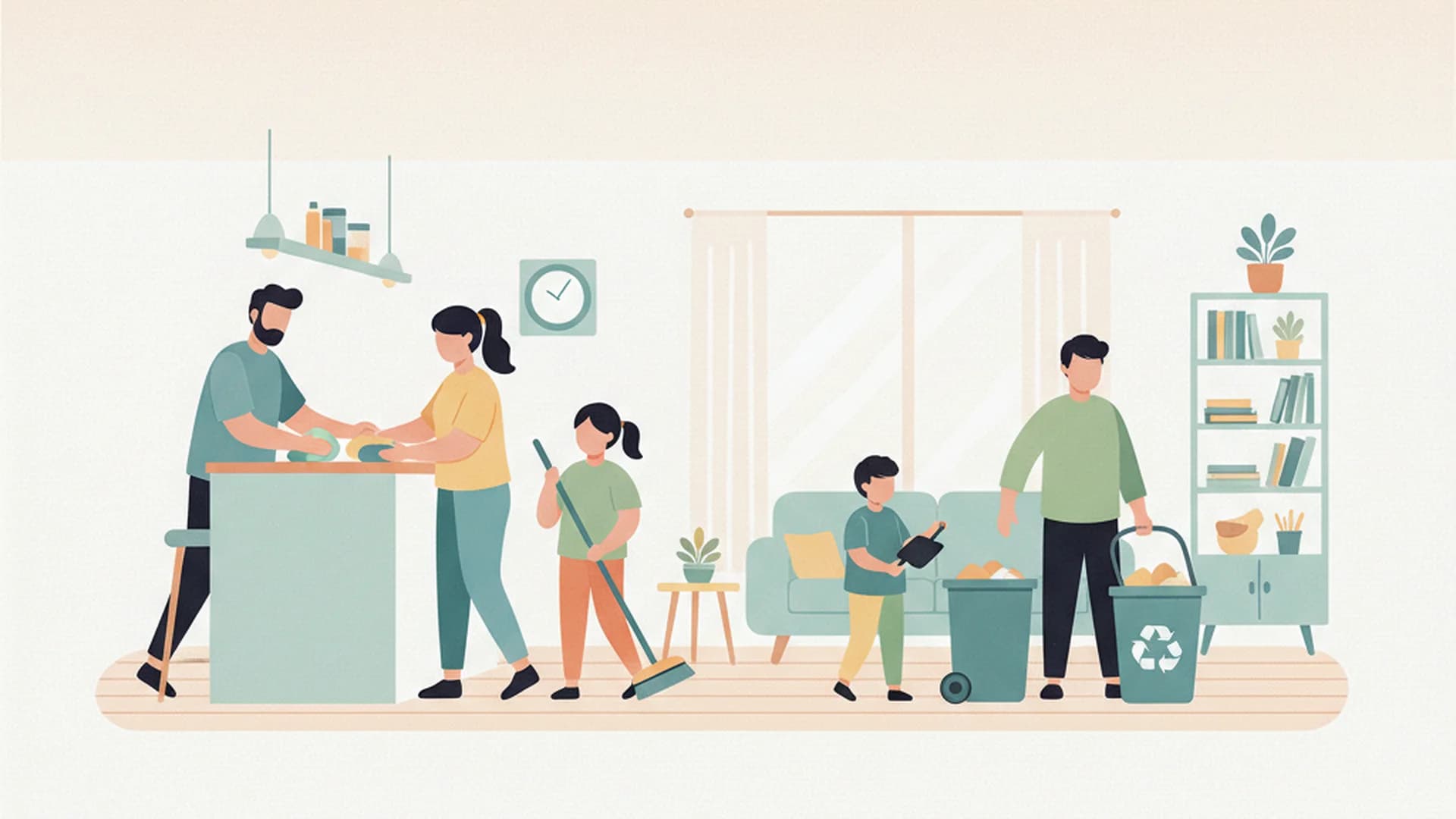
What if the secret to your child’s future professional success wasn't their SAT score or their extracurricular list, but how often they scrubbed the kitchen floor? While it may sound counterintuitive to a busy parent, implementing consistent chores for teenagers is one of the most significant investments you can make in their future. As we move into 2026, the definition of household contribution is evolving beyond simple dusting; it is becoming a comprehensive training ground for executive function, financial literacy, and digital citizenship.
The "Pitch-In" Mindset
Ask anyone who has watched a lot of young people launch into adult life what separates the ones who thrive, and you tend to hear two answers. One is love. The other is having been expected to pull their weight at home.
Specifically, doing chores for teenagers builds a "pitch-in" mindset. When a teen realizes that the dishes don't wash themselves and the trash doesn't walk itself to the curb, they develop a sense of agency and work ethic that translates directly to the workplace. They become the employees who look for what needs to be done rather than waiting for instructions.
Brain Development and Executive Function
Chores are more than just physical labor; they are cognitive exercises. Tasks like laundry or meal planning require "working memory" and "impulse control." A teen has to plan the steps, manage their time, and resist the urge to quit halfway through. These are the building blocks of the prefrontal cortex, which is still developing throughout the teenage years.
Success: Teens who contribute regularly to the household tend to be happier in it. Feeling like a competent, valued member of a family "ecosystem" boosts self-esteem far more than empty praise.
The 2026 Chore Strategy: Scaffolding and Autonomy
The biggest mistake parents make is simply handing over a list and expecting perfection. A far better approach is the "Scaffolding" method.
The Scaffolding Method
Don't just assign a task and walk away. Follow this three-step process:
- Do it with them: Show them the "pro" way to scrub a tub or organize a pantry.
- Watch them do it: Let them take the lead while you provide minor corrections.
- Release: Once they’ve mastered the skill, it becomes their sole responsibility.
Time-Blocking for Busy Teens
A rising trend for 2026 is "Time-Blocked Chores." Modern teenagers are busier than ever with school and sports. Instead of a massive Saturday cleaning list that leads to burnout and resentment, assign "Morning Blocks" (5 minutes for making the bed and clearing the breakfast table) and "Evening Blocks" (10 minutes for dishes or trash). This integrates chores into their schedule rather than making them a disruption.
Tip: Use a digital chores for teenagers chart or a shared family app like Levelty or Sweepy. These tools provide visual accountability and reduce the need for "nagging."
The Ultimate Chores for Teenagers List
As teens grow, their responsibilities should shift from basic maintenance to "management" tasks. Use the following chores for teenagers list to ensure your child is learning the full spectrum of adulting skills.
| Category | Specific Tasks |
|---|---|
| Personal Space | Making bed, washing/drying/folding laundry, dusting tech, deep cleaning their bathroom. |
| Shared Spaces | Loading/unloading dishwasher, vacuuming common areas, wiping kitchen counters, taking out bins. |
| "Adulting" Skills | Cooking one family meal per week, grocery shopping with a budget, basic car maintenance (oil/tire pressure). |
| Digital Housekeeping | Sorting family cloud photos, updating home smart devices, managing streaming subscriptions. |
| Outdoor/Eco | Mowing the lawn, maintaining the family compost, sorting complex recyclables, watering plants. |
Real-World Example: The "Chef of the Week"
One family in Seattle implemented a "Sunday Chef" program. Their 16-year-old was responsible for picking a recipe, checking the pantry for ingredients, and cooking dinner for the family. This taught the teen how to manage a budget, time multiple components of a meal, and—most importantly—how to handle the cleanup.
Note: By age 15 or 16, teens should transition from simple "cleaning" to "management." Managing the grocery budget is a much higher-level skill than just putting the milk away.
Digital and Sustainable Chores: The New Frontier
In 2026, the household isn't just physical; it's digital and environmental. These new categories of chores are essential for the modern world.
Digital Housekeeping
This is a vital addition to any chores for teenagers list. Digital chores include:
- Security Audits: Checking home smart devices for firmware updates to ensure network security.
- Cloud Management: Organizing the family’s shared cloud storage and deleting duplicate photos to save on storage costs.
- Subscription Audits: Reviewing the family’s streaming services and apps once a month to identify unused subscriptions that can be cancelled.
Eco-Chores
With the rise of environmental consciousness, many families are assigning "Eco-Chores." This involves managing the household’s sustainability systems, such as maintaining a composting bin, ensuring electronics are properly recycled, or monitoring the home's energy usage via smart meters.
Warning: Never use chores as a form of punishment. If a teen associates cleaning with being "grounded," they will develop a lifelong resentment of housework rather than seeing it as a neutral, necessary life skill.
Common Mistakes to Avoid
Even with the best intentions, parents often fall into traps that undermine the effectiveness of chores.
The Perfectionism Trap
If your teen vacuums the living room and you immediately go over it again because they missed a spot, you have just taught them that their effort doesn't matter. They will eventually stop trying. Accept "good enough" while they are learning, and use the "Scaffolding" method to improve their skills over time.
The "Too Busy" Excuse
It is a common misconception that teens are "too busy" for chores because of their academic load. As pediatrician Dr. Shelly Flais famously noted, "Baseball practice doesn't make anyone too busy to take out the garbage." Excusing teens from household contributions creates "functional illiteracy" in adulthood—where a brilliant professional doesn't know how to boil an egg or use a washing machine.
Nagging vs. Systemizing
Nagging shifts the responsibility back to the parent. When you have to ask ten times, you are the one "managing" the chore. By using a physical or digital chores for teenagers chart, you place the responsibility on the teen. The chart is the boss, not you.
Frequently Asked Questions
Should I pay my teen for doing chores?
How many chores are reasonable for a high schooler?
What should I do if my teen refuses to do their chores?
Can chores help with financial literacy?
Conclusion
Implementing chores for teenagers is about much more than a clean house. It is about raising a human being who is capable, resilient, and ready for the complexities of adult life. By using a modern chores for teenagers list that includes digital and management tasks, and by supporting them with a clear chores for teenagers chart, you are providing them with the tools they need to thrive.
Success: Consistent household contribution is the foundation of a "can-do" attitude that will serve your teen for the rest of their life.
Cleaning that keeps score
Every task earns points, every streak multiplies them, and Premium adds a household leaderboard plus a monthly Dustagorgon to beat.
- Free forever
- 30 badges to earn
- Up to 6 in a household
No card needed. Set up your rooms in a couple of minutes.