In this article
What you’ll learn
- Starting chores at age 5 builds habits and self-reliance that last well into adulthood.
- Focus on the 'Helper Window' before children reach age 9 to build lasting habits.
- Use visual chore charts to accommodate pre-readers and build executive function.
Five is a magical age. It is the year of transition between the toddler years and "big kid" school life. Developmentally, it is also a critical window for character building. If you are looking for the best chores for 5 year olds, you are tapping into a developmental goldmine. At this age, children have a natural desire to mimic adults and feel like a "big" helper. By introducing a consistent routine of family contributions now, you aren't just getting the playroom clean; you are providing your child with essential brain training that will benefit them for the rest of their lives.
The Science of Starting Early: Why Age 5 is the "Golden Age"
Many parents wonder if five is too young to expect real help around the house. In fact, this is close to the ideal time to start. A child who learns early that effort produces a visible result—and that the household actually depends on them for something—carries that sense of capability into everything from schoolwork to friendships to their own home years later.
Starting young also spares you a fight later. Children who begin contributing at three or four absorb it as simply how families operate, and the habit sticks. Wait until the teenage years and the same request lands as an imposition, which turns every chore into a negotiation.
At age five, children are also in a peak window for developing "Executive Function"—working memory, mental flexibility, and self-control. When a child follows a chores for 5 year olds list, they are practicing sequencing (doing things in order), focus, and task completion.
Note: Five-year-olds are in the "Helper Window." If you don't capitalize on their natural desire to mimic you now, resistance to chores typically increases significantly by age nine.
The Master List: Age-Appropriate Chores for 5-Year-Olds
When selecting tasks, it is important to balance their developing gross motor skills with their emerging fine motor skills. Here is a comprehensive chores for 5 year olds list categorized by area.
In the Bedroom
The bedroom is the best place to start because it teaches "ownership" of personal space.
- Making the Bed: At this age, don't expect hospital corners. Focus on "pulling up the duvet" and straightening the pillow.
- Laundry Sort: Ask them to put all dirty clothes in the hamper and separate whites from colors.
- Toy Management: Sorting toys into specific bins (e.g., LEGOs in the blue bin, cars in the red bin).
- Clothing Prep: Picking out their outfit for the next day and laying it out.
In the Kitchen
The kitchen is the heart of the home, and five-year-olds love being part of the "action."
- Table Clearing: Carrying their own plastic plate and cup to the counter or sink.
- Dishwasher Assistance: Helping unload non-breakable items like Tupperware or sorting the silverware (once sharp knives are removed).
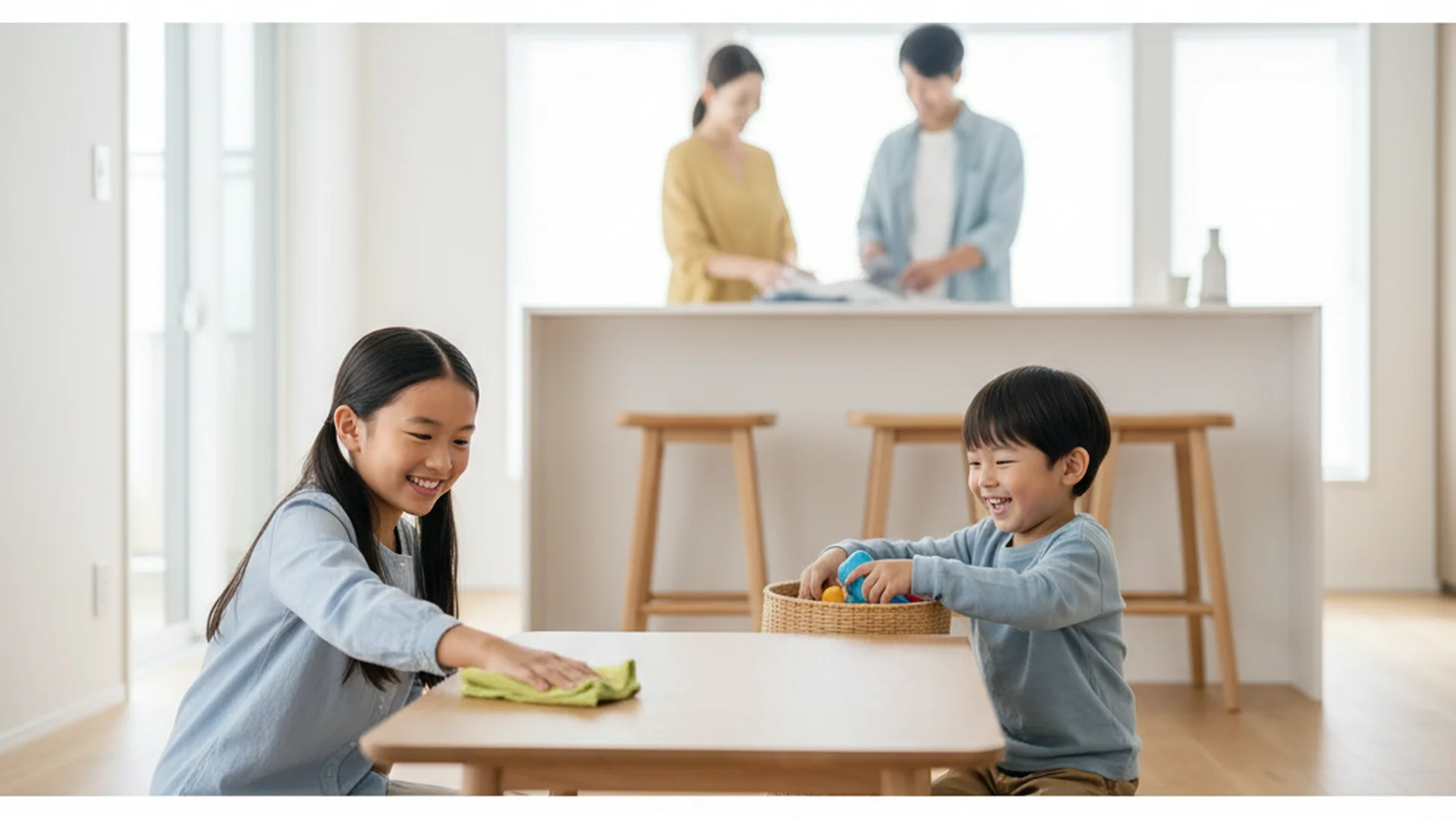
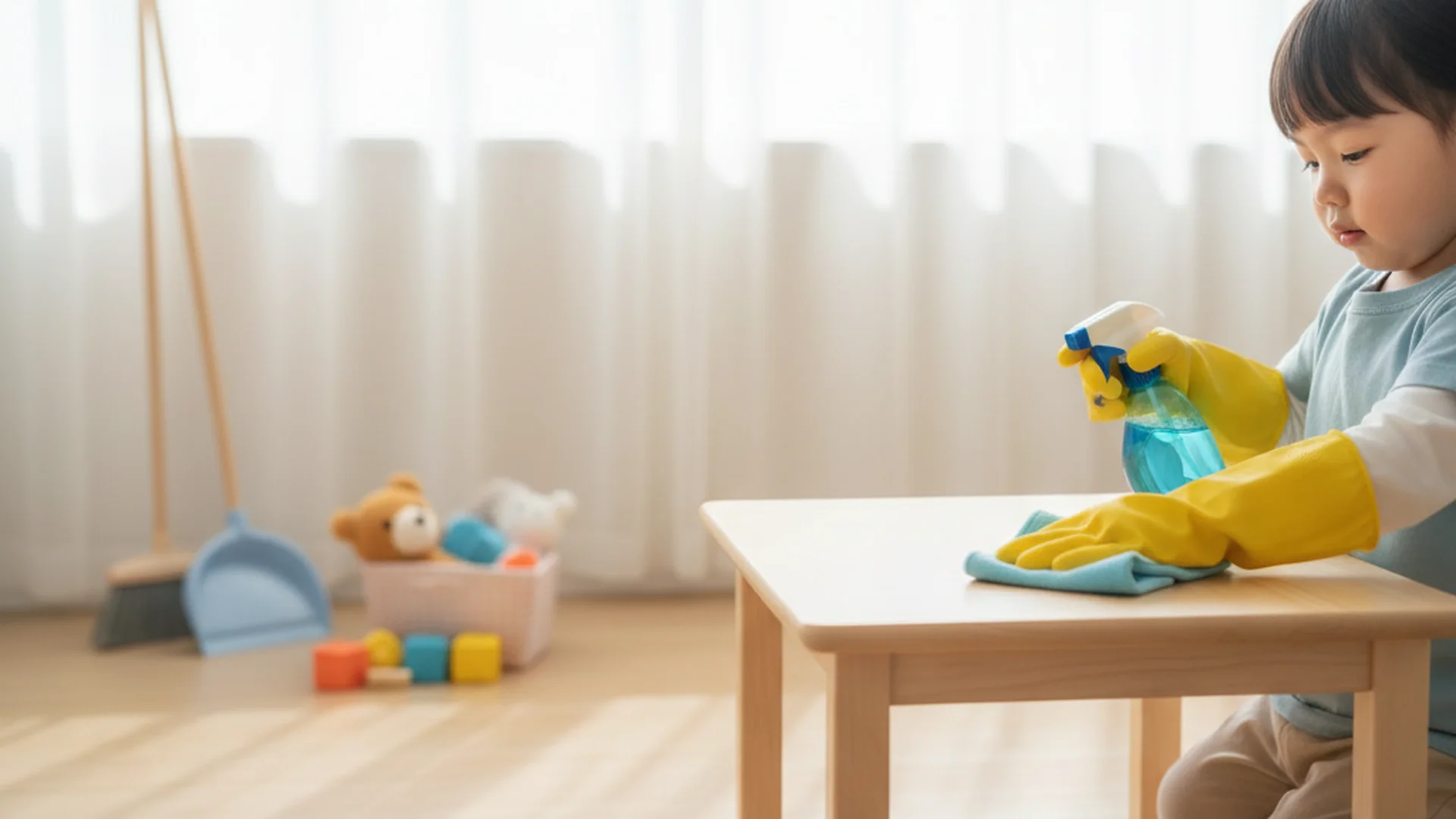
- Surface Wiping: Using a damp cloth to wipe down the kitchen table after meals.
- Grocery Helping: Putting away "low shelf" items like cereal boxes or canned goods.
Pet Care and Outdoors
Teaching empathy through pet care is a powerful motivator for young children.
- Watering the Dog/Cat: Checking the water bowl and filling it using a small pitcher.
- Pet Grooming: Helping brush a calm, friendly pet under supervision.
- Garden Care: Using a small watering can to water indoor plants or flowers in the yard.
- Yard Clean-up: Picking up sticks or "treasures" (large stones) from the lawn before mowing.
| Category | Task | Skill Developed |
|---|---|---|
| Kitchen | Sorting Silverware | Categorization & Fine Motor |
| Bedroom | Pulling up Duvet | Gross Motor & Responsibility |
| Laundry | Matching Socks | Visual Discrimination |
| General | Wiping Baseboards | Attention to Detail |
Tip: Use "Green Chores" to engage your child's curiosity. Ask them to help sort the recycling or carry small scraps to the compost bin to align with environmental lessons they may be learning in school.
The Scaffolding Method: How to Teach a New Chore
You cannot simply tell a five-year-old to "clean the bathroom" and expect results. Their brains struggle with broad instructions. Instead, use the "I Do, We Do, You Do" scaffolding method.
- I Do: You perform the chore while the child watches. Explain what you are doing out loud. "I am putting the LEGOs in this bin so no one trips on them."
- We Do: You and the child perform the chore together. This is where five-year-olds should spend the bulk of their time. It makes work feel like a social connection rather than a lonely task.
- You Do: Once they have mastered the task, let them do it while you stay in the room. Provide encouragement rather than correction.
Success: Children who master a task through scaffolding feel a sense of "mastery," which is a primary driver of intrinsic motivation.
Creating a Chores for 5 Year Olds Chart
Since many five-year-olds are still learning to read, a traditional written list won't work. A successful chores for 5 year olds chart must be highly visual.
Visual Cues and Gamification
- Photo Charts: Take photos of your child actually performing the chore (e.g., a photo of them putting shoes in the closet) and paste that onto the chart.
- The "Velcro Move-Over": Create two columns: "To Do" and "Done." Use Velcro strips so the child can physically move the picture from one side to the other. This provides a tactile "dopamine hit" similar to digital games.
- Adventure-Based Apps: In 2025, many parents are using "Gamification 2.0" apps. These allow children to choose an avatar that "levels up" when real-world tasks are completed.
Warning: Avoid using chores as a punishment. If you say, "You hit your sister, now go fold laundry," you are creating a lifelong negative association with work. Chores should be a neutral or positive part of the daily routine.
Common Mistakes to Avoid
Even the most well-intentioned parents fall into these traps. Being aware of them will save you hours of frustration.
1. The "Do-Over" Mistake
The biggest motivation-killer for a child is watching their parent re-do the work they just finished. If your child folds a towel and it looks messy, leave it. Re-folding it tells the child their effort wasn't good enough. Instead, wait until the next time and practice "We Do" together.
2. Vague Instructions
"Clean your room" is an abstract concept to a five-year-old. They see a pile of toys and don't know where to start.
- The Fix: Use "Sequencing." Say, "First, put the stuffed animals on the bed. Second, put the books on the shelf."
3. The Allowance Trap
There is a major debate about paying for chores. The cleanest approach is to separate "Family Contributions" from "Earned Allowance."
- The Rule of Thumb: Don't pay for basic expectations (picking up their own toys, clearing their own plate). Use allowance for "Extra" chores, like helping pull weeds or helping wash the car.
4. Expecting Perfection
A five-year-old's motor skills are still developing. Their "clean" will not be your "clean." The goal at this age is the habit of contributing, not the quality of the scrub.
Note: Modern parenting trends emphasize "Contribution" over "Chore." Using the phrase "Thank you for your contribution to our family" helps a child feel like a valued member of a team.
Real-World Examples of 5-Year-Old Success
Example 1: The "Sock Match" Game One family turned laundry day into a matching game. The 5-year-old was tasked with finding all the "twins" in the sock basket. This turned a tedious task into a visual discrimination exercise that the child looked forward to every week.
Example 2: The "Table Captain" To give their child a sense of authority, one parent designated their 5-year-old as the "Table Captain." Their job was to ensure everyone had a napkin and to wipe the table after dinner. The title alone made the child take the task much more seriously.
Example 3: The "Timer Challenge" To combat "digital dopamine" and slow-moving routines, a father started setting a 5-minute timer for "The Great Toy Roundup." The child had to see if they could beat the timer to put their blocks away. This turned a chore into a high-energy challenge.
Frequently Asked Questions
What chores are age-appropriate for a 5-year-old?
Should I pay my 5-year-old for chores?
How long should a 5-year-old spend on chores?
How do I get my 5-year-old to do chores without nagging?
What should a chore chart for a 5-year-old look like?
Conclusion
Introducing chores for 5 year olds is one of the most productive parenting moves you can make. By focusing on "family contribution" rather than forced labor, you are helping your child develop the executive function and self-confidence they need for school and beyond. Remember to keep it visual, keep it fun, and most importantly, prioritize the process over the results. Your child's bed might be lumpy today, but the character they are building is becoming solid.
Success: By starting now, you are raising a child who views themselves as a capable, helpful member of society.
Cleaning that keeps score
Every task earns points, every streak multiplies them, and Premium adds a household leaderboard plus a monthly Dustagorgon to beat.
- Free forever
- 30 badges to earn
- Up to 6 in a household
No card needed. Set up your rooms in a couple of minutes.