In this article
What you’ll learn
- Chores at 14 are about executive function and life skills, not just tidiness.
- A hybrid payment model balances "citizen chores" with "commission-based" tasks.
- Modern tools like AI-generated SOPs and FinTech apps increase teen engagement.
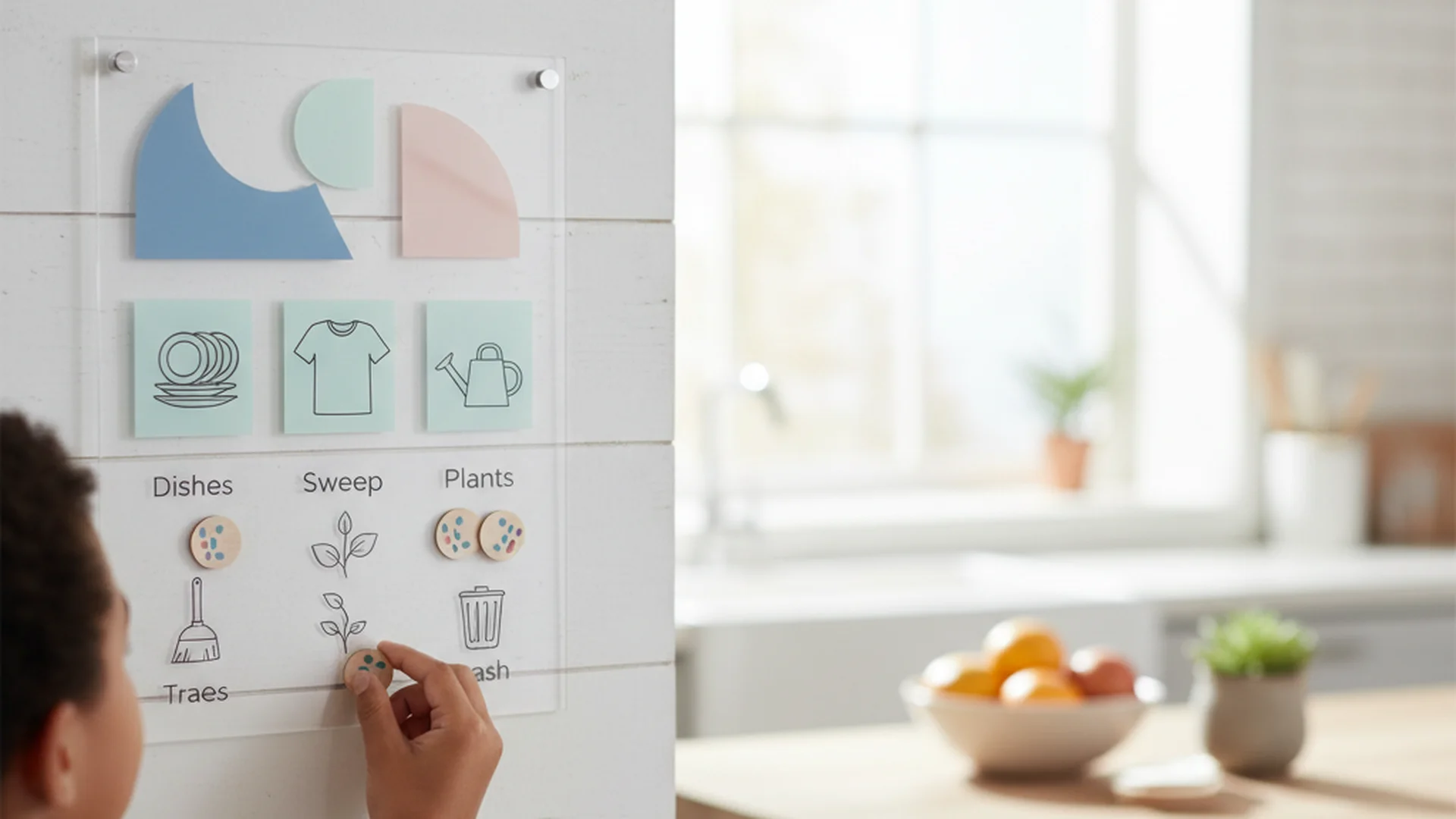
Setting up a chore chart for a 14-year-old is a pivotal transition from "helping out" to "managing a household." At this age, chores 14 year olds perform are no longer just about keeping a room tidy; they are about developing the executive function and life skills required for adulthood. We are currently in a unique parenting era where the gap between childhood and independence is widening. By implementing a structured system now, you are giving your teenager a competitive advantage in the real world.
Why Chores for 14 Year Olds Matter More Than Ever
In 2025 and 2026, the landscape of teenage responsibility has shifted dramatically. Far fewer teenagers hold a part-time job than a generation ago, which means that for many young people, the household is the only environment where they can develop a work ethic and understand the value of labor.
Chores also build what is often called a "pitch-in" mindset—the habit of noticing what needs doing and doing it without being asked. When a 14-year-old contributes to the home, they aren't just cleaning a toilet; they are learning that they are a necessary part of a community.
Note: Arguments about screen time are a fixture of family life with teenagers. Integrating chores into a daily routine can actually provide a necessary "digital detox" and reduce these friction points.
Creating a Modern Chores 14 Year Olds List
When brainstorming chores 14 year olds ideas, it is important to categorize them by frequency and the specific life skill they teach. At 14, teens have the motor skills and cognitive ability to handle almost any household task, provided they are given initial safety training.
Daily "Citizen" Chores
These are the non-negotiables. These tasks are part of living in a shared space and should generally be unpaid.
- Kitchen Maintenance: Loading and unloading the dishwasher, wiping down counters after meals.
- Pet Care: Feeding, walking, or cleaning up after the family pet.
- Personal Space: Making the bed and keeping the bedroom floor clear of "floordrobes."
- Laundry Management: Gathering their own laundry and bringing it to the utility room.
Weekly Deep-Dive Tasks
Weekly chores help a teen understand the maintenance cycle of a home.
- Bathroom Hygiene: Scrubbing the toilet, cleaning the mirror, and wiping the sink.
- Floor Care: Vacuuming common areas and mopping the kitchen floor.
- Meal Preparation: Preparing at least one full family meal from scratch (from planning to cleanup).
Seasonal and "Project" Chores
These are excellent opportunities for earning extra money or "commission."
- Outdoor Maintenance: Mowing the lawn, raking leaves, or shoveling snow.
- Vehicle Care: Washing the car or vacuuming the interior.
- Digital Organization: Helping older relatives with tech updates or cleaning out digital files.
| Category | Chore Idea | Life Skill Learned |
|---|---|---|
| Kitchen | Prepare 1 full meal per week | Nutrition & Budgeting |
| Laundry | Wash, dry, fold, and put away own laundry | Self-Sufficiency |
| Bathrooms | Scrub toilet, sink, and mirror | Hygiene Standards |
| Financial | Create a grocery list within a budget | Financial Literacy |
| Outdoor | Mow lawn or rake leaves | Physical Responsibility |
| Digital | Help older relatives with tech/cleaning devices | Empathy & Teaching |
Best Practices for a Successful Chore System
Transitioning a teen to a new chore chart requires more than just a list on the fridge. It requires a strategy that respects their growing need for autonomy.
1. The "Time-Blocking" Method
Instead of a long, daunting checklist, try assigning chores by time blocks. For example, a "Morning Block" might include emptying the dishwasher and making the bed. This block must be completed before they can access their phone or gaming console. This 2025 update to the traditional chore chart helps teens manage their time more effectively.
2. Focus on "The Why"
Frame chores as "Family Contributions." When a teen understands that their contribution directly impacts the family's well-being—such as making sure everyone has clean towels or a hot meal—it fosters empathy and a sense of belonging within the "household ecosystem."
3. Collaborative Planning
Sit down with your 14-year-old and let them pick one or two chores they don't hate. If they enjoy being outside, give them the yard work. If they find folding laundry meditative, let that be their primary weekly task. Giving them a choice increases compliance and ownership.
Tip: Use "The Definition of Done." Create a simple checklist for complex tasks. For a kitchen, "done" means: counters wiped, sink empty, and floor swept. This prevents arguments over the quality of work.
2025-2026 Trends in Teenage Household Management
The way we manage homes is changing, and your 14-year-old's chore chart should reflect that.
Gamification and FinTech Apps
Many parents are moving away from paper charts in favor of "FinTech" apps like Greenlight, GoHenry, or Mydoh. These apps link completed chores directly to a digital debit card, providing instant gratification and teaching real-time financial literacy.
Sustainability and "Eco-Chores"
There is a growing trend in 2026 of assigning "Eco-Chores." This might include managing the household composting system, sorting complex recycling (like e-waste or soft plastics), or monitoring home energy usage via smart home apps. This connects household work to larger global issues that many Gen Alpha teens care about deeply.
AI-Generated SOPs
Modern parents are using AI to generate customized, step-by-step cleaning guides (Standard Operating Procedures).
Success: One parent reported that after providing their teen with an AI-generated, step-by-step guide for "Cleaning the Bathroom Like a Pro," the quality of the work improved dramatically because the teen no longer had to guess what "clean" meant.
Common Mistakes to Avoid
Even the best-laid plans can go awry if you fall into these common parenting traps.
The "Rescue" Trap
When a teen does a job poorly, parents often step in to finish it. This is a mistake. It teaches the teen that if they wait long enough or do it poorly, they will be "rescued" from the responsibility. If a job is done poorly, have them redo it—calmly but firmly.
Nagging vs. Consequences
Constant reminders (nagging) actually train teens to ignore the first three requests. Make one request, then follow it with an immediate, pre-agreed consequence if the task isn't completed. This might be a loss of data or a "Time-Debt" where you deduct your time spent doing their chore from their social time.
The "Busy Teen" Myth
Many parents excuse 14-year-olds from chores because of sports, heavy homework loads, or extracurriculars. However, chores teach the "soft skill" of time management, which is more valuable for future success than a slightly higher GPA or an extra hour of practice.
Warning: Never use chores as a punishment for unrelated bad behavior. This builds a negative association with household contribution and makes chores feel like a "sentence" rather than a responsibility.
Real-World Examples of Modern Chore Management
Example 1: The "Time-Debt" Model
If 14-year-old Liam forgets to mow the lawn on Saturday as agreed, and his father has to do it on Sunday so the grass isn't overgrown for the week, Liam "owes" that time back. If it took the father 60 minutes, Liam loses 60 minutes of gaming or must complete an extra 60-minute task like cleaning the garage.
Example 2: The "Taco Tuesday" Chef
Maya is 14 and responsible for one meal a week. She isn't just told to "cook." She is given a $40 budget and must check the pantry, create a grocery list, and prepare the meal. This teaches her budgeting, inventory management, and nutrition all in one chore.
Example 3: The Eco-Manager
Noah's primary "contribution" chore is managing the household recycling and composting. He researched local 2026 recycling laws and set up a system to ensure the family is compliant. This task gives him a sense of "Expert Status" within the home.
Frequently Asked Questions
Should I pay my 14-year-old for chores?
How do I handle "chore strikes" or refusal?
Is 14 too young for "adult" chores like cooking or lawn care?
How many chores should a 14-year-old have?
Conclusion
Implementing a chore chart for 14 year olds is an investment in their future. By moving away from nagging and toward a system of clear expectations, collaborative choices, and modern tools, you help your teenager build the resilience and self-efficacy they need for the real world. Remember, the goal isn't just a clean house—it's a capable adult.
Success: Teens who contribute regularly to their households tend to feel more confident in their own competence and better prepared for the challenges of independent living.
Cleaning that keeps score
Every task earns points, every streak multiplies them, and Premium adds a household leaderboard plus a monthly Dustagorgon to beat.
- Free forever
- 30 badges to earn
- Up to 6 in a household
No card needed. Set up your rooms in a couple of minutes.