In this article
What you’ll learn
- Start chores as early as age 2 to build long-term success habits.
- Avoid using chores as punishment to prevent negative associations.
- Use the "Show-Do-Solo" method to teach complex tasks effectively.
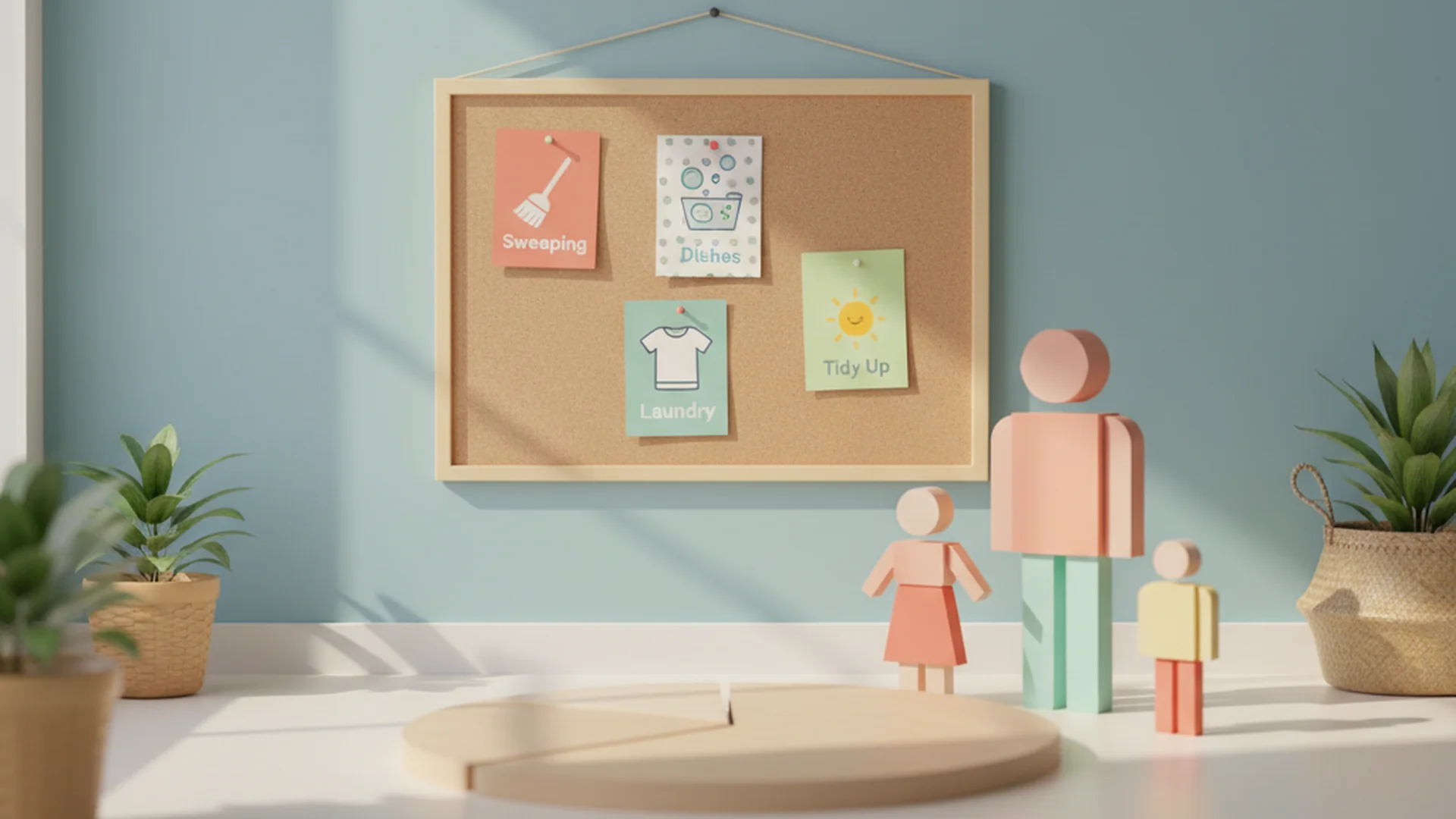
For many parents, the daily routine often feels like a broken record of reminders and negotiations. However, implementing a structured chore chart for kids is more than just a way to get the living room floor cleared of LEGOs; it is a fundamental tool for building life skills. Children who contribute to the household early on develop a stronger sense of responsibility and academic resilience.
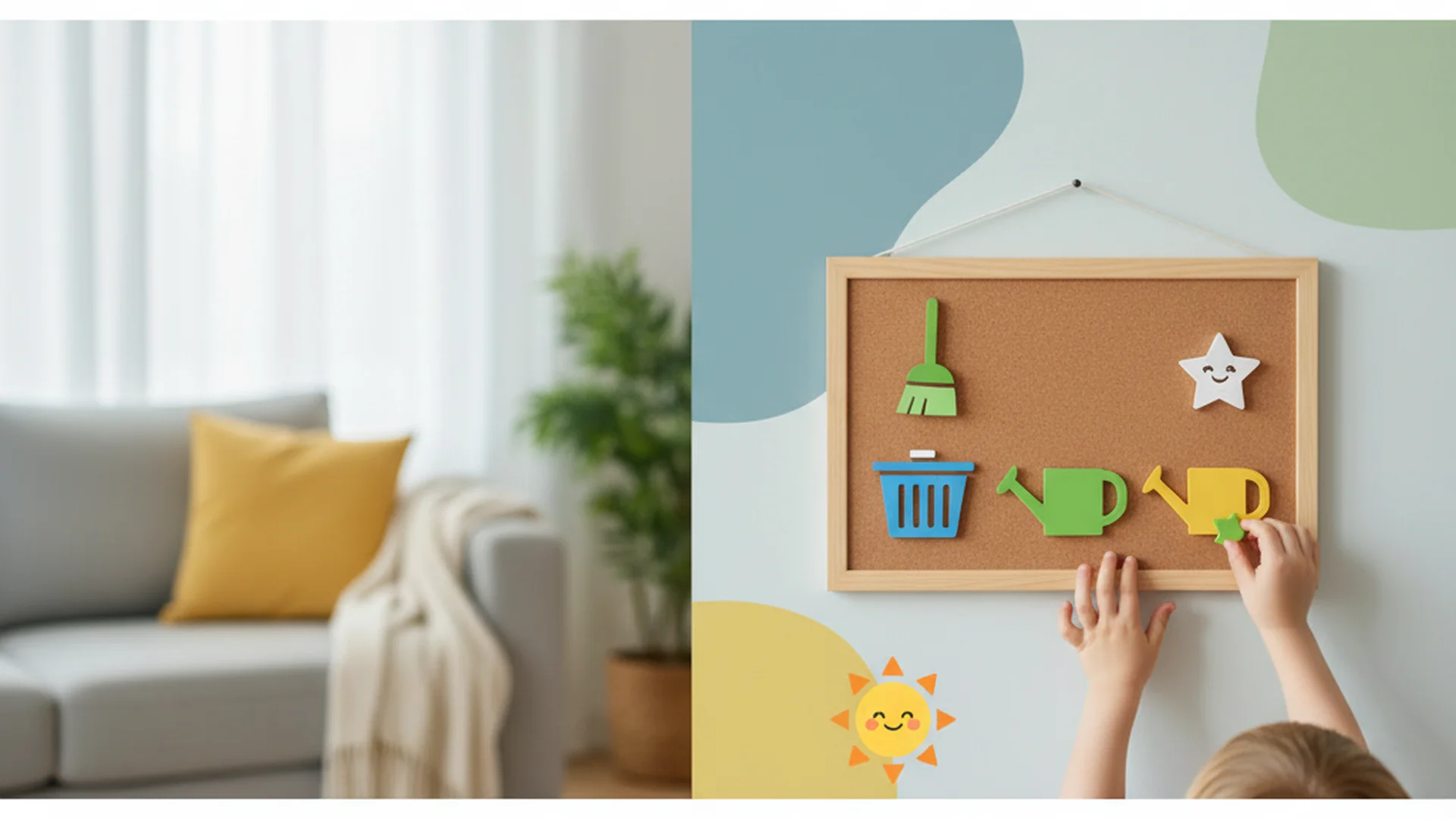
In 2025, the way we approach these "family contributions" has evolved. We are moving away from the "boss vs. employee" dynamic and toward a "family ecosystem" model where everyone plays a vital role in the home's success. Whether you are looking for a simple physical board or a high-tech digital solution, finding the right chore chart for kids can reduce your mental load and empower your children to take pride in their environment.
Self-Efficacy: Why Chores Matter
Before diving into the design of your chore chart for kids chart, it is important to understand the "why" behind the work. Children who grow up doing chores tend to become adults who cope well and feel capable. This isn't just about clean dishes; it’s about building "self-efficacy," the internal belief that one’s actions have a direct impact on their environment.
Children who start chores early also tend to do better academically and socially by the time they hit third grade. These tasks help develop executive function—the mental processes that enable us to plan, focus attention, and juggle multiple tasks.
Tip: Focus on the process rather than the result. For a toddler, putting three toys away is a massive win for their developing brain, even if the room isn't "spotless."
Age-Appropriate Tasks: The Master List
One of the most common reasons a chore chart for kids fails is that the tasks are either too vague or developmentally inappropriate. To help you build an effective chore chart for kids list, we have categorized tasks by what children can realistically handle at each stage.
| Age Group | Sample Chore List | Focus Skill |
|---|---|---|
| Toddlers (2-3) | Put toys in bins, put dirty clothes in the hamper, help feed pets. | Mimicry & Motor Skills |
| Preschool (4-5) | Make bed (basic), set the table, water plants, clear their plate. | Routine & Sequencing |
| Early School (6-8) | Fold towels, sweep small areas, sort laundry, empty dishwasher (plastics). | Precision & Categorization |
| Pre-Teens (9-12) | Vacuum common areas, load dishwasher, cook simple meals, take out trash. | Complexity & Planning |
| Teens (13+) | Full laundry cycle, clean bathrooms, yard work, wash car, grocery shop. | Independence & Maintenance |
Note: At ages 2–3, children are in the "helpful window." They are developmentally wired to want to do what adults are doing. Don't wait until age 7 or 8 to start; capitalize on this natural desire to participate.
Modern Trends: Chore Management in 2025–2026
The landscape of domestic efficiency has shifted. We no longer rely solely on a piece of paper stuck to the fridge with a magnet. Modern families are leveraging technology and psychological trends to make home maintenance more engaging.
AI-Integrated Scheduling
Parents are now using AI prompts in tools like Google Sheets or specialized apps to generate fair, rotating schedules. For example, a parent might prompt an AI: "Generate a weekly rotating chore schedule for a 7-year-old and a 10-year-old that alternates bathroom duties and trash collection, ensuring a balanced workload." This removes the "unfairness" argument from siblings.
Gamification and Marketplaces
Apps like KiddiKash and S'moresUp are leading the 2025 trend of "gamifying" the home. These apps allow kids to earn "points" or "digital currency" for completing tasks on their chore chart for kids. These points can then be traded in a family marketplace for rewards like extra screen time, a trip to the ice cream shop, or even small cash amounts.
The Survival Chart for Teens
As children reach their teen years, the focus is shifting from "cleaning" to "life-readiness." Modern "Survival Charts" include tasks like pumping gas, updating the family digital calendar, and planning one full meal per week. This prepares them for the transition to independent living.
Success: Switching to a "Team Task" model with a digital leaderboard cuts down on daily household arguments and gets deep-cleaning tasks finished noticeably faster.
Best Practices for Implementing Your Chore Chart
To ensure your chore chart for kids actually sticks past the first two weeks, follow these strategies.
The "Show-Do-Solo" Method
Do not expect a child to know how to "clean the bathroom" just because you told them to. Use this three-step progression:
- Show: You perform the task while they watch. Explain why you use certain tools.
- Do: You perform the task together. Let them scrub the sink while you wipe the mirror.
- Solo: They perform the task under your supervision. Once they prove proficiency, they move to the "Solo" list.
Be Explicit, Not Vague
"Clean your room" is a mountain that feels impossible to climb for a child. Instead, break it down into specific actionable items on their chore chart for kids chart:
- Put dirty clothes in the hamper.
- Place all books on the shelf.
- Put toys in the toy box.
The "When/Then" Technique
This is a powerful psychological tool to reduce nagging. Instead of saying, "Clean your room or no park," use the positive frame: "When the toys are in the bin, then we can go to the park." It frames the chore as a prerequisite to a positive outcome rather than a punishment.
Warning: Never "re-do" a chore immediately after your child finishes it. If you refold a towel they just worked hard on, you destroy their motivation and signal that their effort wasn't good enough. Accept "good enough" for their developmental level.
Common Mistakes to Avoid
Even the best-designed chore chart for kids can fail if these common pitfalls are present:
- Using Chores as Punishment: If "cleaning the baseboards" is the penalty for a bad grade, your child will grow up viewing work as something to be avoided at all costs. Work should be presented as a contribution to the family "team."
- The Rewards Economy Trap: If you pay for every single small task (like clearing a plate), you kill intrinsic motivation. Kids should understand that certain things are done because we live here together. Reserve "allowance" for extra-credit jobs like washing the car or weeding the garden.
- Overcomplicating the System: A chart with 25 tiny tasks and a complex point-conversion system usually fails within two weeks. Simplicity is the key to longevity. Start with three core daily tasks and build from there.
Frequently Asked Questions
At what age should I start a chore chart for kids?
Should I pay my children for doing chores?
How many chores should a child have?
What do I do if my child refuses to follow the chore chart?
Conclusion
Building a chore chart for kids is an investment in your child's future character and your own current sanity. By moving away from the "nagging" cycle and toward a structured system of "Visual Wins" and "Family Contributions," you create a home environment rooted in teamwork. Remember that the goal isn't a perfectly clean house—it’s a perfectly capable human being.
Success: Following a structured chart not only keeps the home organized but also significantly reduces the "mental load" for parents, leading to more quality family time.
Cleaning that keeps score
Every task earns points, every streak multiplies them, and Premium adds a household leaderboard plus a monthly Dustagorgon to beat.
- Free forever
- 30 badges to earn
- Up to 6 in a household
No card needed. Set up your rooms in a couple of minutes.