In this article
What you’ll learn
- Morning (9 AM – 11 AM) is best for high-focus decluttering.
- Afternoon (2 PM – 4 PM) is the peak time for physical chores like mopping.
- Micro-cleaning daily is more effective than "marathon" weekend sessions.
We have all been there: staring at a pile of laundry or a dusty shelf on a Sunday afternoon, feeling the "Sunday Scaries" creep in while we try to summon the energy to scrub. For decades, the "Saturday morning marathon" was the gold standard for household maintenance. However, as our lives become more integrated with remote work and smart technology, the best time to clean has shifted from a rigid weekend block to a more fluid approach built around your own energy.
Finding the best time to clean answer depends largely on your personal energy levels and the type of task at hand. By aligning your chores with your body’s natural internal clock—the circadian rhythm—you can make cleaning feel less like a burden and more like a seamless part of your lifestyle. In this guide, we will explore the ideal windows for various chores, the latest trends for 2025 and 2026, and how to stop cleaning fatigue once and for all.
Aligning Your Cleaning with Your Circadian Rhythm
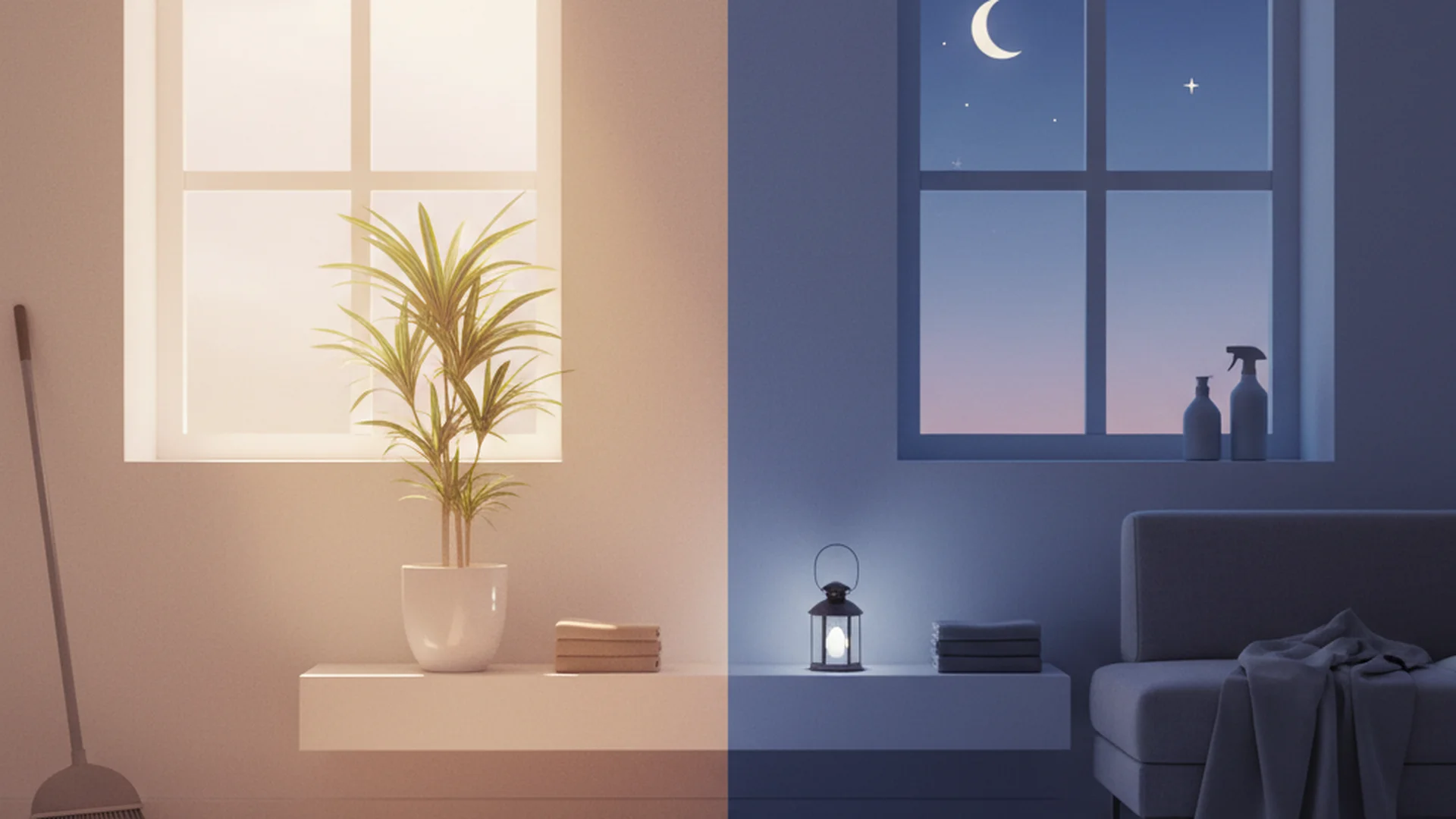
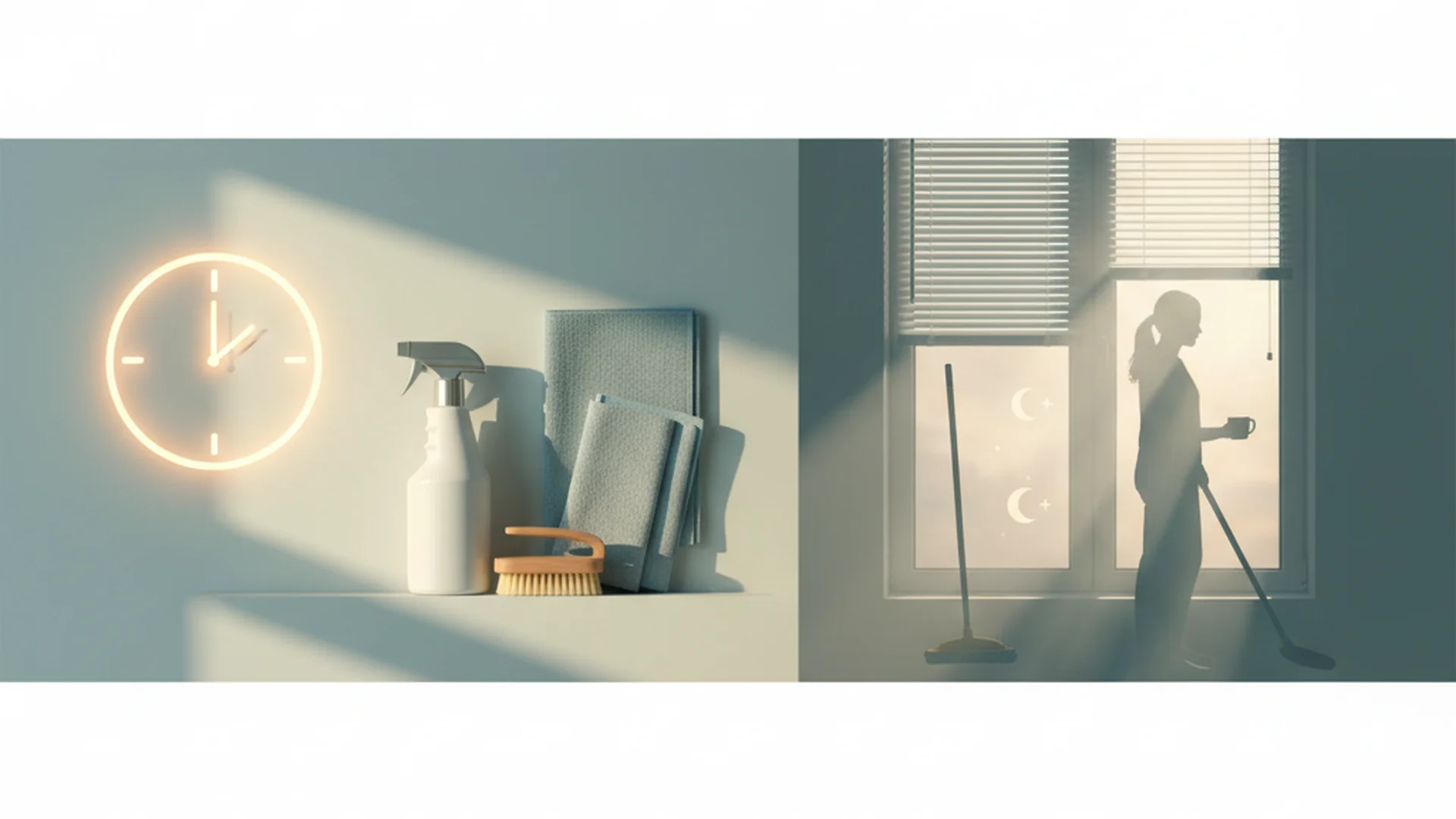
Your body’s biological clock doesn't just dictate when you sleep; it also controls your focus, physical strength, and mood. Productivity peaks at different times depending on whether the task is mental or physical.
The 9 AM – 11 AM "Focus Window"
Between 9 AM and 11 AM, most people experience a peak in cortisol and mental alertness. This is the best time to clean areas that require high attention to detail or organizational skills. If you are decluttering a junk drawer, organizing a pantry, or deep-cleaning the inside of a refrigerator, do it during this window.
Tip: Use your peak morning focus for "decision-heavy" tasks, such as deciding which items to keep, donate, or throw away.
The 2 PM – 4 PM "Physical Push"
While mental energy often dips after lunch (the infamous "afternoon slump"), your physical strength and body temperature actually peak in the mid-to-late afternoon. This makes 2 PM to 4 PM the ideal time for physically demanding chores. Tasks like vacuuming, scrubbing the bathtub, or mopping the entire house are best handled when your body has the most physical "oomph."
The Evening "Reset"
Evening cleaning should never be about heavy labor. Instead, focus on low-energy "resets" that prepare you for the following day. This includes running the dishwasher, wiping down kitchen counters, and a quick 10-minute tidy of the living room.
Current Trends: Cleaning in 2025 and 2026
Cleaning habits have evolved significantly in the mid-2020s. We are seeing a massive shift away from "sterilizing" environments and moving toward "mental wellness" cleaning.
| Trend Name | Description | Key Benefit |
|---|---|---|
| Dopamine Cleaning | Pairing chores with high-reward activities (podcasts, treats) | Boosts mood and motivation |
| Ghost Cleaning | Scheduling AI-driven robots to clean when the house is empty | Minimizes noise and disruption |
| Micro-Cleaning | Two 15-minute resets per day instead of one big session | Keeps stress and overwhelm low |
| Microbiome-Friendly | Using probiotic cleaners to support "good bacteria" | Healthier indoor ecosystem |
The Rise of "Ghost Cleaning"
With the advancement of smart home geofencing in 2025, many homeowners now utilize "Ghost Cleaning." This involves scheduling robot vacuums and mops to activate specifically when the house detects that all occupants have left. This ensures you always return to clean floors without ever hearing the hum of a vacuum.
Dopamine Cleaning: A Real-World Example
Consider the "Dopamine Menu" approach. Instead of dreading the dishes, a homeowner might save their favorite weekly true-crime podcast specifically for that task. By pairing the "low-dopamine" task of cleaning with a "high-dopamine" reward, the brain begins to associate cleaning with enjoyment rather than a chore.
Success: "Micro-Cleaning" (15 minutes twice a day) tends to feel far less stressful than saving every chore for the weekend.
Best Times to Clean by Room
Not all rooms are created equal. Different spaces require different lighting and energy levels to clean effectively.
The Kitchen: Frequency is Key
The kitchen is the most frequently cleaned space in the modern home, often getting attention several times a week. Because hygiene is paramount here, the best time to clean is immediately after use. However, for a deep clean (ovens, cabinets), mid-morning is best to take advantage of natural light.
The Bathroom: Mid-Day Magic
Natural light is essential for seeing soap scum and grime. Clean your bathroom between 10 AM and 2 PM. This ensures you have the best visibility and the highest physical energy for scrubbing tiles.
Windows: The Overcast Rule
One of the most common mistakes is cleaning windows on a bright, sunny afternoon. While it seems intuitive, the sun dries the cleaning solution too quickly, leading to unsightly streaks.
Warning: Never clean windows in direct, hot sunlight. Wait for an overcast day or clean them in the early morning before the sun hits the glass.
Common Mistakes to Avoid
Even if you have the perfect timing, certain habits can undermine your hard work.
- The "Weekend Marathon" Trap: Trying to do everything on Saturday leads to "Cleaning Fatigue." Breaking tasks into daily bites keeps the home cleaner long-term and protects your mental health.
- The Vinegar Myth: While eco-friendly, vinegar is highly acidic. Never use it on marble, granite, or the rubber seals of your dishwasher, as it can cause permanent damage.
- Mixing Chemicals: In 2025, this remains a major safety hazard. Never mix bleach with ammonia-based glass cleaners; this creates toxic chloramine gas.
- Over-Saturating Surfaces: Spraying cleaner directly onto wood or laminate can trap moisture and cause warping.
- Cleaning Bottom-to-Top: Always follow the "Top-to-Bottom" rule. Dust the ceiling fans and shelves first, so the debris falls to the floor to be vacuumed last.
Note: When cleaning wood or delicate surfaces, always spray your microfiber cloth rather than the surface itself to control moisture.
Frequently Asked Questions
Is it better to clean in the morning or at night?
Does natural light actually help with cleaning?
What is the best day of the week to clean?
How much time does the average person spend cleaning?
Can cleaning really improve mental health?
Conclusion
The best time to clean is no longer a one-size-fits-all answer. By understanding your circadian rhythms—using the morning for focus and the afternoon for physical labor—you can maintain a spotless home without the exhaustion of a "weekend marathon." Whether you are adopting the "Ghost Cleaning" technology of 2026 or simply sticking to a 15-minute daily reset, the goal is to make cleaning work for you, not the other way around.
Stop waiting for the "perfect" Saturday to arrive. Start using your body's natural energy peaks to keep your home pristine, your mind clear, and your weekends free.
Success: A clean home is a reflection of a clear mind. Small, timed efforts are always more sustainable than rare, massive overhauls.
Cleaning that keeps score
Every task earns points, every streak multiplies them, and Premium adds a household leaderboard plus a monthly Dustagorgon to beat.
- Free forever
- 30 badges to earn
- Up to 6 in a household
No card needed. Set up your rooms in a couple of minutes.