In this article
What you’ll learn
- Chores build the habits of contribution that serve children well into adult life.
- Shift from rigid charts to 'Rhythm Lists' to reduce morning and evening stress.
- Focus on 'Resets' rather than tasks to improve child executive function.
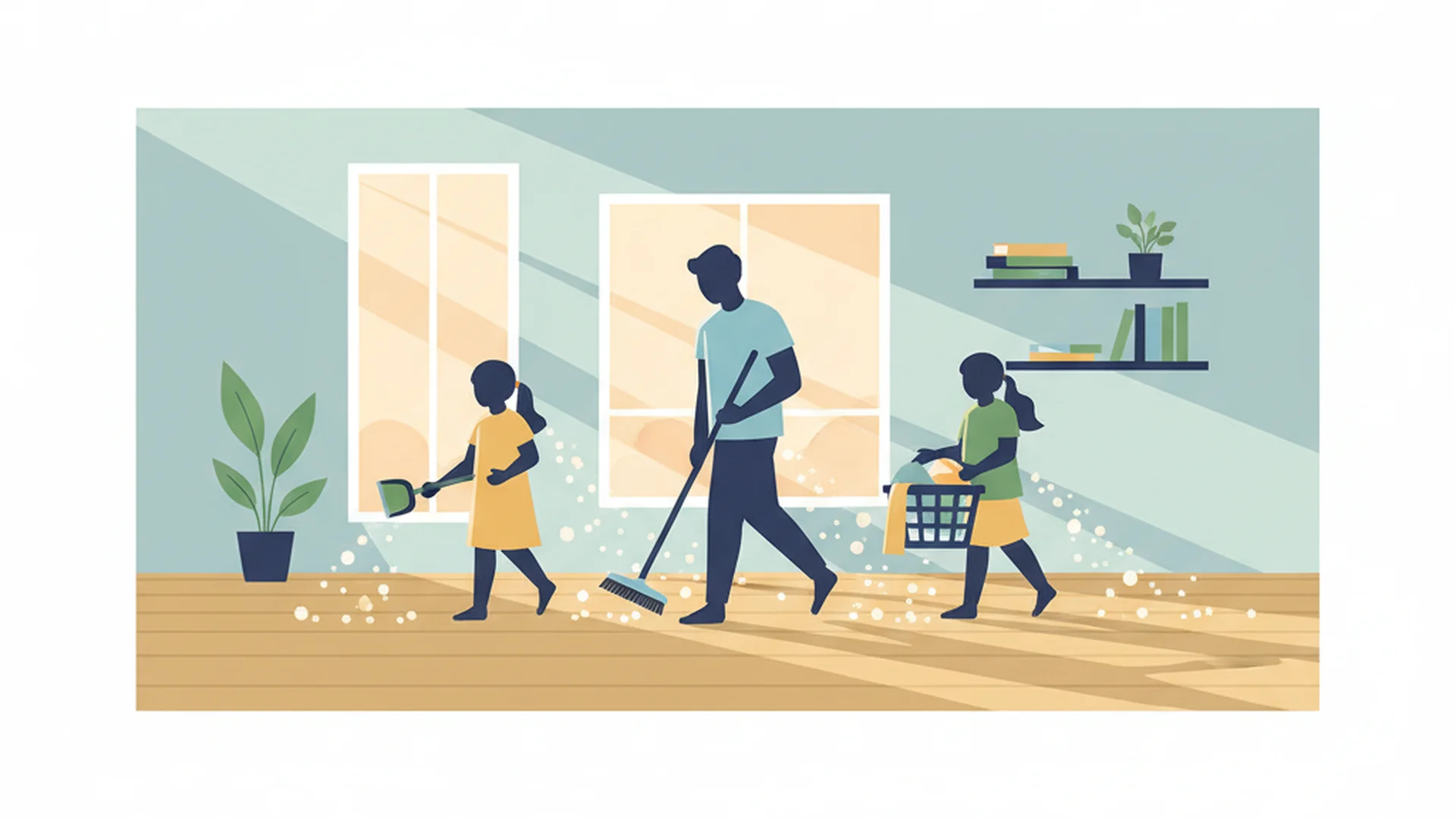
As the summer heat fades and the morning air turns crisp, parents everywhere face the same daunting transition. The relaxed, "shoes-on-the-lawn" energy of July suddenly collides with the rigid demands of the academic year. If your household feels like a whirlwind of lost lunchboxes and misplaced gym shoes, you aren't alone. Establishing a solid back to school chore routine is the single most effective way to restore order to your home while equipping your children with life skills that far outweigh the benefit of a clean living room.
The Science of Contribution: Why Chores Matter in 2025
For many parents, it’s tempting to waive chores during the school year to give children more time for homework or sports. In practice, that tends to backfire.
Children given chores from as early as age 3 or 4 grow up better adjusted, hold onto relationships more easily, and cope better with the demands of working life. The act of contributing to a household teaches "citizenship"—the idea that a community functions because everyone plays a part.
The academic side follows too: children who keep a regular chore routine in their earliest school years tend to do better in class a few years later. This isn't just about discipline; it's about brain development.
Building Executive Function through Housework
"Complex" chores—those requiring multiple steps, like following a recipe or sorting laundry—genuinely improve executive function. This includes working memory, task-switching, and impulse control. These are the exact same neural pathways used for solving math problems and focusing during a classroom lecture. By implementing a back to school chore routine, you are essentially providing your child with a daily "brain gym."
Note: The "eager helper" window opens around age 2. If you wait until the teenage years to start, you’ll face significantly higher resistance. Start small, and start early.
The 2025 Approach: From "Task Lists" to "Rhythm Lists"
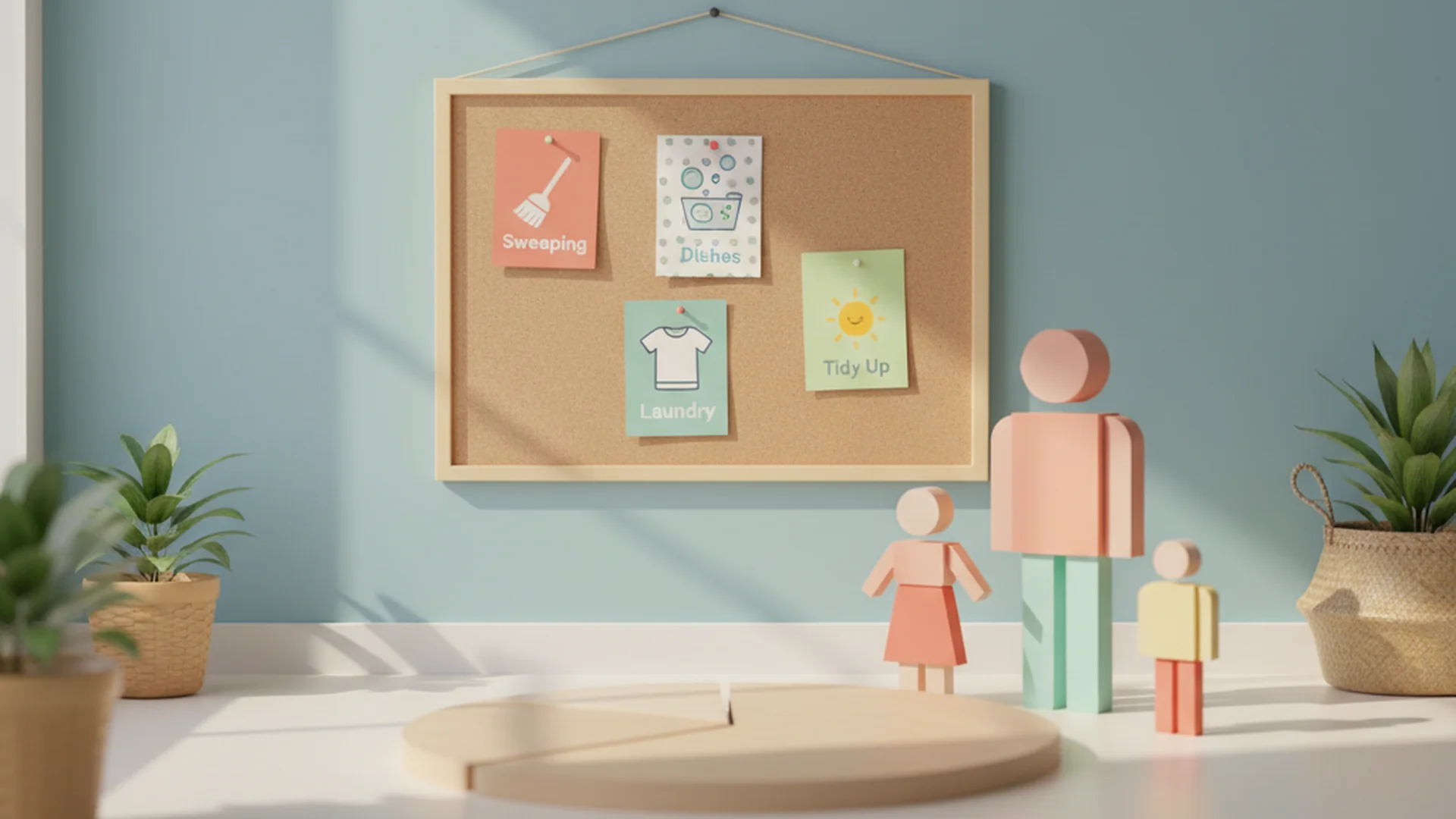
In previous years, the go-to solution was a rigid, sticker-based back to school chore routine chart. While charts can work, the 2025-2026 shift is toward "Rhythm Lists." Instead of a giant list of "to-dos" that feels overwhelming, a Rhythm List breaks the day into three natural phases: The Morning Launch, The After-School Reset, and The Evening Bedtime Prep.
1. The Morning Launch
The goal of the morning is momentum. These chores should be "low-friction" tasks that prepare the child for the day ahead.
- Example: A 7-year-old’s morning routine might include making their bed (a simple "pull-up" style) and feeding the family pet. This creates a sense of accomplishment before they even step onto the school bus.
2. The After-School Reset
This is where many families fail. When kids come home, they are often "cognitively crispy." Instead of demanding a clean room immediately, use the "Drop Zone" system.
- Example: Give your child a 60-second "Entryway Drill." They have one minute to clear their drop zone—backpack on the hook, shoes in the bin, and lunchbox on the kitchen counter.
3. The Evening Bedtime Prep
This is about "setting up your future self." We teach kids that we don’t clean because we "have to," but because we want our "morning self" to be happy and unstressed.
- Example: A teen might be responsible for clearing the kitchen counters and taking out the trash, ensuring the family wakes up to a clean slate.
Tip: Use the "When/Then" technique to reduce friction. "When your backpack is in the drop zone, then you can have your afternoon snack."
The Master Back to School Chore Routine List (Age-Appropriate)
To make your transition easier, we have categorized the most effective chores by age group. Use this as a foundation for your own back to school chore routine list.
| Age Group | The Morning "Launch" | The After-School "Reset" | Evening "Bedtime Prep" |
|---|---|---|---|
| Toddler (2-3) | Put PJs in the hamper. | Put 5 toys back in the bin. | Help "wipe" the table with a cloth. |
| Preschool (4-5) | Make bed (simple pull-up). | Empty lunchbox contents. | Pick out tomorrow's outfit. |
| Primary (6-9) | Feed pets; water one plant. | Hang up backpack/coat. | Load their own dinner dishes. |
| Tween (10-12) | Pack own snack/lunch. | Sort one load of laundry. | Wipe bathroom counters. |
| Teen (13+) | Manage morning alarm/schedule. | Full laundry cycle (Wash/Dry). | Clear/Wipe kitchen; Take out trash. |
Success: Children who master their "Bedtime Prep" routines find the morning school rush noticeably less stressful.
Modern Trends: Inclusive and Tech-Forward Routines
The landscape of parenting is changing, and the back to school chore routine of 2025 reflects a deeper understanding of neurodiversity and technology.
Neurodiversity-Inclusive "Low-Demand" Chores
For children with ADHD or sensory processing needs, a traditional back to school chore routine chart can be a source of intense "demand avoidance." The current trend is "Body Doubling." Instead of sending a child to clean their room alone, a parent works nearby (perhaps folding their own laundry) while the child works. This reduces the mental load and makes the task feel manageable.
Visual Checklists
Moving away from text-heavy lists, Visual Checklists are the better bet for 2026. These include photos of what a "done" space actually looks like. For a child with executive function challenges, "Clean the bathroom" is a vague command. A photo of a clear counter and a scrubbed sink provides a concrete "anchor" for their brain.
Gamification and Smart Home Triggers
Technology is now being used as a supportive tool rather than just a distraction. Many families are integrating chore apps like Greenlight or RoosterMoney.
- Example: In some modern households, the daily Wi-Fi password is changed every morning. It is only released once the child uploads a photo of their completed chores to a shared family app. This creates an immediate, tangible reward system that aligns with the digital age.
Warning: Never use "extra chores" as a punishment for bad grades or behavior. This teaches children that work is a negative consequence rather than a valuable contribution.
Common Mistakes to Avoid
Even with the best intentions, a back to school chore routine can fall apart within the first month. Avoid these common pitfalls to ensure long-term success:
1. The Perfectionism Trap
Nothing kills a child's motivation faster than watching their parent re-do their work. If your 8-year-old folds the towels and they are slightly crooked, leave them. If the job doesn't meet safety or hygiene standards, use the "I do, we do, you do" method.
- I do: You demonstrate the task.
- We do: You do it together.
- You do: They do it independently.
2. Vague Instructions
"Clean the living room" is an invitation for an argument. It is too broad. Instead, break it down into specific, "one-minute" tasks: "Put the pillows on the couch," "Stack the magazines," and "Put the remote in the drawer."
3. Starting Too Late
Many parents wait until middle school to introduce chores, thinking their children are too busy or incapable before then. However, the "habit of contribution" is much harder to build once the teen years hit. Start with "Self-Care" chores (managing their own laundry or calendar) as early as possible.
4. Over-Scheduling the Weekdays
If your child is in varsity sports or has three hours of homework, a deep-cleaning chore routine will fail. During peak school weeks, pivot to "Maintenance Minimums." These are 5-minute resets designed to prevent the house from collapsing into chaos without requiring a deep time commitment.
Note: If a child is genuinely overwhelmed, prioritize "Self-Care" chores (making their own lunch) over "House-Care" chores (dusting the baseboards).
Frequently Asked Questions
Should I pay my kids for doing chores?
How do I handle chore resistance during the first few weeks of school?
What if my child is over-scheduled with school and sports?
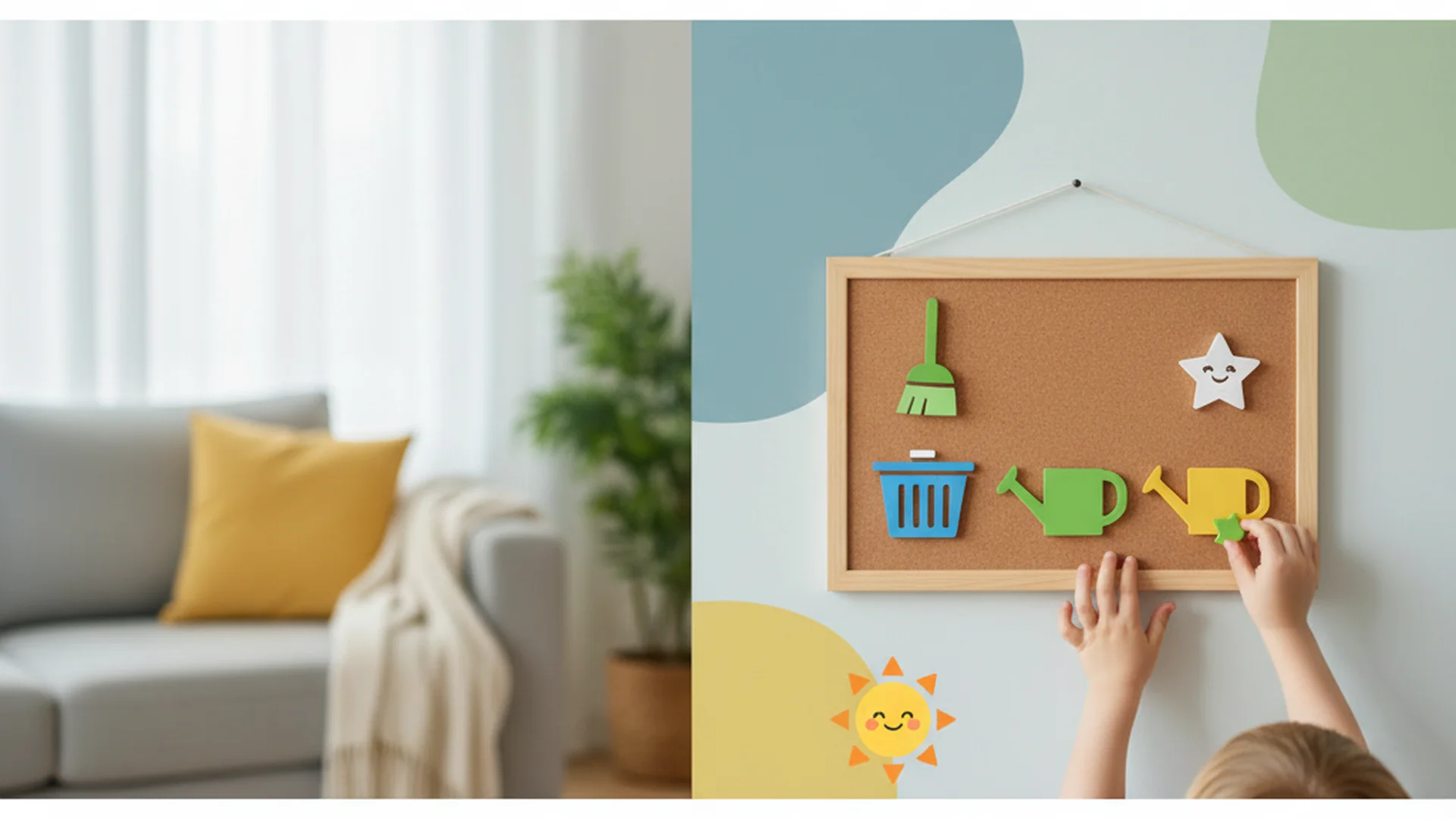
Is a physical chart or a digital app better?
Conclusion
Transitioning back to the classroom doesn't have to mean transitioning into domestic chaos. By implementing a structured back to school chore routine, you aren't just keeping your floors clean; you are training your children’s brains for the complexities of adult life. Focus on the "Reset" philosophy, use "When/Then" language, and remember that progress is always better than perfection.
As we move into the 2025-2026 school year, let’s shift the narrative from "doing chores" to "contributing to the team." Your future self—and your child's future self—will thank you.
Success: A consistent routine takes most of the morning "parent-child friction" out of the day, leading to a happier, more focused start to school.
Cleaning that keeps score
Every task earns points, every streak multiplies them, and Premium adds a household leaderboard plus a monthly Dustagorgon to beat.
- Free forever
- 30 badges to earn
- Up to 6 in a household
No card needed. Set up your rooms in a couple of minutes.