In this article
What you’ll learn
- The 20/10 method prioritizes rest as a requirement, not a reward.
- Short, timed sprints keep you working faster and stop burnout.
- Ideal for those with ADHD, chronic pain, or overwhelming schedules.
We have all been there: the "marathon cleaning" session. It usually starts on a Saturday morning with high hopes and a gallon of coffee. You vow to scrub every inch of the house, but by 2:00 PM, you are surrounded by half-empty boxes, the kitchen floor is wet, you’re exhausted, and the living room looks worse than when you started. This cycle of "binge and burn out" is why so many people struggle to maintain a tidy home. Enter the 20 10 cleaning method, a revolutionary approach to home maintenance that rejects the "all or nothing" mentality in favor of sustainable, timed intervals.
What is the 20/10 Cleaning Method?
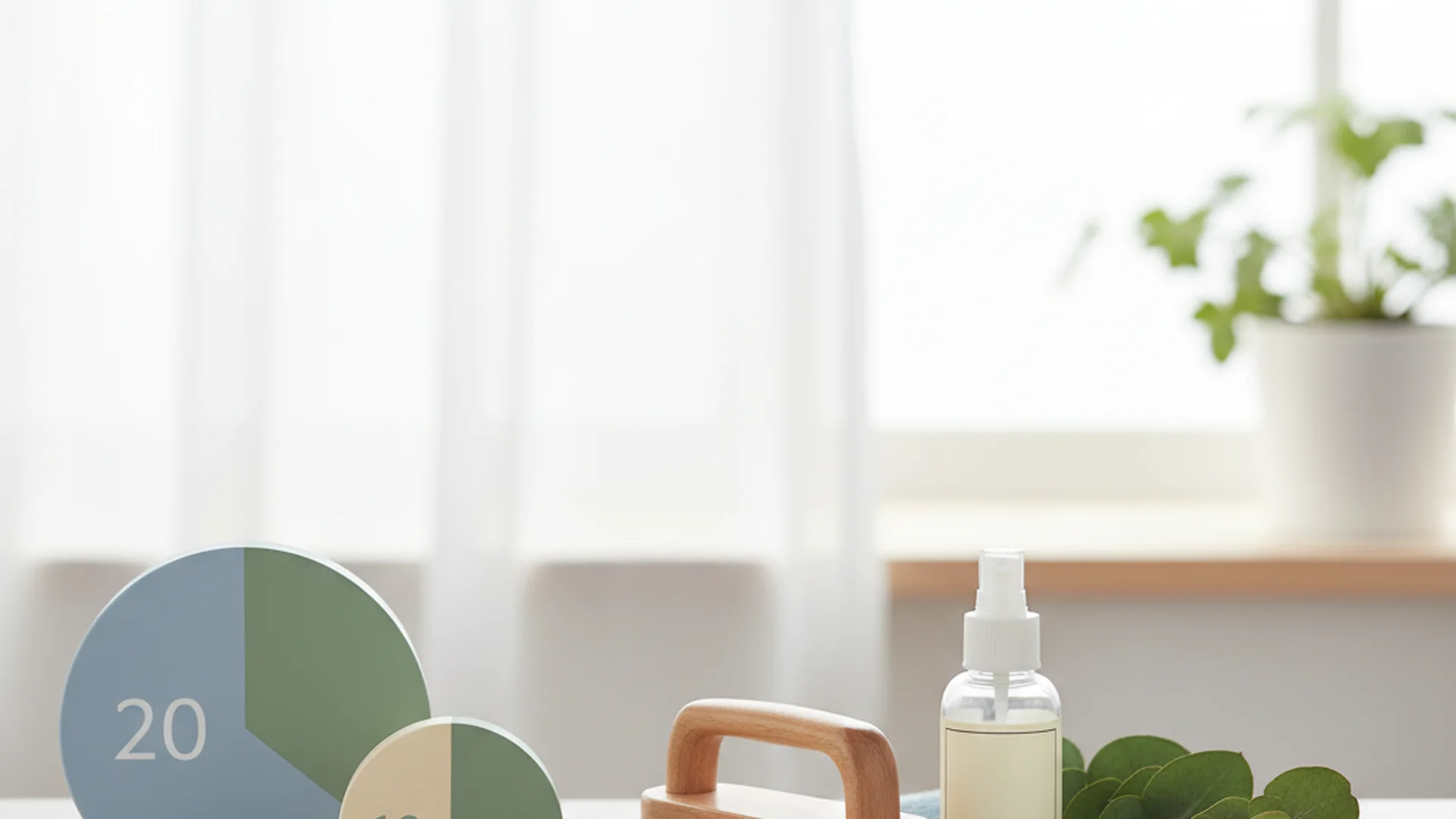
The 20/10 cleaning method is a time-management system designed specifically for domestic labor. At its core, the rules are simple: you clean for 20 minutes and take a mandatory 10-minute break. This cycle repeats until your task is finished or your scheduled cleaning time is up.
The method was popularized by Rachel Hoffman in her 2017 book, Unfck Your Habitat: You’re Better Than Your Mess* (UfYH). Hoffman’s philosophy was born out of a need for a cleaning system that didn't assume the user was a stay-at-home parent with endless energy. Instead, it was designed for "the rest of us"—people with full-time jobs, students, those living with chronic illness or pain, and individuals with ADHD who find task initiation daunting.
Note: The "10" in 20/10 is just as important as the "20." It is not a suggestion; it is a fundamental requirement of the system.
The Philosophy of "Progress Over Perfection"
Unlike traditional cleaning checklists that demand a pristine home, the 20 10 cleaning method guide focuses on the concept of "unf*cking" your space. It acknowledges that life is messy and that perfection is an unrealistic (and often paralyzing) goal. By breaking the work into 20-minute "sprints," the method removes the intimidation factor of a large mess.
Why the Sprint Works
Why is this specific ratio so effective? It comes down to how energy and attention actually behave during physical work. As a professional cleaning consultant, I have seen clients transform their homes using this method when every other "hack" failed.
1. Combatting Cleaning Fatigue
Physical labor is draining. When we "marathon clean," our heart rate stays elevated, and our focus begins to drift. By capping work at 20 minutes, you stay in a high-energy "sprint" state. People who use this method often find they get more done, because they work faster when they know a rest is coming.
2. Reducing Stress
Cleaning under pressure or for hours on end winds you up. People who stick to the 20/10 rhythm tend to find the whole job far less stressful. The 10-minute break acts as a "reset" for the nervous system, preventing the "doom-loop" of feeling overwhelmed by the sheer volume of work left to do.
3. Adaptation of the Pomodoro Technique
If you have ever used the Pomodoro Technique (25 minutes of work, 5 minutes of rest) for office work, you’ll recognize the logic. However, 20/10 is specifically calibrated for physical movement. The 10-minute break is longer than the traditional Pomodoro break because physical labor requires more recovery time for the heart and joints than cognitive labor.
Success: Using a timer creates a "boundary" for your brain. This boundary eliminates the need to decide "when am I done?" because the timer decides for you.
How to Execute Your First 20/10: A Step-by-Step Guide
If you are ready to try the 20 10 cleaning method explained in a practical setting, follow these four phases to ensure success.
Phase 1: The Pre-Game (Staging)
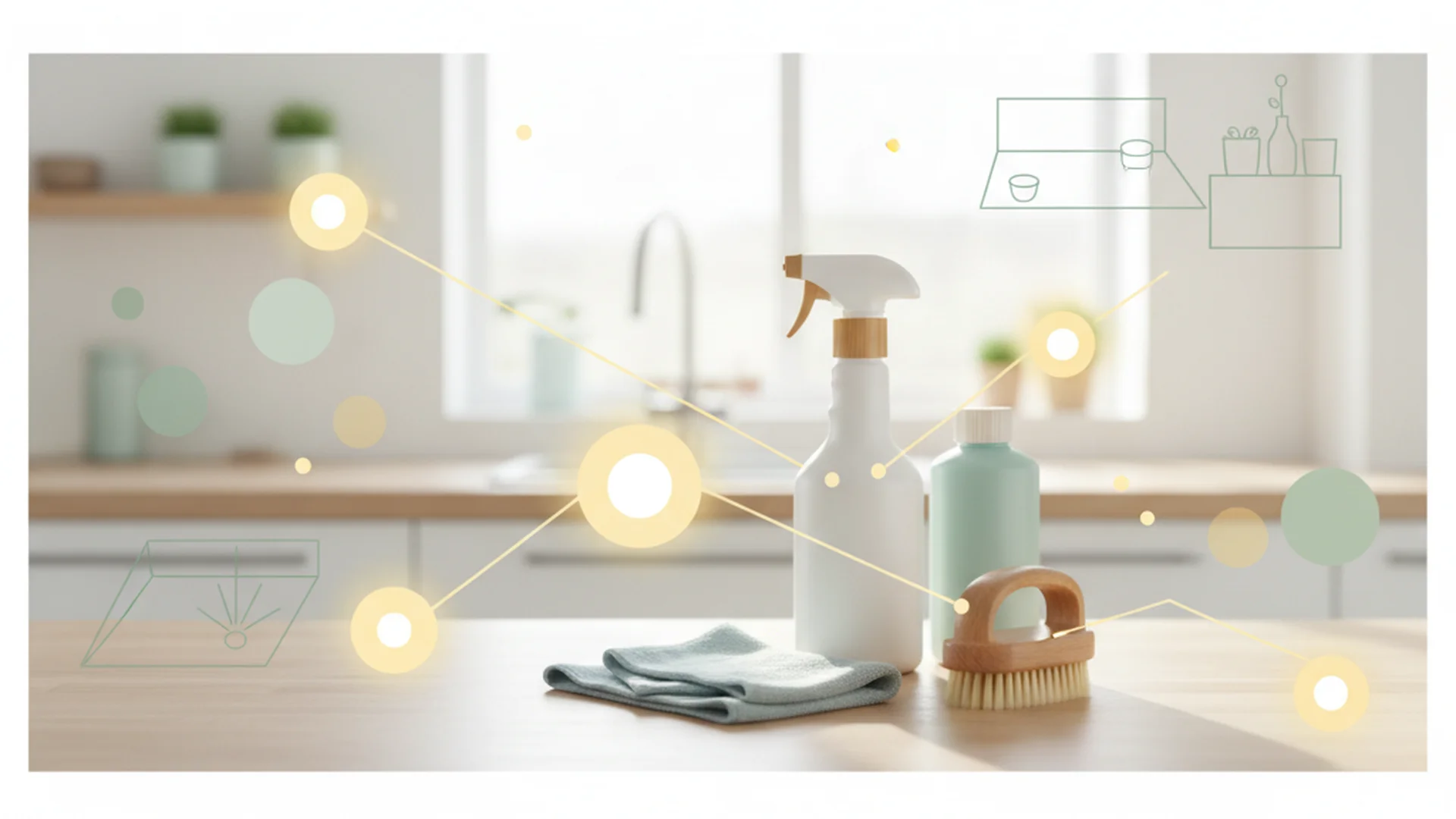
Don't start the timer yet. The most common way to fail a 20/10 cycle is to spend half of your "work" time looking for supplies. Spend two minutes gathering your caddy, microfiber cloths, and vacuum.
Tip: Use a cleaning caddy. Having all your sprays and brushes in one portable container prevents you from wandering into other rooms and getting distracted.
Phase 2: The Zone Strategy
Pick one specific area. Do not try to clean "the house." Pick "the kitchen counter" or "the bedroom floor."
| Room | 20-Minute Focus Goal |
|---|---|
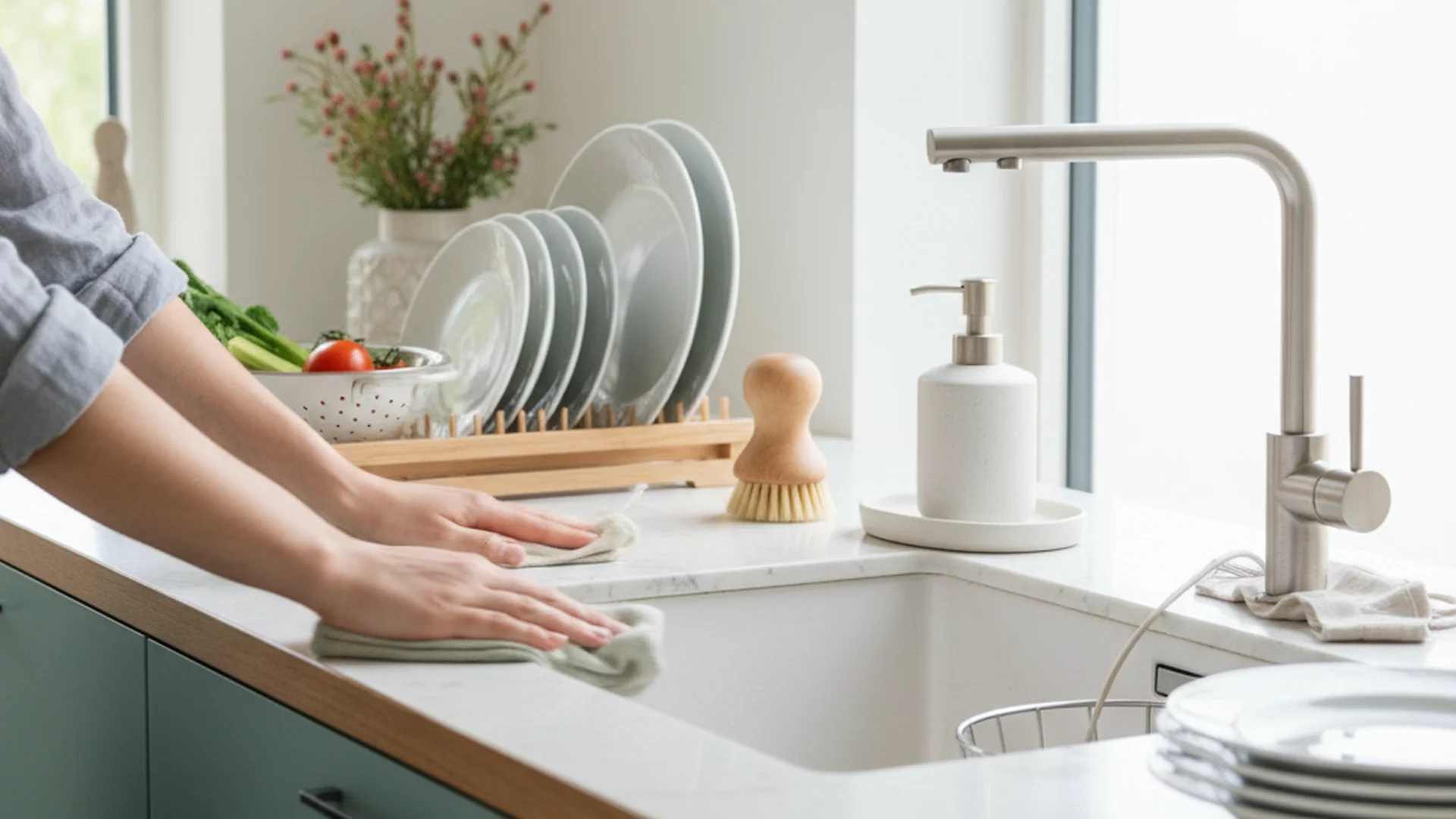
| Kitchen | Clear and wipe counters, load dishwasher |
| Bathroom | Scrub toilet, wipe mirror, clear vanity |
| Bedroom | Make bed, put away "the chair" laundry |
| Entryway | Organize shoes, hang coats, sweep floor |
Phase 3: The Sprint (20 Minutes)
Set your timer and go. Work with intention. This isn't the time for deep-cleaning the grout with a toothbrush unless that is your specific 20-minute goal. Focus on high-impact visual changes.
Warning: Avoid the "Invisible Timer." Do not use a clock on the wall. Use a digital timer with an audible alarm so you don't have to keep checking the time.
Phase 4: The Mandatory Reset (10 Minutes)
When the timer dings, stop immediately. Even if you are in the middle of a task. This is the hardest part for most people, but it is the most vital for long-term consistency. Leave the room you were cleaning. Sit down, drink water, or listen to a favorite song.
Real-World Examples of 20/10 in Action
To truly understand the 20 10 cleaning method, let's look at how it applies to three common household scenarios.
Example 1: The "After-Work" Reset
Sarah comes home at 6:00 PM and is exhausted. Instead of ignoring the mounting dishes, she sets a 20-minute timer. She focuses only on the kitchen. When the timer dings, she takes 10 minutes to sit on the porch. She realizes she has enough energy for one more cycle to fold a load of laundry. By 6:50 PM, her "closing shift" is done, and she has only "worked" for 40 minutes.
Example 2: The ADHD "Doom Pile"
Mark has a pile of mail and clutter on his dining table that has been there for a month. The thought of sorting it all is overwhelming. He commits to one 20/10 cycle. In 20 minutes, he clears the trash and sorts the "to-file" papers. He takes his 10-minute break to play a video game. The "dopamine hit" from the break allows him to do one more cycle to finish the job.
Example 3: Chronic Pain Management
Linda lives with fibromyalgia. Traditional cleaning leaves her bedridden for days. Using the 20/10 method, she cleans the bathroom for 20 minutes (seated when possible) and takes a full 10-minute rest to hydrate and stretch. This allows her to maintain her home without triggering a pain flare-up.
2025–2026 Trends: The Evolution of 20/10
The 20/10 method is more relevant now than ever. In 2025 and 2026, we are seeing a shift away from "perfectionist" aesthetics toward "wellbeing-centered" homes. Here is how the method is evolving:
The "Closing Shift" Synergy
The "Closing Shift" is a viral trend where people treat their homes like a retail store, "closing down" the space at night. Integrating a 20/10 cycle into your evening routine ensures you wake up to a "reset" environment without losing hours of sleep.
Dopamine Cleaning
This trend involves pairing the 20/10 method with high-stimulation rewards. During the 20-minute work block, you listen to a high-energy playlist or a gripping podcast. During the 10-minute break, you do something that provides a quick dopamine hit, like a quick snack or checking social media.
Digital 20/10 Sprints
The method isn't just for physical spaces anymore. "Digital decluttering" is a major trend for 2026. Use a 20/10 cycle to clear your email inbox, delete duplicate photos on your phone, or organize your desktop files.
Success: Pairing 20/10 with "Dopamine Cleaning" techniques can make the time fly by, making the habit much easier to stick to.
Common Mistakes to Avoid
Even with a simple system, it’s easy to fall back into old habits. Watch out for these pitfalls:
1. The "Just One More Minute" Trap
This is the number one mistake. You feel like you’re "on a roll" and decide to ignore the timer to finish the room. Don't do it. Ignoring the break leads to the very burnout the method is designed to prevent. The break is a requirement to keep your brain from associating cleaning with total exhaustion.
2. Productivity Guilt
Do not feel "lazy" during your 10-minute break. In the 20 10 cleaning method guide, the break is viewed as a functional part of the work. You are "charging the battery" so you can perform better in the next cycle.
3. The Multitasking Myth
If you try to do laundry, wash dishes, and dust the living room in one 20-minute block, you will end up with three unfinished tasks. This leads to "half-finished" syndrome, which increases anxiety. Stick to one zone per sprint.
Frequently Asked Questions
Is 20 minutes really enough to see a difference?
Can I use the 20/10 method for deep cleaning?
What if I can't physically do 20 minutes?
What should I do during the 10-minute break?
Conclusion: Progress Over Perfection
The 20 10 cleaning method is more than just a schedule; it is a mindset shift. It teaches us that our worth is not tied to the state of our home and that taking care of our environment shouldn't come at the cost of our mental or physical health. By embracing the power of the interval, you can reclaim your home from the "doom piles" and "marathon" sessions that have been holding you back.
Whether you are a busy professional, a parent, or someone living with chronic fatigue, the 20/10 method provides a path toward a cleaner home that is actually sustainable. Start today with just one cycle. You’ll be surprised at how much you can "unf*ck" in just 20 minutes.
Success: Consistency beats intensity every time. One 20/10 cycle every day is more effective than a 5-hour cleaning spree once a month.
Cleaning that keeps score
Every task earns points, every streak multiplies them, and Premium adds a household leaderboard plus a monthly Dustagorgon to beat.
- Free forever
- 30 badges to earn
- Up to 6 in a household
No card needed. Set up your rooms in a couple of minutes.