In this article
What you’ll learn
- Smoke is a physical residue (thirdhand smoke) that requires deep surface cleaning.
- Neutralizing odors requires a three-phase "Source-Surface-Air" strategy.
- New 2026 disclosure laws make effective smoke removal a financial necessity for homeowners.
Walking into a home that smells of stale cigarettes or the acrid leftovers of a kitchen fire is more than just an olfactory nuisance. For many homeowners and renters, the challenge to remove smoke smell is a battle against an invisible, stubborn enemy. In 2025, we now understand that smoke isn't just a scent—it is "thirdhand smoke," a complex layer of toxic resins and particulate matter that bonds to every surface it touches.
Whether you are moving into a previous smoker’s home, recovering from a wildfire season, or dealing with a burnt dinner, removing these particles is essential for both your comfort and your long-term health. This guide will walk you through the most effective, science-backed methods to refresh your space and ensure the air you breathe is truly clean.
The Science of Smoke: Why It Sticks
To effectively remove smoke smell, you must understand what you are fighting. Smoke particles (PM2.5) are incredibly small—between 0.1 and 1 micron in size. Because they are so tiny, they penetrate porous materials like drywall, wooden floorboards, and even the internal insulation of your HVAC system.
Recent 2025 research from the Harvard T.H. Chan School of Public Health has highlighted that thirdhand smoke remains an "active source" of pollution. As these chemicals age, they react with indoor air to become even more toxic, increasing the risk of respiratory issues and even cellular DNA damage. Simply put: if you can smell it, your body is absorbing it.
Warning: Thirdhand smoke residue has been linked to a 25% increased risk of certain cancers. Effective removal is a health priority, not just an aesthetic one.
Phase 1: Source Removal
The first step in any remediation process is to get rid of the physical items that are off-gassing the most odor. You cannot clean the air if the source remains in the room.
Clearing the Debris
Start by removing all cigarette butts, ash trays, and charred materials. If the smoke smell is coming from a specific incident (like a small fire), dispose of the burnt items immediately in an outdoor bin.
The HVAC System
The most common mistake people make is ignoring their ventilation. Smoke particles circulate through your vents and settle in the filters.
- Replace Filters: Immediately switch to a MERV 13 filter or higher. These are designed to catch the microscopic particles that standard filters miss.
- Duct Cleaning: If the home was occupied by a heavy smoker for years, professional duct cleaning is non-negotiable.
Note: Smoke particles can linger inside HVAC systems for years, recirculating the smell every time the heat or AC turns on.
Phase 2: Surface Neutralization
Once the source is gone, you must tackle the surfaces. Since 70% of smoke residue settles on walls and ceilings, this is where the bulk of your work lies.
The Power of Vinegar and Natural Solutions
The best way to remove smoke smell from hard surfaces often involves acidic cleaners that can break down the alkaline resins in nicotine.
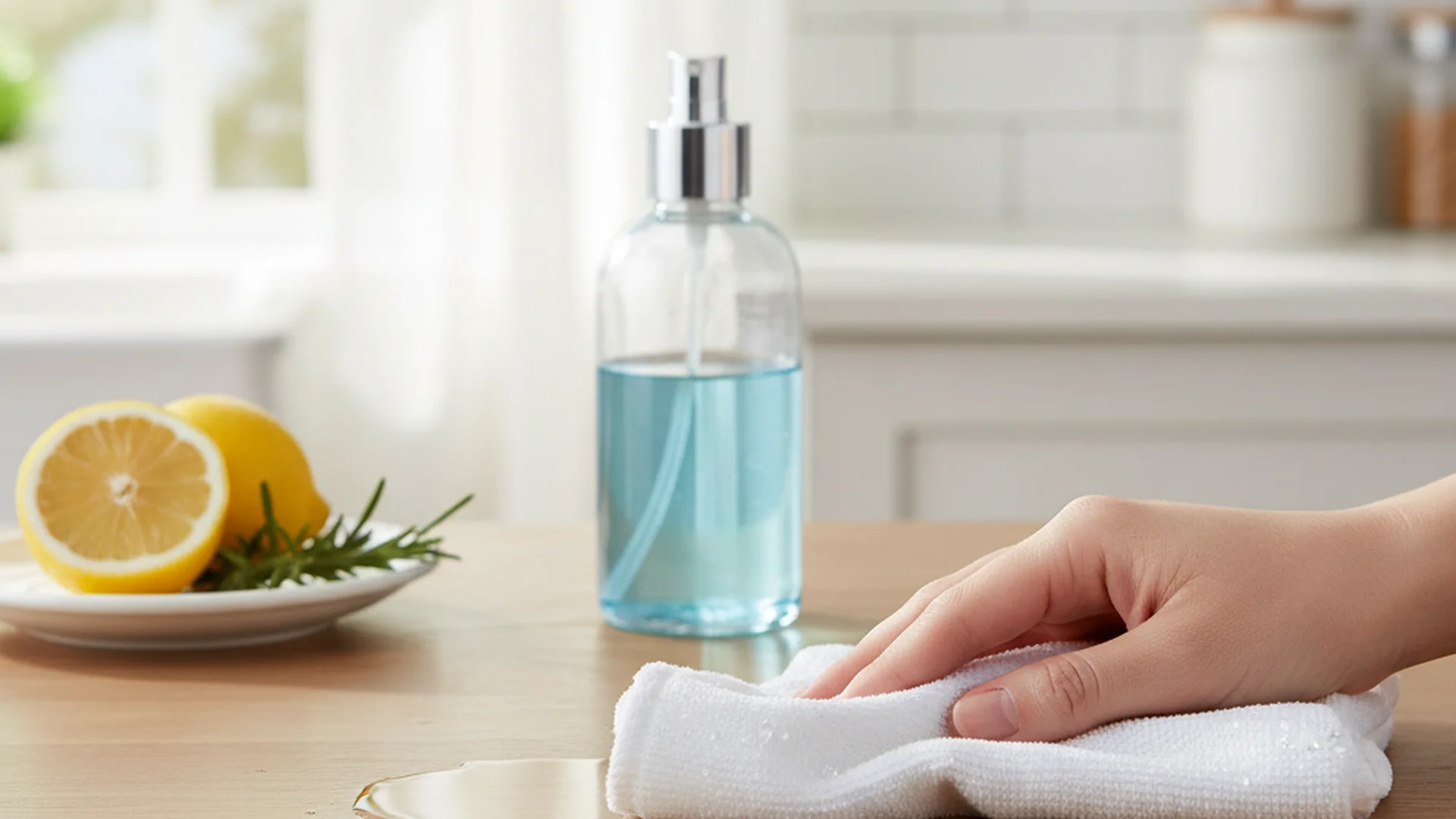
- The Mix: Create a 1:1 solution of distilled white vinegar and warm water.
- The Application: Use a microfiber cloth to wipe down walls, ceilings, and baseboards. Do not skip the ceiling; because smoke rises, it often holds the highest concentration of residue.
Treating Soft Surfaces
Carpets and upholstery act like giant sponges for smoke. To remove smoke smell naturally from these areas:
- Baking Soda Saturation: Sprinkle baking soda liberally over all carpets and fabric furniture.
- The Wait: Leave it for at least 24 to 48 hours. This gives the powder time to pull the oils out of the fibers.
- HEPA Vacuuming: Use a vacuum equipped with a HEPA filter to ensure you aren't just blowing the particles back into the air.
Tip: For curtains and bedding, add one cup of baking soda or half a cup of white vinegar to the wash cycle to neutralize deep-set odors.
| Material | Method | Timeframe |
|---|---|---|
| Drywall/Ceilings | Vinegar/Water Wash | 2–4 Hours |
| Carpets | Baking Soda & HEPA Vac | 24–48 Hours |
| Hardwood | Microfiber & Wood Soap | 1–2 Hours |
| Fabrics | Vinegar Wash Cycle | 1 Hour |
Phase 3: Air Purification and High-Tech Trends
In 2025, air purification has moved beyond simple fans. New technologies allow us to treat the air at a molecular level.
Bipolar Ionization and Activated Carbon
While ozone generators were once the standard, they are now discouraged for occupied spaces due to lung irritation. The 2025 trend is Bipolar Ionization. This technology creates ions that bond to smoke molecules, making them heavy enough to fall out of the air or be caught by filters.
Furthermore, ensure your air purifier has a thick Activated Carbon filter. While HEPA filters catch the physical dust and ash, carbon filters are the only things that can trap the gaseous odors (VOCs).
Real-World Example: The "Wildfire Recovery"
A family in Oregon recently faced intense indoor smoke odors following a heavy wildfire season. Despite keeping windows closed, their IAQ (Indoor Air Quality) sensors showed high levels of TSNAs (Tobacco-Specific Nitrosamines). By implementing "Box Fan Engineering"—placing fans in windows facing outward to create a vacuum effect—and running a dual-filter carbon purifier for 72 hours, they reduced the VOC levels by 90%.
Success: Modern smart sensors, such as the 2025 Dyson models, now allow you to track specific smoke compounds in real-time, giving you visual proof that your cleaning is working.
Common Mistakes to Avoid
Removing smoke is a delicate process, and many "quick fixes" can actually make the problem worse.
1. The "Paint-Over" Disaster
One of the most common mistakes is painting over smoky walls to hide the yellowing or the smell. Without proper cleaning, the smoke resins will eventually "bleed" through the paint or off-gas through the new layer. You must clean the walls with a degreaser first, then apply an odor-blocking primer (like Shellac-based KILZ).
2. Using Steam Cleaners Too Early
Steam cleaners use heat, which can actually "melt" smoke resins and push them deeper into carpet pads or upholstery foam. Always vacuum thoroughly and use dry neutralizing agents before applying moisture.
3. Closing the Windows
It seems counterintuitive, but sealing a room often traps the volatile compounds. Continuous cross-ventilation is required to prevent smoke particles from resettling on the surfaces you just cleaned.
4. Relying on Air Fresheners
Scented candles and sprays do not remove smoke; they mask it. In fact, when fragrances mix with smoke residue, they can create new, irritating chemical combinations that are harder to remove.
Warning: Never mix bleach with ammonia-based cleaners while trying to remove smoke stains, as this creates toxic chloramine gas.
The Financial Impact: New 2026 Laws
If you are planning to sell your home, take note: as of January 1, 2026, new legislation (such as California’s AB 455) requires sellers to disclose known thirdhand smoke residue. Professional remediation is becoming a financial necessity to maintain property value. A home that smells of smoke can see a price reduction of up to 15% in a competitive market.
Real-World Example: The Seller’s Success
In early 2025, a homeowner in Florida struggled to sell a condo previously owned by a 20-year smoker. After two months on the market with no bites, they invested in a professional "thermal fogging" treatment and replaced the carpet pads. The smoke smell was eradicated, and the condo sold for $30,000 over the previous listing price within a week.
Frequently Asked Questions
Can I just use air fresheners to hide the smell?
Does vinegar actually work for smoke?
How long does smoke smell last if untreated?
Is an air purifier enough to fix the problem?
What is the fastest way to get smoke out after a kitchen mishap?
Conclusion
Removing smoke smell is a marathon, not a sprint. By following the "Source-Surface-Air" strategy—removing debris, neutralizing surfaces with vinegar and baking soda, and using modern air purification—you can reclaim your home from the lingering effects of thirdhand smoke.
Whether you're dealing with the aftermath of a wildfire or the legacy of a previous occupant, the keys are persistence and the right tools. Start with the ceilings, work your way down, and never underestimate the power of fresh air and a good HEPA vacuum.
Success: By taking these steps, you aren't just making your home smell better—you're creating a significantly healthier environment for yourself and your family.
Cleaning that keeps score
Every task earns points, every streak multiplies them, and Premium adds a household leaderboard plus a monthly Dustagorgon to beat.
- Free forever
- 30 badges to earn
- Up to 6 in a household
No card needed. Set up your rooms in a couple of minutes.