In this article
What you’ll learn
- Gamification leverages dopamine to provide instant rewards for mundane tasks.
- Neurodivergent people, especially those with ADHD, finish far more tasks this way.
- Modern tech like AR and AI are transforming home maintenance into "Boss Battles."
For most of us, the hardest part of cleaning isn't the physical labor—it’s the mental hurdle of starting. We know that a clean kitchen will make us feel better tomorrow, but our brains are hardwired to prefer immediate rewards over delayed ones. This is where gamification cleaning changes the narrative. By applying game-design elements to household chores, we can trick our brains into enjoying the process rather than just the result.
In 2026, the way we manage our homes has shifted from a "duty" to a "discovery." Whether you are looking for fresh gamification cleaning ideas or want to understand the deep psychology of how to gamify cleaning for your family, this guide will show you how to turn your vacuum into a legendary weapon and your laundry pile into an epic quest.
The Science of the "Ding": Why Gamification Works
At its core, gamification works by hacking the brain’s reward system. Traditional cleaning often fails because it offers only "delayed gratification." You scrub the floors now, and you get a clean house... eventually.
Gamification transforms this by providing immediate feedback. When you hear a "ding" on an app or move a physical token into a "completed" jar, your brain releases a small burst of dopamine. This chemical signal tells your brain, "That was good; let's do it again."
Transforming Delayed Gratification into Instant Wins
When we look at how to gamify cleaning, we are essentially building a bridge between the task and the reward. Instead of waiting until the whole house is spotless to feel successful, you feel successful the moment you "slay" the dust bunnies in the hallway.
Note: Immediate feedback loops are far more effective at building habits than distant, long-term goals.
Top 3 Methods for Cleaning Gamification in 2026
The landscape of home management has evolved. We now have three primary ways to implement gamification, ranging from low-tech analog solutions to high-tech immersive experiences.
1. The App-User: Digital Mastery
Leading cleaning apps like Tody, Sweepy, and Habitica have become household staples. These apps use "dirtiness meters" that turn red as a room gets messier and green as you clean.
- Tody: Focuses on the "cleanliness bar." Seeing a bar fill up provides a visual sense of accomplishment that a paper checklist cannot match.
- Habitica: Turns your life into an RPG (Role-Playing Game). Completing chores earns your avatar armor and pets, while neglecting them causes your character to lose health.
- Choreful: Excellent for shared households, allowing roommates to see a live leaderboard of who has contributed most to the "guild's" success.
2. The Analog-Gamer: Physical Rewards
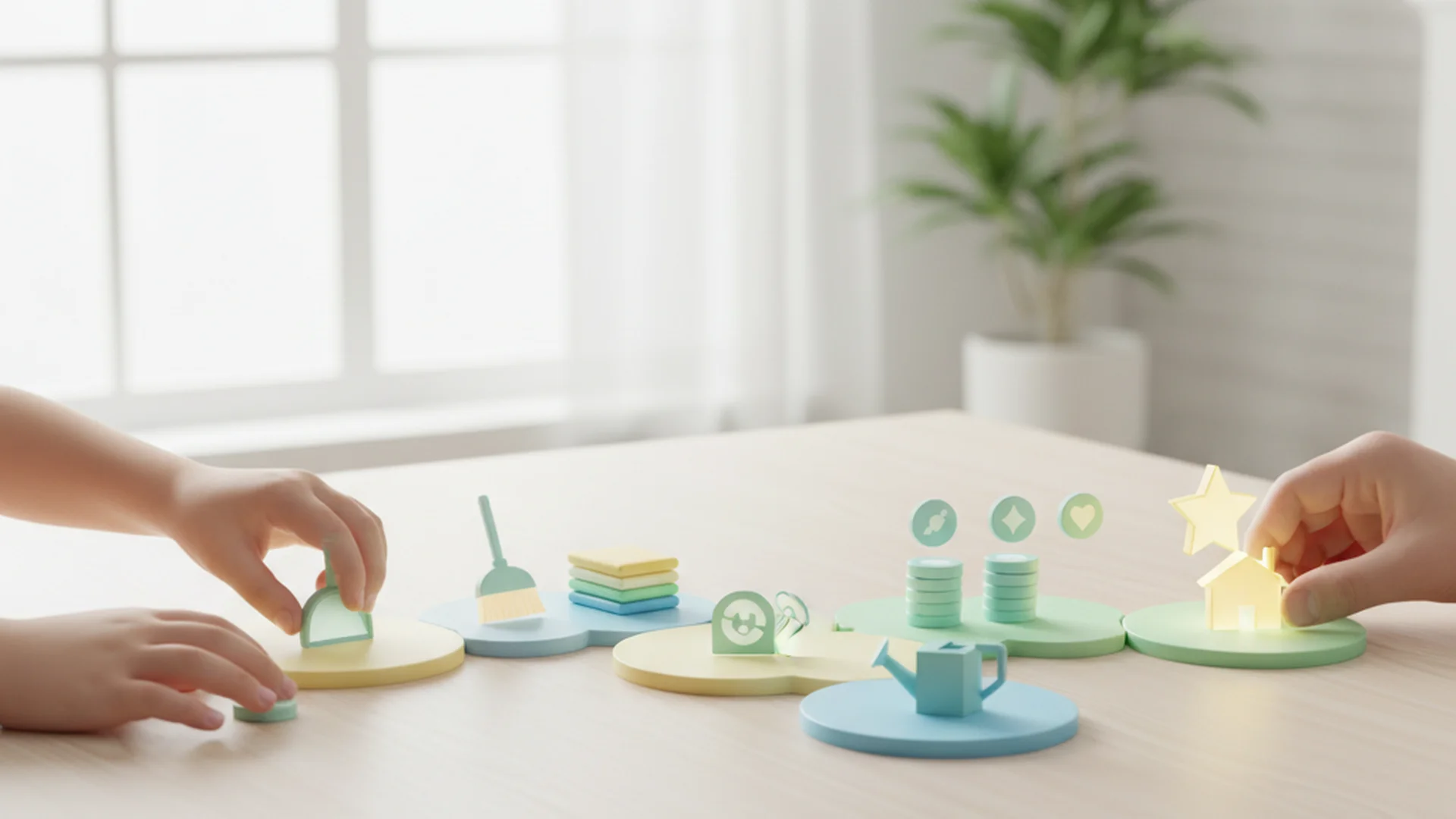
You don't need a smartphone to learn how to gamify cleaning. For many, physical interaction is more satisfying.
- The Dice Roll: Assign six tasks to a die. Roll the die, and whatever number comes up is your "quest" for the next 15 minutes. This removes the "decision fatigue" of choosing where to start.
- Chore Jars: Use two jars—one labeled "To Do" and one "Loot." Each completed slip from the "To Do" jar allows you to draw a small reward from the "Loot" jar, such as "15 minutes of guilt-free gaming" or "Choose the movie tonight."
3. The Tech-Enthusiast: AR and Smart Home Integration
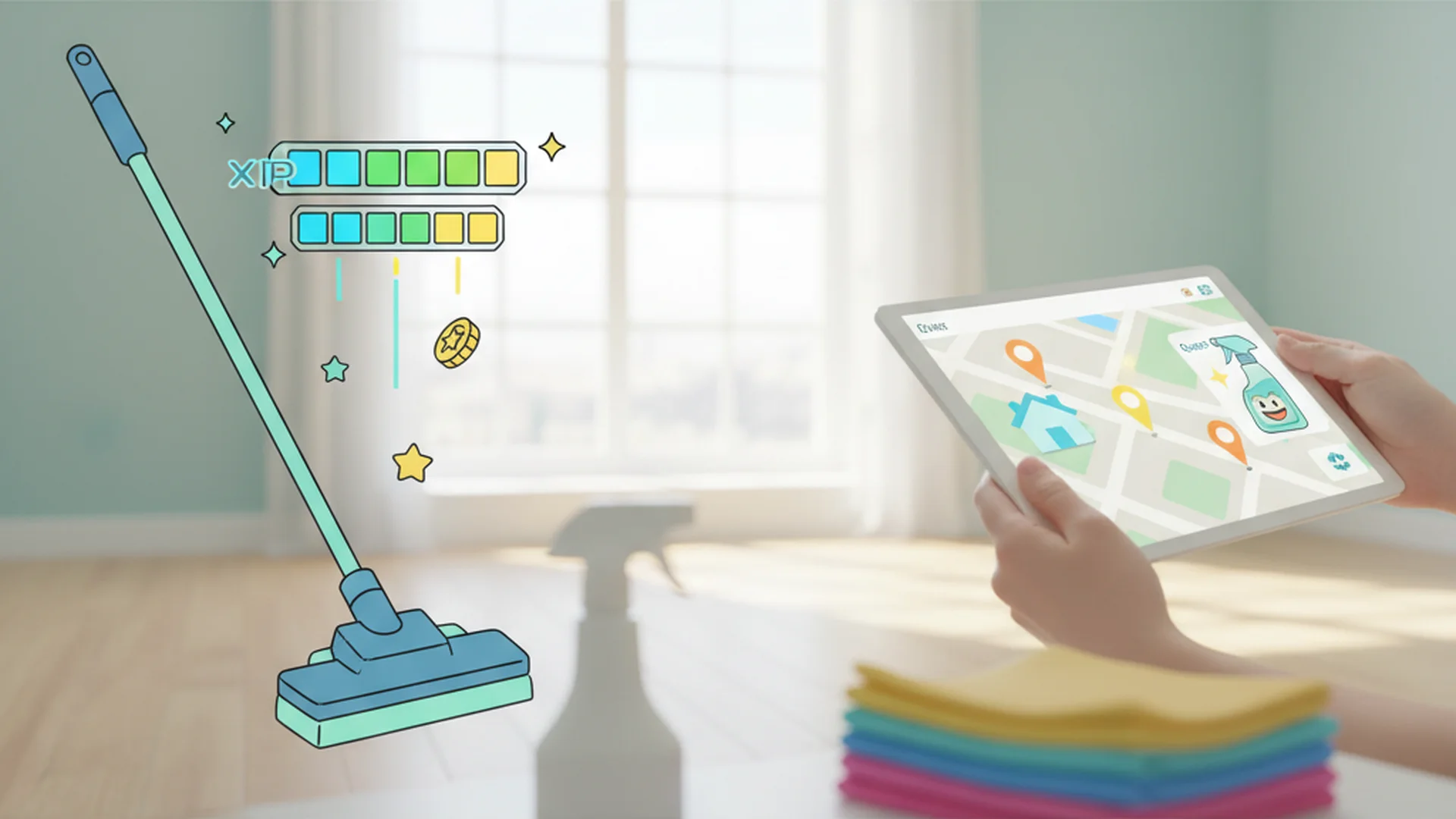
In 2026, we are seeing the rise of Augmented Reality (AR) cleaning. New mobile applications allow you to look through your phone's camera to see "virtual coins" floating in your living room. As you move the vacuum over the floor, you "collect" these coins.
Success: People who use AR cleaning apps tend to spend longer on deep-cleaning tasks, because they are focused on "clearing the map" rather than the labor itself.
| Method | Best For | Complexity | Key Feature |
|---|---|---|---|
| Mobile Apps | Tech-savvy adults | Medium | Automatic reminders & UI |
| Analog/Dice | Families & kids | Low | Tactile feedback |
| AR/Smart Home | Tech enthusiasts | High | Immersive "Boss Battles" |
Gamification for Neurodiversity: An ADHD Game-Changer
Perhaps the most significant impact of gamification cleaning is its efficacy for individuals with executive dysfunction. For people with ADHD, a gamified system can be the difference between a task never starting and a task getting finished.
For the neurodivergent brain, a task like "Clean the Kitchen" is often too vague and overwhelming, leading to the "wall of awful"—a mental block that prevents starting. Gamification breaks this down into "Micro-Quests."
The "Quest" Method
Instead of a giant chore list, tasks are renamed to sound more heroic and manageable:
- The Dishware Duel: Loading the dishwasher (Level 1).
- The Countertop Crusade: Clearing and wiping surfaces (Level 2).
- The Floor Fortress: Mopping the tiles (Final Boss).
By framing the tasks as levels, the brain focuses on the immediate "win" rather than the total mountain of work.
Tip: If you have ADHD, use a "Variable Reward Generator." Roll a die after a task; if it's a 6, you get a "Great Loot" reward (like a favorite snack). The unpredictability keeps the brain engaged.
Recent Trends: The "Clean-to-Earn" Economy
As we move through 2026, we are seeing a shift toward the "Clean-to-Earn" model. Some innovative apps are partnering with retailers to offer real-world value for household maintenance.
- Green Points: Users earn "Green Points" for using eco-friendly DIY cleaners like vinegar and baking soda. These points can be traded for discounts on sustainable brands.
- World Events: Integration with smart home sensors allows your house to "generate quests." If your air quality sensor detects high dust levels, the app triggers a "World Event" notification, encouraging a quick dusting session to "save the air."
Warning: Be careful not to let the rewards become the only reason you clean. The goal of gamification is to build a habit, not a dependency on external prizes.
Common Mistakes to Avoid
While gamification cleaning ideas are powerful, they can fail if implemented incorrectly. Here are the most common pitfalls:
- Over-Complicating the System: If it takes 20 minutes to set up your "game" for a 10-minute task, the system will collapse. Keep the barrier to entry low.
- Punitive Mechanics: Avoid games where you "lose points" or "die" for missing a day. Negative reinforcement in cleaning usually leads to "shame-quitting." Stick to positive reinforcements.
- The "Silly" Stigma: Many adults feel that games are "just for kids." However, gamification is simply project management with a better user interface. Don't let the fear of looking silly stop you from having a clean home.
- Static Rewards: If the reward is the same every time, your brain will eventually stop caring. Rotate your rewards to keep the "dopamine hit" fresh.
Frequently Asked Questions
How do I gamify cleaning for adults?
Does gamification work for cleaning with ADHD?
What are the best cleaning gamification apps in 2026?
How can I gamify cleaning without an app?
How do I get my partner or roommate to participate?
Conclusion
The shift toward gamification cleaning represents a fundamental change in how we view home maintenance. It is no longer about the "should" or the "must," but about the "play." By utilizing the science of dopamine, the structure of micro-tasking, and the excitement of modern technology, we can finally banish the "chore bore" for good.
Whether you're using a high-tech AR app to collect virtual coins while you vacuum or just rolling a die to decide which room to tackle first, the goal is the same: to make the process as rewarding as the result. Start your first quest today—your future, organized self will thank you for the XP.
Success: Start with just one "Quest" today. Don't worry about the whole house; just focus on earning your first 10 points.
Cleaning that keeps score
Every task earns points, every streak multiplies them, and Premium adds a household leaderboard plus a monthly Dustagorgon to beat.
- Free forever
- 30 badges to earn
- Up to 6 in a household
No card needed. Set up your rooms in a couple of minutes.