In this article
What you’ll learn
- Identify the core chemical agents required for a professional-grade home kit.
- Understand the 2025 shift toward probiotic and bio-based cleaning solutions.
- Learn the critical difference between cleaning, sanitizing, and disinfecting.
Creating a sanctuary that feels both inviting and hygienic starts with a foundation of the right tools. In 2025, the landscape of home maintenance has shifted from "harsh and heavy" to "smart and sustainable." Choosing the right essential cleaning products is no longer just about removing visible dirt; it is about protecting your indoor air quality, ensuring the longevity of your surfaces, and safeguarding your family's health. Whether you are a minimalist looking for a streamlined kit or a cleaning enthusiast adopting the latest AI-integrated tools, understanding the science of clean is your first step toward domestic efficiency.
The Core Chemistry: Primary Agents You Can’t Ignore
To maintain a home effectively, you do not need a hundred different bottles cluttering your cabinets. Most professional cleaners rely on a "core four" of liquid agents that handle 95% of household tasks. These must have cleaning supplies are formulated to tackle specific types of grime—from organic oils to mineral deposits.
All-Purpose Cleaner (APC)
The workhorse of your cleaning kit. A high-quality APC is designed for non-porous surfaces like laminate countertops, vinyl flooring, and finished wood. In 2025, we are seeing a massive move toward concentrated refills.
Tip: Look for pH-neutral all-purpose cleaners if you have a mix of surfaces. This ensures you won't accidentally etch sensitive materials while doing a quick wipe-down.
Glass and Mirror Cleaner
Nothing makes a room look "cleaner" than streak-free glass. While many use APC for windows, a dedicated glass cleaner contains fast-evaporating alcohols or specialized surfactants that prevent the hazy residue often left by soap-based cleaners.
The Heavy-Duty Degreaser
The kitchen is the "grease zone." A standard APC often fails against polymerized cooking oils found on stovetops and range hoods. A dedicated degreaser breaks the molecular bonds of fat, making it easy to wipe away without heavy scrubbing.
Disinfectants vs. Sanitizers
It is vital to distinguish between these two. A sanitizer reduces bacteria to safe levels, while a disinfectant is designed to kill 99.999% of germs, including viruses and fungi. In the post-2020 era, keeping a hospital-grade disinfectant for high-touch areas—like doorknobs, light switches, and remote controls—is considered a cornerstone of cleaning essentials.
| Product Type | Primary Use Case | Target Grime |
|---|---|---|
| All-Purpose | Counters, Tables | Dust, light spills |
| Degreaser | Stovetops, Ovens | Grease, oils |
| Disinfectant | Knobs, Faucets | Germs, Viruses |
| Acidic Cleaner | Showers, Toilets | Limescale, Soap scum |
The Hardware: Essential Tools for Efficiency
A liquid cleaner is only as effective as the tool used to apply and agitate it. The era of the "old yellow sponge" is fading, replaced by high-tech fibers and ergonomic designs that reduce physical strain.
Microfiber Cloths: The Gold Standard
Microfiber is not just a fabric; it’s a technology. Each fiber is split to be 1/16th the thickness of a human hair, creating a massive surface area that traps bacteria and dust rather than just pushing it around.
Note: Not all microfiber is created equal. Look for a high "GSM" (grams per square meter) for heavy-duty cleaning and a lower GSM, smooth-weave for polishing glass.
HEPA-Filter Vacuums
In 2025, a vacuum without a HEPA (High-Efficiency Particulate Air) filter is simply a dust-redistribution machine. To truly clean your home, you must capture particles as small as 0.3 microns—including pet dander, mold spores, and pollen.
The Microfiber Mop System
Traditional string mops are heavy, hold onto dirty water, and are difficult to sanitize. Modern microfiber flat mops use replaceable or washable pads that use 90% less water and chemicals while picking up significantly more debris.
Success: Switching to a microfiber flat mop can reduce cross-contamination between rooms, as you can easily swap pads when moving from the bathroom to the kitchen.
The 2025-2026 Trend: Probiotic and Bio-Based Cleaning
We are currently witnessing a "green surge" in the industry. As the demand for sustainable essential cleaning products hits the $110 billion mark, the technology behind them has evolved beyond simple "vinegar and water" solutions.
Probiotic Cleaners
The most exciting trend for 2026 is microbiome-friendly cleaning. These products contain beneficial bacteria (probiotics) that consume organic waste like skin cells and food particles. The "active" cleaning continues for up to three days after you finish wiping.
Concentrates and Solid Formats
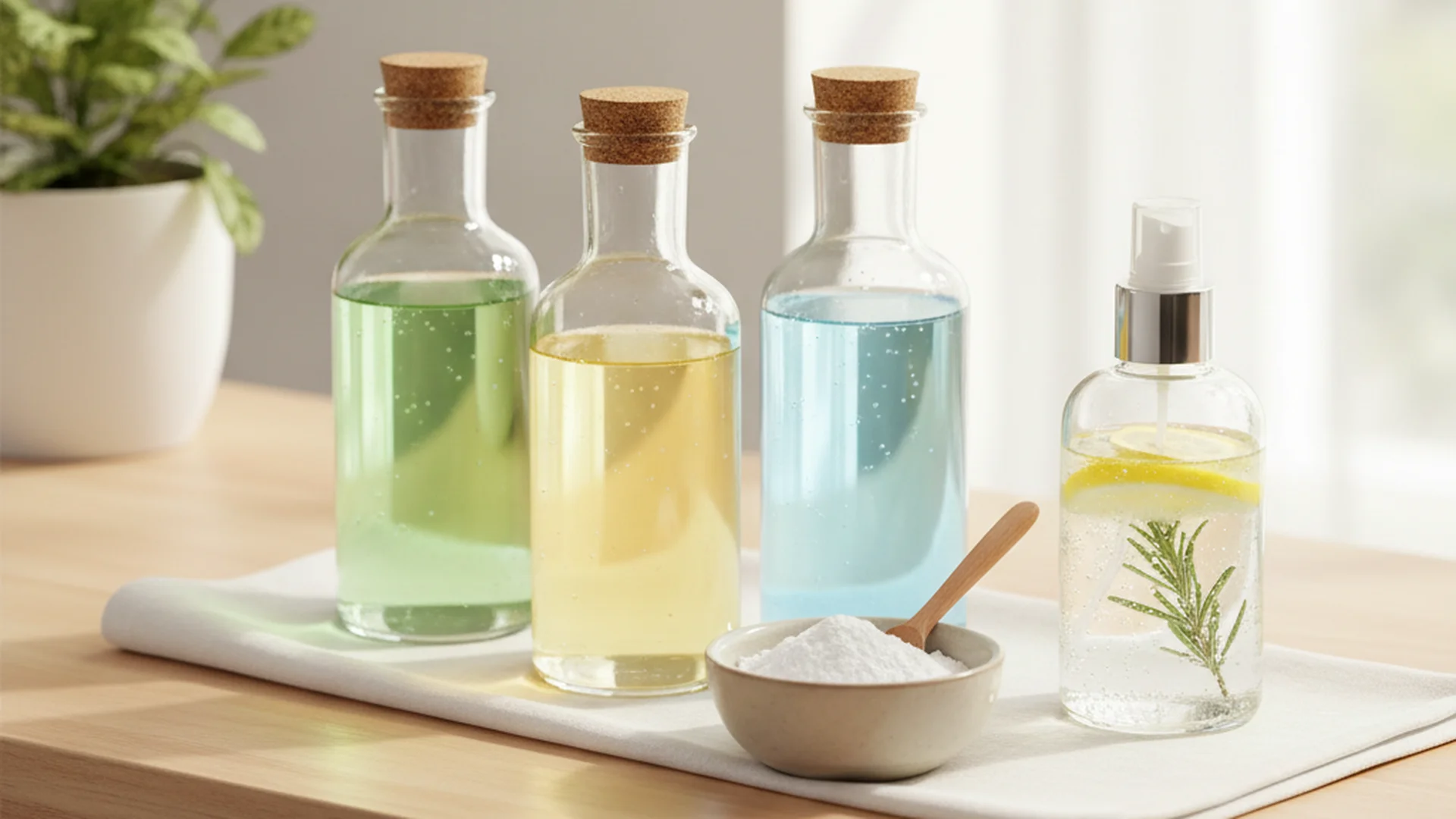
To combat the plastic crisis, the industry is moving toward "waterless" shipping. You buy a glass bottle once and use dissolvable tablets or small concentrated glass vials to mix your cleaner at home. This significantly reduces the carbon footprint of transport.
Mood-Boosting Scents (Cleaning as Self-Care)
Cleaning is no longer viewed as a chore but as a ritual of mindfulness. We are seeing a rise in "functional fragrances." Instead of the harsh smell of bleach, modern essentials feature sandalwood, eucalyptus, and bergamot—scents scientifically chosen to lower cortisol levels while you work.
Tip: Use "Aromatherapy" based cleaners in the evening. The scent of lavender or cedarwood can help transition your brain into "rest mode" while you tidy up the living room.
The Pantry Powerhouses: Natural Alternatives
Even with high-tech chemicals, three classic ingredients remain must have cleaning supplies for any budget-conscious or eco-friendly home.
- White Vinegar: Its acetic acid content makes it a powerhouse for breaking down mineral deposits in kettles or on showerheads.
- Baking Soda: A mild abrasive that provides "grit" without scratching surfaces. It is also an unparalleled deodorizer for carpets and refrigerators.
- Lemon Juice: A natural bleaching agent and degreaser that leaves behind a fresh, authentic citrus scent.
Warning: Never use vinegar on natural stone like marble, granite, or limestone. The acid will "etch" the surface, leaving permanent dull spots that require professional restoration.
Real-World Examples: Putting the Kit to Work
Example 1: The Kitchen Grease Transformation
Imagine a range hood that hasn't been cleaned in months. A standard spray might just smear the yellow film. By applying a specialized degreaser and letting it sit for 5 minutes (dwell time), the polymerized oil emulsifies. Wiping it with a dry microfiber cloth then lifts the sludge entirely, leaving the stainless steel shining without the need for abrasive scrubbing.
Example 2: Managing Seasonal Allergies
During peak pollen season, a homeowner uses a vacuum with a certified HEPA filter. Unlike a standard vacuum that might exhaust fine dust back into the air, the HEPA system traps the allergens. Following this with a damp microfiber dusting of all "high-ledges" ensures that the indoor air quality remains high, significantly reducing sneezing and respiratory irritation.
Example 3: The Bathroom Deep Clean
To tackle a glass shower door covered in soap scum, a professional doesn't reach for bleach. They use an acidic cleaner (or a vinegar-dish soap DIY mix). The acid breaks down the calcium and magnesium in the soap scum, while the microfiber scrub pad provides the mechanical action to lift the film away, restoring transparency to the glass.
Common Mistakes to Avoid
Even with the best essential cleaning products, technique matters. Here are the most frequent errors Domestic Efficiency Specialists encounter:
- The "More is Better" Myth: Using double the recommended amount of laundry detergent or floor cleaner doesn't make things twice as clean. It leaves a sticky residue that actually acts as a "dirt magnet," causing surfaces to get dirty faster.
- Mixing Chemicals: This is the most dangerous mistake. NEVER mix bleach with ammonia (found in many glass cleaners) or vinegar. This creates toxic gases (chloramine or chlorine) that can cause severe respiratory distress or even death.
- Ignoring Dwell Time: Most disinfectants require 3 to 10 minutes of "wet contact time" to kill viruses. If you spray and immediately wipe, you are only cleaning, not disinfecting.
- Cleaning Bottom-to-Top: If you clean the floors first and then dust the ceiling fans, you are double-working. Always follow the "Top-to-Bottom" rule so that gravity brings dust down to the surfaces you haven't cleaned yet.
- Using Dirty Tools: Cleaning with a dirty sponge is just "relocating" bacteria. Ensure your microfiber cloths are laundered after every use and your vacuum filters are changed according to the manufacturer's schedule.
Warning: Mixing bleach and vinegar creates chlorine gas. Always read labels and keep your cleaning cabinet organized to prevent accidental mixing.
Frequently Asked Questions
Can I use vinegar on everything?
Is disinfecting the same as cleaning?
How long should I leave a cleaner on the surface?
Are microfiber cloths better than paper towels?
How often should I replace my cleaning sponges?
Conclusion: Building Your 2025 Cleaning Routine
Mastering your home environment doesn't require an arsenal of harsh chemicals. By focusing on high-quality essential cleaning products—specifically a versatile all-purpose cleaner, a reliable disinfectant, a powerful degreaser, and the magic of microfiber—you can maintain a professional level of cleanliness with half the effort. As we move through 2025 and into 2026, the shift toward probiotic and concentrated solutions offers a path that is better for both your family's health and the planet.
Start by auditing your current supplies. Remove the "one-hit-wonder" products that only do one job, and replace them with high-efficiency, multi-surface tools. Remember: the best cleaning routine is the one that is sustainable, safe, and backed by science.
Success: By streamlining your kit to these essentials, you'll save an average of $150 per year on unnecessary supplies and reduce your household plastic waste by up to 60%.
Cleaning that keeps score
Every task earns points, every streak multiplies them, and Premium adds a household leaderboard plus a monthly Dustagorgon to beat.
- Free forever
- 30 badges to earn
- Up to 6 in a household
No card needed. Set up your rooms in a couple of minutes.