In this article
What you’ll learn
- Use the 20/10 rule to prevent physical crashes
- Prioritize "dwell time" to let cleaners do the heavy lifting
- Adopt micro-habits like the 10-minute evening reset
We have all been there: standing in the middle of a messy living room, feeling the weight of a long work week, and wondering how on earth we are supposed to find the energy to scrub a bathtub. For years, the standard approach to housework was the "Saturday Marathon"—spending five or six hours of your precious weekend deep cleaning until you were physically and mentally spent. But in 2025 and 2026, the philosophy has shifted. Learning how to clean without tired consequences is no longer a luxury; it is a necessity for mental health.
Most of us know the feeling: an organized home sets a positive tone, and the act of cleaning itself can genuinely improve mental well-being. However, the traditional "all-or-nothing" approach often leads to a "motivation wall" that most people hit by mid-February. If you are looking for a clean without tired answer, the secret lies in working with your body’s natural energy cycles rather than against them.
Why Cleaning Exhausts You: The Psychology of Fatigue
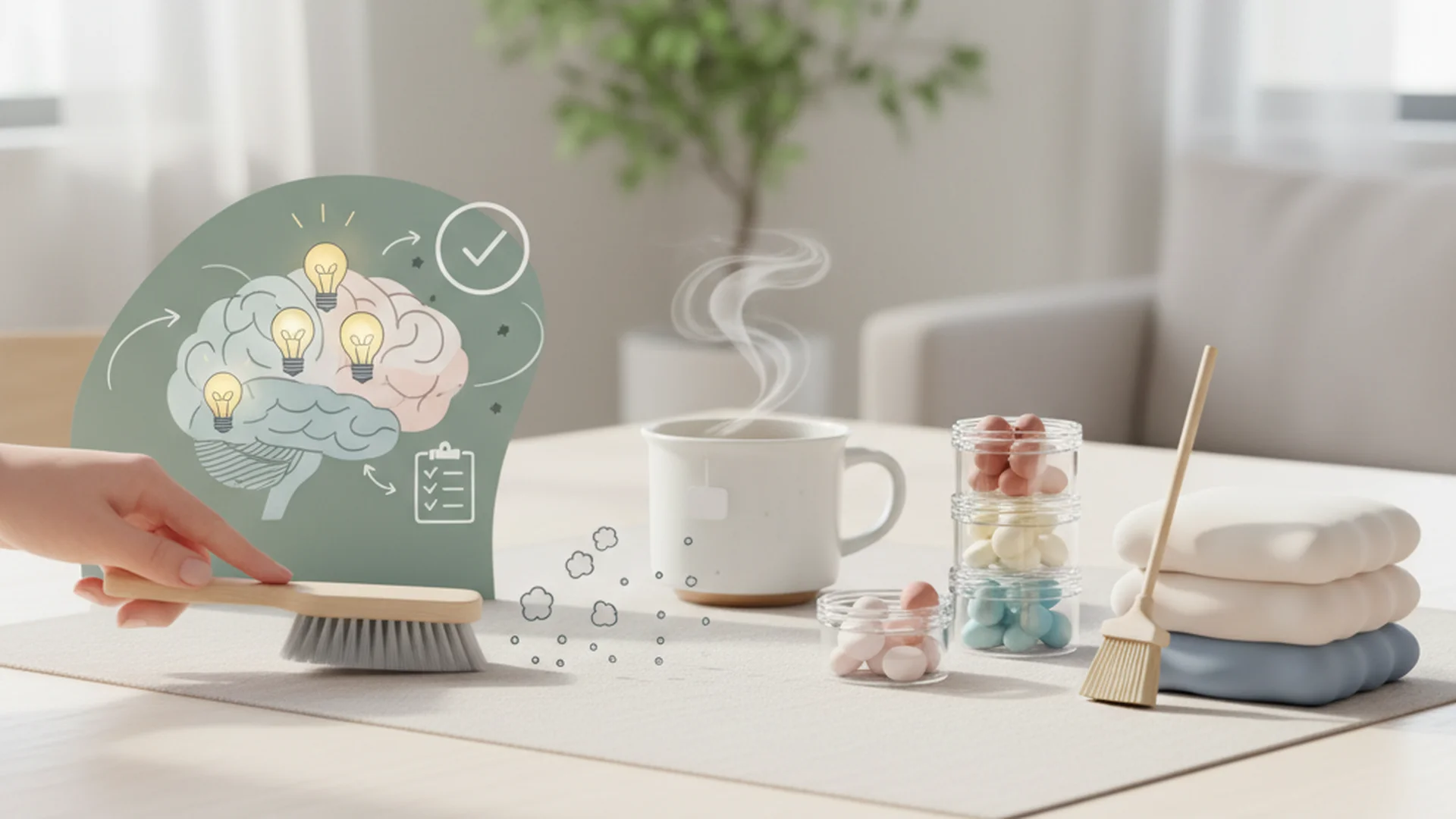
Cleaning is uniquely exhausting because it combines physical labor with "decision fatigue." Every item you pick up requires a choice: Does this stay? Does it go? Where does it live? When you multiply those decisions by hundreds of items, your brain burns out long before your body does.
Furthermore, cleaning involves repetitive "up-and-down" motions that strain the back and joints. The shift toward "cleaning for health" (focusing on allergens and pathogens) over "cleaning for appearance" helps reduce fatigue by narrowing our focus. When we stop trying to make everything look "perfect" and focus on making it "healthy," the mental burden lightens.
Note: Plenty of younger people now use cleaning to unwind or relieve stress, a trend known as "CleanTok" therapy. The key is shifting your mindset from a chore to a mindful ritual.
The Energy-Saving Toolkit: Best Practices for 2026
To keep your energy levels high, you need to use the right techniques. Professionals don’t use "elbow grease"—they use chemistry and physics.
1. The 20/10 Rule
The most effective way to prevent a physical "crash" is the 20/10 rule. Clean for 20 minutes, then take a mandatory 10-minute rest. During those 10 minutes, you must sit down, hydrate, or do something completely unrelated to housework. This prevents the cumulative fatigue that makes you want to quit halfway through.
2. Respect "Dwell Time"
This is the single greatest energy-saving tip in a professional cleaner’s arsenal. Spray your surfaces—counters, tubs, sinks—and then walk away for 5 to 10 minutes. This allows the cleaning agents to break down grime, grease, and soap scum at a molecular level.
Tip: When you return after the dwell time, you should only need to wipe, not scrub. Scrubbing is the most tiring part of cleaning; let the chemicals do the work for you.
3. Top-to-Bottom, Left-to-Right
Always start at the highest point in a room (like ceiling fans or the tops of cabinets) and work your way down to the floors. If you clean the floors first and then dust the shelves, you’ll have to clean the floors again when the dust falls. This simple logic saves roughly 30% of the energy expended during a cleaning session.
| Method | Energy Expended | Effectiveness |
|---|---|---|
| Marathon Cleaning | Very High | Low (leads to burnout) |
| One-Room-a-Day | Medium | High |
| 10-Minute Reset | Low | Very High (for maintenance) |
The 10-Minute Reset and Micro-Habits
The goal of modern cleaning is to stay in "maintenance mode" so you never have to face a "disaster mode" scenario. This is achieved through micro-habits that require very little willpower.
The "Empty-Handed" Rule
Never leave a room with empty hands. If you are moving from the bedroom to the kitchen, scan for a stray coffee mug or a piece of trash. This "micro-tidying" ensures that clutter never accumulates to the point of being overwhelming.
The 10-Minute Evening Reset
Instead of a full house clean, focus on two things before bed: the kitchen sink and one flat surface (like the coffee table). Waking up to a clear sink and an orderly living area provides a massive psychological boost for the following day.
Success: Consistently practicing the 10-minute reset can reduce the time spent on weekend deep cleaning by up to 2 hours.
Modern Trends in Low-Effort Cleaning
As we move through 2026, technology is making it easier to maintain a home without physical strain.
- AI Cleaning Assistants: Many homeowners now use AI to generate customized schedules based on their home’s layout. This removes the "decision fatigue" of figuring out what to clean and when.
- Ergonomic Manual Tools: We are seeing a surge in "high-performance manual tools." Electric spin scrubbers and mops with curved, adjustable handles allow you to stay upright, protecting your lower back.
- Lived-in Minimalism: The trend has shifted from "Pinterest-perfect" to "functional minimalism." By reducing "inventory" (the amount of stuff you own), you naturally reduce the amount of time you spend dusting and moving objects.
Warning: Avoid the "All-or-Nothing" mentality. Waiting until the house is a "disaster" before cleaning is the fastest way to trigger extreme fatigue.
Common Mistakes to Avoid
Even with the best intentions, certain habits can actually make you more tired.
- Cleaning Around Clutter: Trying to vacuum around piles of clothes or toys takes 40% more energy than clearing the floor first. Always declutter before you bring out the cleaning supplies.
- Overusing Products: More soap does not mean more clean. Using too much cleaner leaves a sticky residue that attracts dust faster, meaning you have to clean more often.
- The Vinegar Myth: While vinegar is a great natural cleaner, using it on everything can be a mistake. It can damage stone, grout, and wood, leading to expensive repairs and more "corrective cleaning" later.
Frequently Asked Questions
How can I clean when I’m already exhausted from work?
Why does cleaning make me so tired compared to other tasks?
Is there a way to clean the whole house without spending all Saturday doing it?
Does "dwell time" really work?
Conclusion
Cleaning without getting tired is not about moving faster; it is about moving smarter. By adopting the 20/10 rule, respecting dwell time, and utilizing the 10-minute evening reset, you can maintain a healthy, organized home without sacrificing your weekend or your physical well-being. Remember, the goal in 2026 is consistency over perfection. A "lived-in" home that is healthy and functional is far better for your mental health than a "perfect" home that leaves you too exhausted to enjoy it.
Success: By implementing just two of these strategies this week, you can reduce your cleaning-related fatigue by nearly half.
Cleaning that keeps score
Every task earns points, every streak multiplies them, and Premium adds a household leaderboard plus a monthly Dustagorgon to beat.
- Free forever
- 30 badges to earn
- Up to 6 in a household
No card needed. Set up your rooms in a couple of minutes.