In this article
What you’ll learn
- Follow the top-to-bottom rule to avoid re-cleaning surfaces.
- Document everything with timestamped photos to protect your security deposit.
- Understand the difference between "broom-clean" and "deep-clean" expectations.
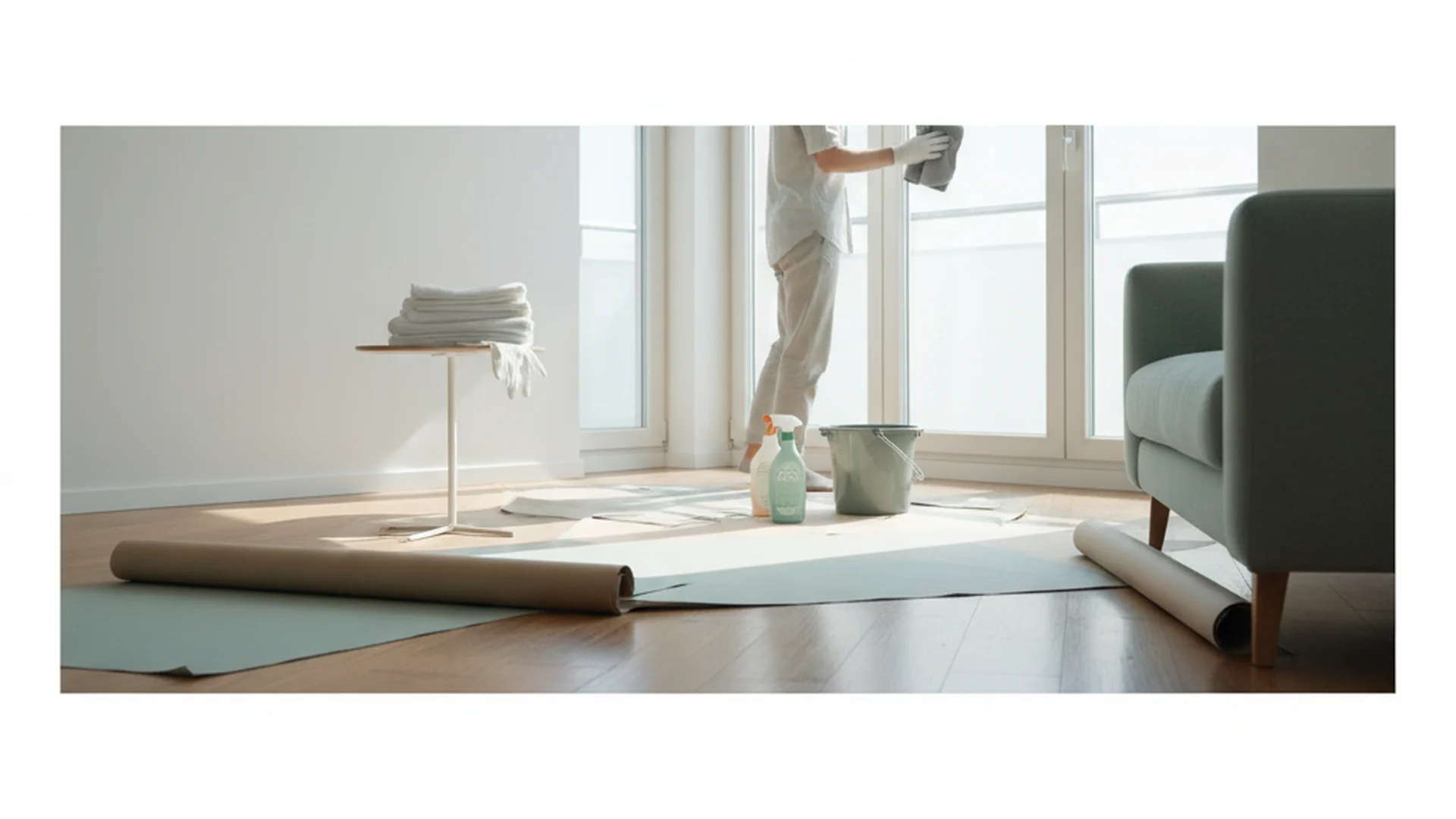
Moving to a new home is one of life’s most stressful transitions, but nothing adds to that pressure quite like the final walk-through with a landlord. Whether you are a long-term tenant or a short-term renter, using a professional-grade move out cleaning checklist is the single most effective way to ensure you receive your security deposit back in full. In 2025, the stakes are higher than ever as rental markets tighten and cleaning standards become more rigorous. This guide provides a systematic approach to cleaning your space, ensuring no corner is left untouched and no fee is unfairly deducted.
Why a Deep Clean is Your Best Financial Move
In today’s economy, security deposits are significant financial assets. In major metropolitan areas like Chicago or Los Angeles, average security deposits currently range from $1,200 to $2,500. When you consider that cleaning charges are one of the top reasons for security deposit deductions, spending a day cleaning or a few hundred dollars on a professional service is essentially "deposit insurance."
Furthermore, legal landscapes are shifting in favor of transparency. Starting July 1, 2025, California's Assembly Bill 2801 requires landlords to provide photographic evidence for any cleaning or repair deductions. While this offers protection, it also means your cleaning must be "picture-perfect" to stand up to scrutiny. Other states are expected to follow this trend, making thorough documentation a necessity for every tenant.
Note: "Broom-clean" is a common lease term, but it is often a trap. While it technically means floors are swept and debris is removed, most landlords expect a deep clean of appliances and surfaces to justify returning a full deposit.
Preparation: Setting the Stage for Success
Before you grab a sponge, you must have a strategy. Cleaning a house full of boxes is inefficient and leads to "re-cleaning" areas where furniture once stood.
Empty the Space First
It is significantly more efficient to clean an empty house. Aim to have all your boxes and furniture loaded into the moving truck before you begin the deep clean. This allows you to see dust bunnies, floor scuffs, and wall marks that were previously hidden.
Gather Your "Green" Cleaning Kit
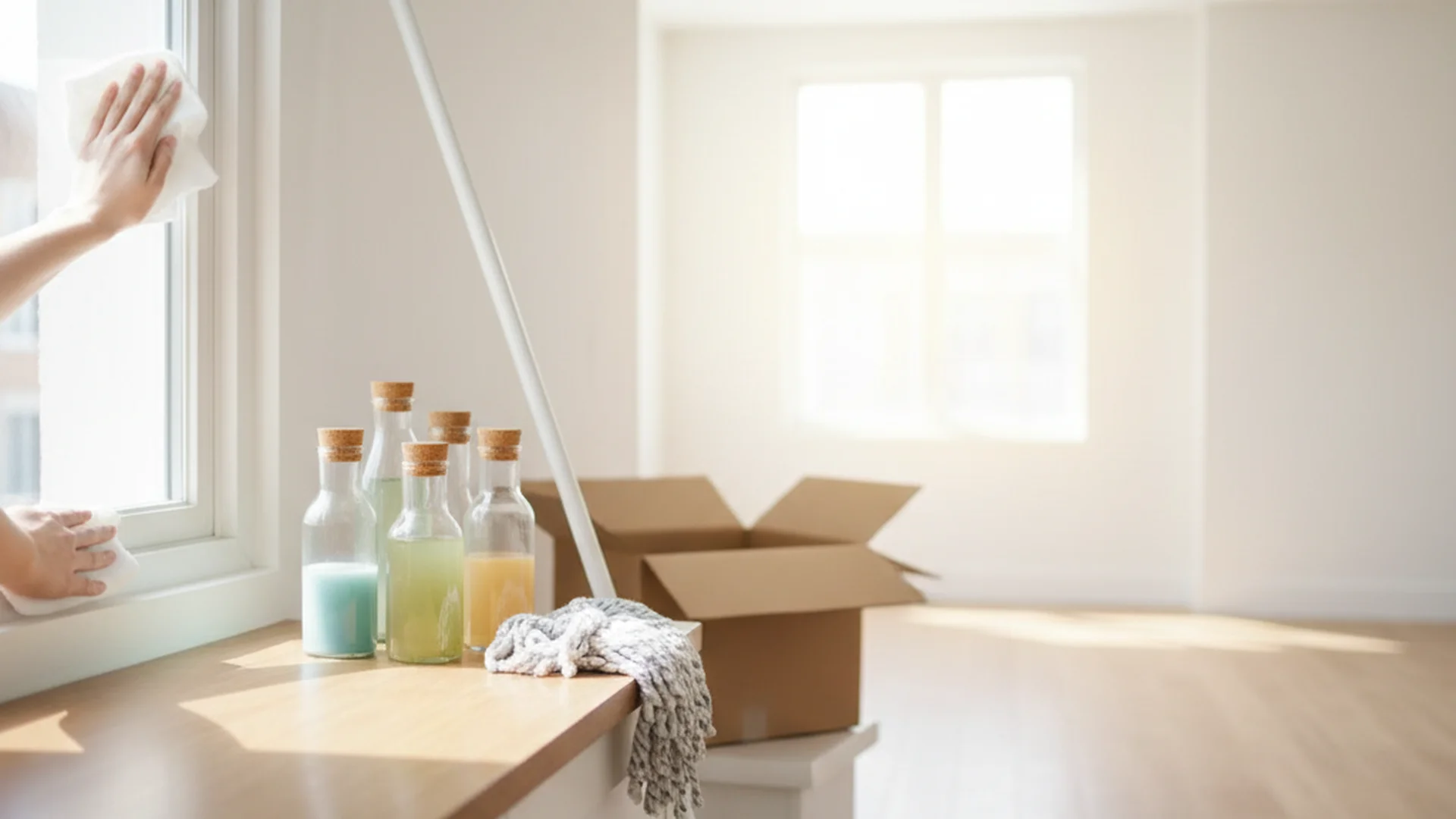
In 2025, sustainability is the standard, and eco-friendly practices have become the norm across the cleaning industry. Not only are plant-based cleaners better for the environment, but they also prevent the "chemical smell" that can sometimes trigger indoor air quality concerns for new tenants.
Essential Supplies:
- Microfiber cloths (the gold standard for dust removal)
- A vacuum with a HEPA filter and hose attachments
- Degreaser for the kitchen
- Descaling solution for bathroom limescale
- Extendable duster for high ceilings
- A stiff grout brush
Tip: Avoid using harsh acidic cleaners like vinegar on natural stone (marble or granite) countertops. It can cause permanent etching, resulting in a repair bill that far exceeds a cleaning fee.
The Top-to-Bottom Move Out Cleaning Checklist
The "Top-to-Bottom" rule is the golden rule of home organization. Always start at the ceiling and work your way down to the floors. This ensures that any dust or debris you dislodge from ceiling fans or light fixtures doesn't land on a floor you’ve already mopped.
1. The Kitchen: The High-Stakes Zone
The kitchen is where most deposit deductions happen. Landlords look for grease and burnt-on food, which are perceived as signs of neglect.
- The Oven and Range: Remove the racks and soak them. Degrease the range hood filter—this is a common spot inspectors check.
- The Refrigerator: Pull the unit out. Clean the coils (which improves efficiency) and mop the floor underneath. Don't forget to wipe the top of the fridge.
- Cabinets and Drawers: Vacuum out the crumbs from the back corners of every drawer.
- The Dishwasher: Clean the filter at the bottom. A clogged filter can leave a musty odor that lingers during the walk-through.
2. Bathrooms: Scrubbing for Sanity
Bathrooms require sanitization and the removal of "personal" grime like hair and soap scum.
- Shower and Tub: Use a descaling solution to remove white limescale from faucets. Scrub the grout with a stiff brush to eliminate any hint of mildew.
- The Toilet: Clean the base and the area behind the toilet. These are high-touch areas that professional inspectors check first.
- Vanity and Mirrors: Ensure mirrors are streak-free. Empty all cabinets and wipe down the interiors.
3. Living Areas and Bedrooms
These rooms are generally easier but contain "hidden" dust collectors.
- Ceiling Fans and Lights: Dust the tops of fan blades and ensure all lightbulbs are working. Replacing a $2 bulb yourself is much cheaper than a $25 "maintenance fee" from a landlord.
- Windows and Tracks: Wipe down window sills and use a vacuum attachment to clear dead insects and dust from the window tracks.
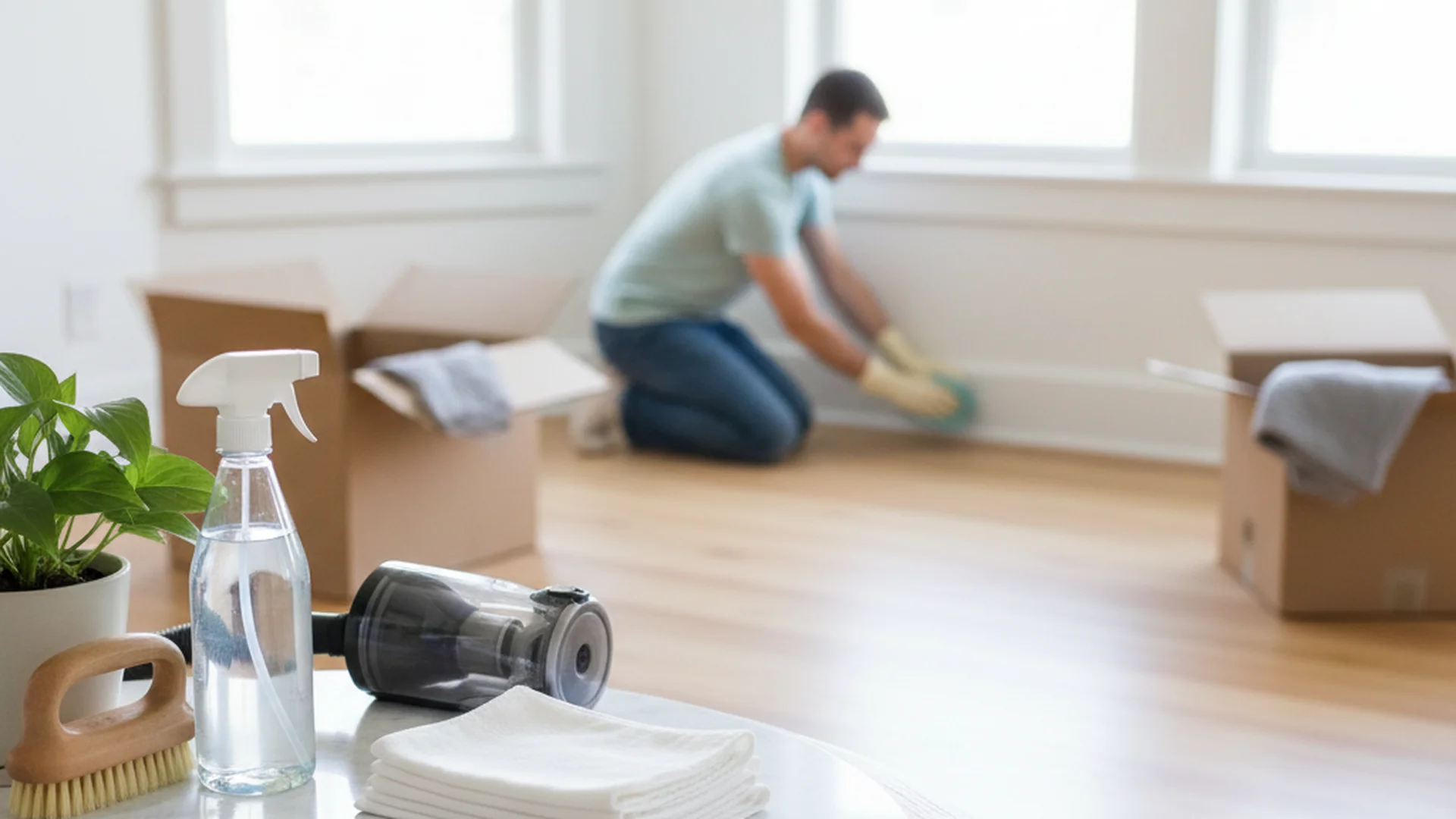
- Walls and Baseboards: Use a damp microfiber cloth to wipe the dust off the top edge of baseboards.
Warning: "Magic Erasers" are wonderful for scuff marks, but they are abrasive. They can strip the sheen off satin or eggshell paint. Always spot-test a hidden area first.
The 2025 Move Out Cleaning Checklist Template
Use the following move out cleaning checklist template to track your progress. You can copy this into a document to create your own move out cleaning checklist printable version.
| Area | Task | Done |
|---|---|---|
| Kitchen | Degrease oven, stovetop, and range hood filter | [ ] |
| Wipe inside/outside of fridge and clean underneath | [ ] | |
| Clean dishwasher filter and door seals | [ ] | |
| Wipe out all cabinets and drawers | [ ] | |
| Bathroom | Remove soap scum from tub/shower and tiles | [ ] |
| Sanitize toilet (base, tank, and floor behind) | [ ] | |
| Polish mirrors and descale all faucets | [ ] | |
| Living/Bed | Dust ceiling fans and light fixtures | [ ] |
| Wipe down all baseboards and window sills | [ ] | |
| Patch small nail holes and remove wall scuffs | [ ] | |
| Floors | Vacuum all carpets (edges included) | [ ] |
| Sweep and mop all hard surfaces | [ ] | |
| General | Replace burnt-out lightbulbs | [ ] |
| Clean light switches and doorknobs | [ ] | |
| FINAL STEP: Take timestamped photos of everything | [ ] |
Real-World Examples of Cleaning Success
To understand the value of a thorough clean, consider these three scenarios:
- The "Hidden Grime" Save: In 2024, a tenant in Seattle was nearly charged $150 for "appliance neglect." Because they followed a checklist and cleaned the dishwasher filter and the space behind the stove, they were able to show the landlord the pristine condition during the walk-through, resulting in a full deposit return.
- The Documentation Win: A tenant in San Francisco used their phone to take a 5-minute video of the clean apartment. The landlord later claimed the "walls were dirty." The tenant produced the timestamped video showing the clean walls, and the landlord immediately dropped the $300 deduction.
- The Professional Pivot: A family moving out of a 4-bedroom home realized their $3,000 deposit was at risk. They spent $500 on a professional move-out clean. The cleaning company provided a "cleanliness guarantee," which the landlord accepted as proof of condition, securing the $2,500 net return for the family.
Recent Trends & Updates (2025-2026)
The cleaning industry is evolving rapidly. Beyond just scrubbing, there are new expectations for "Healthy Homes."
- Specialized IAQ (Indoor Air Quality): Since the pandemic, there has been a marked increase in demand for air duct cleaning and air purification as part of move-out packages. While usually a landlord's job, a tenant who cleans their AC return vents shows exceptional care.
- Smart Cleaning & AI: Many property management companies now use IoT sensors to detect cleanliness levels or UV-C sterilization for high-touch surfaces. If you are moving out of a "smart" building, expect the inspection to be more tech-driven.
- Cleaning as "Self-Care": Social media "clean-fluencers" have reframed the move-out clean as a mental health ritual. Instead of viewing it as a chore, many tenants are using it as a way to say goodbye to their old space and prepare mentally for their new chapter.
Common Mistakes to Avoid
Even with the best intentions, small errors can lead to big deductions.
- Starting Too Late: This is the most common mistake. Many tenants underestimate the "hidden" tasks, like cleaning the tracks of sliding glass doors or the interior of the washing machine rim.
- Ignoring the "High-Touch" Zone: Light switches, doorknobs, and thermostat covers are the first things an inspector touches. If they feel sticky or look dusty, the inspector will assume the rest of the house is dirty too.
- Confusing "Wear and Tear" with "Dirt": Landlords generally distinguish between "wear" (faded carpet in high-traffic areas) and "dirt" (a juice stain on the carpet). Dirt is almost always the tenant's responsibility.
- Neglecting the Exterior: If you have a balcony, patio, or porch, it must be swept and cleared of cobwebs.
Success: Taking timestamped photos of every room, inside every appliance, and inside all cabinets serves as your ultimate evidence in case of a dispute.
Frequently Asked Questions
What does "broom-clean" actually mean?
Do I need to clean behind the fridge?
Should I hire a professional or do it myself?
Are "Magic Erasers" safe for walls?
How do I handle a dispute over a cleaning deduction?
Conclusion
A successful move-out clean is about more than just a mop and bucket; it’s about attention to detail and protecting your financial interests. By following a systematic move out cleaning checklist, you transform a daunting task into a manageable series of steps. Remember to work top-to-bottom, focus on the kitchen and bathroom, and—most importantly—document your hard work with photos.
Success: Using a structured checklist not only secures your deposit but also provides the peace of mind needed to start fresh in your new home.
Cleaning that keeps score
Every task earns points, every streak multiplies them, and Premium adds a household leaderboard plus a monthly Dustagorgon to beat.
- Free forever
- 30 badges to earn
- Up to 6 in a household
No card needed. Set up your rooms in a couple of minutes.